


Professional Horse Handler Course: A Guide to Equine Industry Readiness
- Kim Williams

- 8 hours ago
- 9 min read
The most important part of a career in the equine industry doesn't happen in the saddle; it happens on the ground. While many people are drawn to the excitement of riding, true professionals know that every successful interaction begins with a foundation of trust and mutual respect. Finding the right professional horse handler course is often the first step in building that foundation. You might feel a bit nervous about the physical demands of working with horses or wonder how you can fit a high quality education into your schedule at university or work. It's common to feel overwhelmed by programs that focus on performance while skipping the vital basics of horse behavior.
We understand those concerns, and we believe that everyone deserves a supportive environment where horses inspire learning™. In this guide, we'll show you how specialized training can provide the stability and readiness you need to step into the industry with confidence. You'll learn about the essential skills required for job readiness, the importance of recognized certification paths, and the safety standards that protect both you and the horse. We're here to help you understand the why behind every movement, ensuring you're prepared for a rewarding career in the equine world.
Table of Contents
What Defines a Professional Horse Handler Course?
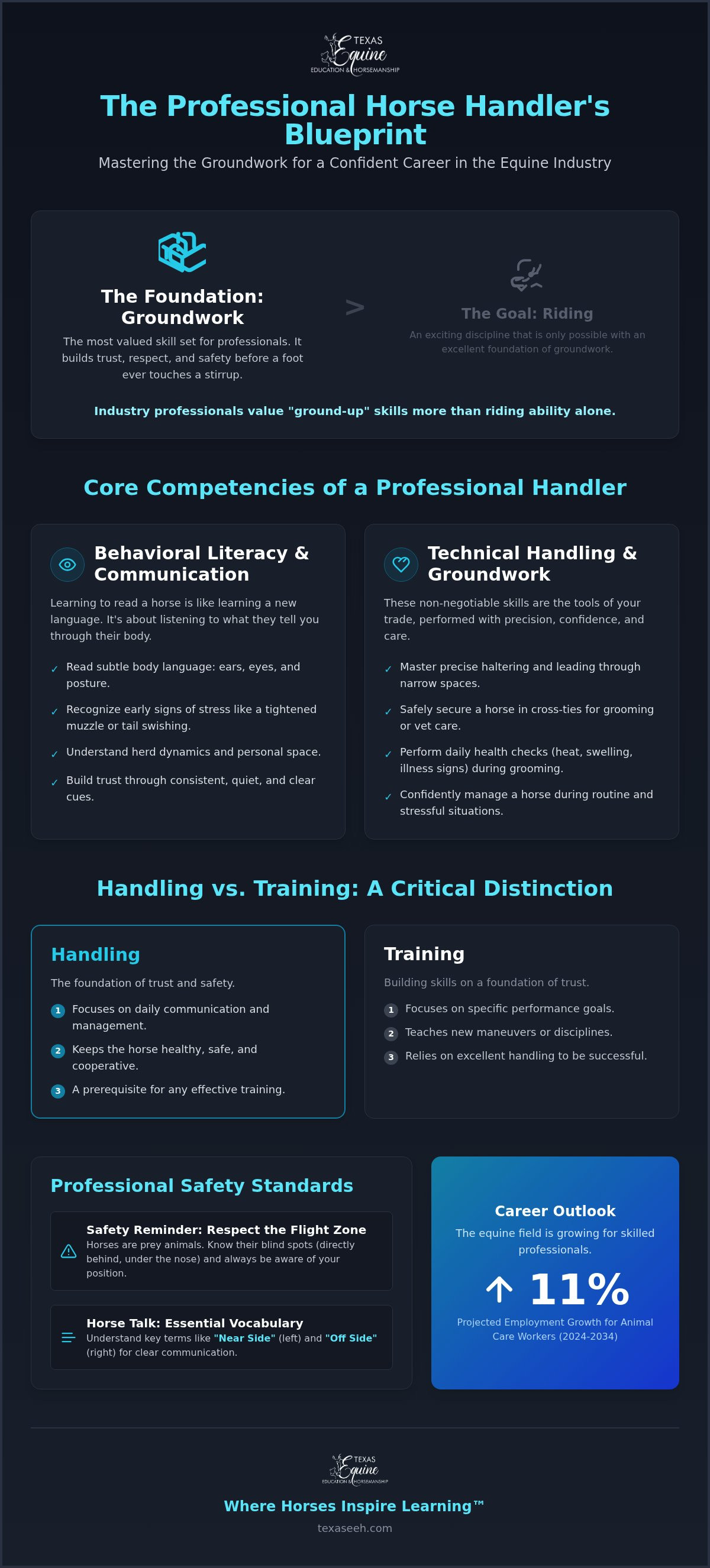
A high quality professional horse handler course focuses on the essential skills that happen before a foot ever touches a stirrup. It's the mastery of groundwork, safety protocols, and daily equine management. While riding is a wonderful goal, industry professionals often value "ground-up" skills more than riding ability alone. They need team members who can safely lead a spirited horse, manage a vet visit, or spot a subtle change in behavior. This is a place where horses inspire learning™, and that learning begins with a deep respect for the animal's natural instincts.
Modern facilities are shifting toward behavior-based handling. This means we don't just tell a horse what to do; we listen to what they're telling us. Understanding horse psychology allows you to work with their nature rather than against it, creating a much safer environment for everyone involved.
Texas Equine Tip:
Safety starts before you ever enter the stall. Take a moment to observe the horse's ears, eyes, and body posture from the aisle. This simple check helps you understand their current headspace and ensures a safer interaction for both of you.
The Difference Between Handling and Training
It's easy to confuse these two concepts, but they serve different purposes. Handling focuses on the daily communication and management required to keep a horse healthy and safe. It's the foundation of trust. Training, on the other hand, usually involves specific performance goals or teaching new maneuvers. A professional handler is often the most critical member of a barn staff because they ensure the horse remains calm and cooperative during every routine task. You can't have effective training without excellent handling as a prerequisite.
Industry Standards for Safety and Professionalism
Professionalism in the horse world relies on clear communication and technical precision. Beginners often make the mistake of standing directly in front of a horse or losing focus on their surroundings. A structured curriculum helps you avoid these pitfalls while learning essential "Horse Talk" and practicing consistent safety habits.
Horse Talk: Understanding terms like "near side" (the left side) and "off side" (the right side) ensures you can follow instructions accurately in a fast-paced environment.
Safety Reminders: Always respect the horse's flight zone. Horses are prey animals with a wide range of vision but a blind spot directly behind them and right under their nose. Knowing where to stand is the first rule of professional safety.
By focusing on these foundational elements, you're not just learning a job; you're building a relationship based on clarity and safety. This prepares you for more advanced roles and ensures you're a valuable asset to any equine team.
Core Competencies of a Professional Equine Handler
Becoming a competent professional requires more than just a love for horses. It's a growing field, with industry projections showing that employment for animal care workers is expected to grow 11% between 2024 and 2034. A comprehensive professional horse handler course focuses on building core competencies through patient repetition and careful observation. This is where horses inspire learning™ by teaching us how to be present and clear in our intentions during every interaction.
Behavioral Literacy and Communication
Learning to read a horse is like learning a new language. You begin by observing herd dynamics. By watching how horses interact with each other in a group, you gain insight into how they view leadership and personal space. Recognizing early signs of stress, such as a tightened muzzle, tail swishing, or a subtle shift in weight, allows you to adjust your approach before a situation escalates. Building trust doesn't happen through big gestures. It happens through consistent, quiet cues that let the horse know exactly what to expect from you.
Technical Handling and Groundwork Mastery
Technical skills are the tools of your trade. Precision in haltering, leading through narrow gates, and securing a horse in cross-ties are non-negotiable for professional readiness. A professional horse handler course also emphasizes the technical precision needed for daily tasks. These movements might seem simple, but performing them with confidence and care sets the tone for the entire interaction.
Even daily grooming is a trust-building exercise. It's an opportunity to check for heat, swelling, or signs of illness. Understanding these health indicators is a vital part of handling. For those looking to dive deeper into this connection, our Equine Health and Care Classes provide a thorough look at ground-up horsemanship. If you're eager to develop these job-ready skills, you can explore our educational programs to find the right fit for your goals.
Instructor Insight:
There's a direct link between calm handling and equine welfare. When a handler remains composed and predictable, the horse's cortisol levels stay lower. This creates a state of emotional stability, making the horse more receptive to learning and less prone to injury.
By mastering these competencies, you ensure you're ready for the physical and mental demands of the industry. It's about becoming a reliable partner for the horse and a valuable asset to any equine facility.
Evaluating Certification: What to Look for in a Course
Choosing the right professional horse handler course is a decision that shapes your future career. It's about more than just a piece of paper; it's about gaining the quiet confidence that comes from real-world experience. When you're looking at different programs, you should consider whether the curriculum prioritizes the well-being of the horse and the safety of the handler. A high quality course acts as a bridge, moving you from an enthusiast to a capable professional who understands the "why" behind every action.
Academic Rigor vs. Hands-On Internship Segments
While textbooks provide a necessary foundation, theory alone cannot prepare you for the physical reality of a 1,200-pound animal. Horses are living, breathing partners with their own personalities and moods. This is why we value 8-week internship segments that allow you to apply what you've learned in a supervised, supportive environment. These shorter, focused blocks of learning help you build a professional portfolio that demonstrates your practical skills to future employers. It's also important to evaluate the pedigree of the education provider. You want to learn from mentors who have spent years in the field and who prioritize an "education-first" philosophy.
Flexibility and Career Readiness
Many aspiring professionals are currently balancing their education with university or full-time work. Modular learning is essential for these students, as it allows for certifications to be completed consecutively or over time as your schedule permits. This flexible approach helps bridge the skills gap between an equine science degree and the practical needs of a busy barn. It ensures that you're job-ready without having to sacrifice your other commitments. We believe that this is "Where Horses Inspire Learning™," and providing a path that fits your life is part of that mission.
If you're ready to take the next step in your professional development, you can explore our equine internships to see how hands-on learning fits into your life. This practical experience is what truly sets you apart in the competitive equine industry.
Did You Know?
A truly comprehensive certification should reflect your ability to handle diverse horse temperaments. A professional doesn't just work with the easy horses; they have the skills to remain calm and effective with sensitive or high-energy animals too.
Advancing Your Career with the Equine Industry Readiness Program™
Choosing to enroll in a professional horse handler course is a significant step toward a career where horses inspire learning™. Our Equine Industry Readiness Program™ is designed to turn that inspiration into a tangible, professional skill set. By focusing on a ground-up approach, we ensure that every student develops the quiet authority and technical precision required by the modern equine industry. This program isn't just about finishing a checklist; it's about becoming a reliable, knowledgeable advocate for the horses in your care.
The 8-Week Internship Certification Model
Our model breaks the learning journey into manageable 8-week segments. These modules focus on Foundational Horsemanship, Equine Care, and Stable Management. Because these segments are shorter, they fit perfectly into university schedules or seasonal breaks from work. You'll spend your time in a mentored environment, applying what you've learned to real-world scenarios. This hands-on repetition builds a level of confidence that classroom study alone cannot provide. You can explore our equine internships to see how these segments are structured to support your growth.
Beyond the Certificate: Building Professional Confidence
The skills you gain here reach far beyond the barn doors. Mastering the nuances of equine communication improves your ability to lead and communicate in any professional field. Whether you're aiming for a role in a veterinary clinic, a high-traffic boarding facility, or a performance training barn, your ability to handle horses safely and calmly will set you apart. These practical applications ensure you are ready for the physical and mental demands of a professional environment from day one. You're also joining a community of like-minded professionals who value education, stability, and integrity.
We encourage you to continue your learning and stay connected with the equine world. Every horse you meet has something new to teach you, and every day is an opportunity to refine your craft. If you're ready to begin this transformative experience, explore our additional educational resources to find the path that's right for you.
Taking Your First Step Toward Professional Horsemanship
Transitioning from a horse enthusiast to a respected professional is a journey built on foundational ground skills and a deep understanding of equine behavior. You've seen that true industry readiness isn't about how well you ride; it's about your ability to communicate safely and effectively with a 1,200-pound partner. By prioritizing behavioral literacy and technical precision, you become an invaluable asset to any veterinary, boarding, or training facility.
Choosing the right professional horse handler course provides the structure you need to build this expertise with confidence. Our Equine Industry Readiness Program™ offers a trademarked curriculum through flexible 8-week internship segments. This nurturing, mentor-led environment ensures you gain practical experience without feeling overwhelmed by your existing university or work commitments. It's a place where horses inspire learning™ and where your growth as a handler is our primary mission.
We invite you to explore our Equine Industry Readiness Program™ and internships as you continue your educational journey. The equine industry is waiting for dedicated, capable handlers like you, and we're here to walk beside you every step of the way.
Common Questions About Equine Professional Readiness
What is a professional horse handler course and who is it for?
A professional horse handler course is a specialized educational program that focuses on ground-up horsemanship, safety standards, and behavioral literacy. It's designed for aspiring professionals, university students, and those looking to enter the equine workforce with confidence. Whether you're a first-time rider or someone looking to formalize years of experience, this course provides a supportive environment where horses inspire learning™ through practical, mentor-led instruction.
Can I take a horse handler course if I have never owned a horse?
You don't need to own a horse to enroll in a professional horse handler course. In fact, these programs are ideal for individuals who want to gain experience before making the commitment of ownership. Our curriculum provides the necessary access to horses and professional mentors, allowing you to develop technical skills like leading, grooming, and health management in a safe, controlled environment. We prioritize accessibility for all learners.
How long does it take to earn an equine industry certification?
The timeline for earning a certification depends on your personal schedule and career goals. Our Equine Industry Readiness Program™ is structured into flexible 8-week internship segments, allowing you to complete modules consecutively or over several seasons. This modular approach is particularly helpful for university students or working professionals who need to balance their education with other responsibilities. Most students find that these focused segments provide a clear, steady path toward achieving their credentials.
What is the difference between a horse trainer and a horse handler?
While both roles are vital, a horse handler focuses on the daily management, safety, and foundational communication that occurs on the ground. Handling is the prerequisite for all advanced work. A horse trainer typically works toward specific performance or riding goals, such as teaching a horse new maneuvers for a discipline. A handler ensures the horse remains calm and cooperative during routine tasks, which is the essential groundwork that makes successful training possible.
Are equine internships available for college credit through these courses?
Many university students successfully use our 8-week internship segments to fulfill their academic requirements for college credit. While the specific approval process depends on your individual institution and degree program, we provide the necessary documentation and professional mentorship to support your application. These internships offer a bridge between academic equine science degrees and the practical, hands-on skills required in the industry, making you a more competitive candidate after graduation.
What career opportunities are available for certified horse handlers?
Certified handlers are in high demand across various sectors of the equine world. You might find opportunities in veterinary clinics as an assistant, in large boarding facilities as a barn manager, or in professional training stables as a lead groom. With the animal care industry projected to grow 11% through 2034, there are approximately 81,700 job openings projected annually. Your certification demonstrates a commitment to safety and excellence that employers value.


Comments