


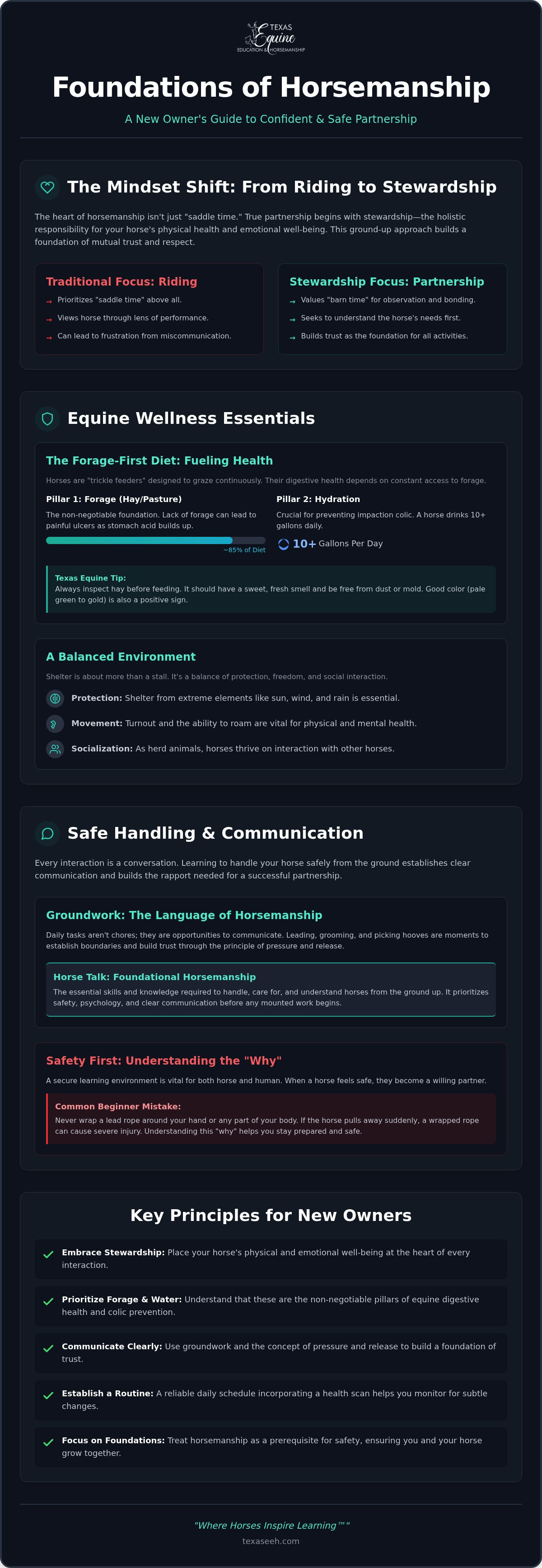
Horse Care for New Owners: A Guide to Horsemanship

What if the most important tool in your barn isn't a high-end saddle or a new lead rope, but your own ability to listen to what your horse is telling you? Bringing a horse into your life is a significant milestone, yet it's completely natural to feel a bit overwhelmed by the flood of conflicting advice regarding horse care for new owners. You want to provide the best possible life for your new companion, but the uncertainty of reading body language or managing maintenance costs can feel like a heavy weight on your shoulders. It's a journey that requires patience, and we're here to walk that path beside you.
We believe that effective stewardship begins with a foundation of mutual respect and education, transforming that initial worry into a steady, confident partnership. In this guide, we'll explore the essentials of horsemanship through a lens that prioritizes safety and holistic health. You'll gain a clear understanding of nutritional needs, learn to interpret behavioral cues, and discover how a structured routine prevents burnout while fostering a deep bond. By focusing on the "why" behind every action, you'll move past simple checklists and start seeing the world through your horse's eyes, ensuring a journey that's truly rewarding for both of you.
Table of Contents
The New Owner Mindset: Shifting from Riding to Stewardship
Becoming a horse owner is the fulfillment of a lifelong dream for many. However, the transition from being a student at a lesson barn to being the primary caregiver requires a profound shift in perspective. We call this stewardship. Stewardship is the holistic responsibility for your horse’s physical health and emotional peace. While many beginners focus on "saddle time," the true heart of horse care for new owners is found in "barn time." It's during these quiet moments of grooming, feeding, and stall cleaning that you truly learn who your horse is and what they need to thrive.
Where Horses Inspire Learning™, we see every interaction as a chance to grow. If you approach your horse with a desire to observe rather than just an agenda to ride, you'll find they are incredible teachers of patience and presence. Foundational horsemanship must always precede riding. This ground-up approach ensures that when you do finally step into the stirrup, you're doing so on a foundation of mutual trust rather than just mechanical control. This mindset prevents the frustration that often stems from a lack of communication.
Ground-Up Horsemanship: Why Your Journey Starts in the Barn
Learning horse behavior begins with your feet firmly on the ground. Every time you lead your horse to the pasture or pick their hooves, you're communicating. These daily tasks aren't just chores; they are opportunities to establish boundaries and build a rapport. By watching how your horse reacts to your movements and energy, you develop the intuition needed for a successful partnership. It's a step-by-step process where progress is measured in trust, not just trophies.
Horse Talk: Foundational Horsemanship
This term refers to the essential skills and knowledge required to handle, care for, and understand horses from the ground up. It prioritizes safety, psychology, and clear communication before any mounted work begins.
Safety First: Establishing a Secure Learning Environment
Safety is the most vital component of any equine environment. It's not just about following rules; it's about understanding the "why" behind them. For instance, you should never wrap a lead rope around your hand. If a horse spooks and pulls away, a wrapped rope can cause severe injury. Understanding these risks helps you stay calm and prepared. For those seeking a comprehensive guide to horse management, remember that a secure environment allows both the human and the horse to feel safe enough to learn. When a horse feels safe, they become a willing partner in your education.
Equine Wellness Essentials: Nutrition, Shelter, and Professional Care
A horse’s health is built from the inside out. Their digestive system is unique; they are "trickle feeders" designed to eat small amounts of forage almost constantly throughout the day. This physiological need makes high-quality hay or pasture the non-negotiable foundation of horse care for new owners. Without steady access to forage, the stomach continues to produce acid, which can lead to painful ulcers. Similarly, clean and consistent water access is vital. A horse may drink 10 gallons or more daily, and a lack of hydration is a primary cause of impaction colic, a serious and potentially life-threatening digestive blockage.
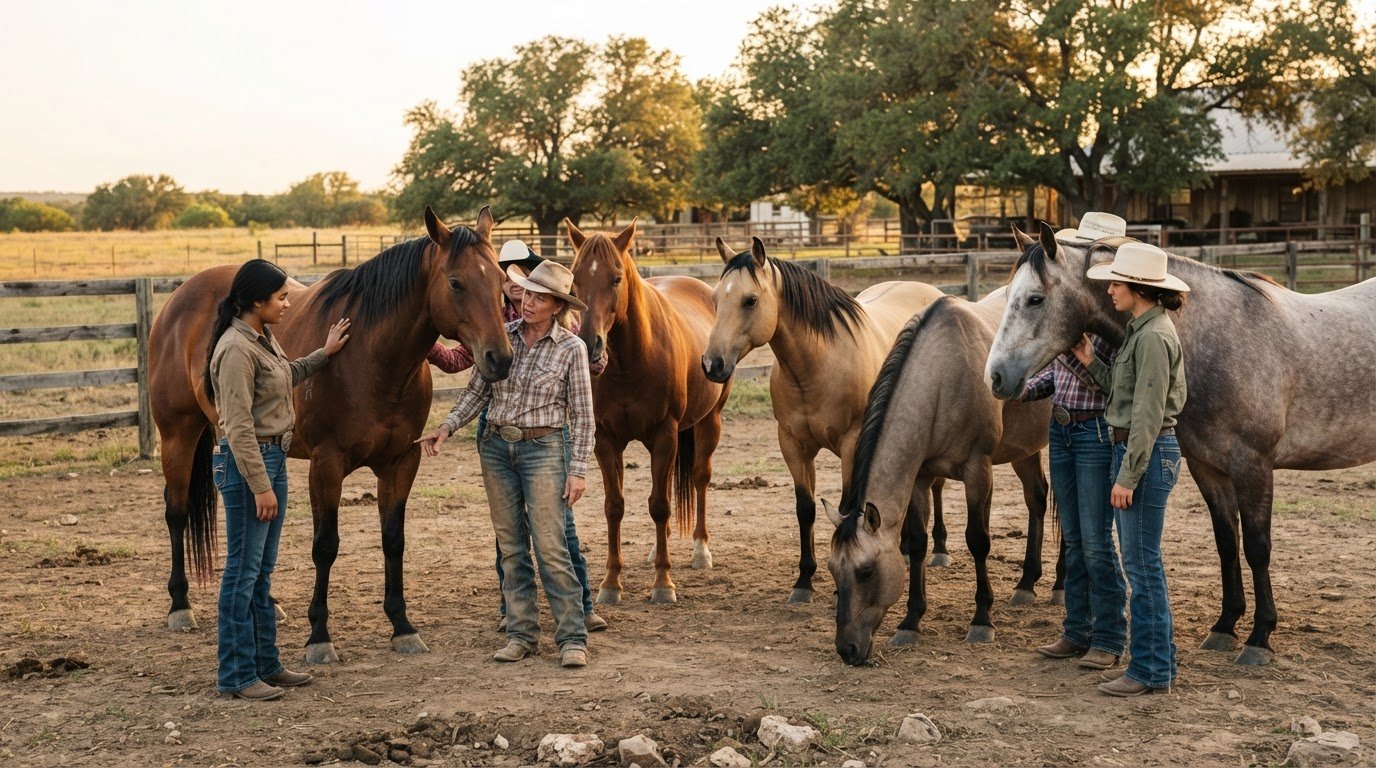
While we often think of shelter as a barn or a stall, a horse's primary need is protection from extreme elements like driving rain or scorching sun. However, physical shelter should never come at the cost of movement and socialization. Horses are herd animals that thrive on interaction and the ability to roam. Understanding these natural requirements is a core part of Responsible Horse Ownership. Balancing a safe resting area with plenty of turnout time ensures your horse remains mentally stable and physically fit.
The Forage-First Diet: Understanding Equine Digestion
The equine hindgut is a complex fermentation vat that requires fiber to function correctly. If a horse goes for long periods without eating, their gut motility can slow down, leading to health complications. Supplements can be helpful, but they should only be used as "gap-fillers" to provide specific minerals or vitamins missing from the local soil or hay. They aren't a replacement for the bulk provided by good forage.
Texas Equine Tip:
Always inspect your hay before feeding. Look for a sweet smell and a green or golden hue. If you notice dust, a musty odor, or "hot" spots inside a bale, discard it immediately. Moldy hay is toxic to horses and can cause permanent lung damage or severe colic.
Routine Professional Care: Farriers, Vets, and Dentists
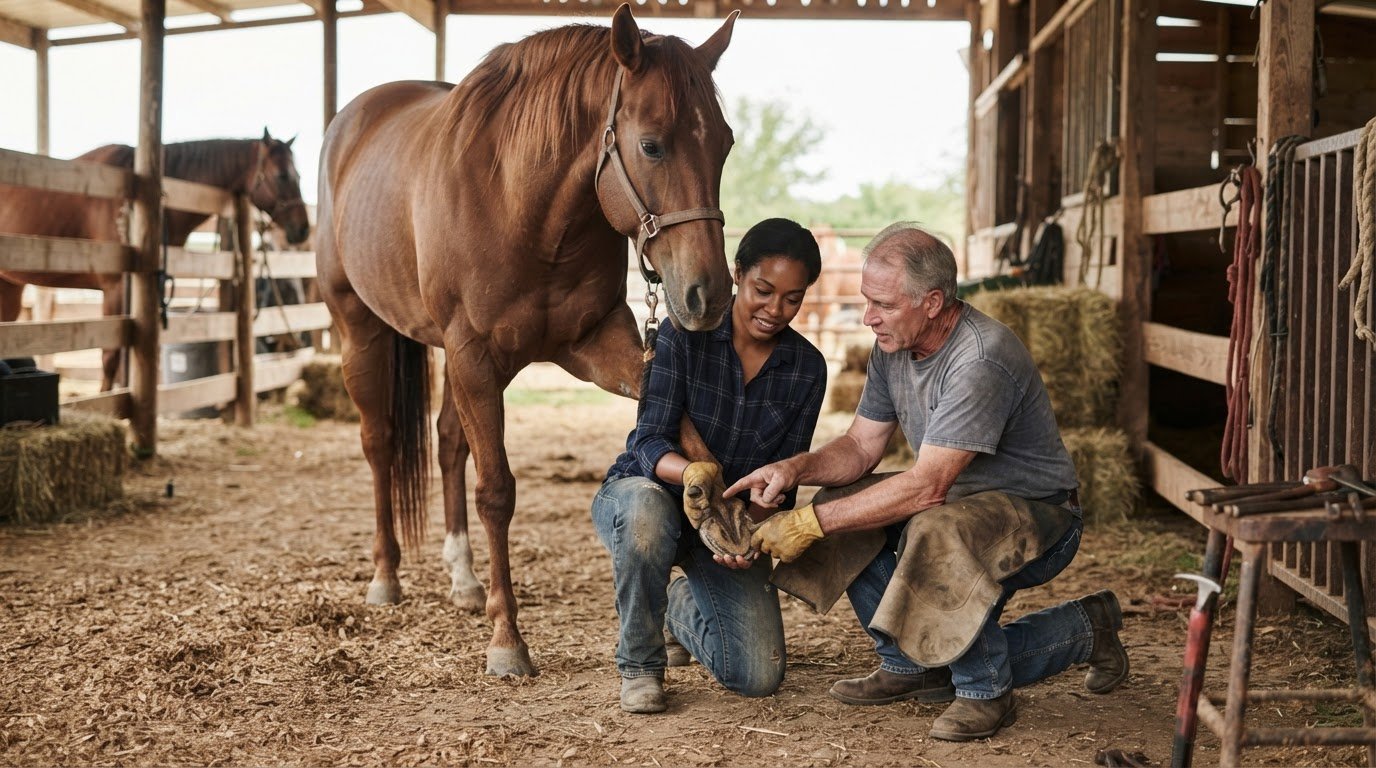
No owner is an island. You'll need a "Professional Support Team" consisting of a veterinarian, a farrier, and an experienced mentor. Most horses require hoof trimming or shoeing every 6 to 8 weeks to maintain proper balance. Additionally, annual dental exams are necessary to "float" or smooth down sharp enamel points that naturally develop on their teeth. We explore these maintenance schedules in depth during our Equine Care Classes, which help you stay ahead of your horse's needs.
Safe Handling and Groundwork: Communicating with Your Horse
Groundwork is the shared language of horsemanship. It's the conversation you have with your horse before you ever mount, establishing you as a reliable and clear leader. The primary way horses learn is through a concept called "Pressure and Release." When you ask a horse to move or change their focus, you apply a subtle cue (pressure). The moment they respond correctly, you immediately remove that cue (release). This release is the reward that tells the horse they've made the right choice. Consistency is the most important element of horse care for new owners. If your cues are the same every time, your horse won't feel confused or frustrated, leading to a much safer and more peaceful partnership.
Instructor Insight: The Instinctive Mind
Horses are prey animals, meaning their "fight or flight" instinct is always active. If a horse feels cornered or surprised, their first reaction is often to move away from the perceived danger. Understanding this helps you remain patient when they react to things that seem small to us, like a rustling leaf or a sudden shadow. Your calm presence helps them feel secure.
Horse Behavior 101: Reading Body Language and Social Cues
A horse’s body language tells you exactly how they feel. Pinned ears usually signal anger or pain, while ears flicking back and forth show they're paying attention to you. You might hear a soft "nicker" when they're happy to see you, or see them "spook" (jump suddenly) if they're startled. To stay safe, always approach from the shoulder rather than directly from the front or back. This keeps you in their line of sight and out of their natural blind spots.
The Five Essential Groundwork Skills for Every New Owner
Mastering these five skills will build your confidence and ensure your horse understands your boundaries:
Step 1: Haltering and unhaltering safely. Move slowly and avoid "crowding" the horse's face; let them accept the halter willingly.
Step 2: Leading with a loose lead rope. Your horse should walk calmly beside you while maintaining a respectful distance from your personal space.
Step 3: Yielding the hindquarters and forequarters. Asking the horse to move their body away from your steady pressure establishes respect and control.
Step 4: Backing up on a light cue. A horse that backs up easily is focused and showing they recognize your leadership.
Step 5: Standing patiently. Your horse should wait quietly for grooming and tacking without walking off or fidgeting.
Refining these skills is a step-by-step process that pays off every time you interact with your horse. To build your confidence in daily handling, explore our Horsemanship Lessons for personalized guidance.
Creating Your Daily Care Routine and Continuing Your Education
A structured routine is the heartbeat of horse care for new owners. It provides emotional stability for the horse and a clear baseline for the owner. Beyond the physical tasks, your daily routine serves as a vital diagnostic tool. We recommend starting every visit with a "Daily Health Scan." Run your hands down each leg to check for unusual heat or swelling. Look at the eyes for any cloudiness or discharge, and if you're trained to do so, listen for the steady gurgling of gut sounds. These small, intentional checks help you catch potential health changes before they become emergencies.
The Daily Health and Happiness Checklist
Consistency builds trust. By following a predictable schedule, you help your horse feel secure in their environment. Your daily checklist should include:
Morning and Evening Care: Verify that water sources are clean and functioning. Remove manure from stalls or high-traffic pasture areas to manage parasites and hoof health.
Grooming and Hoof Care: Picking your horse's feet is arguably the most important 30 seconds of your day. It allows you to check for lodged stones, loose shoes, or signs of thrush.
Quiet Observation: Spend five minutes simply watching your horse in the field. Observe their movement and how they interact with herd mates. This "quiet time" is where you learn to recognize their unique personality and normal behavior patterns.
Beyond the Basics: Where Horses Inspire Lifelong Learning
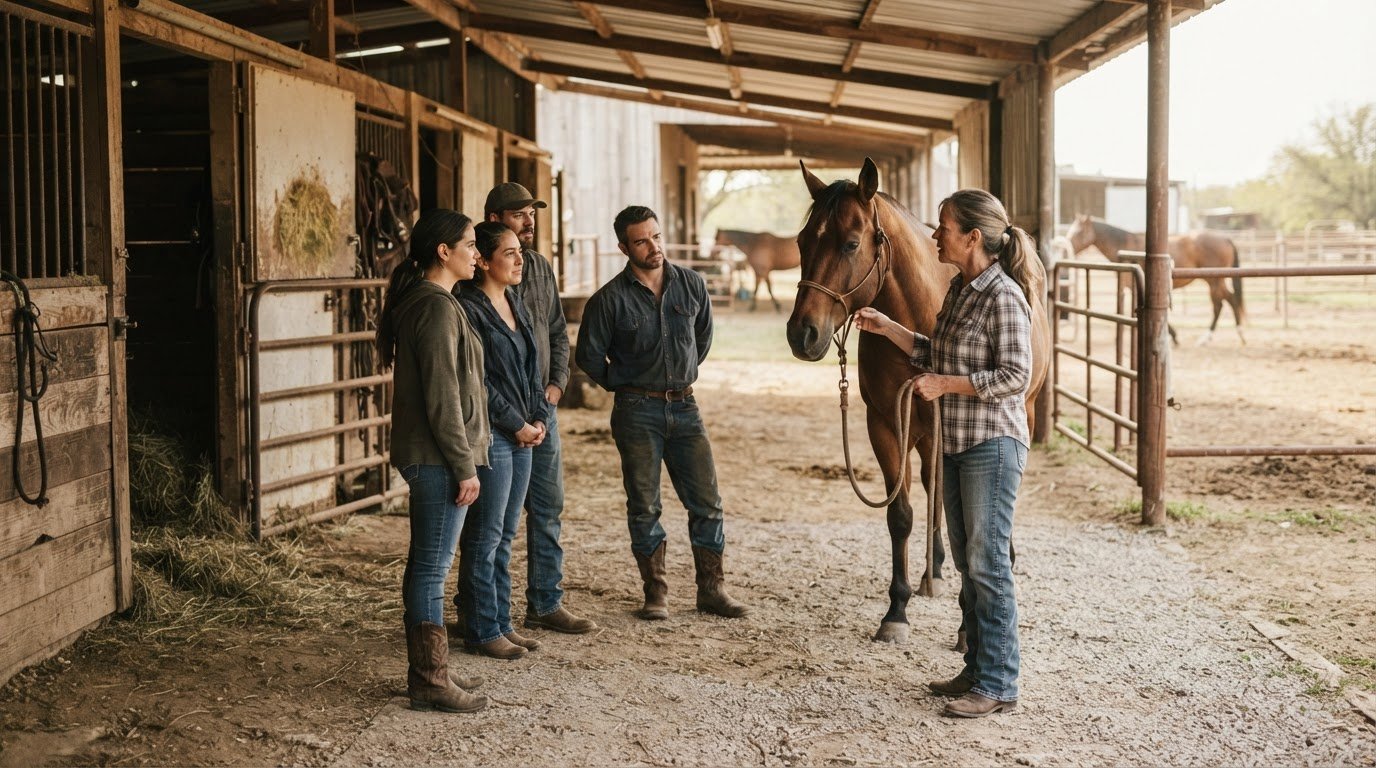
True horsemanship is a journey without a finish line. We encourage you to view every challenge, from a difficult leading session to a minor health scrape, as an educational milestone. For younger learners, programs like The Reading Rein™ provide a nurturing environment where literacy and equine knowledge grow together. Adults and families looking to deepen their technical expertise can benefit from formal Equine Care Classes, which offer hands-on guidance from experienced educators.
If you find that your passion for horses is evolving into a career interest, the Equine Industry Readiness Program™ offers a structured path toward professional excellence. Regardless of your goals, remember this final safety reminder: never stop being a student. The safest horsemen are those who remain curious, patient, and dedicated to their ongoing education. By prioritizing learning, you ensure that your partnership with your horse remains a source of joy and growth for years to come.
Building Your Future in Horsemanship
Mastering horse care for new owners isn't a destination; it's a commitment to a steady, lifelong learning process. By shifting your focus from "saddle time" to holistic stewardship, you've already taken the most important step toward a safe and successful partnership. Remember that groundwork is the language of trust, and your daily routine is the foundation of your horse's health. These small, consistent actions build a bond that lasts a lifetime.
We provide a safe, family-friendly learning environment where you can develop these skills with confidence. Our education-first approach ensures you understand the "why" behind every action, and we even offer professional certification modules for those who wish to pursue a career in the industry. Continue your learning with our foundational Equine Care Classes to refine your skills under the guidance of experienced mentors. You have everything you need to become the partner your horse deserves, and we're honored to walk beside you on this path.
Frequently Asked Questions
How much does it truly cost to care for a horse each month?
On average, monthly expenses range from $500 to $1,800. This variability depends on whether you choose pasture board, which averages $150 to $400, or full stall board, which can reach $1,200. You should also budget $150 to $400 for feed and set aside funds for farrier visits every six to eight weeks. Including routine veterinary care and insurance, the total annual commitment often falls between $6,000 and $15,000 for a single horse.
Can I keep a horse alone, or do they always need a companion?
Horses are social herd animals that thrive on the presence of others. Keeping a horse in total isolation often leads to stress, anxiety, and behavioral issues like wood chewing or pacing. While a second horse is ideal, some owners find success with a donkey, goat, or pony as a companion. Providing a social environment is a key part of horse care for new owners, ensuring your horse feels safe and emotionally balanced.
What are the most common mistakes new horse owners make?
One frequent error is over-supplementing the diet while overlooking the quality of foundational forage. Another mistake is skipping groundwork to focus solely on riding, which can lead to communication breakdowns and safety risks. New owners also sometimes underestimate the hidden costs of routine maintenance, such as dental floating or emergency vet calls. Avoiding these pitfalls in horse care for new owners requires a commitment to ongoing education and a willingness to listen to your horse’s subtle feedback.
How much time should I expect to spend on daily horse care?
You should plan for at least one to two hours of dedicated time each day. This includes feeding, checking water sources, and cleaning stalls or paddocks. A thorough health scan and grooming session are essential for monitoring your horse's well-being. If you're also working on groundwork or riding, your time at the barn will likely extend to three or four hours. Consistency is vital for building a stable and trusting partnership with your horse.
What should I have in my equine first-aid kit for emergencies?
A well-stocked kit is essential for managing minor injuries before the vet arrives. You should include a digital thermometer, a stethoscope for checking gut sounds, and various bandages like Vetrap or standing wraps. Antiseptic washes, saline for eye flushing, and blunt-ended scissors are also necessary. Don't forget a clean bucket and a flashlight. Keeping these items in a dedicated, waterproof container ensures you're ready to act calmly and effectively if an unexpected emergency occurs.
Do I need a professional trainer if I already know how to ride?
Even experienced riders benefit from the objective eye of a professional instructor. A mentor helps you identify subtle habits in your handling and ensures that your groundwork remains clear and consistent. Horsemanship is a continuous journey, and having a guide prevents the frustration that comes from misunderstandings between you and your horse. Working with a trainer reinforces safety and helps you refine the skills necessary for a truly harmonious and lifelong partnership with your horse.


Comments