


Inside a Children's Equine Learning Center: Where Horses Inspire Learning™
- Kim Williams

- 11 minutes ago
- 9 min read
Imagine a young student standing in a quiet barn, not holding reins to ride, but holding a book to read aloud to a patient, four-legged listener. It's a moment where the pressure of the classroom disappears, replaced by the steady, calming presence of a horse. Many parents want their children to experience the beauty of horses, yet they often worry that traditional riding lessons might be too intense or focus solely on mechanics rather than true connection. It's natural to feel concerned that a stable might be a riding mill where safety and individual instruction take a backseat to volume.
This article will show you how a dedicated childrens equine learning center provides a different path, blending literacy with foundational horsemanship to build lasting confidence. We believe that education must always come before the saddle, starting with the essential groundwork that establishes trust and safety. You'll learn about the science behind how horses reduce stress, why the ground-up approach is the safest entry point for families, and how programs like The Reading Rein help even the most reluctant readers find joy in their books through a supportive, horse-inspired environment.
Table of Contents
Beyond the Saddle: Defining the Children's Equine Learning Center
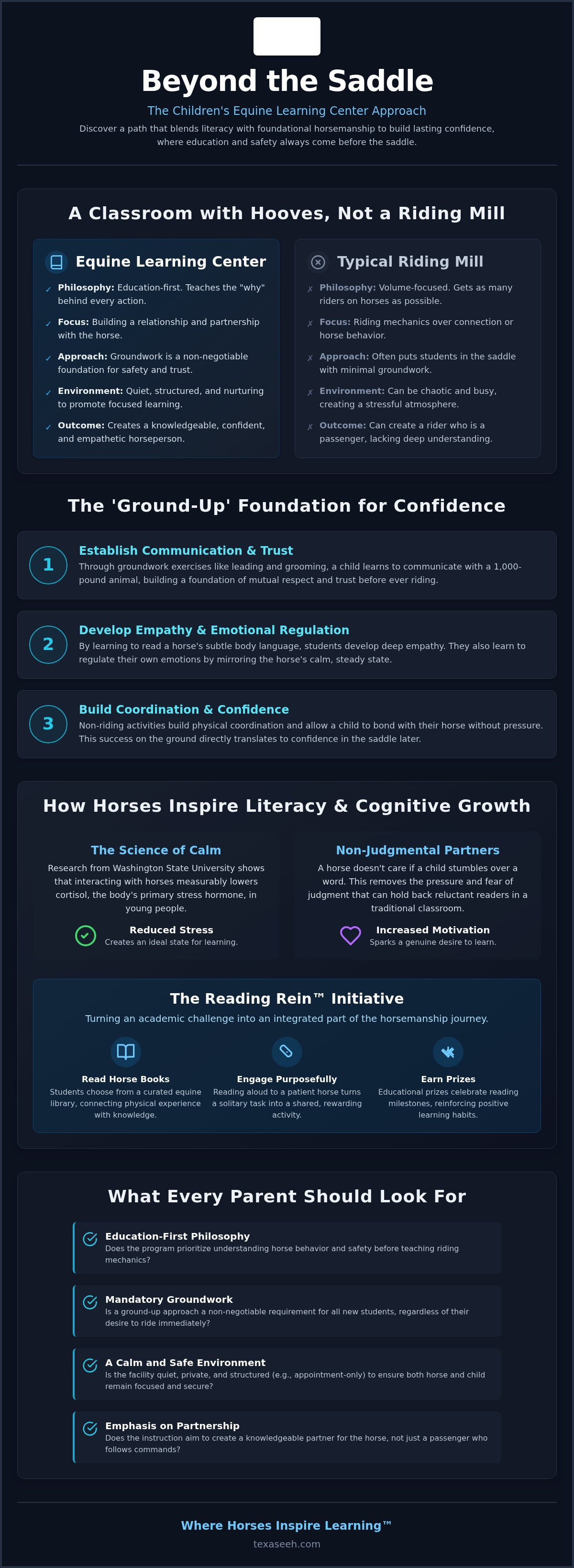
When you walk into a childrens equine learning center, you'll notice it feels different than a bustling commercial stable. It's a classroom with hooves; the focus is on the student's development as much as the horse's care. While a riding mill might focus on getting as many students on horses as possible, a learning center prioritizes the relationship and the "why" behind every movement. This education-first philosophy means we teach students to understand horse behavior and language before they ever put a foot in the stirrup.
This approach creates a structured and nurturing environment where all learning styles can thrive. By focusing on foundational horsemanship, we ensure that children aren't just passengers. They're becoming knowledgeable partners with their horses. When selecting a childrens equine learning center, look for this emphasis on the "why" over the "how fast."
The 'Ground-Up' Educational Philosophy
Groundwork is the essential foundation for every young student. It's where we build trust. When a child learns to lead a thousand-pound animal or groom it with care, they're practicing horse psychology. This process builds deep empathy as they learn to read subtle cues, like the flick of an ear. Benefits of this ground-up approach include:
Establishing clear communication before getting in the saddle.
Building physical coordination through grooming and leading.
Developing emotional regulation by mirroring the horse's calm state.
Much like the principles found in Equine-assisted therapy, this interaction fosters emotional growth. Horse Talk:Groundwork refers to any exercise where the handler is on the ground instead of in the saddle. It's the primary way we teach a horse to respect our personal space.
Instructor Insight: Starting with non-riding equine care allows a child to bond with the horse without the physical pressure of riding. It builds their confidence in their own ability to communicate effectively.
Creating a Safe Space for Discovery
Our environment is designed for focus. We maintain a quiet, appointment-only facility to prevent the chaos of a public stable. This tranquility helps children feel safe to ask questions. Within this space, we provide a curated equine library, encouraging students to connect their physical experiences with written knowledge. Horses are non-judgmental partners; they don't care if a child struggles with a word. They simply respond to the energy the child brings. You can explore our specific educational services to see how this philosophy translates into our daily programs.
Safety Reminder: A calm environment isn't just about peace of mind. It's a critical safety measure. Horses are prey animals and react to their surroundings. A structured, quiet facility ensures both the horse and the child stay focused and secure.
How Horses Inspire Literacy and Cognitive Growth
Inside a childrens equine learning center, we see how the desire to understand a horse can transform a child's relationship with learning. Many students who find sitting at a desk difficult will spend hours researching horse breeds or care techniques. This isn't just a feeling; research from Washington State University shows that interacting with horses can measurably lower cortisol, a stress hormone, in youth. When a child feels a genuine connection to their equine partner, their motivation to explore the written word often grows alongside that bond.
The environment of a childrens equine learning center is uniquely suited for this work because it removes the traditional barriers of a classroom. For reluctant readers, the motivation to learn about their favorite pony often outweighs the struggle of decoding words. By using horse-themed books, we help children engage with text in a way that feels like a reward rather than a chore.
The Reading Rein™: A Nationwide Literacy Initiative
Our nationwide literacy program, The Reading Rein, encourages children to dive into equine literature with purpose. Students read horse books and earn educational prizes that celebrate their milestones. This system turns a challenging academic task into an integrated part of their horsemanship journey. Our curated library provides students with easy access to stories and technical guides that spark their curiosity. To help your child get started with their reading goals, you can explore the resources available through The Reading Rein.
Critical Thinking and Problem Solving in the Barn
Beyond reading, the barn serves as a laboratory for logic and problem-solving. In our equine care classes, students learn the "why" behind every routine. They calculate feed ratios and learn to identify subtle changes in a horse's health, which requires full presence and focus. We also foster creative expression through equine art shows. These events allow students to translate their connection with horses into visual stories, further developing their cognitive and creative skills.
Texas Equine Tip: Use 'Horse Talk' to build language skills at home. Encourage your child to explain terms like withers, fetlock, or curry comb. This practice builds their descriptive vocabulary and reinforces their confidence as budding experts.
The Priority of Safety: Building Confidence from the Ground Up
Safety is more than just wearing a helmet. At a childrens equine learning center, we view safety as a comprehensive educational process. We don't just tell children what to do; we explain the "why" behind every safety rule. This helps them develop a deep sense of responsibility and awareness. By focusing on the ground first, we ensure that every child feels secure and capable before they ever consider mounting.
Our Tiny Tot philosophy centers on gentle, non-riding interactions for our youngest learners. These early sessions focus on building a positive association with horses through observation and light grooming. It's about creating a safe emotional space where children can explore without pressure. This aligns with research on emotional safety in equine learning which highlights how a supportive environment helps young people manage their feelings and build lasting resilience.
A common beginner mistake is thinking that riding is the only way to learn. Rushing into the saddle before a child understands horse behavior can lead to anxiety or fear. By mastering ground skills first, we ensure the child has the confidence to handle the horse effectively. Proper attire is also essential; sturdy boots with a heel and a correctly fitted riding helmet are non-negotiable for every session.
Safety Reminder: Groundwork must always be a supervised activity. We teach children to always stay in a safe position relative to the horse's body, ensuring they are visible to the animal at all times. This constant supervision builds good habits that last a lifetime.
Mastering the First Five Skills
We focus on core skills that establish a safe foundation. These include:
Approaching: Learning to read the horse's body language to ensure they're ready for interaction.
The Halter: Developing the physical coordination and mutual respect needed to secure a horse.
Grooming: A vital sensory experience where children learn to bond while checking for the horse's well-being.
Building Trust Through Groundwork
Leading a horse requires a child to step into a leadership role. When they successfully guide a thousand-pound animal, their self-assurance grows. Instructor Insight: Horses provide immediate feedback to a child's energy. If a child is frantic, the horse will be restless. If the child is calm, the horse will settle. This teaches emotional regulation in real-time. Once these ground skills are solid, students are ready for their first foundational horsemanship services, where they can begin their riding journey with a base of true confidence.
Evaluating Equine Education: What Every Parent Should Look For
Choosing a childrens equine learning center is about finding a sanctuary where your child can grow at their own pace. A high-quality educational facility will always prioritize a structured curriculum over a high volume of riders. When you visit a potential stable, observe the atmosphere. Is it quiet and organized, or does it feel like a chaotic riding mill? A true learning center focuses on the "why" of horsemanship, ensuring students understand horse behavior before they ever attempt to mount.
Ask potential instructors about their background and certifications. You should also inquire about their specific safety protocols, such as their adherence to the latest equestrian helmet safety standards. Professional instructors are happy to explain their teaching techniques and how they manage group control to keep every student safe. This transparency is a hallmark of a reputable childrens equine learning center that values the long-term success of its students.
Virtual and On-Site Learning Opportunities
Learning doesn't have to stop when you leave the barn. We offer "Virtual Education Thursdays" to provide students across the country with consistent access to equine knowledge. This appointment-only model ensures that every student, whether in-person or online, receives personalized instruction. You can even participate in our Horse & Rider Showcase™. This virtual horse show is designed for both English and Western riders to demonstrate their progress and receive professional feedback from the comfort of their home facility.
Long-Term Pathways in Horsemanship
Horsemanship is a journey that evolves as a child grows. For our older students, the Equine Industry Readiness Program™ prepares them for professional opportunities within the horse world. We encourage a lifelong connection to horses that goes beyond just riding, fostering leadership and responsibility. To build a solid base, many families start with our Foundational Horsemanship course. This ground-up guide ensures that every student has the skills needed for long-term success. You can explore our full range of educational programs to find the right fit for your child's current level of experience.
Starting Your Child’s Journey in Horsemanship
Finding the right childrens equine learning center is about more than finding a place to ride. It's about choosing a community that values the safety and emotional well-being of your child. By focusing on a ground-up approach, you ensure they develop the leadership skills and confidence needed to interact with horses safely. We've explored how understanding horse behavior creates a foundation for both physical and academic growth, turning every moment in the barn into a meaningful lesson.
Whether your child is a budding equestrian or a reluctant reader, horses offer a unique path to discovery. Our education-first philosophy ensures that every student feels supported as they build their skills step-by-step. To further bridge the gap between horses and academics, continue your learning with The Reading Rein™ literacy program. This nationwide initiative is designed to inspire a love for books through the magic of equine stories. We look forward to seeing your child grow in confidence and knowledge as they discover where horses inspire learning.
Frequently Asked Questions
What is the best age for a child to start at an equine learning center?
We offer Tiny Tot lessons for children as young as toddlers. The best age depends on the individual child's maturity and interest level. For our youngest learners, the focus is on sensory experiences and emotional safety. Older children can engage in more complex horsemanship and cognitive tasks. It's about readiness rather than a specific birthday. We tailor our approach to ensure every student feels safe and successful from their very first visit.
Do children need their own horse to participate in these programs?
No, children don't need their own horse to participate in a childrens equine learning center. We provide well-trained, patient horses that are specifically selected for their temperament and teaching ability. This allows students to learn on different horses, which builds a broader range of skills. If a family eventually decides to purchase a horse, our foundational programs ensure they have the knowledge to make a safe and informed decision for the long term.
How does a horse literacy program actually help with reading skills?
A horse literacy program like The Reading Rein works by leveraging a child's natural interest in animals to overcome reading anxiety. When children read horse-themed books, they're motivated to decode difficult words to learn about their favorite subject. This interest-based learning reduces stress and builds confidence. Students also earn educational prizes for their progress, which turns reading into an integrated and rewarding part of their horsemanship journey while fostering academic growth.
Is groundwork mandatory before a child can start riding lessons?
Yes, groundwork is a mandatory foundation at our childrens equine learning center. We believe that understanding horse behavior and establishing trust from the ground is essential for safety. By learning to lead, groom, and read body language first, students become more confident and capable riders. This ground-up approach ensures that when a child eventually mounts, they've already developed a partnership with the horse based on mutual respect and clear communication.
What should my child wear for their first visit to the learning center?
For a first visit, safety and comfort are the priorities. Your child should wear long pants, such as jeans or leggings, to protect their legs. Footwear is critical; they need sturdy, closed-toe boots with a small heel to prevent their foot from slipping through a stirrup. We also require a correctly fitted equestrian helmet meeting current safety standards. Proper attire ensures that the student can focus on learning without distractions or safety risks.
Can we participate in the literacy program if we don't live near the facility?
Absolutely. The Reading Rein is a nationwide literacy program, meaning children can participate from anywhere in the country. You don't need to live near our physical facility to benefit from the resources and incentives we provide. We also offer Virtual Education opportunities for those who want to supplement their learning from home. This allows us to support young equestrians and readers regardless of their geographic location, fostering a broad community of learners.


Comments