


Red Light Therapy in Horses: What It Is & How It Supports Healing


At Texas Equine Education & Horsemanship, we incorporate a variety of evidence-based therapies to support the health, recovery, and performance of our horses. One of the modalities you may see used in our program is Red Light Therapy, also known as photobiomodulation—a treatment that has been studied and utilized in both human and veterinary medicine for decades.
History & Development
Red Light Therapy traces back to the work of Endre Mester, a Hungarian physician and researcher in the 1960s. His studies demonstrated that low-level laser light could support tissue healing and hair growth, leading to its early use in human medicine for:
Wound healing
Pain management
Reduction of inflammation
By the 1980s, as technology became more accessible, these therapies began to be incorporated into equine rehabilitation settings, particularly for horses recovering from soft tissue injuries.
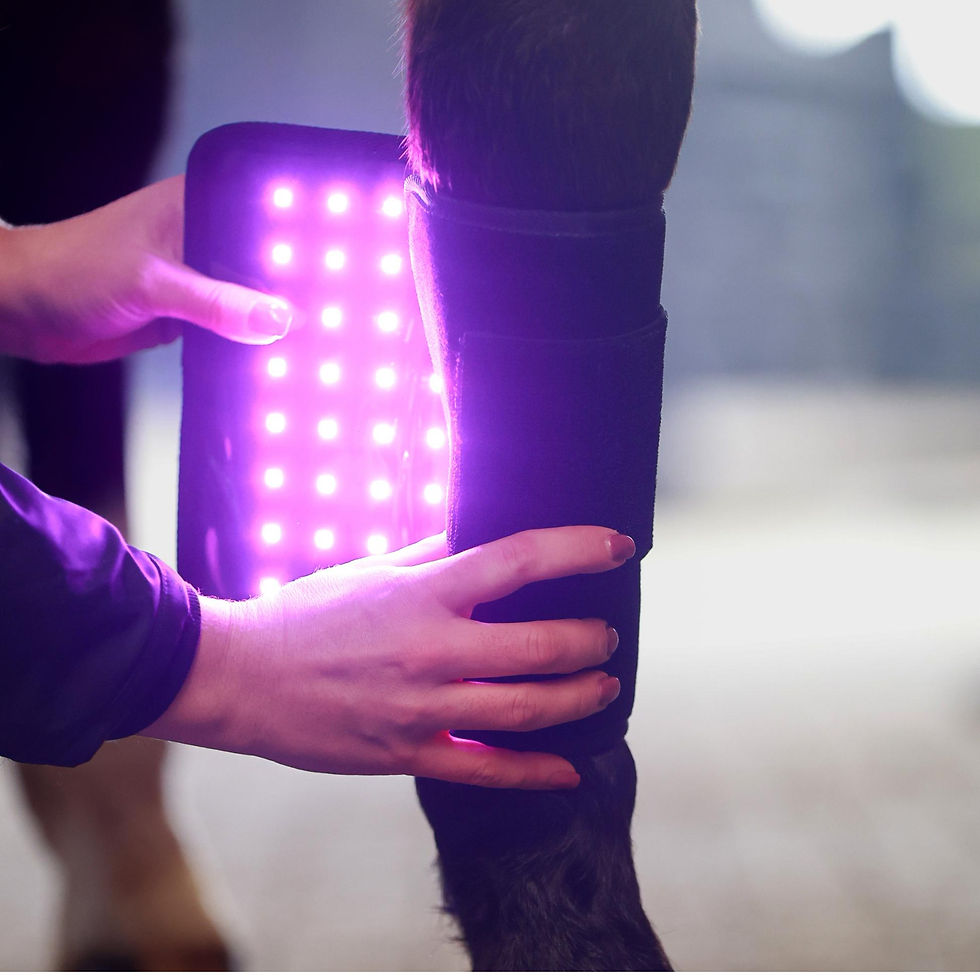
How Red Light Therapy Works
Red Light Therapy uses red and near-infrared wavelengths of light that penetrate the skin and reach underlying tissues. These wavelengths interact with cells at a fundamental level:
Light energy is absorbed by the mitochondria, the “powerhouse” of the cell
This stimulates increased production of ATP (cellular energy)
Increased ATP supports cellular repair and regeneration
Blood flow improves, delivering more oxygen and nutrients to the area
Because infrared light penetrates deeper than visible red light, it can reach muscles, tendons, and ligaments, making it particularly useful in equine applications.

Benefits in Equine Care
Research and clinical use have shown that red light therapy may support:
Reduction of inflammation
Decrease in muscle soreness
Support of tissue repair
Improved circulation to affected areas
In equine settings, it is commonly used as part of a comprehensive rehabilitation program, rather than as a standalone treatment.
Types of Red Light Therapy Devices
Different devices are used depending on the treatment area and severity of the condition:

Handheld Laser Devices
Provide targeted, deeper penetration
Often used by veterinary professionals
LED Wraps & Pads
Cover larger areas such as legs, back, or neck
Commonly used for maintenance and post-exercise recovery
Clinical Laser Systems
High-powered equipment used by veterinarians
Designed for deeper or more severe injuries
Safety & Considerations
While red light therapy is widely used, proper application is essential:
Eye protection is critical—direct exposure can damage the retina
Correct dosage matters:
Too little may have no effect
Too much may slow healing or irritate tissue
Treatment protocols should follow device guidelines or veterinary direction

Cost Overview
Professional-grade treatments (veterinary clinics):
Higher cost due to advanced equipment and expertise
Consumer-grade devices:
Typically range from $300–$600
Used for maintenance or mild conditions
Red Light Therapy at Texas Equine
As part of our commitment to whole-horse wellness, red light therapy is incorporated alongside other supportive modalities to help horses recover, perform, and feel their best. Every horse’s care plan is approached thoughtfully, ensuring treatments are used appropriately and in alignment with veterinary guidance.
Closing Thought:Red Light Therapy is not a cure-all, but when used correctly as part of a comprehensive program, it serves as a scientifically supported tool to enhance healing, improve comfort, and support the long-term wellness of the horse.



Comments