


Texas Horses Have a New Reason to Hate Flies!!! New World Screwworm Confirmed in Texas: What Horse Owners Need to Know
- Kim Williams

- Jun 4
- 4 min read
The recent confirmation of New World Screwworm (NWS) in Texas has many animal owners paying close attention—and for good reason.
On June 3, 2026, the U.S. Department of Agriculture (USDA) confirmed a case of New World Screwworm in the umbilical area of a calf in Zavala County, Texas. While the case involved cattle, this parasitic fly poses a serious threat to horses, livestock, pets, wildlife, and even humans.
At Texas Equine Education & Horsemanship, we believe education is one of the most powerful tools horse owners have when it comes to protecting their animals. While we do not want to create panic, we do want to encourage awareness, vigilance, and prompt action if concerns arise.
What Is New World Screwworm?
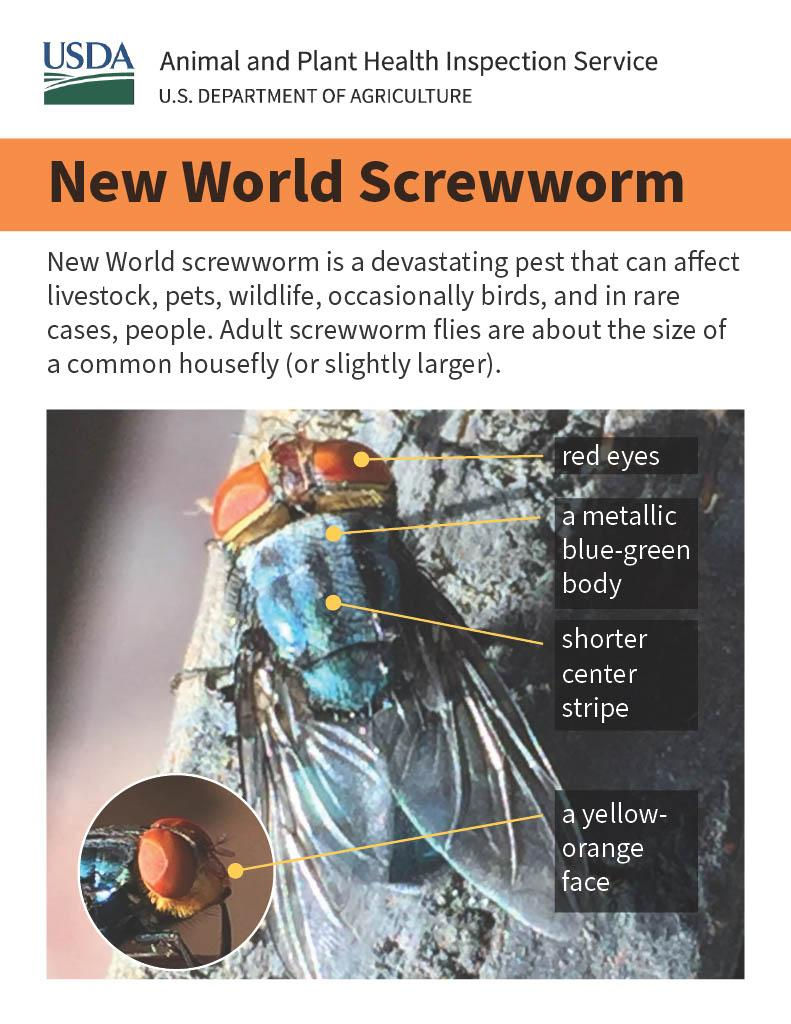
New World Screwworm is not actually the worm itself, but rather the larval stage of a parasitic fly. Unlike common maggots that feed on dead tissue, screwworm larvae feed on living tissue.
Adult female flies are attracted to wounds, surgical sites, scratches, insect bites, and natural body openings. Once eggs are deposited, the larvae hatch and begin feeding on living flesh, causing extensive tissue damage.
As the infestation grows, wounds can rapidly worsen, become infected, and attract additional flies, creating a dangerous cycle that can quickly threaten an animal's health and life.
Why Horse Owners Should Be Concerned
Horses are particularly vulnerable because they frequently experience minor cuts, scrapes, insect bites, and skin irritations.

Screwworm flies may target:
• Small cuts and abrasions• Surgical incisions• Castration sites• Umbilical areas in foals• The nostrils• The sheath• Other moist body openings
A wound that appears minor one day can become significantly worse in a short period of time if infested.
Signs that may indicate a screwworm infestation include:
• Wounds that rapidly enlarge• Excessive drainage• A foul odor• Swelling• Visible maggots• Irritation or unusual behavior• Repeated biting, kicking, or rubbing at a wound
If you observe any of these signs, contact your veterinarian immediately.
Why Early Detection Matters
One of the biggest concerns with New World Screwworm is how quickly it can spread if left undetected.
A widespread outbreak could impact:
• Horse owners• Livestock producers• Veterinary practices• Animal events and competitions• Interstate animal movement• Agricultural businesses
Federal and state animal health officials may implement quarantines or movement restrictions in areas where cases are detected. This could affect horse shows, clinics, rodeos, trail events, and other equine activities.
Early reporting and treatment are critical to protecting individual animals and preventing broader outbreaks.
How Can Horse Owners Protect Their Horses?
The good news is that there are several practical steps horse owners can take to reduce risk.

Perform Daily Health Checks
Take a few minutes each day to look over your horse carefully.
Check for:
• Cuts and scrapes• Drainage• Swelling• Skin irritation• Insect bites• Unusual odors• Changes in behavior
The sooner a wound is discovered, the easier it is to manage.
Treat Even Minor Wounds Promptly
Don't dismiss a small scratch as "nothing."
Clean wounds thoroughly and monitor them closely until healed. Covering or protecting wounds when appropriate can help reduce fly exposure.
Maintain Strong Fly Control
Fly management becomes even more important during periods of heightened concern.
Consider:
• Fly sprays• Fly masks• Fly sheets• Manure management• Proper drainage• Clean stalls and paddocks• Fans in barns when appropriate
Reducing fly populations helps reduce opportunities for screwworm flies to locate wounds.

Monitor Horses After Procedures
Pay special attention after:
• Surgeries• Castrations• Dental procedures involving wounds• Injuries requiring stitches• Any veterinary treatment that creates an open wound
These sites should be monitored carefully during healing.
A Reminder for All Animal Owners
While many of us immediately think about horses, this issue extends beyond the equine community.
Cattle, goats, sheep, dogs, cats, wildlife, and other warm-blooded animals may also be at risk. Anyone who owns animals that spend significant time outdoors should be aware of this developing situation.

It is not uncommon to see a horse suddenly bolt across a pasture trying to escape a biting insect. Most of the time, those insects are simply an annoyance. However, the confirmation of New World Screwworm in Texas serves as an important reminder that some insect-related threats can have serious consequences.
At Texas Equine, we are encouraging our staff, students, boarders, and horse owners everywhere to be especially vigilant. Check your animals regularly. Don't ignore wounds. Practice good fly control. And contact your veterinarian if something doesn't seem right.
Potential Impact on Equine Events
Because this is a newly confirmed case within the United States, federal and state animal health officials are actively developing response protocols.
Depending on how the situation develops, infected horses or horses within affected geographic regions could be placed under quarantine. States may also implement movement restrictions or additional health requirements for horses attending shows, clinics, competitions, and other events.
Organizations such as the United States Equestrian Federation (USEF) are already working with state veterinarians to develop protocols that would allow healthy horses to continue participating safely in equestrian activities whenever possible.
Horse owners who travel should stay informed and monitor guidance from their state veterinarian and event organizers.

Staying Informed
Additional resources:
• USDA Current Outbreak Map• Equine Disease Communication Center Horse Owner Fact Sheet• USDA New World Screwworm Myth Busters• USDA New World Screwworm Industry Webinar
Final Thoughts

The confirmation of New World Screwworm in Texas is certainly concerning, but awareness and early intervention remain our best defenses.
At Texas Equine, we encourage all horse owners and animal caretakers to take this issue seriously without becoming alarmed. Education, prevention, and vigilance are key to protecting our animals and our equine community.
By staying informed, practicing good wound care, and maintaining strong fly-control measures, we can all do our part to help stop the spread of this dangerous parasite.
This situation is a reminder that sometimes the smallest threats can have the biggest impact—and that attentive animal care remains one of the most important responsibilities we have as horse owners and animal stewards.


Comments