
Cold Therapy (Cryotherapy) in Horses: A Proven Tool for Recovery & Care
- Amy Valles

- Apr 21
- 2 min read
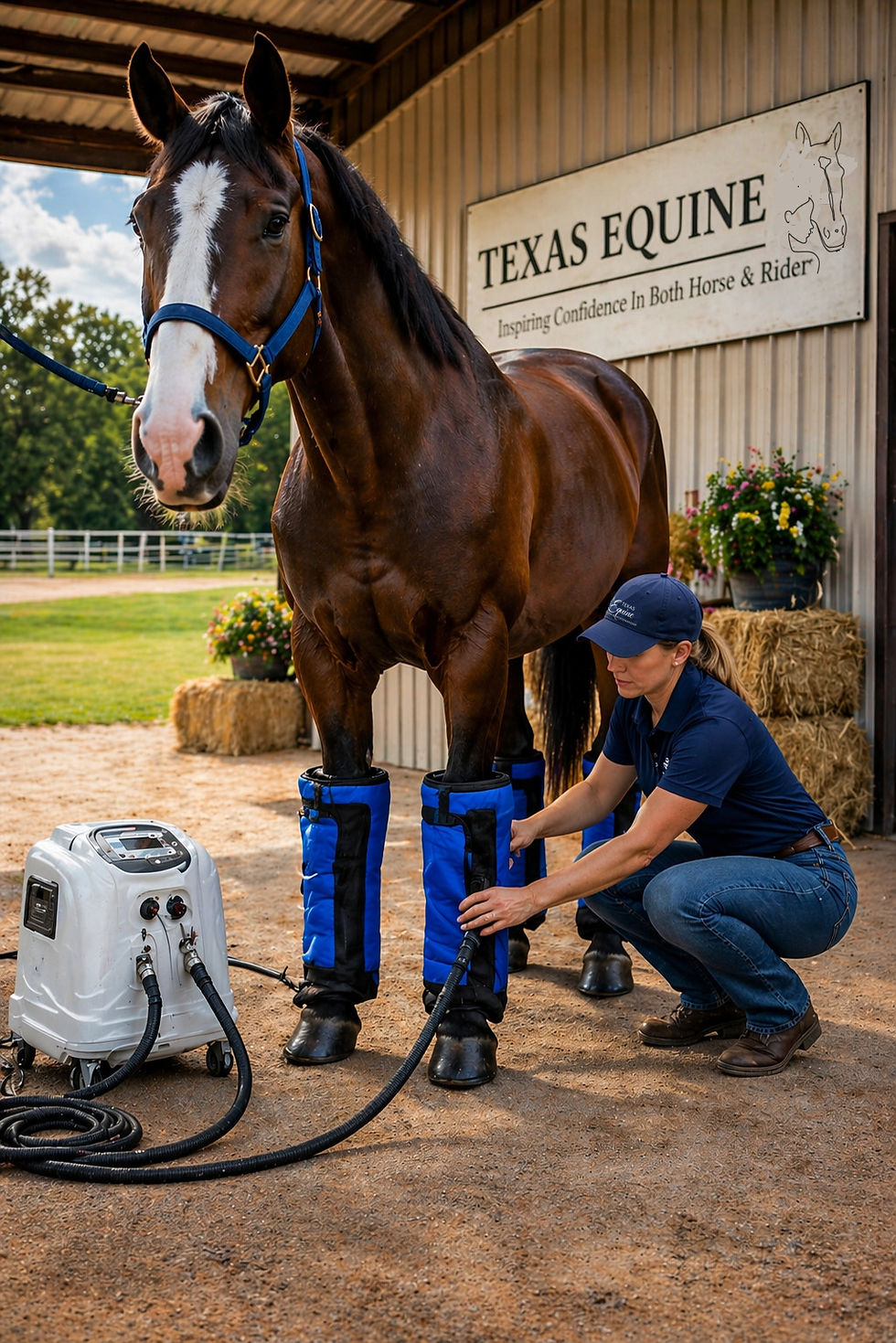
At Texas Equine Education & Horsemanship, proper recovery is just as important as training. One of the most widely used and scientifically supported methods for managing inflammation and supporting healing in horses is Cold Therapy, also known as cryotherapy.
What is Cold Therapy?
Cold therapy involves applying low temperatures to tissues to reduce pain, inflammation, and swelling. This method has been used for centuries, with traditional approaches such as:
Ice packs
Cold water application
Snow or natural cold exposure
Modern advancements have introduced more controlled and efficient systems, allowing for improved consistency in treatment outcomes.
How Cold Therapy Works
Cold therapy works through several well-documented physiological responses:
Vasoconstriction (narrowing of blood vessels) reduces blood flow to the area
This helps limit swelling and fluid buildup (edema)
Decreases inflammation and pain
Slows cellular metabolism, which may help reduce tissue damage in acute injury stages
Common Applications in Equine Care
Cold therapy is commonly used in horses for:
1. Acute Injuries
Most effective within the first 24–72 hours following injury
Helps reduce swelling and inflammation
Supports management of sprains, strains, and soft tissue injuries
2. Post-Exercise Recovery
Reduces muscle soreness
Helps manage inflammation after training sessions
3. Swelling Control
Limits fluid accumulation in limbs
Commonly used in performance horses that are on their feet for extended periods
Types of Cold Therapy Methods
🔹 Traditional Methods
Cold hosing: Running cold water over limbs
Ice packs: Simple and accessible
These methods are widely used due to their ease and low cost, though they offer less control over temperature and duration.
🔹 Targeted Equine Tools
Ice Boots
Designed to wrap around legs for consistent cooling
Should generally not exceed 30 minutes per use to avoid irritation or tissue damage
🔹 Advanced Systems
Cold Compression Units
Provide controlled temperature and compression
Often used in veterinary or professional rehabilitation settings
More effective for reducing swelling due to consistent application
Cold vs. Heat Therapy
Understanding when to use cold versus heat is essential:
Cold Therapy
Best for early-stage (acute) injuries
Reduces swelling and limits tissue damage
Heat Therapy
Used in later stages of healing
Helps relax muscles and improve circulation
Using heat too early in an injury can increase swelling, which is why cold therapy is the preferred initial approach.
Safety & Best Practices
Limit application time (commonly under 30 minutes for targeted methods like ice boots)
Monitor for signs of numbness or irritation
Ensure even application to avoid uneven cooling
Follow veterinary guidance for injury-specific protocols
Cost Overview
Basic methods (hosing, ice packs): Low cost and widely accessible
Ice boots: Approximately $40–$200
Advanced systems: Higher cost, typically used in clinical settings
Cold Therapy at Texas Equine
At Texas Equine, cold therapy is a foundational part of our horse care and rehabilitation programs. Whether used after a training session or as part of an injury recovery plan, it supports our commitment to maintaining soundness, comfort, and long-term performance in our horses.
Closing Thought:Cold therapy remains one of the most effective, accessible, and scientifically supported tools in equine care—helping protect the horse’s body, manage inflammation, and support a safe return to work when used correctly and at the appropriate stage of healing.


Comments