


The Equine Industry Readiness Program™: A Professional Path to Horsemanship
- Kim Williams

- 4 days ago
- 9 min read
Professional equine readiness isn't actually measured by the hours you spend in the saddle; it's defined by the safety and precision of your ground-based horsemanship. Many aspiring professionals feel a deep connection to horses but hesitate to apply for industry roles because they worry they aren't experienced enough or fear making a costly safety mistake with a high-value animal. You might even find that rigid university schedules make it nearly impossible to commit to the long-term internships that most professional barns demand.
It's completely normal to feel that gap between your passion and the high standards of a working stable. This is exactly why a structured horse industry readiness program is so valuable. In this guide, you'll discover how a modular approach to education allows you to master essential skills like lunging, wrapping, and feeding plans on a timeline that works for your life. We will look at how gaining a recognized certification and building a professional network can turn your love for horses into a stable career path. You'll learn why starting from the ground up is the most reliable way to build both your confidence and your resume.
Table of Contents
Defining Professionalism: What is a Horse Industry Readiness Program?
Professionalism in a barn environment is often misunderstood as simply having a high level of riding skill. In reality, being "industry ready" means you possess the discipline, safety awareness, and technical knowledge to manage a horse's daily life without constant supervision. A horse industry readiness program serves as a vital bridge for those transitioning from casual riding to a professional career. It moves beyond the "what" of horse care and dives deep into the "why," ensuring every action you take supports the animal's well-being and the facility's standards.
The Gap Between Passion and Professionalism
Many people enter the equine world because they love horses, but passion alone isn't enough to manage a high-performance facility. A common mistake beginners make is assuming that because they've owned a horse, they're prepared for the fast-paced demands of a professional stable. In a commercial setting, there's no room for shortcuts. Common errors include:
Failing to notice subtle changes in a horse's temperament or physical condition.
Overlooking the strict cleanliness standards required to prevent the spread of disease.
Misunderstanding the hierarchy and communication protocols within a professional team.
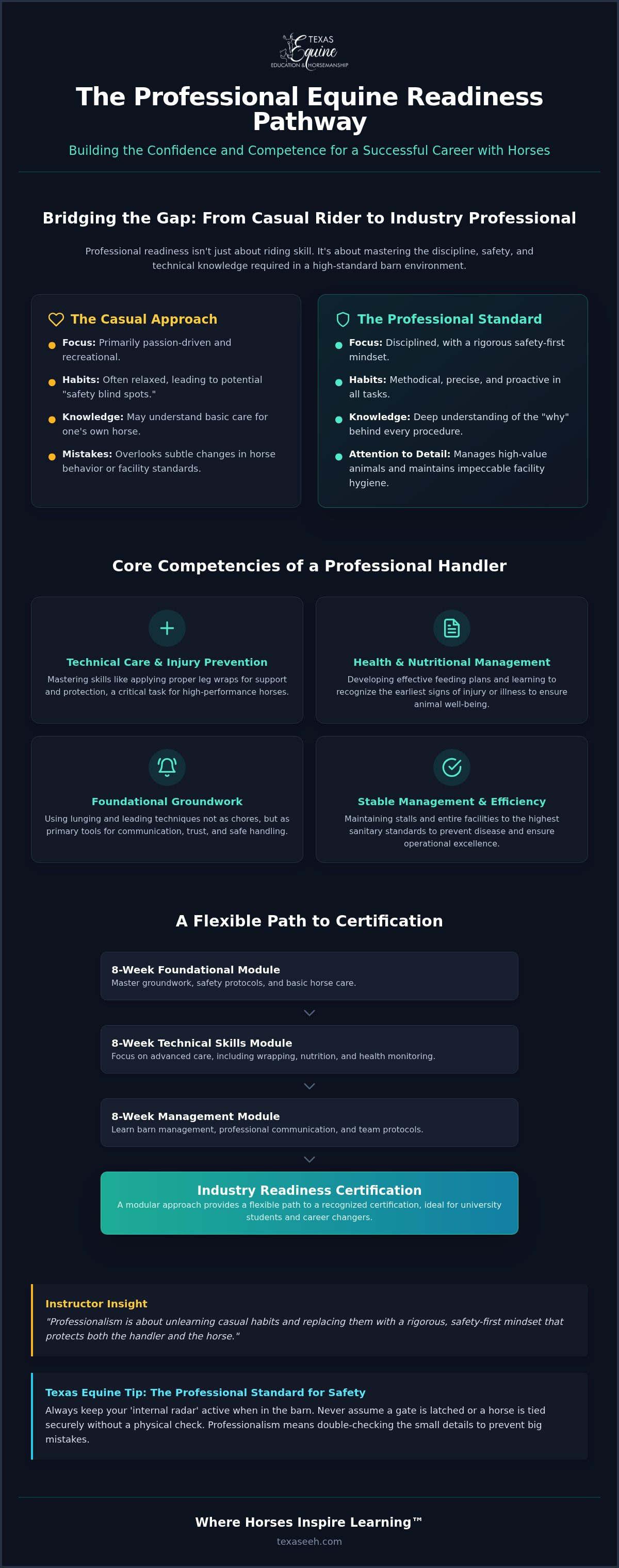
Instructor Insight: We often see students arrive with "safety blind spots." These are habits formed in relaxed environments that don't hold up under professional scrutiny. Professionalism is about unlearning those casual habits and replacing them with a rigorous, safety-first mindset that protects both the handler and the horse.
Where Horses Inspire Learning™
Our approach at Texas Equine Education & Horsemanship is built on the belief that every interaction with a horse is an opportunity for growth. This holistic method combines technical care with professional etiquette, teaching you how to communicate effectively with trainers, owners, and veterinarians. Understanding the broader scope of the equine industry helps you see where your specific role fits into the larger economic and social picture. Readiness is the seamless integration of technical handling skills and a proactive awareness of your surroundings at all times. By focusing on ground-up education through our internship opportunities, you create a resume that speaks to your reliability and depth of knowledge.
Core Competencies: The Skills That Define a Professional Handler
Professional handling isn't just about finishing chores; it's about being a reliable partner to the horse and a trusted asset to the barn owner. A horse industry readiness program focuses on the technical skills that ensure a stable runs with precision and safety. This involves mastering the principles of Equine Science and Management, where technical knowledge meets the practical, daily needs of the animal. You'll move beyond basic chores to understand the "why" behind every action.
In a professional setting, handlers are expected to manage several core competencies effectively:
Technical Care: Applying proper leg wraps for support and protection.
Health Monitoring: Developing feeding plans and recognizing early signs of injury or illness.
Groundwork: Using lunging and leading techniques to maintain discipline and safety.
Stable Efficiency: Maintaining stalls and facilities to the highest sanitary standards.
Safety Reminders: The Professional Standard
Safety is the primary concern for any equine employer. Handling high-value or high-energy horses requires a level of composure that keeps both you and the horse calm. If you're nervous, the horse will be too. Texas Equine Tip: Always keep your "internal radar" active when you're in the barn aisle. Never assume a horse is tied securely or a stall is latched without a physical check. Professionalism means double-checking the small details so the big mistakes don't happen.
Ground-Up Horsemanship Training
Everything we do in the saddle starts on the ground. These groundwork skills are the focus of our foundational horsemanship course, where you learn to predict a horse's reactions before they occur. Understanding horse behavior allows you to communicate with clarity rather than force. You'll also learn the "Horse Talk" vocabulary used by professionals, such as "yielding to pressure" or "tracking up," which are essential for clear communication with trainers and veterinarians. Mastering this language shows you're ready to contribute to a professional team. To see these skills in a real-world setting, you can explore our internship segments and see how we put these principles into practice.
Flexibility in Education: Structuring Your 8-Week Internship Segments
One of the biggest hurdles in equine education is the rigid nature of traditional internships. Many programs require a three-month, full-time commitment that isn't realistic for students or career changers with existing responsibilities. Our horse industry readiness program solves this through a modular design. By breaking the curriculum into 8-week segments, we provide a path that respects your time while maintaining professional standards. You can choose to complete these blocks consecutively for an immersive experience or spread them out over several university terms.
Accommodating University and Career Schedules
We understand that life doesn't stop because you want to learn. For college students, this flexibility means you can strategically plan your internship hours around your academic calendar. Whether you're working toward an equine management degree online or attending classes in person, these segments allow for focused, deep learning during summer or winter breaks. This modular approach helps prevent the burnout often associated with high-intensity barn environments. It gives you the space to truly absorb each skill, ensuring you feel confident before advancing to more complex tasks. We accept applications year-round, so you don't have to wait for a specific semester to begin your journey.
The 8-Week Certification Milestone
What can you expect during your first 8-week milestone? You'll start by establishing a solid foundation in stall management, feeding protocols, and safety procedures. These aren't just chores; they're the essential components of a professional portfolio that employers actually value. When you choose an equine industry certification program, you're investing in a cumulative learning process. Each segment builds directly upon the last, moving you from foundational care to advanced handling techniques. As you grow in the program, you'll have the opportunity to transition from an intern into a mentorship role, guiding newer students through their first steps in the barn. This leadership experience is a powerful addition to any resume. If you're ready to see how these blocks fit into your schedule, you can explore our available internship segments to find the best start date for you.
Beyond the Barn: Translating Readiness into Career Success
Completing a horse industry readiness program is about more than mastering technical skills; it's about developing the professional character that employers value. In a working barn, you learn that time management isn't just about a clock. It's about knowing exactly how long it takes to safely wrap four legs or prep a nutritional plan for a performance horse. You develop a level of self-awareness and problem-solving that allows you to handle unexpected situations, such as a loose horse or a broken fence line, with quiet composure. These soft skills are the hallmark of a true professional.
Networking is another vital component of your growth. Throughout your time in the program, you'll connect with mentors and industry leaders who can offer guidance on your specific career goals. A unique way to document this progress is through the Horse & Rider Showcase™. This event serves as a professional display of your handling and horsemanship, providing a tangible way to show future employers the standard of work you're capable of producing. When it comes time to write your resume, you'll be able to articulate your experience with precision, moving beyond "helping at a barn" to "managing facility operations and equine health protocols."
Career Paths for Industry-Ready Graduates
Graduates who have refined their skills through a structured program find themselves prepared for a variety of roles. You might step into barn management, professional grooming, or facility operations. For those aiming higher, this experience serves as a strong foundation for veterinary school or advanced equine science degrees. Having hands-on, ground-up knowledge makes you a more competitive candidate in any specialized field.
Did You Know? The equine industry is a massive economic driver, contributing approximately $122 billion to the U.S. GDP and supporting 1.7 million jobs. There is a constant, high demand for handlers who prioritize safety and professional standards, as they are the backbone of this diverse industry.
Taking the Next Step in Your Equine Journey
If you're ready to bridge the gap between your passion and a professional career, we invite you to apply for the Equine Industry Readiness Program™. We focus on creating a supportive environment where you can grow at your own pace. You can also explore our other educational services, such as the "Connection Corral," to find additional resources that match your interests. To continue your learning and find answers to common questions about the application process, please visit our internship details and FAQs. We look forward to helping you build a future where horses inspire your learning every day.
Build Your Professional Foundation in the Barn
Finding your place in the equine world is a step-by-step process that begins with a solid foundation. You've seen how mastering technical groundwork and stable management can transform your passion into a credible professional resume. The horse industry readiness program is designed to support you through this transition, offering mentorship-based learning with real-world application in every task. Whether you're a university student or a career changer, our flexible 8-week modular segments allow you to grow without the pressure of a rigid schedule. You aren't just learning skills; you're joining a nationwide community of equine educators dedicated to safe, intentional horsemanship. We're here to help you gain the confidence and technical precision needed to handle high-value horses with ease. Your journey toward a professional career is waiting, and we're ready to walk beside you. Apply for the Equine Industry Readiness Program™ today and see where your passion can lead. We look forward to seeing you in the barn and helping you reach your goals.
Frequently Asked Questions
What is the difference between a horse industry readiness program and a riding lesson?
A horse industry readiness program differs from a riding lesson by focusing on vocational skills rather than recreational riding. While a lesson helps you improve your seat and aids in the saddle, this program teaches you how to manage the horse from the ground up. You'll learn the essential barn management and safety protocols that professional stables expect from their staff, which are rarely covered in a standard riding session.
Do I need prior horse experience to apply for the Equine Industry Readiness Program™?
You don't need years of experience to begin your journey with us. We welcome individuals who are 16 years or older and have a genuine desire to learn professional standards. Because we prioritize safety and specific technical methods, starting with a "blank slate" can sometimes be an advantage. We ensure every participant masters the foundational groundwork and care routines required to work confidently in any professional equine environment.
Can I earn university credit for my 8-week internship segments?
Many students successfully use their 8-week internship segments to fulfill university practicum or internship requirements. Because the program is modular, it's easier to fit into a traditional semester break or summer term. We recommend speaking with your academic advisor or department head to confirm the specific documentation they need. We are happy to provide the necessary verification of your hours and skill mastery to support your educational goals.
What specific certifications do I receive upon completion of the program?
Upon successfully finishing each module, you receive a formal certificate of completion from Texas Equine Education & Horsemanship. These certifications act as a professional endorsement of your skills in areas like lunging, leg wrapping, and stall management. Including these milestones on your resume provides tangible proof to potential employers that you've met high industry standards and are prepared for the responsibilities of a working barn environment.
Is the Equine Industry Readiness Program™ available for international students?
Yes, the horse industry readiness program is open to international participants who are at least 16 years old. Our program teaches universal principles of safe handling and equine care. Professional horsemanship is a global language, and gaining experience through a recognized program can help you stand out in equine communities around the world, regardless of where you choose to work.
How does groundwork training help me if I eventually want to be a professional rider?
Groundwork is the primary tool for establishing clear communication and mutual respect before you ever step into the stirrup. Professional riders know that a horse's behavior on the ground directly reflects their responsiveness under saddle. By mastering groundwork, you learn to read a horse's body language and address potential resistance safely. This foundation ensures that when you do begin training as a rider, you and your horse already share a language of trust.


Comments