


Essential Horse Safety for New Riders: A Foundational Guide

Did you know that equestrian activities are currently the leading cause of sports-related injuries seen in emergency rooms? While that statistic might feel a bit heavy, it underscores why learning horse safety for new riders is the most vital foundation you can build. It's perfectly normal to feel a mix of excitement and nerves when you first step into a barn. You might worry about being kicked or feel anxious about losing control once you're in the saddle. We understand those feelings because every experienced instructor started exactly where you are right now.
Our goal is to help you master the core principles of equine behavior so you can build a secure, confident partnership with these magnificent animals from your very first day. We'll show you how to interpret subtle body language cues and stay safe during ground handling. You will also learn how to identify a high-quality lesson environment that prioritizes your well-being. By focusing on the "why" behind a horse's actions, you'll move past fear and into a place of mutual respect and steady, intentional progress.
Table of Contents
The Psychology of Safety: Understanding the Horse’s Perspective
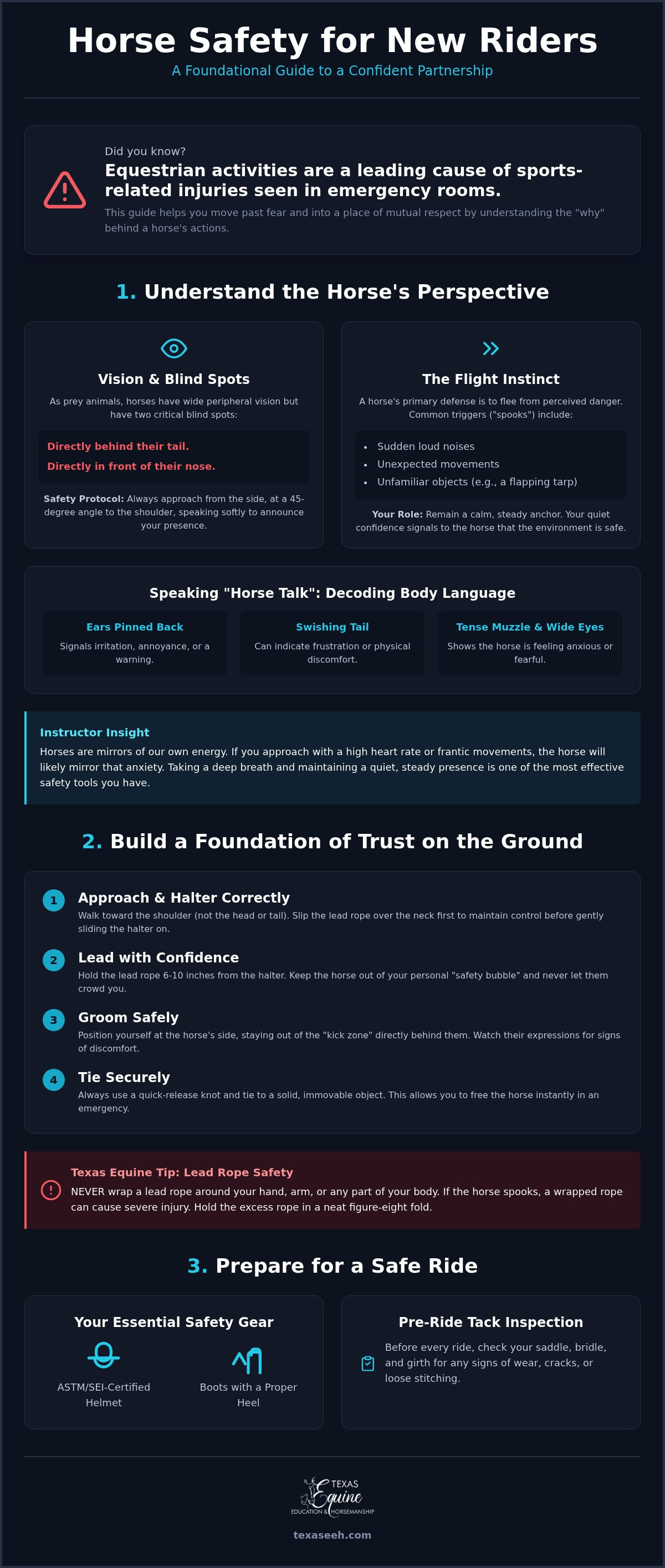
Horses view the world through the lens of a prey animal. Their primary goal is survival, which means they are constantly scanning for potential threats. This biological programming is the most important concept to grasp when learning horse safety for new riders. Unlike humans, who are predators with forward-facing eyes, horses have eyes on the sides of their heads to provide a wide field of vision. This helps them spot danger from almost any angle, but it also creates a unique perspective that we must respect to maintain a secure environment.
Communication happens through "Horse Talk," a silent language of body cues. You can tell a lot about a horse's emotional state by watching their ears and tail. Ears pinned flat against the neck often signal irritation or a warning, while a swishing tail can indicate frustration or physical discomfort. Tension in the muzzle or a wide-eyed stare usually means the horse is feeling anxious. In a barn setting, horses follow a herd hierarchy. They look for a confident leader to guide them. If you don't provide that calm direction, the horse may feel the need to take charge for their own safety, which can lead to unpredictable behavior.
Instructor Insight: Horses are mirrors of our own energy. If you approach with a high heart rate or frantic movements, the horse will likely mirror that anxiety. Taking a deep breath and maintaining a quiet, steady presence is one of the most effective safety tools you have.
Navigating the Equine Blind Spots
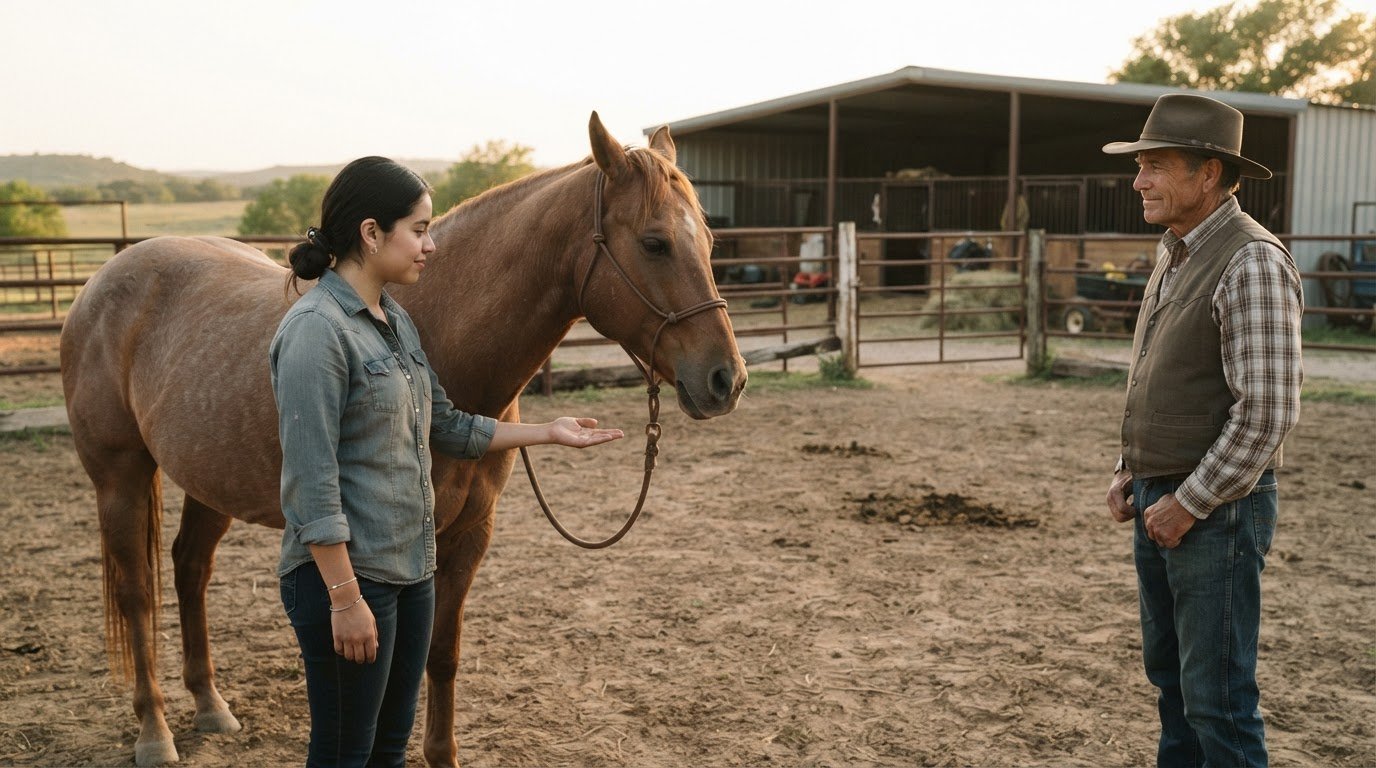
A horse's blind spot is a specific area directly in front of their nose and directly behind their tail where they cannot see anything at all. Because they can't see you in these zones, sudden movements or touches can trigger a startle response. To stay safe, always approach at a 45-degree angle toward the shoulder. This ensures you remain in their line of sight, allowing them to process your presence before you make physical contact. Speaking softly as you approach also helps the horse identify you as a friend rather than a threat.
The Flight Response and Environmental Awareness
When a horse feels threatened, their natural instinct is to flee. Common triggers, or "spooks," include a flapping tarp, a sudden loud noise, or even a strange shadow. If a horse becomes anxious, your job is to remain a steady anchor. By staying calm and focused, you signal to the horse that the environment is secure. This leadership is built on the ground long before you ever mount up.
Safety Reminder: When working in a stall or a small grooming tie, always ensure you have a clear path to the exit and never let the horse pin you against a wall or corner.
Ground Handling Checklist: Building the Foundation of Trust
Safety in the saddle is actually built on the ground. Engaging in ground work horse training allows you to establish clear communication before you ever put your foot in the stirrup. When you approach a horse to halter them, walk toward the shoulder while speaking softly. Slip the lead rope over the neck first to maintain control, then gently slide the halter onto the muzzle. Mastering these initial steps is a core part of horse safety for new riders.
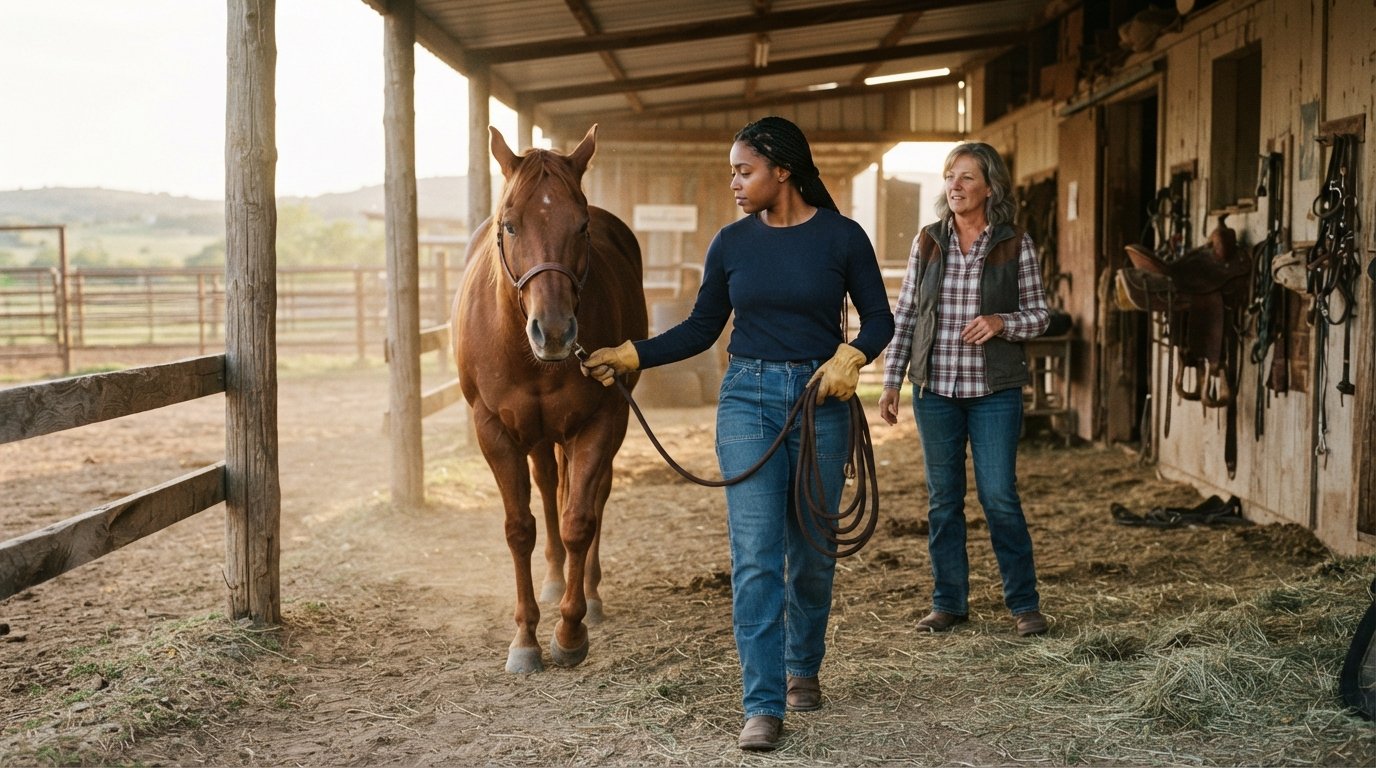
Texas Equine Tip: Never wrap a lead rope around your hand, arm, or body. If a horse pulls away suddenly, a wrapped rope can cause severe injury. Always hold the excess rope in a neat figure-eight fold in your non-leading hand.
When grooming, position yourself at the horse's side rather than directly behind them. This keeps you out of the potential "kick zone" and allows you to watch the horse's facial expressions for signs of discomfort. If you're interested in refining these fundamental skills, you can explore our horsemanship programs designed to build your confidence from the ground up.
Leading with Confidence and Control
Control starts with how you hold the lead rope. Use the "fold, don't coil" rule to manage the length. Keep your leading hand about six to ten inches from the halter. This distance provides enough room for the horse to move comfortably while giving you enough leverage to guide them. Maintain a "safety bubble" by ensuring the horse doesn't crowd your personal space. When walking through gates, open the gate fully and walk through first, turning the horse to face the gate before you close it.
Tying and Cross-Tying Protocols
Knowing how to tie a horse securely is a non-negotiable skill for horse safety for new riders. Always use a quick-release knot. This specific knot allows you to free the horse instantly with a single pull if they panic or pull back. Only tie to solid, immovable objects like a heavy hitching rail or a sturdy post. Avoid tying to fence rails or thin boards that could snap and become a dangerous projectile if the horse pulls.
Did You Know? You should only ever tie a horse using a halter and lead rope. Never tie a horse by the reins of a bridle. If a horse pulls back while wearing a bridle, the pressure on the bit can cause serious injury to their mouth.
Gear and Mounted Safety: Preparing for Your First Ride
Once you've established trust on the ground, the transition to the saddle requires a new level of awareness. Preparation is the bridge between a nervous start and a confident ride. Statistics from 2026 show that 75% of riding-related deaths are caused by head or neck injuries. This data makes your choice of personal protective equipment the most significant factor in horse safety for new riders. Every time you prepare to mount, you should perform a systematic check of your equipment to ensure everything is functioning as intended.
Instructor Insight: A secure ride begins with a snug girth and correct stirrup length. If your girth is too loose, the saddle can slide as you mount or turn. If your stirrups are too long, you'll struggle to maintain your balance and stay deep in the seat. Always double-check these settings before you leave the mounting block.
Safety also extends to how you interact with others in a shared space. In the arena, always maintain at least one full horse-length of distance between you and the rider in front. This spacing prevents horses from feeling crowded, which reduces the risk of kicking. If you're ready to begin your journey with expert guidance, you can book an introductory lesson to learn these protocols in a supportive environment.
The New Rider’s Gear Checklist
Your helmet is your most vital tool. Ensure it meets the ASTM F1163-23 safety standard, certified by the Safety Equipment Institute. Bicycle helmets are not an alternative; they aren't designed to withstand the height of a fall from a horse or the impact of a hoof. Your footwear must have a smooth sole and a distinct 1-inch heel to prevent your foot from sliding through the stirrup. Avoiding common beginner mistakes, such as wearing loose jewelry or baggy clothing that could get caught on the saddle, will further enhance your security.
Mounting and Dismounting with Care
Always use a mounting block to get into the saddle. This practice isn't a sign of being a beginner; it's a way to protect the horse's spine from the lateral pull of your weight and helps you stay balanced as you settle. Once mounted, keep a "soft" hand on the reins. Pulling too hard or using jerky movements can confuse the horse and lead to tension. It's also helpful to understand the concept of an emergency dismount. Knowing how to safely slip both feet from the stirrups and slide down away from the horse's body gives you a plan if you ever feel a loss of control. These foundational habits are essential for long-term horse safety for new riders.
Advancing Your Skills: Choosing a Safe Educational Environment
The most important decision you'll make after deciding to ride is where you'll learn. A quality learning environment does more than teach you how to sit in a saddle; it cultivates a deep respect for the animal and a rigorous commitment to horse safety for new riders. Choosing a facility that prioritizes a "ground-up" approach ensures that you aren't just a passenger, but a capable and informed partner to your horse. This methodology is the core of foundational horsemanship, which provides the bedrock for long-term security and success.
Our Horse & Rider Showcase™ is a wonderful example of how structured progress can be celebrated safely. Instead of high-pressure competition, these events focus on demonstrating the skills and trust developed through patient, intentional training. For those who cannot visit a barn daily, virtual equine education offers a way to keep these safety principles fresh in your mind from the comfort of home. This steady immersion in equine knowledge helps you stay prepared for every real-world interaction.
Evaluating an Instructor’s Safety Standards
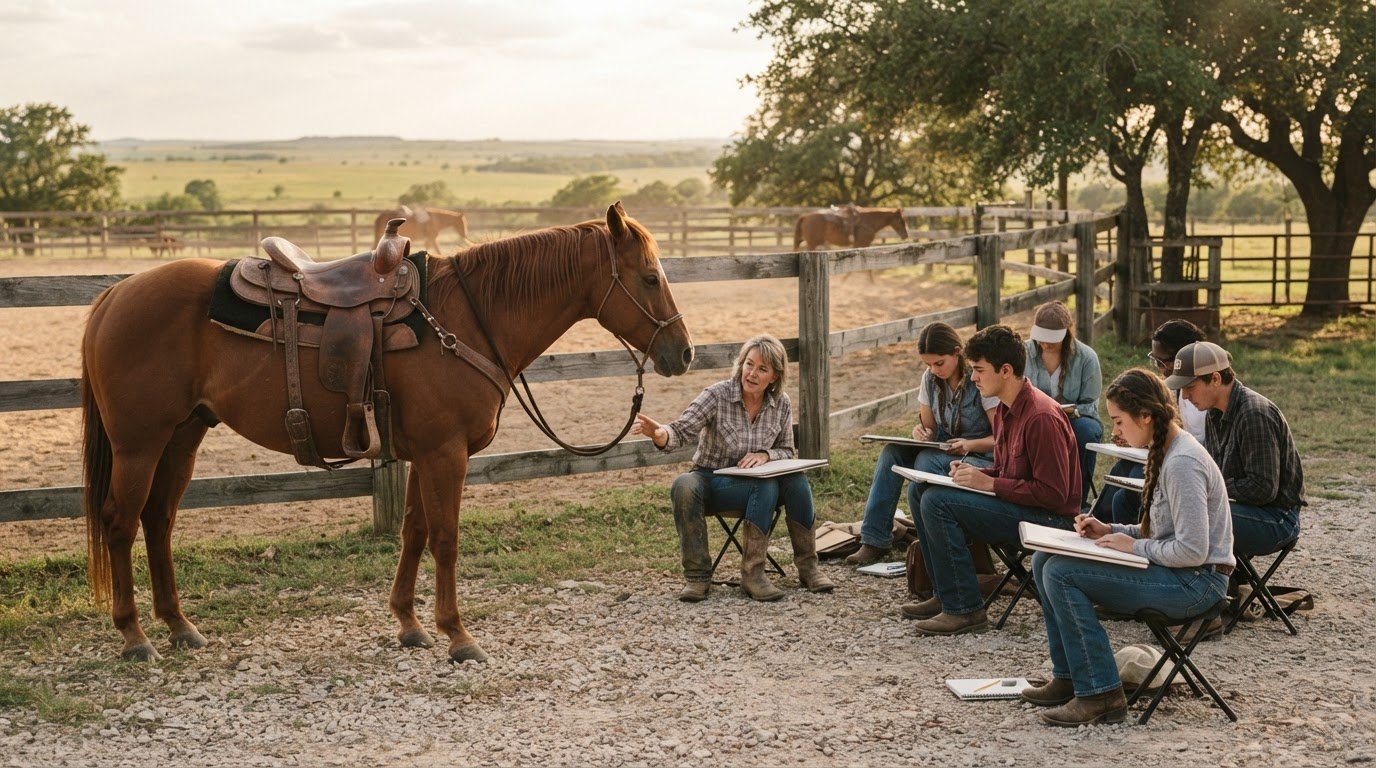
When you interview a potential instructor, don't be afraid to ask specific questions about their safety protocols. Inquire about the temperament of their lesson horses and how they handle emergency situations. A professional educator will welcome these questions because they mirror the philosophy that "Where Horses Inspire Learning™" starts with putting the animal's well-being first. Look for a curriculum that includes horse care and handling as a mandatory prerequisite to riding. If an instructor rushes you into the saddle without explaining the "why" behind the horse's behavior, it may be a sign to look for a more education-focused environment.
Building Your Equine Library
Education doesn't stop when you leave the barn. Literacy programs like The Reading Rein™ are designed to help young riders connect with horses through the power of stories and age-appropriate facts. By curating a library of books that emphasize responsible handling and equine psychology, you reinforce the habits of horse safety for new riders in a relaxed setting. Literacy programs bridge the gap between barn time and home learning by providing a consistent, calm space to process new concepts. This holistic approach ensures that safety becomes a natural part of your lifestyle rather than just a set of rules to follow at the stable.
Building a Lifetime of Confident Horsemanship
Mastering the basics of equine psychology and ground handling is the most important step you can take. By understanding that a horse is a prey animal, you shift from reacting with fear to leading with calm intention. We believe that true safety is found in this ground-up approach, where education always precedes the ride. Whether you're checking your ASTM/SEI certified helmet or practicing a quick-release knot, these small habits create a secure foundation for every future interaction.
Our mission is to provide a space "Where Horses Inspire Learning™" through family-friendly programs that meet professional Equine Industry Readiness Program™ standards. This commitment ensures that everyone, from young children to career-focused adults, feels supported and prepared. You can continue your learning with our Foundational Horsemanship resources to further strengthen your bond with these incredible animals. We're here to walk beside you as you develop the skills and confidence needed to master horse safety for new riders. The journey of horsemanship is a beautiful, step-by-step process, and we're honored to be part of yours.
Frequently Asked Questions
What are the three most important safety rules for new riders?
The three foundational rules for every beginner include approaching from the shoulder at a 45-degree angle, wearing a certified helmet at all times, and maintaining a respectful "safety bubble." These habits ensure you stay within the horse's line of sight while protecting your own personal space. By following these protocols, you reduce the risk of startling the animal. Consistency in these areas is the cornerstone of horse safety for new riders as they build their confidence.
How do I know if a horse is about to kick or bite?
You can identify an impending kick or bite by watching for specific "Horse Talk" cues such as ears pinned flat against the neck or a leg lifted slightly off the ground. A horse may also bare their teeth or snake their neck toward you if they feel crowded. These signals are clear warnings that the horse is uncomfortable or defensive. Paying close attention to these subtle shifts in body language allows you to step back safely.
Why do I need a specific equestrian helmet instead of a bike helmet?
Equestrian helmets are specifically engineered to withstand a fall from a significant height and the potential impact of a horse's hoof. While bike helmets protect against linear impacts during forward motion, equestrian models like those meeting the ASTM F1163-23 standard are tested for falls onto varied surfaces. Since head injuries are a leading concern in equestrian sports, using gear designed for these unique risks is a non-negotiable part of horse safety for new riders.
Is it safe for a toddler to be around horses?
It's safe for toddlers to interact with horses when they are enrolled in specialized programs like our Tiny Tot Lessons. These sessions utilize exceptionally calm, seasoned horses and focus on very basic ground-up interactions. Constant adult supervision is mandatory to ensure the child stays in safe zones. Early exposure helps children develop a natural respect for animals while learning the importance of quiet movements and gentle touch in a controlled environment.
What should I do if a horse gets spooked while I am leading it?
If a horse spooks while you're leading it, your first priority is to remain calm and keep your own feet moving. Don't try to pull the horse's head down with force; instead, maintain a firm but flexible grip on the lead rope. Ensure you aren't in the horse's path if they jump sideways. By staying relaxed and centered, you act as a steady anchor that helps the horse regain its focus and composure quickly.
How can I practice horse safety at home without a horse?
You can refine your skills at home by practicing the quick-release knot with a piece of rope or exploring our virtual education resources. Programs like The Reading Rein™ also offer a wonderful way for families to learn about equine behavior through literacy and stories. Visualizing safe approach angles and reviewing your gear checklist ensures that these habits become second nature. This mental preparation makes your actual time at the barn much more productive and secure.


Comments