


Creative Activities for Kids Who Like Art and Horses
- Kim Williams

- 23 hours ago
- 10 min read
What if your child’s sketchbook could become a gateway to understanding the living, breathing world of horses? For many parents of kids who like art, the challenge isn't finding a pencil or a brush, but finding a subject that keeps their interest alive long after the first sketch is finished. You likely already recognize that art is more than just a hobby; it's a way for your child to process the world around them and express their unique perspective.
In this guide, you'll discover how to nurture your child’s artistic passion by connecting their love of creativity with the inspiring world of equine heritage and horsemanship. We'll explore structured ways to combine artistic expression with real-world learning, helping you move away from screen-based entertainment toward high-quality, educational opportunities. You'll learn about the developmental link between careful observation and creative growth. We also discuss how events like the Equine Expression & Heritage Art Show can give your young artist a sense of community and a meaningful goal to work toward as they refine their skills.
Table of Contents
Nurturing the Creative Spark in Kids Who Like Art
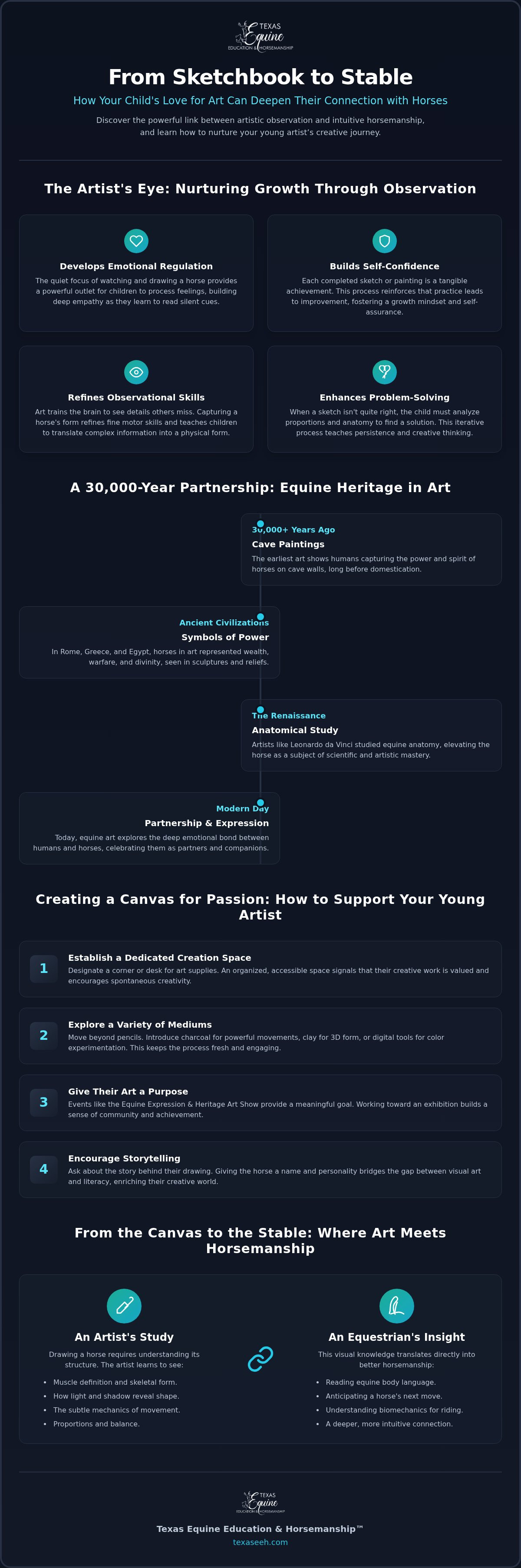
Many kids who like art possess a natural ability to notice the small details that others might miss. This deep observational skill often goes hand in hand with high levels of empathy. When a child spends time watching a horse, they aren't just looking at an animal; they're learning to read silent cues and emotional states. This process provides a powerful tool for emotional regulation. It gives them a quiet, focused outlet to process their feelings while building self-assurance through every completed project.
A "subject-first" approach keeps young creators engaged much longer than generic prompts. Instead of simply "drawing a picture," focusing on the history of horses in art allows them to see how humans have connected with these animals for thousands of years. This grounding in nature and animals helps stabilize a child's creative energy, giving them a tangible anchor for their imagination that feels more significant than a random doodle.
The Developmental Benefits of Artistic Observation
Focusing on a complex subject like a horse helps refine fine motor skills as children try to capture the curve of a neck or the strength of a hindquarter. It also encourages creative problem-solving. If a sketch doesn't look quite right, the child must analyze the proportions and try again. This builds a growth mindset. They learn that every "mistake" on the paper is actually just a step toward a better understanding of their subject. This persistence translates directly into other areas of life, from schoolwork to learning how to handle a horse on the ground.
Moving Beyond the Sketchbook
While pencils are a great start, exploring different mediums keeps the creative spark alive. Charcoal allows for bold, sweeping movements that mimic a horse's power, while digital art offers new ways to experiment with color and lighting. For younger children, tactile experiences are essential. Working with clay or textiles helps them understand three-dimensional forms and textures in a way that flat paper cannot. These hands-on activities help kids who like art feel more connected to the physical world around them, much like how adults can find their own creative inspiration through the professional services at Style Salon Tyler.
Texas Equine Tip:
Encourage your child to describe the "story" behind their drawing. Giving the horse a name, a home, and a personality helps bridge the gap between visual art and literacy. You can further explore this connection through programs like The Reading Rein, where storytelling and horses inspire a love for learning.
Exploring Equine Heritage as a Canvas for Learning
Horses have been our creative partners for over 30,000 years. Long before we ever placed a saddle on their backs, we were painting their likeness on cave walls. For kids who like art, exploring these ancient images is a way to trace the evolution of the human-animal bond without needing a history textbook. When a child looks at a Renaissance painting or a modern sculpture, they witness how different cultures viewed strength, beauty, and partnership. This study builds a rich vocabulary, turning terms like "equine heritage" and "domestication" into vivid, visual stories rather than just words on a page.
Observing horse behavior in person provides a primary source for realistic drawing that no photograph can match. By watching how a horse flicks its ears or shifts its weight, a young artist learns to capture the "spirit" of the animal. This practice of careful looking is one of the many benefits of art for early childhood development, as it trains the brain to process complex information and translate it into a physical form.
Anatomy and Science Through an Artist’s Eyes
Drawing a horse requires a basic understanding of muscle structure and movement. As children sketch the powerful curve of a shoulder or the delicate line of a fetlock, they are actually engaging with biological concepts. They begin to see how light and shadow reveal the underlying anatomy, or how different coat colors and textures represent various breeds. If your child is ready to see these concepts in person, you might explore our horsemanship lessons to see how observation turns into real-world skill.
Instructor Insight:
Try having your child sketch a horse while it's moving in a pasture or during a lesson. This exercise isn't about getting a perfect likeness; it's about seeing how the center of gravity shifts during a walk or trot. It is a wonderful way to teach the basics of physics and balance through a simple pencil and paper.
The Power of Equine Storytelling
For kids who like art, storytelling often begins with a single illustration. Reading about famous horses or historical events can inspire more detailed and meaningful artwork. We encourage families to use The Reading Rein™ to find stories that spark the imagination. By illustrating scenes from their favorite horse-themed books, children deepen their connection to the narrative. Building a personal "equine library" of books and sketches serves as a valuable reference for future projects, allowing their artistic journey to grow alongside their knowledge of the horse world.
Practical Ways to Support Your Young Artist’s Passion
Helping kids who like art grow requires more than just buying a new set of brushes. It's about creating an environment where their creativity can flourish every day. Start by setting up a dedicated "creation station." This doesn't need to be an entire room; a simple corner with good lighting and accessible supplies works perfectly. When a child has a space that belongs to them, it encourages daily practice and shows them that their artistic voice is a valued part of the home.
Your role as a mentor is to provide feedback that nurtures rather than strictly critiquing. Instead of judging the final product, try asking open ended questions about their choices. Ask them why they chose a specific color for the horse's coat or how they decided on the background. This approach builds self assurance and helps them think deeper about their process. Finding a community of other children who share a love for animals and creativity further reinforces that they aren't alone in their journey.
Participating in the Equine Expression & Heritage Art Show
One of the most rewarding steps for a young creator is sharing their work with others. The Equine Expression & Heritage Art Show is designed for artists of all ages and skill levels. We believe an inclusive, non competitive environment is the best way to build confidence in young learners. To prepare, encourage your child to select one piece they feel particularly proud of, regardless of the medium. Seeing their work displayed alongside other horse lovers provides a profound sense of accomplishment and belonging.
Virtual Education and Community
If you don't live near a major equine hub, you can still find a vibrant community for your child. Engaging in Virtual Education Thursdays offers a way for kids who like art to learn specific horse facts that directly inform their drawings. Understanding the nuances of breed characteristics or horse care makes their artwork more authentic and detailed. Connecting with a national community of horse loving families allows them to exchange ideas and inspiration from the comfort of home.
Safety Reminder:
Always ensure your child's online interactions take place in a moderated, family-friendly environment where their well-being and privacy are the top priorities.
To help your child take the next step in their creative journey, explore our upcoming art show dates and submission guidelines.
From the Canvas to the Stable: Experiential Learning
For kids who like art, the transition from the sketchbook to the stable is a natural progression of their observational skills. When a child spends hours drawing the lines of a horse's body, they develop an intuitive understanding of anatomy and movement. This artistic background helps them notice the subtle cues that a horse uses to communicate. Whether it's a slight shift in weight or the soft flicker of an ear, the young artist is already trained to see these details, making them more perceptive handlers and riders from the very first day.
Groundwork serves as a form of "living art" and communication. It isn't just about control; it's about the rhythmic dance between human and horse. By working with a horse on the lead, children learn how their own body position and energy affect the animal's response. This experiential learning builds deep confidence. Foundational equine care, such as grooming and leading, allows the child to touch the muscles and textures they once only viewed from a distance, grounding their creative passion in physical reality.
Introductory Lessons for Creative Minds
Artistic children often excel in Tiny Tot Lessons because they possess a unique level of focus and patience. We prioritize a "ground-up" education, ensuring that children understand the horse's nature and behavior before they ever get in the saddle. Handling a horse in person fundamentally changes a child's perspective on their art. They move from drawing a flat image to capturing the warmth, scent, and power of a living being, which adds a new layer of depth to their creative work.
Building a Future in the Equine Industry
A childhood love for art doesn't have to remain a hobby. It can lead to professional paths in equine photography, graphic design for industry brands, or even facility management where an eye for detail is vital. For older students, the Equine Industry Readiness Program™ provides a bridge to these professional opportunities. We encourage every child to see horses not just as a subject for a drawing, but as a lifelong source of inspiration and professional growth. By connecting their creativity with practical skills, they prepare for a future where their passions and career can coexist beautifully.
Inspiring a Lifelong Connection Through Art and Horses
Nurturing the interests of kids who like art involves more than just providing supplies; it's about offering a subject that challenges their minds and touches their hearts. By exploring equine heritage and anatomy, young creators gain a deeper appreciation for history and biology. When they move from the canvas to the stable, they apply their keen observational skills to real world horsemanship, which builds confidence and emotional stability through every interaction.
At Texas Equine Education & Horsemanship™, we provide a supportive, family friendly environment for all skill levels. Our national reach through virtual education and specialized events ensures your child can find a community that shares their passion, no matter where you live. Continue your child’s creative journey by exploring our Equine Expression & Heritage Art Show.
Every sketch is a step toward a better understanding of the living world. We're honored to act as a bridge to a place Where Horses Inspire Learning™, helping your child grow into a more confident and connected individual.
Frequently Asked Questions
What are the best art supplies for a child who wants to draw horses?
High-quality, non-toxic materials are the best choice for young creators. Look for products with the AP seal from the Art and Creative Materials Institute to ensure they meet ASTM D-4236 safety standards. For horses specifically, charcoal and graphite pencils help capture movement and shadow. Soft pastels are excellent for blending coat colors. Providing a variety of textures, including modeling clay, allows children to explore equine anatomy in three dimensions.
How can I help my child improve their horse drawings if I am not an artist?
You can support your child by encouraging them to observe the "why" behind a horse's shape rather than just the final image. Ask questions about the horse's posture or the direction of its ears. Using reference photos or watching videos of horses in motion helps them understand proportions. For kids who like art, having a supportive listener who values their effort is often more important than providing technical art advice.
Are there art competitions specifically for kids who love animals?
Yes, the Equine Expression & Heritage Art Show is a wonderful opportunity specifically designed for young animal lovers. This show welcomes all skill levels and artistic mediums, from traditional painting to digital works. It provides a non-competitive environment where children can feel a sense of achievement and pride. Participating in these events helps build a community of peers who share a similar passion for both creativity and the equine world.
Can my child participate in the Equine Expression & Heritage Art Show virtually?
Your child can certainly participate in our art show through virtual submission options. We believe that geographic location shouldn't be a barrier to celebrating a child's creativity. Our national reach allows families from across the country to submit digital copies or high-resolution photos of their artwork. This virtual platform ensures that every young artist has a chance to see their work recognized and appreciated by a wider audience of horse enthusiasts.
How does drawing horses help with my child’s school education?
Drawing horses integrates several core educational subjects, including biology, physics, and history. To draw a horse accurately, a child must learn about skeletal structure and how muscles move, which is a practical application of science. Capturing a horse in motion also introduces basic concepts of physics and balance. Additionally, researching the historical role of horses in different cultures provides a visual way to engage with world history and storytelling.
What is the best age for a child to start learning about horsemanship through art?
Children can begin connecting with horses through art as soon as they can hold a pencil, often as early as age three. Early childhood is a peak time for developing fine motor skills and observational habits. For kids who like art, starting young with simple sketches or tactile clay work prepares them for more structured learning. These early creative experiences build the foundational focus needed for our Tiny Tot Lessons.


Comments