


The Equine Expression Art Show Guide: Celebrating Horses Through Creativity
- Kim Williams

- 5 hours ago
- 11 min read
Drawing a horse is a form of groundwork that requires the same patience, observation, and respect as standing in a round pen. You might feel that your sketches or sculptures are just personal hobbies, or perhaps you worry they aren't professional enough to share with a wider audience. It's natural to feel a bit of hesitation, but participating in the equine expression art show is a beautiful way to deepen your connection to these animals while sharpening the same observational skills you use every time you're in the saddle.
We believe that your unique perspective as a horse lover is irreplaceable, especially as concerns about automated, digital art continue to grow. This guide will help you gain the confidence to submit your first piece to the Equine Expression & Heritage Art Show™ and walk you through the technical steps for 3D entries, such as capturing the required 360-degree video. You'll discover how the process of creating art celebrates our shared heritage and why your human touch is the most important part of the story. We'll explore exactly how to prepare your work so you can feel proud of your contribution to our creative community.
Table of Contents
The Intersection of Art and Horsemanship: Why We Express the Equine Spirit
At Texas Equine Education & Horsemanship™, we believe that every moment spent with a horse is an opportunity for growth. While many people think of horsemanship as something that only happens in the saddle, expressing the horse's spirit through art is a powerful tool for deepening the bond between you and your animal. When you sit down to create, you aren't just making a picture. You're engaging in a form of "Where Horses Inspire Learning™" that encourages you to see the animal in a whole new light. Participating in an equine expression art show allows you to celebrate this connection while honoring the rich history of horses in art that has documented our shared journey for centuries.
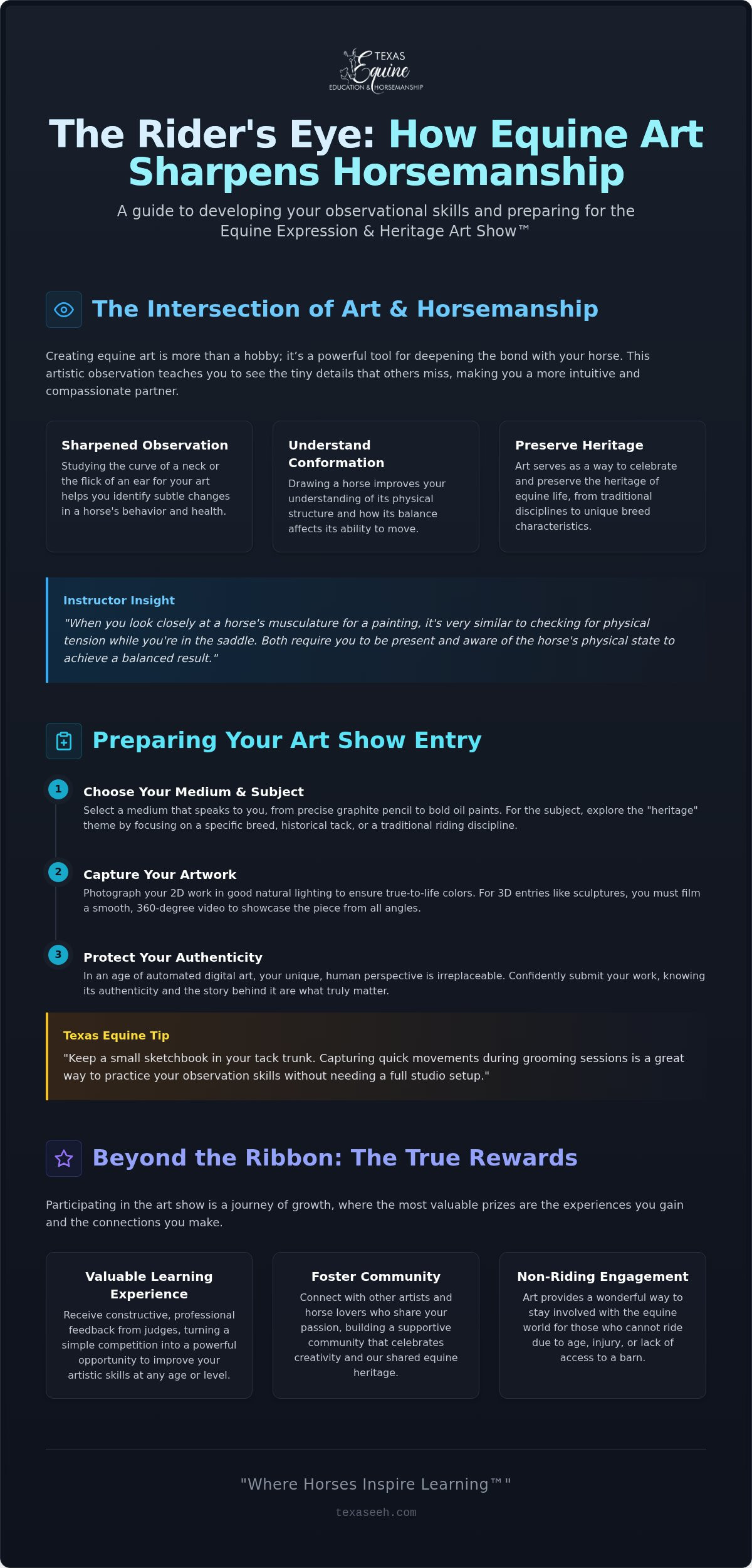
This process of artistic observation is more than just a creative exercise. It teaches you to look for the tiny details that others might miss. As you study the curve of a neck or the flick of an ear for your piece, you're practicing the same skills needed to identify subtle changes in a horse's behavior or health. This focus helps riders become more intuitive partners, as they learn to read their horse's body language with greater clarity and compassion. For those who value this kind of spiritual and intuitive growth, Third Eye Kentucky offers expert guidance through psychic readings and mediumship. Art also serves as a way to preserve the heritage of equine life, ensuring that traditional disciplines and the unique characteristics of different breeds are celebrated by future generations.
Developing the Rider's Eye Through Sketching
One of the most practical benefits of equine art is the way it improves your understanding of conformation, which refers to the physical structure and arrangement of a horse's bones and muscles. When you try to draw a horse, you quickly realize how its structural balance affects its ability to move. You must understand the horse's form before you can master its movement. This ground-up education is vital for any horseman who wants to communicate effectively with their partner.
Instructor Insight: When you look closely at a horse's musculature for a painting, it's very similar to checking for physical tension while you're in the saddle. Both require you to be present and aware of the horse's physical state to achieve a balanced result.
Art as a Non-Riding Horse Education Tool
Art provides a wonderful way to stay connected to the community for those who cannot ride due to age, injury, or current lack of access to a barn. It serves as a bridge, keeping the equine spirit alive in your daily life. You can continue your education and stay involved by exploring our foundational horse skills workshop, which offers virtual ways to engage with others who share your passion. Whether you're a seasoned professional or a beginner, the equine expression art show offers a space where everyone belongs and can learn at their own pace.
Texas Equine Tip: Keep a small sketchbook in your tack trunk. Capturing quick movements during grooming sessions is a great way to practice your observation skills without needing a full studio setup.
Choosing Your Medium and Subject: From Traditional Realism to Modern Heritage Art
Choosing how to honor the horse through art is a deeply personal decision that reflects your own connection to these animals. Some artists find peace in the quiet precision of a graphite pencil, while others prefer the bold, vibrant textures of oil or acrylic paints. Each choice allows you to highlight different aspects of the equine spirit. The equine expression art show provides a welcoming space for these varied voices, whether you're a seasoned professional in the Open division or a young artist just starting in the Youth category. This structure ensures a fair and supportive environment where everyone's skill level is respected and celebrated.
The "heritage" aspect of our show is particularly special because it encourages you to look back at the traditions that have shaped our bond with horses. This might mean focusing on the distinct conformation of a specific breed or detailing the intricate patterns on historical tack used in traditional Western or English disciplines. For inspiration on how these details have been captured throughout time, the International Museum of the Horse offers incredible archives that showcase the horse's role in human history. In our high-tech world, we also welcome digital art, but we maintain authenticity by requiring artists to be photographed with their work. This ensures every entry is a true reflection of human creativity.
2D vs. 3D: Capturing Movement in Different Dimensions
Horse Talk: In the art world, a medium refers to the materials used to create the work, such as charcoal, oil, or clay. The substrate is the surface the art is created on, like canvas, paper, or a wood panel.
Working in 3D, such as with clay or wood sculpture, is an excellent way to study equine anatomy in the round. It helps you understand how muscles wrap around the bone from every angle, which is a skill that translates directly to how you feel a horse move beneath you. For photographers, the challenge is different. Success often comes from capturing "The Moment"—that split second of peak athletic expression where the horse's power and grace are perfectly aligned. Whether you're working in two dimensions or three, the goal is to capture the living essence of the horse.
Selecting a Subject That Tells a Story
When choosing your subject, try to look beyond a simple portrait and focus on the connection between horse and human. Think about the story you want to tell. Does your piece show the quiet trust of a grooming session or the focused energy of a horse at work? If you're looking for live subjects to study and want to see these connections in person, you might consider exploring our introductory horsemanship services. Seeing horses interact in real time can provide the perfect reference for your next creative project.
Did You Know? Much of the historical equine art we see today didn't just feature horses as pets. Instead, it celebrated them as vital partners in daily work, transportation, and agricultural life, highlighting a bond built on mutual labor and respect.
Preparing Your Entry: Practical Tips for Capturing the Horse's Essence
Preparing your work for the equine expression art show is just as important as the creation itself. To help our judges see the texture of your brushstrokes or the subtle shading of your pencil work, you need a high-quality digital representation. Organizations like the Society of Equestrian Artists emphasize excellence in presentation as a way to honor the subject. Following a structured approach ensures your horse's essence translates clearly through the screen. Use this checklist to get your artwork ready for submission:
Find the right light: Use natural, indirect sunlight, such as a bright day in the shade.
Steady your lens: Use a tripod or a stable surface to prevent any blur in the image.
Align your frame: Keep your camera perfectly parallel to the artwork to avoid structural distortion.
Check your background: Place 2D pieces against a neutral, non-distracting wall.
Review the details: Zoom in on your photo to ensure the focus is sharp on the horse's eye or musculature.
Lighting and Composition for Art Photography
Safety Reminder: If you choose to photograph your art outdoors near your horses, ensure the environment is secure. A sudden gust of wind can spook a horse or knock over your easel; always keep a safe distance from active riding or turnout areas.
Common beginner mistakes often include using a built-in flash, which "washes out" delicate pencil shading and creates harsh glares on wet-looking oil paint. It's also best to avoid photographing art under yellow indoor light bulbs, as this changes the natural coat color of the horse you worked so hard to capture. Once you have a clear shot, crop the photo tightly so the edges of the room or the frame don't distract from the artwork itself.
The Human Element: Proving Authenticity
We ask for a photo of you holding your creation to preserve the integrity of human-made art. In an era of automated, digital images, this simple step confirms that your work is an original expression of your own hand and heart. This requirement protects the value of your creativity and ensures that every participant is competing on a level playing field of genuine effort.
Instructor Insight: This photo isn't for judging the artist; it's a celebration of the person behind the brush and a way to build a face-to-face connection within our virtual community.
For 3D sculptures, a 360-degree video is necessary to show the horse's anatomy from every angle. You don't need fancy equipment; simply place your piece on a rotating kitchen turntable or slowly move your smartphone around the work at eye level while keeping a steady hand. Explore the specific entry requirements for our next equine expression art show to get started on your submission.
Beyond the Ribbon: How Art Shows Foster Community and Lifelong Learning
While the excitement of receiving a rosette ribbon is a wonderful part of the experience, the true value of the equine expression art show lies in the growth you achieve along the way. We designed this event to be a supportive educational platform where every participant, regardless of their age or skill level, receives personal feedback from our professional judges. This process turns a simple competition into a meaningful lesson, helping you see your work through the eyes of an expert. By participating, you join a national community of artists who share your passion for the horse, creating a space where we can all learn from one another.
For those who wish to challenge themselves further, entering multiple classes allows you to work toward High Point and Reserve High Point awards. This requires entering three or more classes within the same division, which encourages a "portfolio" mindset. Instead of focusing on just one piece, you begin to think about your artistic journey as a building process. All participants receive a certificate of participation and a rosette ribbon, while winning entries from 1st through 8th place are recognized in our online gallery. This gallery serves as a virtual arena, connecting creators from different backgrounds and celebrating the diverse ways horses inspire us.
Understanding the Judge's Feedback
Receiving feedback is one of the most effective ways to sharpen your observational skills. When a judge points out the specific way light hits a horse's coat or suggests a slight adjustment in the proportion of a hock, they are giving you a roadmap for your next project. We encourage you to view these notes as a conversation with a mentor. If you are a young artist looking to improve the accuracy of your work, you might continue your learning by visiting The Reading Rein™ to research specific breeds and their unique histories before you start your next sketch.
Horse Talk: In an educational setting, a critique is a detailed analysis aimed at helping an artist improve by identifying both strengths and areas for growth. It differs from criticism, which often focuses only on faults without providing a path forward for learning.
Celebrating Your Progress in the Virtual Arena
The equine expression art show mirrors the philosophy of our Horse & Rider Showcase™; both events prioritize the journey of learning over the final score. For parents, linking creative activities to horsemanship for young children is a fantastic way to build confidence. It allows kids to express their love for horses in a safe, low-pressure environment before they ever step into a physical barn. Whether you are an amateur, a youth, or a professional, we invite you to share your spirit with us. You can explore additional educational resources and register for our upcoming series at our Online Art Show page to begin your own creative journey.
Sharing Your Creative Voice with the Equine Community
Creating art is a beautiful extension of your horsemanship. It allows you to slow down and truly see the horse, which naturally makes you a more sensitive and aware partner when you're back in the barn. By participating in the equine expression art show, you're doing more than just entering a contest. You're joining a safe, family-friendly environment where artists of all ages and skill levels are celebrated for their unique perspective. Each entry is a step forward in your personal journey of learning and discovery.
As you continue your journey, you may want to learn more about We LOVE Arabian Horses to deepen your appreciation for the unique heritage and personality of these animals.
Every participant walks away with more than just a rosette ribbon and certificate. You'll gain valuable, constructive feedback from professional equine art judges, providing you with a clear path for your continued growth. This experience honors the heritage of the horse while protecting the integrity of human creativity in our modern world. Whether you're sketching a quiet moment or sculpting a powerful movement, your contribution helps keep the equine spirit alive for everyone to enjoy.
We invite you to explore the Equine Expression & Heritage Art Show™ and register for the next series to see where your creativity can take you. We can't wait to see the horses through your eyes.
Frequently Asked Questions
What is an equine expression art show and who can enter?
An equine expression art show is a virtual series that celebrates the horse through various creative mediums. Hosted twice yearly, these events are open to everyone, featuring specific divisions for Youth, Amateur, and Professional Open artists. Whether you're a first-time sketcher or a seasoned painter, the show provides a supportive platform to share your work. It's a wonderful way to connect with a community that values the heritage of the horse-human bond.
Can I submit digital art or is the show only for traditional mediums?
You can certainly submit digital art, as we welcome a wide range of mediums in our classes. This includes traditional choices like oil, acrylic, graphite, and photography, as well as 3D sculptures. While we embrace modern technology, we prioritize the human element of creativity. Every entry must be the original work of the participant, ensuring that the artistic journey remains a personal and authentic experience for everyone involved.
Why do I need to take a photo of myself holding my artwork?
We require a photo of the artist holding their work to ensure that every entry is a genuine, human-made creation. This step is essential in protecting our community from the rise of AI-generated art, which can devalue the hard work of real people. It provides proof of authorship and helps us celebrate the person behind the brush. It's a simple way to maintain the integrity and authenticity of the equine expression art show.
How do the judges provide feedback on my art entry?
Judges provide written feedback to every participant, turning the competition into a valuable learning opportunity. Instead of just receiving a score, you'll get insights into your technical execution, anatomical accuracy, and composition. This constructive critique helps you understand your strengths and identifies areas where you can sharpen your skills. It's an educational approach that mirrors our commitment to helping you grow as both an artist and a horse person.
Is there a specific age limit for the youth divisions?
Our youth divisions are designed to be inclusive for children of all ages, providing a safe space for early creative development. For any participant under the age of 18, we require a parent or legal guardian to approve the submission form. This keeps the environment family-friendly and ensures that young artists feel supported as they begin their journey. It's a great way for homeschool families to incorporate equine education into their curriculum.
What happens if I want to enter a sculpture or other 3D piece?
Submitting a 3D piece, such as a clay sculpture or wood carving, requires a few extra steps to show your work properly. You must provide clear photos of the front, side, and back, along with a 360-degree video uploaded to YouTube. This allows the judges to see the anatomical balance and detail from every angle, just as they would in person. It's a thorough process that ensures your three-dimensional work receives a fair and detailed evaluation.


Comments