


Choosing the Right Beginner Horse First Aid Class: A Foundation for Safety
- Kim Williams

- 1 day ago
- 9 min read
Imagine walking into the barn and noticing your horse isn't quite himself; he's pawing at the ground and turning his head toward his flank. That sudden knot in your stomach is a feeling many new owners know well. Choosing a beginner horse first aid class is about more than just buying a stethoscope; it's about gaining the peace of mind that comes from true preparation.
You likely started your journey in the saddle, but realized quickly that riding lessons don't always cover the quiet, critical moments of ground-based care. It's natural to feel anxious about missing a subtle sign of illness or making a mistake during a crisis. This guide will help you evaluate equine health programs that empower you with the skills to recognize, respond to, and prevent emergencies through foundational education. We'll explore how to choose a course that teaches you to perform basic health checks, discern when to call the vet, and deepen the bond you share with your horse through confident daily care.
Table of Contents
Beyond the Bandage: Why Education is the Foundation of Equine Safety
A beginner horse first aid class is often the first step in a deeper journey of horsemanship. It moves beyond the basics of riding to focus on the horse's total well-being. At Texas Equine Education & Horsemanship, our philosophy centers on the idea that "Where Horses Inspire Learning™" begins with a deep respect for the animal's health. While many people think of first aid as a response to an accident, true safety is built on proactive management. By understanding the "why" behind equine care, you shift from a state of worry to one of readiness. This education builds the self-assurance you need to stay calm and focused when your horse needs you most.
Horse Talk: Understanding the 'Normal' Horse
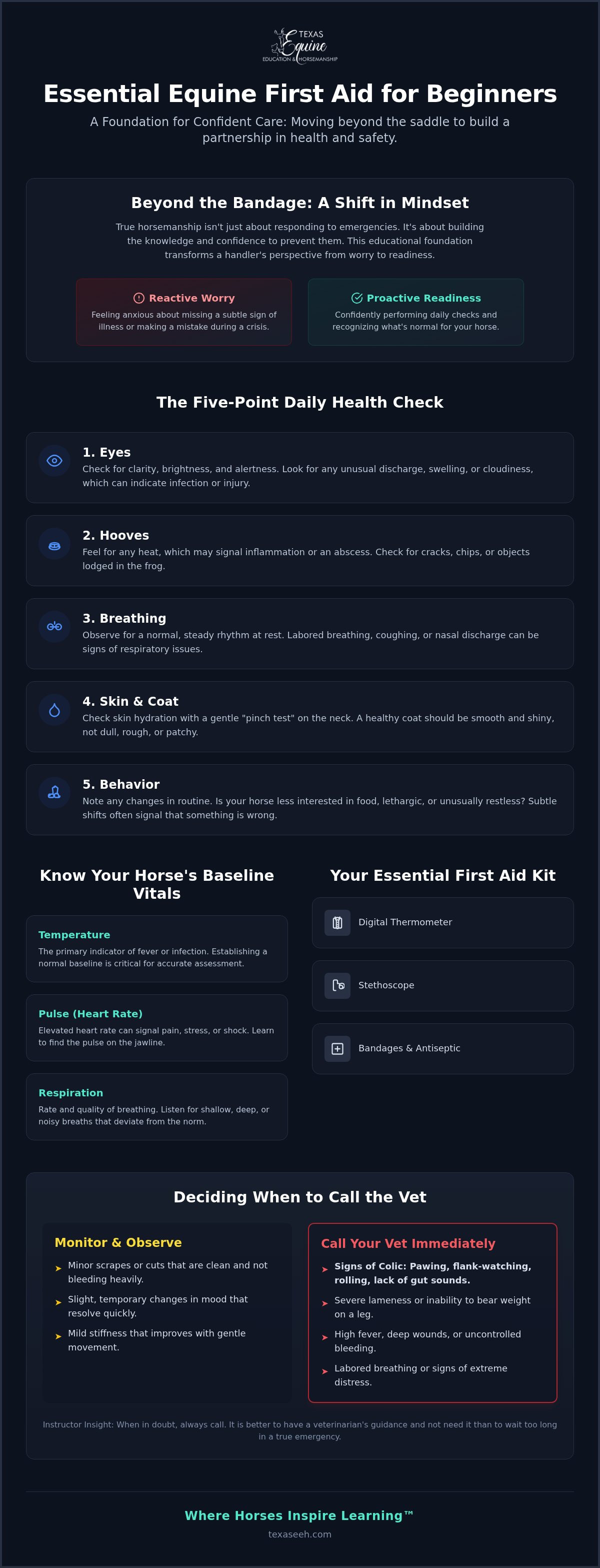
To recognize when something is wrong, you must first understand what is right. This starts with mastering a horse's vital signs, which include temperature, pulse, and respiration. These numbers form the baseline for all equine care. Beyond the numbers, you'll learn to observe typical behavior and temperament. Does your horse usually greet you at the gate? Is he a slow eater? Small changes in these patterns often signal health issues long before they become emergencies. Learning these nuances in a supportive environment helps you build a well-stocked equine first-aid kit and, more importantly, the confidence to use it effectively.
Instructor Insight: The Connection Between Groundwork and Health
Effective first aid is impossible without solid handling skills. If a horse is in pain, he may be hesitant or fearful. Your ability to lead, halter, and stand quietly with your horse is essential for any veterinary assessment. Trust is the bridge between a crisis and a calm resolution. When you've established a relationship based on clear communication, treating a minor wound or administering medication becomes a peaceful process rather than a struggle. For those looking to strengthen these skills, our foundational horsemanship course offers a ground-up approach to equine success. This education ensures you're prepared for the physical and emotional demands of daily horse care.
Essential Skills for New Handlers: Reading the Horse Before the Crisis
A quality beginner horse first aid class teaches you that the best care happens before a crisis begins. This starts with the 'Five-Point Health Check.' By systematically observing the eyes for clarity, the hooves for heat, the breathing for rhythm, the skin for hydration, and the behavior for changes, you create a complete picture of wellness. Catching early signs of colic, such as subtle restless movements or a lack of interest in food, allows for much faster intervention. Learning to communicate these findings clearly to a veterinarian ensures they have the data needed to provide the best advice over the phone.
Safety Reminder: Protecting Yourself While Helping the Horse
Your safety is the priority when assessing an injured or ill horse. A nervous animal needs a confident, educated handler who understands how to stay out of the 'kick zone.' Proper footwear and mindful positioning are non-negotiable during a health check. If you're new to handling, reviewing our horse safety for new riders guide provides the standards needed to remain safe while providing care. Trust and calm energy are your most effective tools when restraining a horse for a basic assessment.
Horse Talk: Building Your Equine First Aid Kit
Every handler should maintain a well-prepared kit that supports daily monitoring and emergency response. Understanding your horse's vital signs requires a few specific tools. We've curated a selection of helpful items in our A Little Bit of This & That product line to help you get started. Each item serves a specific purpose in your journey of care:
Thermometer: This is essential for detecting infection or systemic stress.
Stethoscope: Use this to listen for gut sounds and heart rate, which provides clues to digestive health.
Bandages and Antiseptic: These allow you to clean and protect minor abrasions before they become infected.
Preparing your kit is a step toward greater stability in your horse's life. If you want to deepen your knowledge, consider exploring our education programs for hands-on guidance.
Evaluating Equine Education: What to Look for in a Quality Class
Choosing a beginner horse first aid class is a significant step in your personal growth as a handler. You want a program that doesn't just show you how to apply a bandage, but explains the husbandry and management choices that prevent the need for one. A quality curriculum should integrate biosecurity and stall management into its medical training. These foundational habits protect your horse from illness and create a safer environment for everyone in the barn. When you understand the biological reasons for a specific treatment, you become a more effective advocate for your horse's long-term health.
The Role of Theory and Literacy in Horse Care
Learning doesn't stop when you leave the barn. We believe that theory and literacy are vital components of horsemanship that support your practical skills. For younger learners or those who enjoy a deeper dive into equine topics, reading horse-themed books can reinforce complex health concepts in a gentle, accessible way. Our national literacy program, The Reading Rein™, provides a wonderful resource for this type of literacy-based education. Having access to an on-site equine library also allows students to research specific health topics at their own pace, turning curiosity into stable knowledge that lasts a lifetime.
Instructor Insight: Mentorship vs. Lecture
The best educators act as patient mentors rather than just lecturers. When you're a beginner, you need an inclusive environment where questions are encouraged and mistakes are seen as learning opportunities. This supportive atmosphere builds the self-assurance necessary to handle real-world challenges with tranquility. Look for programs that offer a path for continued growth, such as our 'Virtual Education Thursdays.' These sessions provide ongoing theory support and allow you to stay connected with a knowledgeable community. A quality beginner horse first aid class should be the beginning of a journey, not just a one-time event.
If you're ready to build a stronger foundation for your horse's safety, we invite you to browse our available education programs to find a format that fits your learning style.
From the Classroom to the Barn: Applying First Aid Skills Daily
Completing a beginner horse first aid class is a transformative milestone, but the true value of this education reveals itself in the quiet moments of daily care. When you approach your horse each morning with a trained eye, you aren't just looking for problems; you're deepening your understanding of his unique personality and physical needs. This consistent observation builds a profound sense of trust. Your horse learns that you're a reliable partner who notices when he's uncomfortable, and you gain the peace of mind that comes from being truly prepared. This foundation of care is essential as you prepare for community events like the Horse & Rider Showcase™, where the health and presentation of your equine partner are celebrated.
Texas Equine Tip: Consistency Over Intensity
The most effective way to retain your first aid skills is to integrate them into your regular grooming routine. Checking a horse's digital pulse or listening to gut sounds shouldn't be reserved for emergencies. By practicing these checks when your horse is healthy, you master the 'normal' so the 'abnormal' becomes instantly recognizable. This steady approach is much more effective than trying to learn under the stress of a crisis. Remember that learning to handle horses safely is the first step in any health assessment, as it prevents common barn injuries for both you and your horse. In this context, biosecurity is best defined as the daily habit of maintaining clean environments and mindful protocols to prevent the spread of illness before it starts.
Ready for the Next Step: Equine Industry Readiness
For those who feel a calling to work more deeply with horses, mastering first aid is a vital prerequisite for professional roles. Whether you're interested in stable management or equine education, your ability to provide foundational care is your most valuable asset. Our Equine Industry Readiness Program™ is designed for aspiring professionals who want to turn their passion into a career through structured, 8-week segments. This program builds on the skills learned in your initial classes, offering a clear path toward stability and expertise in the field. Horsemanship is a journey that requires patience and dedication. Every interaction with a horse is a fresh opportunity to learn something new, and every lesson you absorb brings you closer to the compassionate, knowledgeable handler you're meant to be.
Embrace Your Journey Toward Confident Care
Stepping into the role of a horse's guardian is a path filled with discovery and meaningful connection. By choosing a beginner horse first aid class that values proactive education, you move beyond simple emergency response. You've learned that true safety is built on a foundation of daily observation, understanding vital signs, and fostering a relationship of trust through mindful groundwork. This knowledge doesn't just prepare you for a crisis; it transforms every interaction you have in the barn into an opportunity for growth and tranquility.
At Texas Equine Education & Horsemanship, we believe that education is a step-by-step process. You might explore literacy through The Reading Rein™ or prepare for a professional career through our Equine Industry Readiness Program™. Your commitment to learning creates a safer world for horses in every environment. This is the place where horses inspire learning™ and where your dedication turns into real-world stability. We invite you to continue your learning with our foundational equine care resources and join a community that values holistic, patient mentorship. Your journey is unique, and every step you take builds the self-assurance you need to be the partner your horse deserves.
Frequently Asked Questions
Do I need to own a horse to take a beginner first aid class?
You don't need to own a horse to participate in a beginner horse first aid class. These programs are designed for anyone who wishes to deepen their understanding of equine wellness, including university students and those who lease horses. Learning these skills before you take on the responsibility of ownership ensures you're prepared from day one. It's a wonderful way to build confidence while working with educational horses in a safe and supportive environment.
What is the most important skill to learn in an equine first aid course?
The most vital skill you'll acquire is the ability to recognize 'normal' behavior and physical baselines. While bandaging is helpful, knowing your horse's typical heart rate, respiration, and temperature allows you to spot trouble before it escalates. This foundational horsemanship empowers you to act as an informed advocate for your horse. Mastering these assessments ensures you can provide clear, accurate data to your veterinarian when every second counts during a potential health crisis.
Can children participate in horse health and care classes?
Children are absolutely welcome in our horse health and care classes. We offer specialized programs like Tiny Tot Lessons and youth-oriented Equine Care Classes that focus on age-appropriate safety and handling. These sessions encourage a sense of responsibility and compassion from a young age. By learning the basics of horse wellness early on, young handlers develop a lifelong respect for the animal's needs and build a deeper bond through daily care.
How do I know if my horse's emergency requires a vet immediately?
You should call a veterinarian immediately if you observe signs of severe distress. These include non-weight-bearing lameness, profuse bleeding, or symptoms of colic like constant rolling and pawing. Eye injuries are always considered emergencies due to their delicate nature. If your horse has a fever or isn't eating, it's best to consult a professional rather than waiting. Your training helps you describe these symptoms accurately so the vet can prioritize your horse's care.
Is there a certification for beginner horse first aid?
Many programs offer a certificate of completion to recognize your dedication to equine safety. While these aren't medical licenses, they demonstrate that you've mastered the foundational skills taught in a beginner horse first aid class. Some advanced certifications are valid for two or three years and may even qualify for continuing education credits. Having this documentation can be a helpful asset if you're pursuing professional roles within the equine industry or volunteering at stables.
How long does it take to feel confident in basic horse handling and care?
Confidence is built through a steady, unhurried journey rather than a single lesson. While a one-day clinic provides essential tools, many students find that structured programs offer the repetition needed for true self-assurance. Most handlers begin to feel comfortable with basic health checks after a few weeks of consistent practice. Remember that horsemanship is a lifelong learning process; every interaction with a horse adds to your experience and stability in the barn.


Comments