


Veterans and Horses: The Impact of Equine-Assisted Services

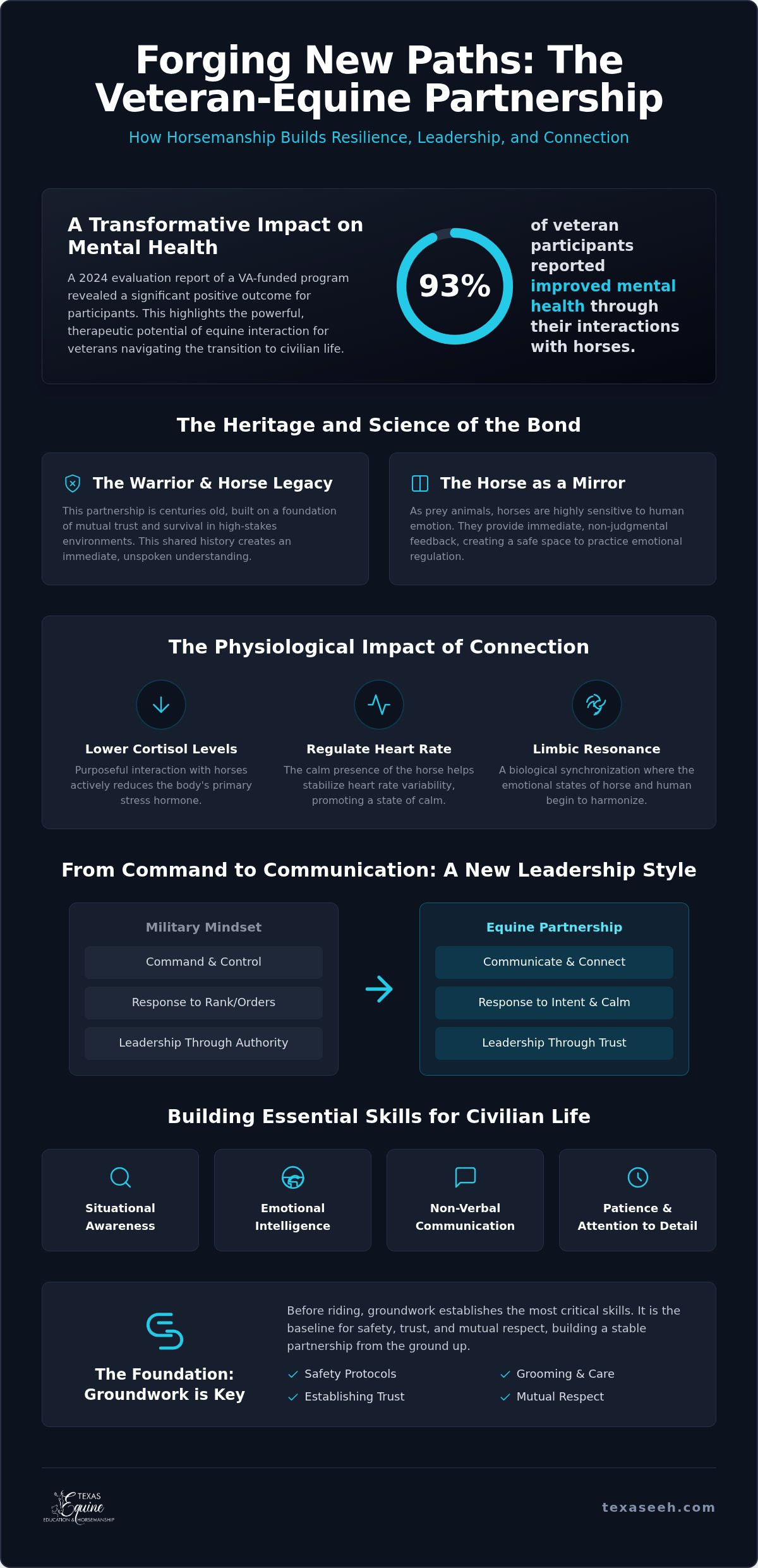
A 2024 evaluation report of a VA-funded program found that 93% of veteran participants reported improved mental health through their interactions with horses. For many, the transition to civilian life feels like losing a vital sense of mission or the reliable structure of a team. It's natural to feel disconnected or struggle with hyper-vigilance in peaceful environments. The quiet, honest nature of the bond between veterans and horses offers a bridge back to a sense of purpose and calm.
This article explores how equine-assisted services and horsemanship provide unique opportunities for growth, leadership, and connection. You'll discover how working with these animals helps you regain situational awareness and develop a new skill set. We will look at the practical benefits of groundwork and how this environment fosters a supportive community that understands and respects military values.
Table of Contents
The Heritage and Science of the Veteran-Equine Bond
Equine-assisted services encompass a range of educational, therapeutic, and professional activities involving horses. While the terminology is modern, the connection between veterans and horses is centuries old. Historically, the "warrior and horse" partnership was a bond forged in the necessity of mutual trust and survival. This heritage creates a unique foundation for growth, as veterans and horses have long been reliable partners in high-stakes environments.
Horses are naturally prey animals, which means they've evolved to be acutely sensitive to their environment. They possess an uncanny ability to mirror human emotion, offering immediate and non-judgmental feedback to those they work with. For a veteran, this mirror is invaluable. It provides a safe space to practice emotional regulation and improves situational awareness without the pressure of verbal communication. This dynamic is a key component of the Animal-Assisted Therapy Overview, which highlights how these interactions support recovery.
Physiological Impacts of Equine Interaction
Purposeful interaction with horses helps lower cortisol levels and regulate heart rate variability in humans. This process often involves "limbic resonance," a state where the emotional frequencies of the horse and handler begin to harmonize. Such biological synchronization fosters emotional stability and helps ground the individual in the present moment. Understanding these mechanics is essential for anyone exploring A Professional Guide to Equine-Assisted Services to see how foundational work leads to lasting wellness.
Foundational Horsemanship: Skills for Transition and Leadership
The partnership between veterans and horses is built on a shared language of discipline and situational awareness. Foundational horsemanship mirrors core military values such as consistency, clear communication, and a respect for structure. However, working with a large animal requires a subtle shift from commanding to communicating. Horses don't respond to rank or orders; they respond to intent and calm leadership. This transition helps individuals refine their non-verbal cues and emotional regulation, which are vital components of mission-readiness. By learning to lead through trust rather than force, you develop a more nuanced approach to professional authority.
These interactions develop "soft skills" that are highly transferable to civilian career integration. Learning to read a horse’s body language and adjusting one's own energy builds a level of emotional intelligence that is essential in any workplace. The federal government acknowledges the value of these specialized programs, as seen in U.S. Government Grants for Equine Therapy. This support highlights how equine-assisted services provide a structured path for personal development and community connection, helping to bridge the gap between service and the civilian workforce.
The Importance of Groundwork and Non-Riding Education
Groundwork is the most critical safety skill for any new equine handler. It establishes a baseline of trust and mutual respect before anyone ever steps into a stirrup. Activities like grooming and equine care classes foster patience and a meticulous attention to detail. This ground-up approach ensures that you aren't just learning to ride, but learning to understand the horse as a partner. Focusing on these fundamentals builds the stability and versatility needed to handle unpredictable situations with a steady hand and a clear mind.
Exploring Equine-Assisted Services and Educational Paths
The journey between veterans and horses doesn't have to end with a single session. Many individuals find that their initial interest grows into a lifelong pursuit, ranging from recreational horsemanship to professional industry certifications. These diverse educational paths allow you to rediscover a sense of mission while building a new career or hobby. Government resources, such as those detailing Equine-Assisted Therapy for Veterans, highlight how these services serve as a valuable alternative to traditional settings. By engaging in structured learning, you can transition from a participant to a knowledgeable advocate within the equine community.
Shared experience is a cornerstone of success in these programs. Being surrounded by a community that understands military values provides a supportive environment where the bond between veterans and horses can truly flourish. This connection often leads to long-term involvement in the industry, where your leadership skills are highly valued. Whether you are pursuing Equine Health and Care Classes or exploring administrative roles, the equine world offers a place to belong. Horses don't judge your past; they only respond to who you are in the present moment.
Connecting with Stars & Stirrups and Heritage Art
Texas Equine™ is dedicated to supporting this journey through specialized resources. Our Stars & Stirrups program is designed specifically for veterans and first responders, providing a ground-up approach to horsemanship. You can find more details at stars stirrups. Beyond the barn, we celebrate the veteran-equine story through the Equine Expression & Heritage Art Show. This creative outlet offers a unique medium for processing service experiences and sharing your perspective with the public. Learn more about participating at www.texaseeh.com/artshow.
Embracing a New Mission in Horsemanship
The historical bond between veterans and horses serves as a powerful bridge to personal growth and emotional stability. By focusing on a ground-up educational approach, you can translate your military leadership into the nuanced language of equine communication. This journey isn't just about learning a new skill. It's about finding a supportive community and a renewed sense of purpose. Whether you're interested in foundational horsemanship or expressing your service story through creative outlets, the equine world offers a path forward.
For veterans and first responders looking to begin their journey, learn more about Stars & Stirrups and our Equine Expression & Heritage Art Show at Texas Equine™. We're here to guide you through every step of this transformative experience with patience and expertise.
Frequently Asked Questions
Do I need prior horse experience to participate in a veteran equine program?
You don't need any prior experience to join a veteran equine program. Most programs begin with ground-level education to ensure safety and comfort for both the handler and the animal. This introductory phase allows you to learn basic equine behavior and handling techniques at your own pace. Starting from the ground up ensures you build a solid foundation of trust before moving on to more complex horsemanship tasks.
What is the difference between equine-assisted therapy and foundational horsemanship?
Equine-assisted therapy is a clinical approach led by mental health professionals to address specific psychological needs. If you are interested in pursuing a career as a therapist or health coach, check out Active Health Group for accredited training programmes. In contrast, foundational horsemanship is an educational discipline focused on teaching the skills required to care for and work with horses. While horsemanship has significant wellness benefits, its primary purpose is to build professional competency and a deep understanding of equine management. Both pathways offer valuable support for **veterans and horses** through structured interaction.
Many equine-assisted services offer opportunities for family involvement to support the veteran's transition. While some modules are specifically for service members, family sessions often focus on improving communication and rebuilding connections through shared activities. These sessions provide a neutral space for families to interact with horses together, fostering a sense of unity and mutual support in a tranquil environment. This inclusive approach helps integrate the benefits of horsemanship into daily family life.
How do horses help veterans with situational awareness and leadership?
Horses provide immediate feedback to your body language and emotional state, which requires high levels of focus and presence. To lead a horse effectively, you must maintain a steady energy and clear intent, mirroring the situational awareness required in military operations. Working with veterans and horses helps sharpen these leadership traits by requiring you to adapt your communication style to a non-verbal partner. This process builds the self-assurance and adaptability needed for various civilian leadership roles. To further strengthen your confidence and awareness, you might check out Performance Krav Maga for practical self-defense training.


Comments