


A Professional Guide to Equine-Assisted Services
- Kim Williams

- 2 hours ago
- 6 min read
What if the most effective way to build self-assurance isn't found in a classroom, but in the quiet presence of a thousand-pound animal? It's common to feel a natural pull toward horses while feeling confused by the complex labels like hippotherapy or equine-assisted learning. You aren't alone in wanting to understand how these programs actually work and whether they meet the safety standards your family deserves.
This guide provides a clear look into the world of equine-assisted services, helping you distinguish between clinical therapy and developmental education. We'll explore how structured interactions foster growth and what specific standards define a high-quality program. You'll gain the knowledge needed to find the right environment for personal development, professional readiness, or specialized support for veterans and youth. This journey begins with understanding how the horse acts as a steady partner in human health and learning.
Table of Contents
Defining the Umbrella: What Are Equine-Assisted Services?
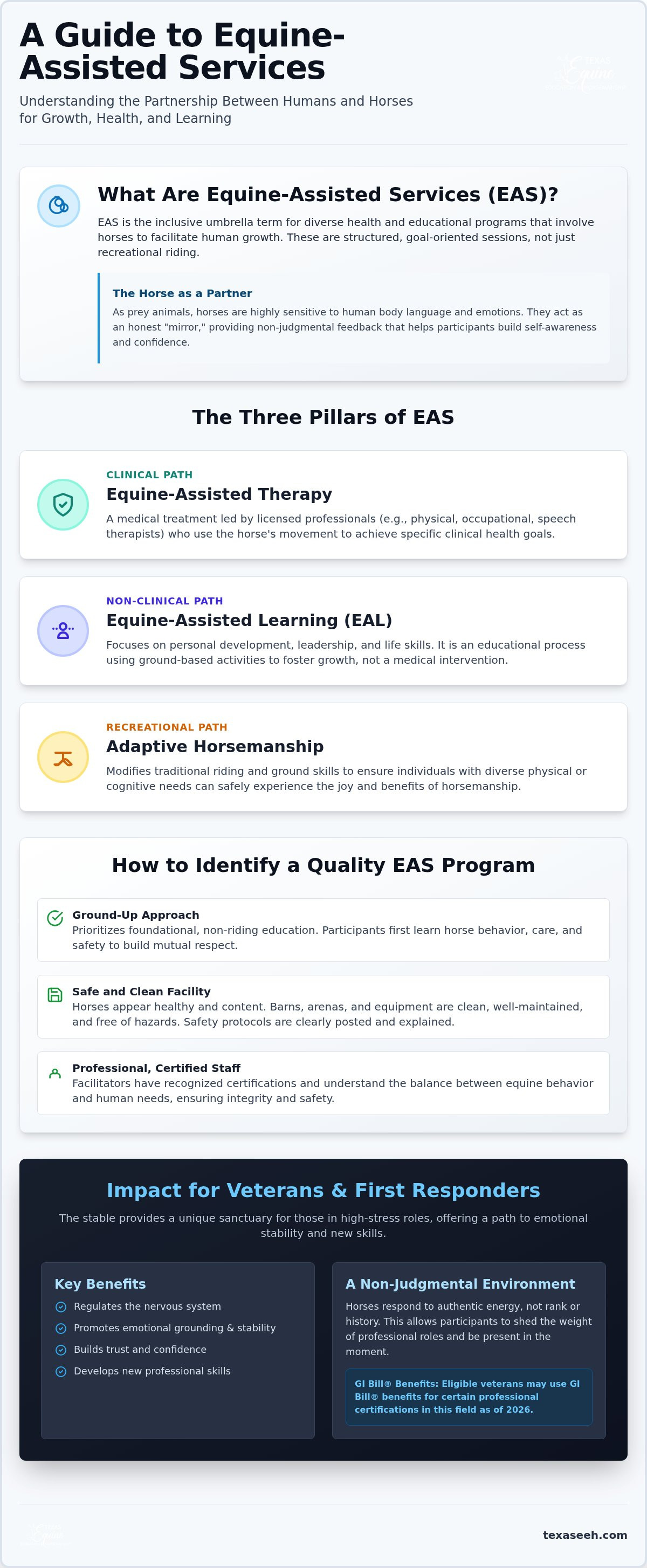
The term equine-assisted services acts as a broad umbrella for diverse programs that prioritize human growth through horse interaction. This field has transitioned from simple recreational riding to highly intentional, goal-oriented sessions. At the heart of this work is the horse, a sentient partner that remains uniquely sensitive to human body language and emotional states. Because horses are prey animals, they've evolved to read subtle cues in their environment. This sensitivity allows them to act as a mirror, providing honest feedback that helps participants build awareness and self-assurance. These interactions aren't accidental. They're carefully designed to foster stability and readiness in every participant.
The Three Pillars: Therapy, Learning, and Horsemanship
Understanding the distinctions between these categories helps you find the right fit for your journey. Equine-assisted therapy is a clinical service. It's led by licensed medical professionals like physical therapists, occupational therapists, or speech-language pathologists who use the horse’s movement to meet specific health goals. This is a medical treatment where the horse is an integral part of the clinical plan.
Equine-Assisted Learning (EAL) focuses on a non-clinical path. Here, the emphasis is on personal development, leadership, and academic skills. It's about life lessons learned through ground-based activities rather than medical intervention. Finally, Adaptive Horsemanship modifies traditional riding and ground skills. It ensures that individuals with diverse physical or cognitive needs can experience the joy of horsemanship in a safe, supportive environment. Each pillar offers a structured way to build stability and confidence through a step-by-step process.
Navigating the Landscape: How to Identify Quality EAS Programs
Identifying a quality program requires looking beyond the saddle. High-quality equine-assisted services prioritize a ground-up approach where participants start by learning about the horse's needs, behavior, and care before ever mounting. Ground-based interaction builds a foundation of mutual respect and safety. It's helpful to review the Optimal Terminology for Equine-Assisted Services to ensure a program aligns with recognized industry standards and professional frameworks.
A safe facility is easy to spot if you know what to look for. Horses should appear healthy, well-rested, and content in their environment. Barns and arenas must be clean and free of hazards. Clear safety protocols should be visible and explained to every newcomer. These standards reflect a commitment to both human and equine well-being within high-quality equine-assisted services. Structured environments like these leave the reader feeling well-informed and at ease.
Industry Standards and Professional Readiness
Facilitators must understand the intricate balance between equine behavior and human needs. Professional certification ensures that staff can handle complex situations with poise and integrity. Programs like the Equine Industry Readiness Program™ are essential for preparing future leaders. They offer the specific training needed to maintain high standards of care while acting as a bridge between the specialized field and the public.
Starting with a foundational horsemanship course provides the stability required for long-term success. This non-riding education is often the most vital component of the journey. It builds the readiness necessary to handle horses with confidence. If you're looking for a place to begin your journey, exploring educational programs can help you find a path that fits your specific developmental goals.
The Impact of EAS for Veterans and First Responders
For those in high-stress roles, the stable offers a unique sanctuary. The calm, intentional nature of horsemanship helps first responders regulate their nervous systems after long shifts in demanding environments. Horses respond to authentic energy and subtle cues. They don't care about rank or history, which allows participants to shed the weight of their professional roles. These equine-assisted services require a deep level of presence that naturally grounds the individual and promotes emotional regulation.
Moving from military service to a stable environment provides a clear path toward new professional skills and emotional stability. Veterans often find that the structured environment of a barn mirrors the discipline of military life but adds a vital layer of quiet tranquility. Ground-based care is a cornerstone of this process. It builds trust and confidence through simple, repetitive tasks like grooming and health checks. For those looking to turn this passion into a career, the VA allows eligible members to use GI Bill® benefits for certain professional certifications in this field as of 2026.
Building Resilience Through Foundational Horsemanship
Equine care classes foster a sense of responsibility and tranquility by focusing on the horse's physical and emotional needs. These horsemanship programs are specifically designed to help veterans and first responders translate their existing leadership qualities into a new, peaceful context. Texas Equine™ supports this journey through Stars & Stirrups, a program that provides dedicated support for our nation's heroes. By engaging with equine-assisted services in this way, participants gain the readiness needed for both personal wellness and potential career shifts. This step-by-step process ensures that every participant feels supported as they build a new relationship with their surroundings and themselves.
Embracing the Path of Purposeful Horsemanship
Understanding the diverse world of equine-assisted services is the first step toward finding a program that aligns with your specific goals. By prioritizing ground-up education and recognizing the hallmarks of a safe, structured facility, you can ensure a journey that's both transformative and secure. Whether you're a veteran seeking tranquility or a professional looking for developmental growth, the horse provides a unique mirror for self-assurance and stability.
Texas Equine™ prioritizes a nurturing, education-first environment. We offer comprehensive equine care classes and professional development through the Equine Industry Readiness Program™ to foster long-term success. If you're ready to experience the calming impact of the stable, we invite you to learn more about our Stars & Stirrups program and see how we support our heroes through horsemanship. Your journey toward readiness is a step-by-step process. The stable door is always open.
Frequently Asked Questions
What is the difference between equine-assisted therapy and equine-assisted learning?
Equine-assisted therapy is a clinical health service delivered by licensed medical professionals, such as physical therapists or psychologists, to meet specific medical goals. In contrast, equine-assisted learning focuses on non-clinical personal development and academic skills. While therapy treats a specific condition, learning programs build life skills and leadership through structured horse interactions. Both paths utilize the horse's unique sensitivity to foster human growth.
Do I need prior horse experience to participate in equine-assisted services?
You don't need any previous horse experience to begin your journey. Most quality programs prioritize a ground-up approach that starts with basic equine care and handling. This ensures every participant feels safe and builds self-assurance before moving to more advanced activities. Starting with the basics allows you to develop a genuine bond with the horse while learning the foundational skills necessary for stability.
How do horses help with mental health and emotional wellness?
Horses act as sentient partners that are highly sensitive to human body language and internal states. Because they're prey animals, they provide immediate, honest feedback to the energy you bring into the stable. This interaction helps you practice emotional regulation and presence in a peaceful environment. These equine-assisted services create a supportive space where you can build resilience and holistic well-being through mutual respect.
Are there specific equine programs available for veterans and first responders?
Dedicated programs exist specifically to support the unique needs of heroes in high-stress professions. These initiatives focus on nervous system regulation and building emotional stability through intentional horsemanship. For example, the Stars & Stirrups program provides a structured environment where veterans and first responders can transition their leadership skills into a tranquil setting. These equine-assisted services offer a path toward new professional readiness and personal tranquility.


Comments