


Starting a Career with Horses with No Experience: A Beginner’s Guide
- Kim Williams

- 11 minutes ago
- 6 min read
You don't need to be a lifelong rider or an expert equestrian to build a meaningful, professional life around horses. It's a common misconception that years in the saddle are a prerequisite for every role in the barn. If you feel intimidated by technical jargon or unsure where to begin, you aren't alone. Many successful professionals began their journey with nothing more than a deep respect for animals and a willingness to learn. This guide will show you that starting a career with horses with no experience is a practical and rewarding path for anyone dedicated to the process.
You'll discover entry-level roles that prioritize reliability and safety over riding skills. We will also explain what barn managers look for in new hires and how you can find reputable certification programs to build your resume. By focusing on foundational horsemanship, you can step into the equine industry with confidence.
Table of Contents
Understanding the Equine Industry Landscape for Beginners
The equine industry is a vast ecosystem that extends far beyond the show ring. While many people associate horses primarily with riding, professional careers in the equine industry often focus on what happens on the ground. This landscape includes diverse sectors like stable management, equine health, and educational support. Success in these areas requires a mental shift. You are moving from recreational enjoyment to a role of professional responsibility. Barn owners today are actively seeking individuals who have invested time in equine health and care classes because they need reliable handlers who understand the "why" behind every daily routine.
High-Demand Entry-Level Roles in Equine Care
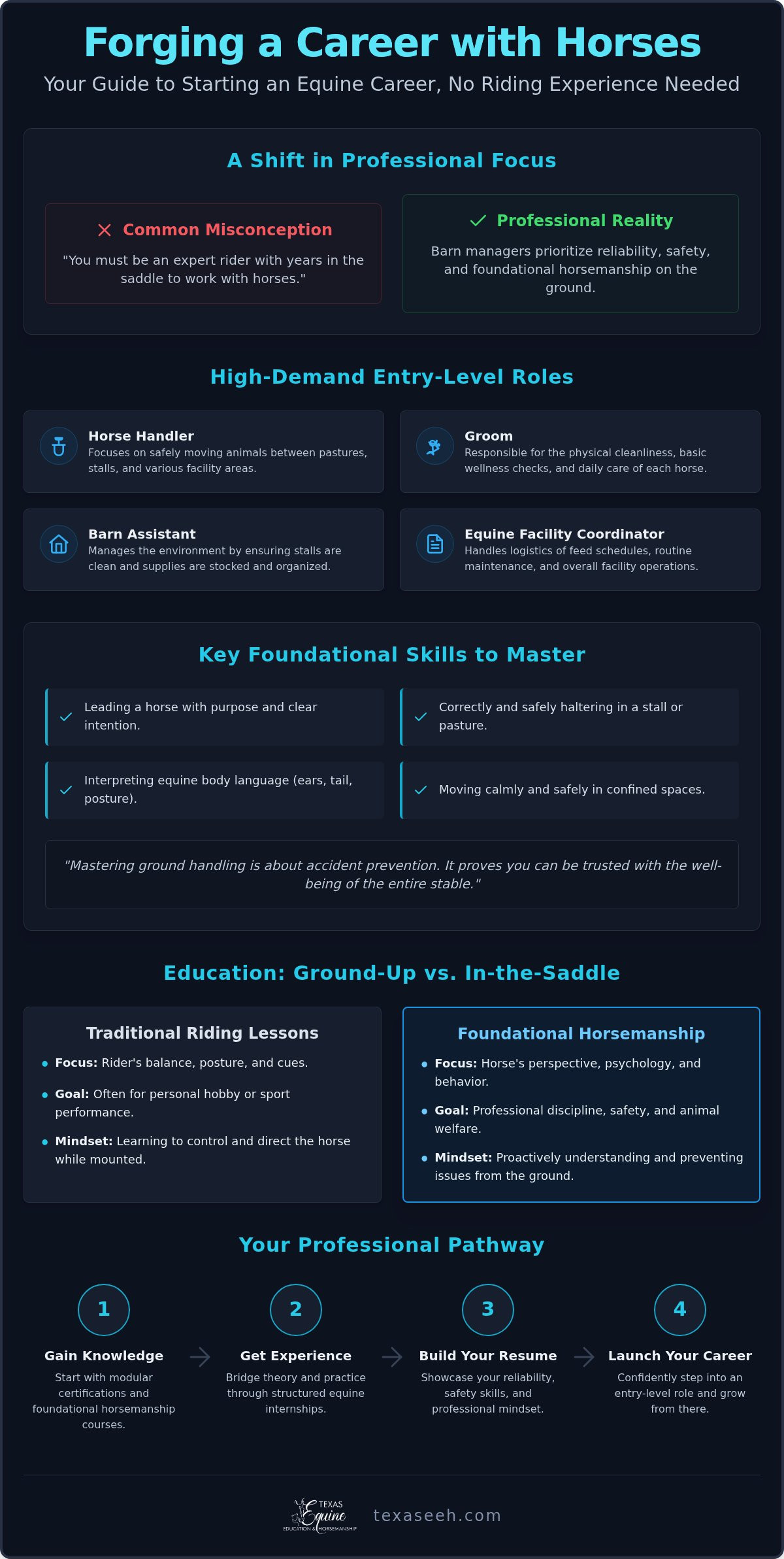
When starting a career with horses with no experience, you'll likely begin in roles that support the daily rhythm of a facility. These positions are the essential backbone of any professional operation. Without them, trainers couldn't focus on performance and horses wouldn't thrive in a stable environment. Common entry points include:
Horse Handler: Focuses on safely moving animals between pastures, stalls, and grooming areas.
Groom: Responsible for the physical cleanliness and basic wellness checks of each horse.
Barn Assistant: Manages the environment by ensuring stalls are clean and supplies are organized.
Equine Facility Coordinator: Handles the logistics of feed schedules and general facility maintenance.
Your daily responsibilities in these roles rarely involve being in the saddle. Instead, you'll spend your time checking water troughs, monitoring hay quality, and identifying subtle changes in a horse's behavior. Starting a career with horses with no experience is about building trust with animals and colleagues through consistent, thoughtful care and a steady presence.
Building Foundational Horsemanship and Ground-Handling Skills
Foundational horsemanship is the essential knowledge of horse behavior, safety, and ground handling. It's the silent language you speak before you ever set foot in a stirrup. When starting a career with horses with no experience, your ability to move safely around a thousand-pound animal is your most valuable asset. Barn managers prioritize this ground-up knowledge because a safe handler ensures the well-being of the entire stable. While riding is often a personal hobby, ground handling is a professional discipline. You can explore various equine industry career options that focus entirely on these specialized management skills.
Mastering the "First Five Skills" is your professional entry point. These include leading with intention, correctly haltering a horse in a stall, and interpreting equine body language. Understanding subtle cues, like a flickered ear or a shifted weight, helps you stay safe in tight spaces. Starting a career with horses with no experience becomes much easier when you can demonstrate a calm, respectful presence. These skills prove you're ready for the daily responsibilities of a working barn and can be trusted with the animals' safety.
Why Ground-Up Education Beats Riding Experience
Standard riding lessons usually focus on the rider's balance and cues. In contrast, a foundational horsemanship course teaches you to understand the world from the horse's perspective. Reading a horse is about accident prevention. It involves seeing a potential spook before it happens and responding with quiet authority. This proactive mindset makes a new employee an immediate asset to any facility. When you understand equine psychology, you become a partner in the horse's care rather than just a passenger. If you're looking for a place to begin your journey, exploring foundational education programs can provide the steady guidance you need to build a lasting career.
Professional Readiness and Internship Opportunities
Transitioning from a casual interest to a professional role requires a specific kind of immersion that moves beyond basic interaction. Equine internships act as a vital bridge between "loving horses" and "working with horses" by offering a structured look at the daily demands of stable operations. This experience is essential because it introduces you to the pace and responsibilities of a high-functioning facility. You'll learn to manage resources, prioritize animal welfare under pressure, and work effectively within a professional team environment.
Building a professional resume doesn't always require a four-year commitment to a traditional university degree. Modular certifications allow you to gain specialized knowledge in manageable segments that fit around your existing life or work commitments. This step-by-step approach is particularly helpful for those starting a career with horses with no experience, as it provides documented proof of your growing competency. Alongside these certifications, networking within the national equine community is vital. Connecting with established professionals through associations and clinics creates a support system that can guide your long-term career stability and growth.
Transitioning from Education to the Workforce
When you're ready to enter the job market, you should focus on how your training has prepared you for the specific safety needs of a barn manager. Presenting non-traditional experience or independent certifications requires a readiness mindset that emphasizes your commitment to reliability and safe handling. It's important to look for equine internships that prioritize structured mentorship over general labor. These programs provide the professional feedback needed to refine your techniques and build the self-assurance required for more advanced roles. Demonstrating a proactive approach to learning will make you a standout candidate in the competitive equine workforce.
Taking Your First Steps in the Equine Industry
Building a professional life around horses begins with a single, intentional step toward education. You've learned that the industry values foundational safety and ground-handling skills far more than a competitive riding resume. By focusing on equine behavior and professional readiness, you can transform your passion into a sustainable career path. Starting a career with horses with no experience is entirely possible when you have the right mentorship and a structured roadmap to follow.
Texas Equine™ offers this support through the Equine Industry Readiness Program™. This national curriculum is designed for university-level professional development and focuses on essential care. You can build your resume through certification segments completed in flexible 8-week modules. Explore professional development through the Equine Industry Readiness Program™. Your dedication to the horse's well-being is the most important tool you'll ever own, and we're here to help you develop it with confidence.
Frequently Asked Questions
Do I need to know how to ride a horse to get a job in the equine industry?
No, riding isn't a prerequisite for many professional roles. The majority of daily operations in a barn happen on the ground. Positions like horse handlers, grooms, and facility coordinators focus on wellness and safety rather than performance. Managers often value a reliable person who understands equine behavior over someone who only has experience in the saddle.
What is the best way to learn horse handling if I do not own a horse?
The most effective way is to join structured equine care classes or horsemanship programs. These environments provide access to horses and professional mentors who can guide your movements. You'll learn essential skills like haltering and leading in a safe, controlled setting. This hands-on education allows you to build confidence and competence without the financial responsibility of horse ownership.
How long does it take to become "industry ready" for an entry-level horse job?
You can become ready for entry-level work in a few months through focused training. Many students find that 8-week modular certifications offer a clear path to professional competency. This timeframe is ideal for mastering safety protocols and ground-handling techniques. It's a practical duration for anyone starting a career with horses with no experience to build a solid foundational resume.
Are there online horsemanship classes that employers actually respect?
Yes, employers respect online education that focuses on the science of horse management and care. Virtual classes covering equine psychology, health monitoring, and facility logistics demonstrate your commitment to professional growth. These certifications show you've studied the theoretical side of the industry. When combined with practical internships, online learning makes you a much more versatile and knowledgeable job candidate.


Comments