


How Therapeutic Riding Supports Health and Development

What if the most effective tool for improving human balance and core stability wasn't found in a gym, but in the rhythmic, three-dimensional gait of a horse? For many, the idea of therapeutic riding feels like a distant or even intimidating goal, especially when you're deciphering complex clinical terminology or physical safety concerns. It's natural to search for a wellness path that feels personal and supportive rather than strictly medical. Whether you are exploring equine therapy or wish to visit Mother And More for baby massage and yoga, finding the right nurturing environment is key to developmental progress.
You'll discover how therapeutic riding and foundational horsemanship foster physical, emotional, and cognitive growth through a ground-up approach to equine education. This guide explains why true horsemanship starts with essential ground-based skills to ensure safety and mutual trust. We will examine the specific developmental benefits of equine movement and how a peaceful, structured environment helps participants of all ages find new levels of confidence, stability, and joy.
Table of Contents
The Fundamentals of Therapeutic Riding and Equine-Assisted Services
Therapeutic riding is a specialized approach to horsemanship designed to address physical, emotional, and cognitive challenges. It's a journey that prioritizes the relationship between the horse and the participant, focusing on individual growth rather than just competitive skill. The industry has evolved significantly, moving toward the umbrella term of equine-assisted therapy and services (EAS). This shift reflects a commitment to professional standards and ensures that families can find the specific type of support their loved ones need. It's about providing a clear roadmap for development and wellness.
Success in this field relies heavily on a nurturing and supportive environment. A tranquil setting helps build the self-assurance necessary for a rider to step outside their comfort zone. This process often begins with ground-based education. Understanding how to interact with a horse safely creates a sense of readiness and stability. By focusing on the "why" behind every interaction, participants develop a deeper connection with the animal. This foundational knowledge ensures that every step forward is built on a solid base of trust and competence.
Differentiating Therapeutic Riding, Adaptive Riding, and Hippotherapy
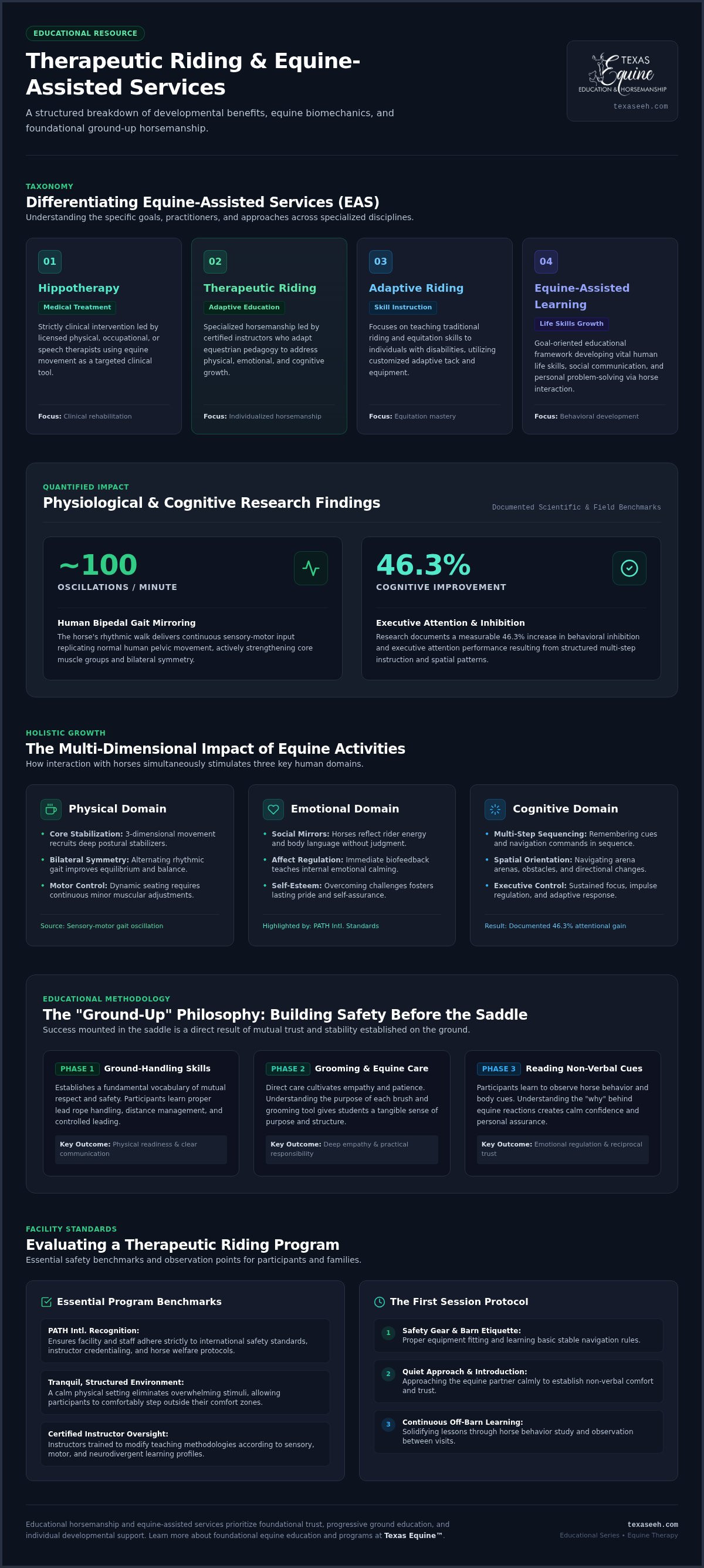
It's helpful to understand the distinctions between different equine services to ensure the best fit for your needs. Hippotherapy is strictly a medical treatment. It's conducted by licensed physical, occupational, or speech therapists who use the horse’s rhythmic movement as a clinical tool. Therapeutic riding, however, is an educational horsemanship activity led by certified instructors who adapt teaching methods to suit various learning styles. Adaptive riding focuses on teaching traditional equestrian skills to individuals with disabilities, often using specialized equipment. Equine-assisted learning is a goal-oriented educational approach that focuses on developing life skills through interactions with horses.
The Multi-Dimensional Benefits of Equine-Assisted Activities
The impact of therapeutic riding reaches across several developmental domains simultaneously. Physically, the horse's rhythmic walk provides sensory-motor input that strengthens core muscles and improves symmetry. This movement closely mirrors the human bipedal gait, providing approximately 100 rhythmic oscillations per minute to the rider. This input helps develop better postural alignment and coordination. Emotionally, horses act as social mirrors. They provide immediate, non-judgmental feedback to a participant's energy and body language. This unique relationship helps individuals learn to regulate their emotions and build lasting self-esteem. As highlighted by the Professional Association of Therapeutic Horsemanship International, these interactions foster a sense of accomplishment that carries over into everyday life. Cognitively, horsemanship involves following multi-step instructions and spatial awareness. Research has shown that following these patterns can lead to a 46.3% improvement in behavioral inhibition and executive attention tasks.
The Role of Ground-Up Horsemanship in Personal Development
True growth often begins long before a participant ever enters the saddle. Ground-handling skills are essential because they establish a foundational language of mutual respect and safety between horse and human. Engaging in grooming and daily equine care allows individuals to develop deep empathy by focusing on the well-being of another living being. It's a practical way to foster a sense of responsibility and patience. Learning the purpose behind each grooming tool or lead rope movement creates a sense of readiness and confidence. This ground-up philosophy ensures that every participant feels secure and fully prepared for their personal development journey. Success in the saddle is a direct result of the stability and trust built on the ground.
Starting Your Journey with Therapeutic Horsemanship
Choosing a facility requires looking for credentialed instructors and a commitment to foundational safety. It's helpful to search for programs recognized by the Professional Association of Therapeutic Horsemanship International (PATH Intl.). This ensures the facility adheres to high standards of care and education. When you visit a potential center, observe the environment. Is it calm? Are the horses well cared for? A quality program prioritizes a steady, unhurried introduction to ensure every participant feels secure. During your first session, you'll likely focus on safety gear and learning basic barn etiquette. Meeting the horse involves a quiet approach and learning to read their non-verbal cues. This initial contact is a vital part of therapeutic riding because it sets the stage for a relationship based on trust and mutual understanding.
Beyond the barn, continuing to learn about horse behavior and care helps solidify the lessons learned during mounted sessions. Understanding the "why" behind equine reactions makes you a more confident and effective partner. Many participants find that supplemental reading or virtual resources provide a helpful way to stay engaged with their education between weekly visits. This ongoing commitment to learning ensures that progress remains steady and intentional, allowing for a deeper connection with the animal over time.
Specialized Support for Veterans and First Responders
Horsemanship offers a unique path for those in high-stress professions who may experience hyper-vigilance or chronic stress. Horses respond to the internal state of the person handling them, requiring a level of presence and calm that can be deeply grounding. This interaction provides a non-clinical way to practice emotional regulation and focus. The horse doesn't care about your rank or your past; it cares about how you show up in the moment. Texas Equine™ provides a dedicated environment for this growth through the Stars & Stirrups program. For veterans and first responders seeking a supportive path to wellness, more information is available at Stars & Stirrups.
Embracing the Path Toward Equine Wellness
The journey into therapeutic riding offers more than just time in the saddle; it's a holistic process that builds physical strength and emotional resilience. By focusing on a ground-up approach to horsemanship, you ensure every interaction is rooted in safety and mutual respect. This foundation allows for meaningful development of core stability and executive function in a peaceful setting.
Texas Equine™ provides a nurturing and supportive educational environment where participants grow with confidence. For those who've dedicated their lives to service, we offer specialized resources to assist in your personal journey. For veterans and first responders seeking a path to wellness through horsemanship, learn more about Stars & Stirrups. We invite you to explore our foundational programs and take the first step toward a transformative experience today.
Frequently Asked Questions
What is the main difference between therapeutic riding and regular riding lessons?
Therapeutic riding differs from traditional lessons by prioritizing developmental goals alongside equestrian skills. While regular lessons focus on performance, these specialized sessions adapt instruction to meet physical, cognitive, or emotional needs. This approach often utilizes a support team and emphasizes foundational ground-handling. It's a step-by-step journey designed to build confidence and stability in a way that respects each individual's unique learning pace.
Can adults benefit from therapeutic riding programs, or is it only for children?
Adults definitely benefit from these programs, as the therapeutic effects of equine movement aren't limited by age. Many professionals, including those in high-stress roles, use therapeutic riding to improve mental clarity and physical core stability. Whether you're a senior looking for gentle exercise or a veteran seeking a peaceful environment, the inclusive nature of equine-assisted services provides a reliable path for personal growth.
Do I need to have my own horse or equipment to start therapeutic horsemanship?
You don't need to own a horse or have your own tack to start learning. Professional facilities provide suitable horses that are specifically trained for educational and therapeutic work. Beginners usually start with an introductory session where safety gear and barn etiquette are explained thoroughly. Most participants only need to wear appropriate clothing, such as long pants and sturdy, closed-toe shoes with a small heel.
How do horses help with emotional regulation and mental wellness?
Horses facilitate emotional regulation by providing immediate, honest feedback to a person's internal state. Because horses are prey animals, they're naturally attuned to subtle changes in human heart rates and tension. If a participant is frustrated, the horse may move away, prompting the individual to breathe and refocus. This process builds self-assurance and helps people learn to manage their emotions in a supportive environment.


Comments