


Riding Helmet Safety: Protecting Your Most Vital Asset

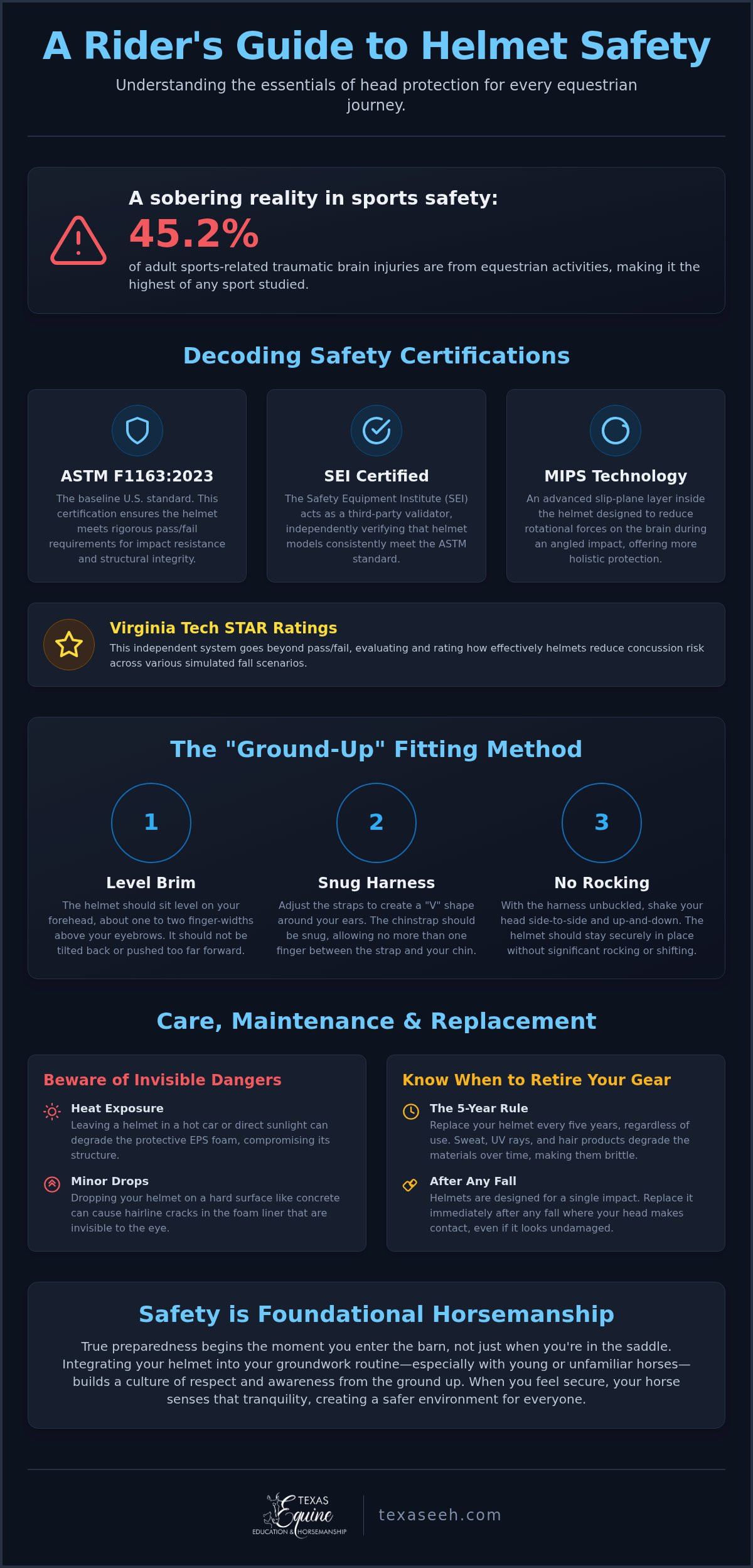
A study analyzing sports-related traumatic brain injuries found that 45.2% of these injuries in adults come from equestrian activities, which is the highest rate of any sport evaluated. While the bond between horse and rider brings immense joy, prioritizing riding helmet safety is the most vital step in your horsemanship journey. It’s natural to feel overwhelmed by technical safety acronyms or wonder if a minor drop truly requires a costly replacement. You deserve to feel secure and focused during every lesson or trail ride. This article explains how to evaluate modern safety standards, ensure a perfect fit, and understand the science of head protection to keep you safe in any discipline. We will walk through the essentials of choosing gear that offers both stability and peace of mind. At Texas Equine™, we believe that true empowerment begins with the quiet confidence of being properly prepared.
Table of Contents
Understanding Equestrian Helmet Standards and Certifications
Choosing the right gear is a foundational step in your equestrian journey. Every Equestrian helmet sold in the United States must meet specific pass/fail requirements to ensure it can withstand significant impact. Focusing on riding helmet safety begins with looking for the ASTM F1163:2023 and SEI labels. These marks represent a commitment to quality and stability, providing you with the peace of mind needed to focus on your horse.
The ASTM sets the rigorous standards for impact resistance, while the SEI acts as an independent body to verify that each model truly performs as promised. Beyond these basics, many riders now look for rotational force protection like MIPS technology. This system uses a slip-plane layer to reduce the energy transferred to the brain during an angled fall, offering a more holistic approach to protection. Understanding these technologies is a vital part of maintaining riding helmet safety throughout your equestrian career. This slip-plane technology is particularly helpful for the varied types of falls that can occur in different disciplines, from dressage to jumping. It reflects a growing understanding of how we can better support our physical readiness.
Decoding ASTM/SEI and Virginia Tech STAR Ratings
The ASTM/SEI certification is your essential baseline, confirming that a helmet meets the legal requirements for impact and strap retention. However, you can gain even deeper insights by looking at the Virginia Tech STAR ratings, which evaluate how effectively a helmet reduces concussion risk. The STAR score is the "Summation of Tests for the Analysis of Risk." This system allows you to compare models based on performance in various fall scenarios. At Texas Equine™, we encourage riders to see their gear as an investment in their personal growth and long-term safety.
Proper Fit and Maintenance: Ensuring Your Helmet Performs
A secure fit is the bridge between a good helmet and real protection. We recommend a "Ground-Up" approach to fitting: ensure the brim stays level on your forehead, the harness feels snug, and the shell doesn't rock when you move. This stability is central to essential horse safety for new riders. When your gear fits correctly, you can focus entirely on the connection with your horse.
Many riders don't realize that riding helmet safety can be compromised by factors we can't see. Dropping your gear on a concrete aisle or leaving it in a hot car can cause the internal structure to fail. High temperatures are especially damaging to the protective materials. Consistent Helmet Safety, Fit & Maintenance involves keeping your gear in a cool, dry place. Use this daily checklist for peace of mind:
Check the EPS foam liner for hairline cracks or compressions.
Ensure the harness stitching is intact and free of fraying.
Verify the buckle clicks securely and stays locked under pressure.
The Five-Year Rule and When to Retire Your Gear
The expanded polystyrene inside your helmet is designed for a single impact. Over time, sweat, hair products, and UV rays make this foam brittle. Most experts recommend a replacement every five years to maintain readiness. If you've had a fall, replace it immediately, even if it looks fine. At Texas Equine™, we believe being well-informed is the first step toward confidence; explore our educational services to build your foundational knowledge step-by-step.
The Role of Safety Gear in Foundational Horsemanship
Safety isn't just about the time spent in the saddle. It begins the moment you enter the barn. We believe that foundational horsemanship treats safety gear as a core component of the relationship between horse and human. By integrating protective equipment into your daily routine, you foster a culture of respect and awareness from the ground up. This mindset ensures that you are mentally and physically prepared before you ever set foot in the stirrup.
Many incidents occur during handling rather than riding. When you're working with young or unfamiliar horses, wearing a helmet during groundwork is a vital practice. This proactive approach to riding helmet safety demonstrates a commitment to your long-term wellness. It builds a quiet, steady confidence within you. When you feel secure, your horse senses that tranquility, which creates a more stable environment for holistic learning. You can find more guidance in our resources regarding essential horse safety tips for every rider.
Safety Standards at Texas Equine™
The philosophy at Texas Equine™ is built on ground-up education and intentional equine care. We believe that understanding the "why" behind your equipment is just as important as mastering a physical skill. This deep knowledge is a central pillar of our Horsemanship and Equine Care Education. Whether you're guiding a Tiny Tot through their first lesson or preparing for professional development, prioritizing riding helmet safety ensures you're ready for every step. We invite you to join our journey through virtual education opportunities, where we explore the connection between safety and success in a nurturing environment.
Building a Foundation of Confidence and Care
Your journey in horsemanship is a beautiful path of personal growth and discovery. By understanding the rigorous standards behind riding helmet safety and committing to a precise fit, you protect your most vital asset while building a deeper sense of readiness. Safety isn't a hurdle; it's a foundational element that allows you to focus on the peaceful connection between you and your horse. Whether you're conducting groundwork or preparing for a lesson, your gear serves as a grounded partner in your development. At Texas Equine™, we prioritize an education-first approach to equine care for all ages. We believe that holistic learning through national literacy and learning programs creates a stable environment where both horse and rider thrive. Explore Foundational Horsemanship and Safety Classes at Texas Equine™ to continue your step-by-step journey in a supportive, encouraging community.
Frequently Asked Questions
Can I use a bicycle helmet for horseback riding?
No, you shouldn't use a bicycle helmet for equestrian activities. While both offer protection, they're designed for different scenarios. Bicycle helmets are engineered for falls onto flat surfaces at high speeds. Equestrian helmets are built to withstand impacts from height and potential contact with horse hooves. Prioritizing riding helmet safety means choosing gear specifically tested for the unique risks found in the barn and arena.
How should a riding helmet fit on my head?
A proper fit ensures the helmet stays in place during a fall. It should sit level on your head, about one inch above your eyebrows. When you shake your head, the shell shouldn't rock or slide toward your eyes. The harness must be snug against your chin without being restrictive. This foundational stability is essential for your long-term confidence and physical readiness during every ride.
What does MIPS stand for in equestrian helmets?
MIPS stands for Multi-directional Impact Protection System. This technology features a low-friction layer inside the helmet that allows for small movements during an impact. This design helps reduce the rotational forces transmitted to the brain during angled falls. It’s a modern advancement in riding helmet safety that provides a more holistic approach to protection for riders of all skill levels and ages.
Do I really need to replace my helmet if I just dropped it?
Yes, replacing your helmet after a significant drop is the safest choice. The internal protective foam is designed to compress once to absorb energy. Even if the outer shell looks perfect, the inner structure may have invisible damage that prevents it from working during a real fall. Treating your gear with respect is a key part of the ground-up education we advocate for at Texas Equine™.


Comments