


Master Equestrian Terminology: A Professional Guide

Have you ever felt a wave of uncertainty when an instructor asks you to adjust the "near side" or check the "poll" of your horse? It's a common experience for many riders to feel slightly overwhelmed by the vast world of equestrian terminology. You're not alone in this feeling. Learning a new language while simultaneously handling a large animal is a significant undertaking that requires patience and steady guidance.
This guide will help you master the essential vocabulary of the horse world so you can build a safer, more confident connection with your equine partner. We'll explore foundational ground handling terms, decode the jargon used in different riding disciplines, and review vital health indicators that every responsible owner should know. By understanding these terms, you'll communicate more clearly and ensure a peaceful, professional environment for both you and your horse.
Table of Contents
Foundational Horsemanship and Ground Handling Vocabulary
True horsemanship begins long before you place a foot in the stirrup. It's a holistic approach to understanding equine behavior and psychology, prioritizing a deep connection over simple instruction. By focusing on how a horse thinks and reacts, you create a partnership built on mutual respect and stability. This ground-up philosophy is why mastering equestrian terminology starts with groundwork. Groundwork serves as the essential foundation for all future riding success, ensuring that both horse and human feel safe and understood before moving into the saddle.
Using the correct language allows you to communicate with clarity and intent. While a broad glossary of equestrian terms covers everything from gaits to anatomy, the most vital equestrian terminology for a beginner focuses on safety. These words describe the unspoken dialogue between you and your horse.
Essential Safety and Communication Terms
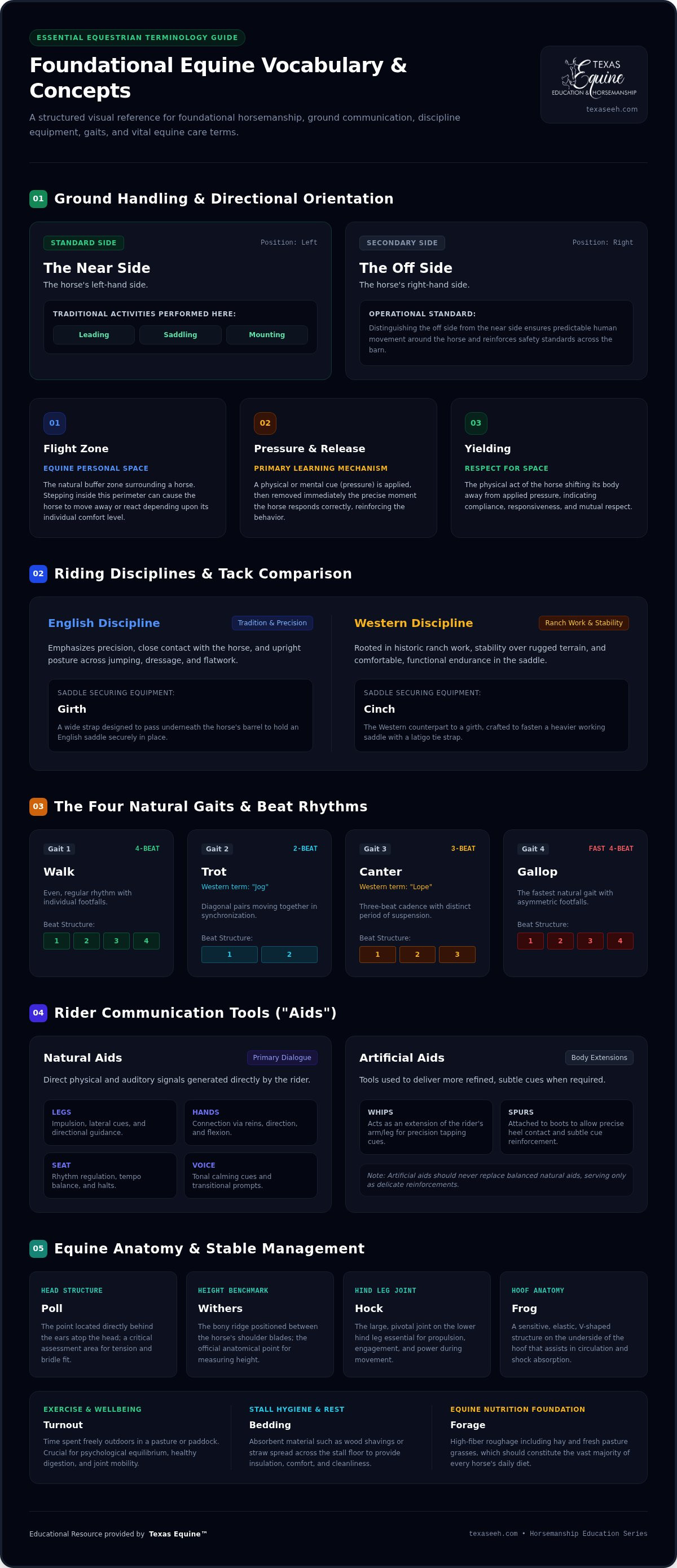
Safety in the barn depends on clear, predictable communication. Beginners should first learn to distinguish the horse's sides to navigate the environment correctly. The "Near Side" refers to the horse's left, which is the traditional side for leading, saddling, and mounting. The "Off Side" is the horse's right side. Following these professional standards helps you move around the horse with confidence and clarity.
Several behavioral concepts are central to safe handling:
Flight Zone: This is the "personal space" around a horse. Entering it may cause the horse to move away or react based on their comfort level.
Pressure and Release: This is the primary way horses learn. You apply a cue (pressure) and immediately remove it (release) the moment the horse responds correctly.
Yielding: This occurs when a horse moves its body away from your physical or mental pressure, showing respect for your space.
Mastering these foundational terms creates a safer environment for everyone involved. It builds the readiness needed for more advanced interactions and ensures that your first steps in the horse world are grounded in stability and respect.
Decoding Riding Disciplines and Equipment Jargon
Transitioning from ground handling to the saddle introduces a new layer of equestrian terminology. While the principles of respect remain constant, the specific language often depends on the riding discipline you choose. English riding generally emphasizes precision and close contact with the horse, while Western riding is rooted in ranch work and stability. These traditions have created distinct vocabularies for the equipment used. "Tack" is the universal term for this equipment, encompassing everything from the saddle to the bridle. For example, an English rider uses a "girth" to secure the saddle, while a Western rider uses a "cinch." Familiarizing yourself with these tack and equipment terms is essential for anyone looking to participate in horse shows or clinics, where clear communication about gear is expected.
Understanding Gaits and Rider Cues
A horse's movement follows specific patterns called gaits, each with its own rhythm. There are four natural gaits: the four-beat walk, the two-beat trot (often called a "jog" in Western), the three-beat canter (referred to as a "lope" in Western), and the fast, four-beat gallop. To guide these movements, riders use "aids," which are the primary tools for communication. Natural aids include your legs, hands, seat, and voice. These are the subtle signals that tell the horse which gait to pick up or which direction to turn. Artificial aids, such as whips or spurs, act as extensions of your body to provide more refined cues when needed. Developing a feel for these aids is a major step in becoming a balanced rider. This vocabulary allows you to understand instructor directions clearly and ensures that your cues are consistent, leading to a more harmonious partnership in the arena.
Equine Care and Management Terminology for New Owners
Caring for a horse's physical well-being is just as vital as the time spent in the saddle. Mastering this specific equestrian terminology allows you to provide holistic care and communicate effectively with professionals like veterinarians or your farrier. You should recognize key anatomy, such as the withers, which is the ridge between the shoulder blades used to measure height; the hock, a large joint on the hind leg; and the frog, a sensitive, V-shaped structure on the bottom of the hoof. These physical markers help you monitor your horse's condition during daily grooming.
Daily life at the barn also involves essential stable management concepts. Turnout refers to the time a horse spends in a pasture or paddock, which is crucial for their mental and physical health. Inside the stall, bedding like wood shavings or straw provides comfort and hygiene. Most importantly, forage, such as hay or grass, should make up the majority of a horse's diet. Understanding these basics is the first step toward professional development, preparing students for the Equine Industry Readiness Program™ at Texas Equine™.
Anatomy and Health Fundamentals
A horse's conformation, or their physical structure and proportions, plays a significant role in their long-term health and athletic ability. Evaluating how a horse is built helps in evaluating equine vital signs and wellness to ensure they remain in peak condition. You should also be familiar with terms like colic, a serious type of abdominal pain, and soundness, which indicates the horse is free from injury or lameness. Building this vocabulary is a rewarding journey that strengthens the bond with your horse. It ensures you can advocate for their needs with confidence and clarity, creating a peaceful and stable environment for your equine partner.
Build Confidence Through Clear Communication
Mastering equestrian terminology is more than just learning new words; it's about creating a language of safety and respect between you and your equine partner. By understanding foundational groundwork, the nuances of different riding disciplines, and the essentials of equine anatomy, you're better prepared to provide the holistic care every horse deserves. This knowledge ensures you can communicate effectively with mentors and professionals alike, making every moment at the barn more meaningful.
At Texas Equine™, we prioritize an education-first approach that nurtures riders of all ages in a supportive, tranquil environment. Whether you're building foundational skills or seeking certifications through our Equine Industry Readiness Program™, we're here to guide your journey with expertise and compassion. Ready to put your knowledge into practice? Explore our Horsemanship and Equine Care Education programs and begin your transformative experience today. You've already taken a vital step toward a deeper, more confident connection.
Frequently Asked Questions
What are the most basic horse terms every beginner should know?
Beginners should start with terms that ensure safety on the ground. Key vocabulary includes the "near side," which is the horse's left side, and the "off side," which is the horse's right. You'll also want to learn the four natural gaits: walk, trot, canter, and gallop. Understanding these basics is a foundational step in mastering equestrian terminology and building a reliable connection.
What is the difference between English and Western terminology?
The primary differences lie in the equipment used and the names for specific gaits. In English riding, you'll use a "girth" to secure the saddle, while Western riders use a "cinch." Similarly, a two-beat diagonal gait is a "trot" in English but often called a "jog" in Western. A three-beat gait is a "canter" in English and a "lope" in Western riding.
What does 'Tack' mean in horse riding?
"Tack" is the collective term for all the equipment a horse wears for handling and riding. This includes foundational items like saddles, bridles, and bits, as well as pads and cinches. Understanding these equipment terms is essential for proper stable management. It ensures you can correctly prepare your horse for a lesson while maintaining their comfort and overall safety.
Why is it important to learn horse anatomy terms?
Learning anatomy terms like the withers, hock, and frog is vital for monitoring your horse's health and soundness. This knowledge allows you to communicate clearly with professionals such as veterinarians or farriers. It also helps you identify potential issues early. Mastering this equestrian terminology is a key part of our education-first approach, preparing you for professional development and industry readiness.


Comments