


Essential Basic Horse Care: A Complete Beginner's Guide

What if the daily routine of mucking stalls and filling water buckets was actually the most important conversation you'll ever have with your horse? Many beginners view basic horse care as a daunting list of chores, often fearing they'll miss a critical health sign or feel overwhelmed by conflicting nutrition advice. It's completely normal to feel a bit of anxiety when you're responsible for such a large, sensitive animal. This guide will help you master the essential pillars of equine stewardship through a nurturing, education-first approach to daily care and horse health. You'll gain the confidence to identify your horse's unique needs and follow a clear daily care checklist. By understanding the purpose behind every brush stroke and feeding schedule, you'll transform your care routine into a foundation of safety and a deeply rewarding bond.
Table of Contents
The Pillars of Equine Well-Being: Understanding Basic Horse Care
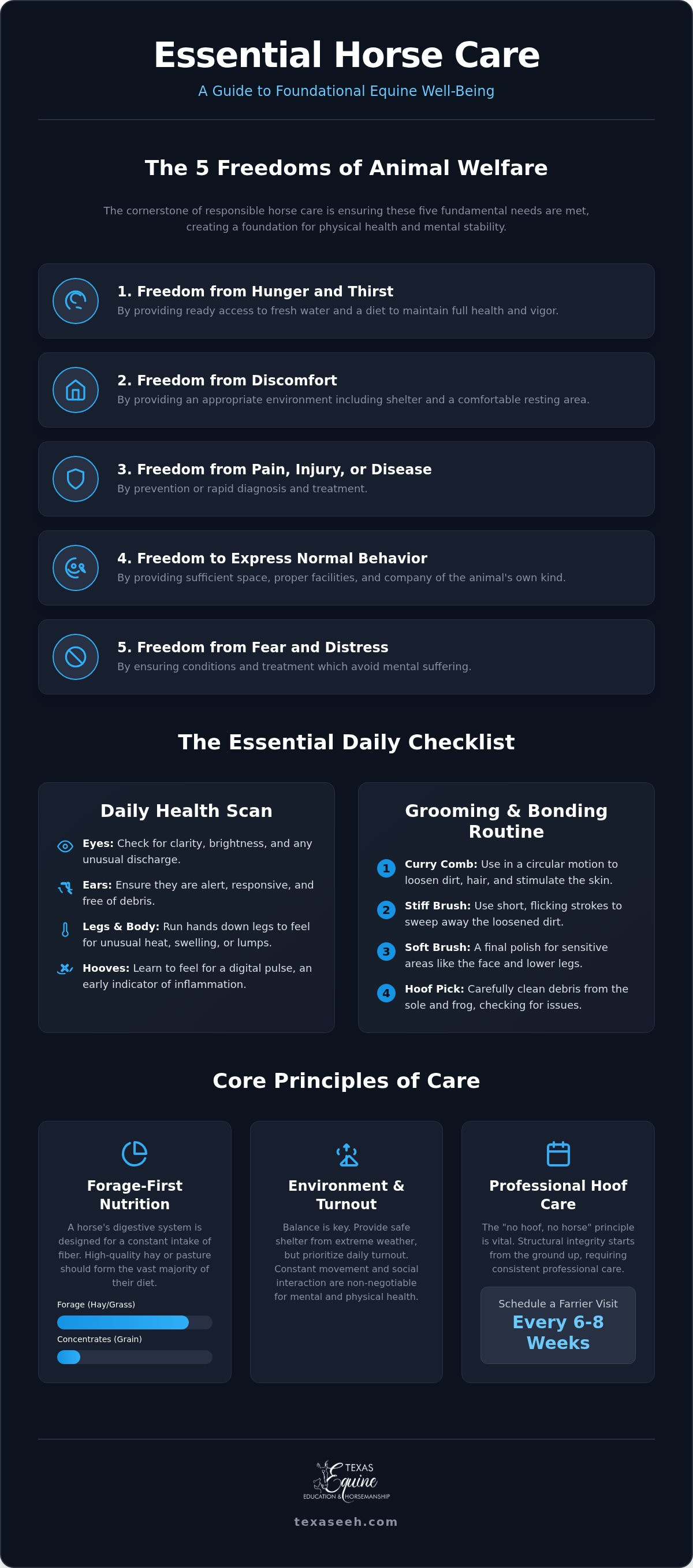
Success in basic horse care begins with recognizing that horses are complex, social creatures. As herd animals, their mental stability depends on the presence of others. Isolation creates chronic stress, which can lead to behavioral issues and physical illness. A comprehensive guide to horse management often highlights the "Five Freedoms" of animal welfare. These include freedom from hunger and thirst; freedom from discomfort; freedom from pain, injury, or disease; freedom to express normal behavior; and freedom from fear and distress. Applying these standards through research-backed education ensures your horse lives a dignified life. Holistic horse care is the intentional balance of a horse's physical health, social connections, and nutritional requirements.
Providing a safe environment requires balancing protection with freedom. While horses need shelter from extreme weather, wind, and sun, they also possess a biological drive for constant movement. Confining a horse to a stall for twenty-four hours a day goes against their natural physiology and can lead to joint stiffness or respiratory issues. Proper management includes clean bedding, adequate ventilation, and space to move.
Meeting the Biological and Social Needs of Your Horse
Turnout is a non-negotiable component of equine health. It allows horses to graze, stretch their limbs, and engage in natural behaviors like mutual grooming with herd mates. These social bonds are essential for emotional well-being and help your horse feel secure. Additionally, maintaining a consistent daily routine provides a sense of stability. Predictable feeding and turnout times support the horse's internal clock, reducing cortisol levels and helping prevent digestive disturbances like colic. By prioritizing these foundational needs, you create a stable environment where your horse can truly thrive.
Essential Daily Routines for Optimal Horse Health
A predictable rhythm is the heartbeat of a healthy barn. When considering your horse's diet, prioritize high-quality forage like grass or hay over grain concentrates. Their digestive systems are designed for constant, small intakes of fiber rather than large, infrequent meals. While you feed, perform a "Daily Health Check" to ensure everything is normal. Observe the eyes for clarity, check that ears are responsive, and run your hands down their legs to feel for unusual heat or swelling. Learning to feel for digital pulses in the hooves can also alert you to early signs of inflammation. For those just starting, following a basic horse care checklist helps ensure no detail is overlooked.
Grooming serves as a vital bridge between task and connection. It isn't just about removing dust; it's a primary opportunity to check for skin irritations, lumps, or sensitivity that might go unnoticed. This quiet time builds trust and allows you to learn your horse's normal state, making it easier to spot when something is wrong. You can find more tips on establishing these supportive habits in our guide on Horse Care for New Owners: A Guide to Horsemanship. Building this foundation of basic horse care through observation is the first step toward confident stewardship.
Nutrition, Grooming, and Hoof Maintenance Fundamentals
Safe grooming follows a logical, step-by-step process. Start with a rubber curry comb in circular motions to loosen dirt, followed by a stiff brush to sweep it away, and a soft brush for the face and legs. Always finish by using a hoof pick to clear debris from the frog, the V-shaped structure on the bottom of the hoof. The "no hoof, no horse" philosophy reminds us that structural integrity starts from the ground up. You should schedule a professional farrier every 6 to 8 weeks to maintain proper balance and hoof health. Finally, ensure your horse has constant access to clean water. During colder months, check frequently to make sure troughs aren't frozen, as dehydration is a leading cause of health complications. If you're looking for more ways to support your horse's well-being, exploring our educational resources can provide the research-backed knowledge you need.
Advancing Your Knowledge: The Path to Confident Stewardship
Mastering the mechanics of basic horse care is a significant milestone for any beginner. To become a truly confident steward, you'll eventually move from simply completing tasks to understanding equine behavior and psychology. Horses communicate through subtle shifts in body language and energy. Learning to read these cues allows you to anticipate their needs and respond with patience. This proactive mindset transforms your daily routine from a list of chores into a meaningful dialogue. Exploring Equine Health and Care Classes provides the context you need to interpret your horse's reactions with clarity and compassion.
Safety is a natural byproduct of clear, consistent communication. The evolution of your basic horse care skills involves more than just physical labor; it requires foundational groundwork. Exercises like leading, yielding to pressure, and respectful space management create a shared language between you and your equine partner. These boundaries protect both the handler and the horse, ensuring that care routines remain calm and predictable. We encourage owners to utilize equine-specific libraries and literacy programs to stay informed on current best practices. This commitment to ongoing learning ensures your stewardship remains grounded in research and stability.
How Foundational Education Strengthens the Horse-Human Bond
A "ground-up" education is the most secure entry point for any new owner or rider. By focusing on handling, health, and behavior before moving to more advanced activities, you build a foundation of readiness and self-assurance. This methodical approach honors the horse's nature while giving the human the tools to succeed. Texas Equine™ supports this journey through their Equine Care Classes, where students master the essentials of stewardship in a nurturing and professional environment.
Embarking on Your Stewardship Journey
Mastering basic horse care is a transformative process that shifts your perspective from seeing chores to seeing opportunities for connection. It's about trust. By prioritizing the social needs of your horse and maintaining a diligent daily health checklist, you ensure their physical and mental well-being are always in balance. This education-first approach builds the self-assurance needed to handle these magnificent animals with grace and safety. True stewardship is a lifelong path of learning and discovery that benefits both the horse and the human.
Texas Equine™ supports your growth through professional development like the 8-week Equine Industry Readiness Program™ and weekly virtual education sessions. You can also access a free nationwide literacy program through The Reading Rein to deepen your knowledge. Explore foundational learning at Texas Equine™ Horsemanship and Equine Care Education and begin building a stronger, more informed bond with your horse today.
Frequently Asked Questions
What are the three most important things in basic horse care?
The three most vital pillars are high quality forage, consistent social interaction with other horses, and regular health monitoring. Horses are trickle feeders that require fiber for digestive stability, while their herd nature demands social bonds for mental well-being. By focusing on these biological foundations, you create a safe environment where your horse can thrive through stable routines and proactive management of their physical needs.
How often should a horse be groomed?
You should ideally groom your horse every day to maintain skin health and strengthen your bond. Daily sessions allow you to identify subtle changes like heat, swelling, or new skin irritations that might indicate a health issue. While a quick brush before riding is standard, a thorough grooming routine is a primary tool for basic horse care, ensuring your partner remains comfortable and well-monitored.
How much hay should a horse eat daily?
A healthy horse typically consumes between 1.5% and 2.5% of its body weight in forage daily. For a 1,000 pound horse, this equals approximately 15 to 25 pounds of hay or grass. Prioritizing forage over grain concentrates supports the equine digestive system's natural function. Always monitor your horse's body condition score to adjust amounts, ensuring they receive the appropriate energy for their specific activity level.
What does a basic horse first aid kit need?
A reliable first aid kit should include a digital thermometer, stethoscope, antiseptic wash, and various bandages like vet wrap and sterile gauze. You also need blunt ended scissors, a hoof pick, and clean towels. Keeping your veterinarian’s contact information and a record of your horse's normal vital signs inside the kit ensures you are ready to respond calmly and effectively during an unexpected health event.


Comments