


A Professional Guide to Horse Art and Equine Expression

A truly masterful piece of horse art does more than decorate a room; it captures the silent language and steady spirit of a powerful animal in a single, frozen moment. It's common to feel a bit lost when you are searching for work that respects true equine anatomy or explains the deep history behind a specific style. You likely value the heritage of these animals and want to understand the meaningful difference between casual equestrian decor and formal equine expression.
This guide will help you navigate the beautiful evolution of the horse as a subject, from ancient sketches to the vibrant styles seen in 2026. You'll learn how art acts as a bridge to our shared history and discover ways to engage with a community that celebrates the horse as a symbol of progress. We will explore how to identify quality work that honors the horse's legacy while building your confidence as a knowledgeable admirer.
Table of Contents
The Evolution and Styles of Equine Art Expression
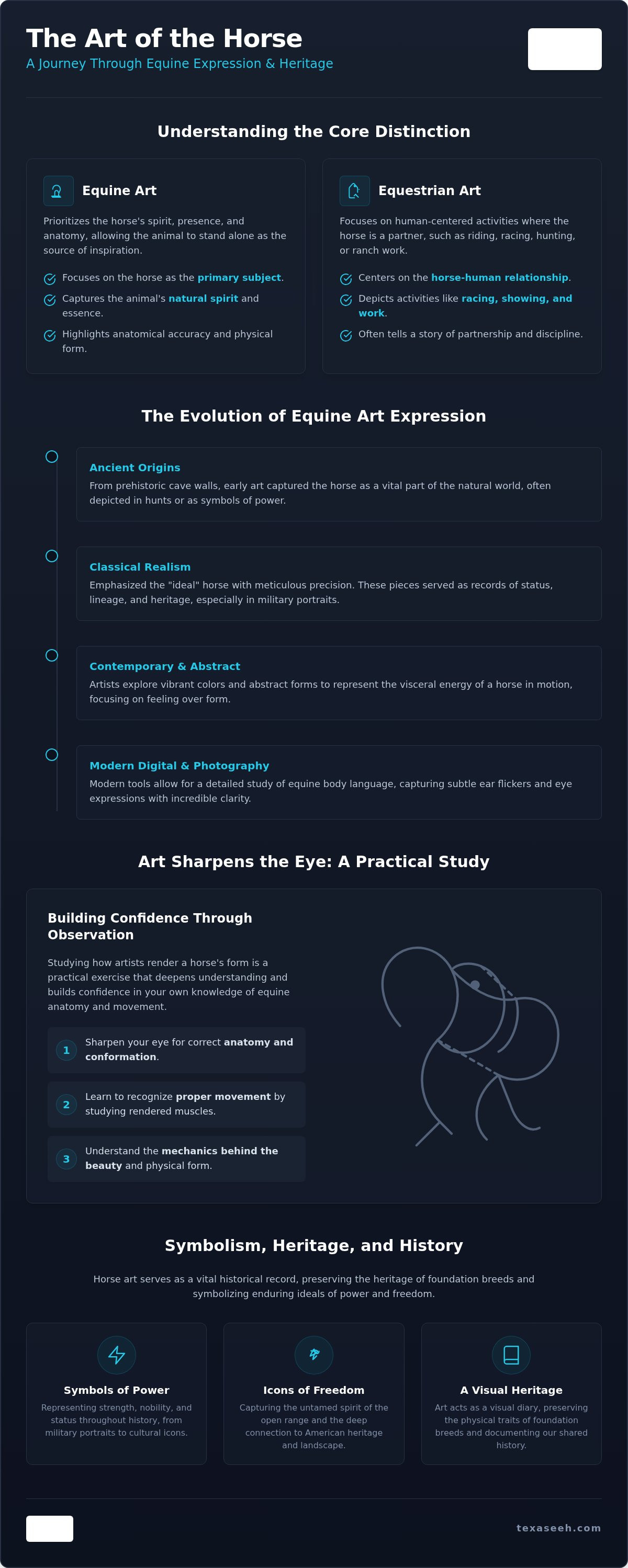
Equine art is defined as any visual media, including painting, sculpture, photography, or drawing, that centers on the horse as the primary subject. For collectors and enthusiasts, it's vital to recognize the subtle distinction between "equestrian art" and "equine art." While equestrian pieces focus on human-centered activities like riding, racing, or hunting, equine art prioritizes the horse's spirit, presence, and anatomy. This distinction allows the animal to stand alone as a source of inspiration. Understanding the history of horses in art helps us see how these animals transitioned from prehistoric cave walls to symbols of nobility and grace. By focusing on the horse itself, artists create a window into the quiet bond we share with these creatures. Modern horse art often blends anatomical accuracy with deep emotional resonance to tell a story about the animal's individual nature.
From Classical Realism to Contemporary Imagery
Classical styles traditionally emphasize the "ideal" horse. You can find this in historical military portraits and early breed registries where every muscle and tendon is rendered with meticulous precision. These pieces served as important records of status, lineage, and heritage. In contrast, contemporary artists often explore abstract forms and vibrant colors to represent the visceral energy of a horse in motion. They focus on the feeling of a gallop or the quiet peace of a grazing herd. Today, digital mediums and photography allow for a detailed study of equine body language. These modern tools capture subtle ear flickers or eye expressions that were once difficult to document. This evolution makes horse art an inclusive journey that honors the animal's physical beauty and emotional depth.
Understanding Heritage and Symbolism in Horse Artwork
Horses have stood as enduring symbols of freedom and power within American heritage for centuries. They aren't just animals; they're companions that helped shape our landscape and culture. When you look at horse art, you're viewing a visual diary of how we've lived alongside these creatures. Collections like the Appleton Museum of Art's equine collection illustrate how this relationship spans over 3,000 years. These works preserve the physical traits of foundation breeds and show us how horse management practices have evolved. They act as a bridge between our past and the stable, grounded future we're building together.
For a dedicated horse person, studying art is a practical exercise that builds confidence. It sharpens your eye for anatomy and conformation. By observing how a painter renders a shoulder or a hock, you learn to recognize correct movement in your own animals. It's a step-by-step journey of learning. Understanding the mechanics behind the beauty through horse art informs both the pieces we admire and the daily care we provide. This quiet authority comes from experience and a deep respect for the animal's physical form.
The Role of Horses in Western and American History
Western art frequently celebrates the working horse. It highlights the essential partnership between rider and animal in rugged ranch environments. This heritage art doesn't just focus on the West; it tells the stories of many disciplines, from traditional ranch work to formal English showing. Each style captures a unique part of our identity. Whether it's a cow horse at work or a dressage horse in a quiet moment, these images keep our traditions alive. You can see these traditions celebrated first-hand at our horse shows, where art and action meet.
Celebrating Equine Expression Through Community and Shows
Community engagement is a powerful way to celebrate the horse. Participating in local or online shows lets you share your unique perspective on the horse-human bond. These events aren't just for professionals with decades of experience. They provide a safe, inclusive platform for youth and amateur artists to express their passion. Creativity fosters a deeper respect for the animal's heritage. For example, exploring Equestrian Textiles for Power and Prestige shows how even functional items like saddle blankets are forms of horse art that carry cultural weight. By engaging with others, you realize your artistic journey is shared by a wider circle of enthusiasts who value these traditions.
Preparing for the Equine Expression & Heritage Art Show
Start by identifying your preferred medium. You might enjoy traditional sketching, photography, or three-dimensional sculpture. Each medium offers a different way to capture the essence of the animal. Focus on a theme that resonates with your personal experience. This could be a specific breed trait, like the powerful build of a Quarter Horse, or a quiet moment of connection in the pasture. It's about your story. Preparing for a show helps you look at your subjects with a fresh perspective. You'll notice the way light hits a coat or how a horse carries its weight. This practice ensures that horse art remains a living, breathing part of our community. Texas Equine™ invites artists of all ages to join the Equine Expression & Heritage Art Show to celebrate the legacy of the horse.
Continuing Your Journey in Equine Expression
Exploring the world of horse art is a meaningful way to deepen your connection with these animals while honoring their rich history. By understanding the shift from classical realism to contemporary styles, you gain a clearer perspective on equine anatomy and the symbolic power horses hold in our culture. This knowledge doesn't just sit on a shelf; it informs how you view, care for, and respect the horses in your life every day. Whether you're a seasoned professional or a young enthusiast, your creativity plays a vital role in preserving this heritage for future generations.
Texas Equine™ is proud to foster this growth through a community-focused approach that celebrates artists of all ages and skill levels. We invite you to share your passion and join a national circle of creators. You can learn more about the Equine Expression & Heritage Art Show to see how you can contribute to this living legacy. Your voice is a gift to the equine community and a step toward a brighter future together.
Frequently Asked Questions
What is the difference between equine art and equestrian art?
Equine art centers on the horse as the primary subject, focusing on its spirit and anatomy. In contrast, equestrian art emphasizes human activity, such as riding or racing. Understanding this distinction helps collectors choose pieces that highlight the animal's natural essence rather than its role in sport. It's a way to honor the horse as an individual creature rather than a tool for human use.
Can beginners enter a horse art show?
Beginners and artists of all ages are encouraged to enter community-focused events. These shows provide an inclusive platform for youth and amateur artists to share their passion without the pressure of professional competition. It's a step-by-step journey that builds confidence and celebrates the horse-human bond. Starting your creative path in a supportive environment ensures you feel well-informed and at ease with your expression. To further develop your artistic skills in a guided setting, you can visit Art Therapy and discover workshops that help creators of all levels find their unique voice.
What are the most popular mediums for horse art?
The most popular mediums for horse art include traditional oil painting, pencil sketching, photography, and three-dimensional sculpture. Each medium offers a unique way to capture specific details, like the texture of a coat or the energy of a gallop. Digital art is also growing, allowing artists to study and render complex equine body language with modern precision and vibrant, contemporary colors.
How does horse art help in learning about equine heritage?
Art acts as a historical record that preserves the characteristics of foundation breeds and the evolution of horse management. By studying heritage pieces, you see how different equine disciplines developed over centuries. This visual history fosters a deeper respect for the animal's role in American culture. It's a powerful tool for understanding the legacy we continue to build through horsemanship and care.


Comments