


How to Build Trust With Horses: Professional Techniques

What if building trust with horses had less to do with affection and more to do with your ability to provide a predictable, safe environment? Many handlers struggle with a horse that feels unpredictable or reactive, which often leads to a loss of confidence during daily groundwork. It's frustrating when you're met with resistance instead of the calm, willing partnership you've worked so hard to achieve. You deserve a relationship where your horse looks to you for direction with genuine respect and ease.
This article provides the psychological principles and practical groundwork exercises you need to develop a secure, lasting bond. You'll learn how professional techniques improve your safety and deepen your understanding of equine behavior. By focusing on clear communication and consistent leadership, you can move past the confusion of conflicting advice and start building a foundation of mutual trust that carries over into every aspect of your horsemanship journey.
Table of Contents
Understanding the Equine Perspective: The Biological Basis of Trust
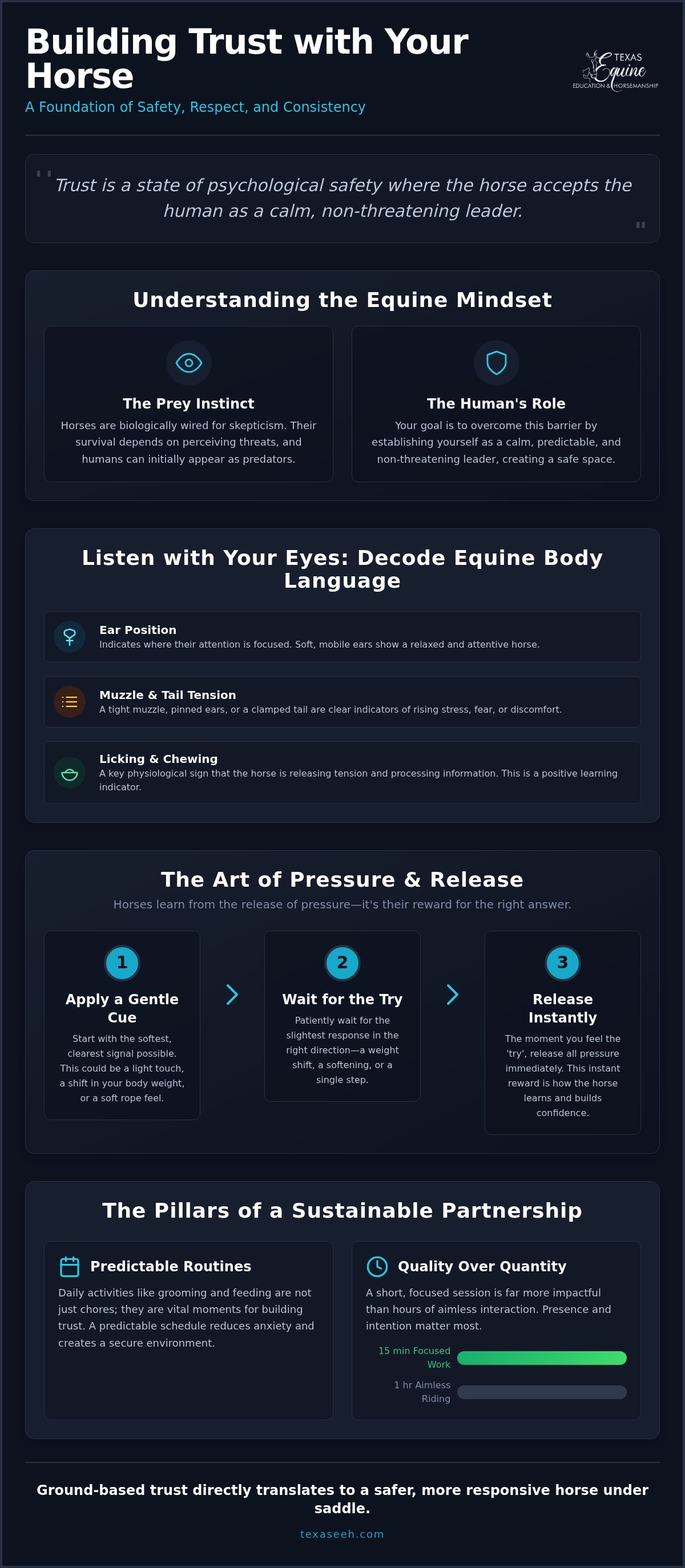
Building trust with horses starts with recognizing that their survival depends on their ability to perceive threats. In horsemanship, trust is defined as a state of psychological safety where the horse accepts the human as a calm, non-threatening leader. Because horses are prey animals, their natural instinct is one of skepticism toward humans, who possess the physical traits of a predator. Overcoming this biological barrier requires a dedicated focus on non-riding horse education to establish a connection based on mutual understanding rather than just physical control.
Body language serves as the primary language of trust between species. By learning to read subtle equine cues, you can adjust your behavior to reassure your horse and foster a sense of security. This awareness transforms your interaction from a series of commands into a two-way conversation, which is the hallmark of a professional approach.
Interpreting Equine Body Language and Cues
A horse's physical posture provides a constant stream of information about their internal state. For instance, ear positions indicate where their attention is focused, while tension in the muzzle or a clamped tail suggests rising stress levels. Learning to identify these signals is essential for any handler. You can expand your vocabulary by reviewing horse terminology to better describe what you see.
When a horse begins licking and chewing, it's a physiological sign that they are releasing tension and processing the information they've just received. Recognizing these moments of relaxation helps you build a more stable, respectful bond that lasts for years.
Practical Groundwork Exercises to Foster Mutual Respect
Trust and respect are two sides of the same coin in any horsemanship journey. While trust creates a sense of safety, respect ensures that the horse remains attentive to your boundaries. Building trust with horses requires a balanced approach where the horse feels secure but also understands your role as a leader. Establishing this dynamic from the ground is far more effective than attempting to fix reactive behaviors from the saddle. Groundwork allows you to build a clear communication channel without the added complexity of riding.
Your internal state is a powerful tool in this process. Horses are incredibly sensitive to your energy and breathing. If you are tense or holding your breath, your horse will likely mirror that anxiety. By practicing deep, rhythmic breathing, you project a calm authority that reassures the horse. This mental readiness is the foundation for Practical Groundwork Exercises that keep both handler and horse safe. Mastering the "First Five" skills for learning to handle horses safely, such as leading with precision and yielding the hindquarters, creates the predictability a horse needs to feel confident.
The Mechanics of Pressure and Release
Horses don't learn from the application of pressure; they learn from its release. The release is the reward that tells the horse they've found the correct answer. To use this effectively, follow a simple three-step guide. First, apply a clear and gentle cue. Second, wait patiently for the horse's slightest try or shift in weight. Third, release the pressure instantly. This immediate reward builds a willing partner who looks for your direction. For those seeking structured instruction, ground work horse training classes offer a supportive environment to refine these essential skills. You can also explore our horsemanship services to find the right path for your personal development.
Building a Sustainable Partnership: Consistency and Care
Consistency is the bedrock of any equine relationship. Daily activities like grooming and feeding are not just chores; they are essential moments for building trust with horses. A predictable routine provides a sense of security, allowing the horse to lower their guard because they know exactly what to expect. This stability significantly reduces equine anxiety, creating a more settled and focused partner that feels safe in your presence.
You might feel that building trust takes too long, especially with a busy schedule. However, fifteen minutes of focused, intentional groundwork is often more impactful than hours of aimless riding. Quality of presence matters more than the quantity of time spent. When you prioritize these short, meaningful sessions, you reinforce the bond and establish yourself as a reliable leader. This ground-based trust directly translates to a safer, more responsive horse when you finally move to the saddle.
Advancing Your Foundational Horsemanship
Horsemanship is a lifelong journey of discovery rather than a final destination. Each interaction offers a chance to refine your skills and deepen your connection. To support this growth, you can explore the Foundational Horsemanship Course as a path for formal education. Additionally, attending equine care classes provides a structured way to improve your management skills and strengthen your bond through better daily care.
Texas Equine™ is committed to supporting those who serve our community through the Stars & Stirrups program. This initiative provides horsemanship lessons designed specifically for veterans and first responders, focusing on building confidence and communication through the unique bond between horse and human. You can find more details about this program at stars stirrups.
Advancing Your Equine Partnership
Building trust with horses isn't just a goal; it's a journey that begins with understanding their unique biological perspective and respecting their need for safety. By prioritizing professional groundwork and maintaining a consistent daily routine, you create a stable environment where your horse can thrive. This education-first approach ensures that every interaction is purposeful, turning simple tasks into opportunities for deeper connection. When you focus on these foundational principles, you develop a partnership based on mutual respect and tranquility.
The supportive learning environment at Texas Equine™ is designed to guide you through this transformative process. We uphold professional horsemanship standards so you feel confident handling any situation with grace. Explore our foundational horsemanship programs to start building a better connection today. Your commitment to a patient, intentional approach leads to a rewarding relationship with your equine companion.
Common Questions About Building Trust
How long does it take to build trust with a horse?
Building trust with horses is a gradual process that depends on the individual animal's history. A September 2026 study found that horses with the same owner for over ten years scored 12% higher on sociability dimensions. Consistency is more important than duration. Fifteen minutes of focused groundwork often yields better results than hours of unstructured time spent in the barn.
Can groundwork really help my riding performance?
Yes, groundwork is the essential foundation for all riding activities. Establishing clear communication and respect on the ground ensures your horse is responsive and calm before you ever mount. Professional techniques like yielding the hindquarters or leading with precision improve safety and handler confidence. This clarity makes the transition to the saddle smoother and more predictable for both horse and rider.
What should I do if my horse is afraid of me?
If a horse shows fear, you should first acknowledge their biological role as a prey animal. Focus on becoming a non-threatening presence by practicing deep breathing and using gentle, predictable movements. Research indicates that heart rates are lower when horses are being groomed. This helps the horse associate your presence with relaxation rather than pressure or fear during daily handling.
Is it possible to build trust with an older horse?
It's absolutely possible to build a secure bond with an older horse. Horses are sentient beings capable of learning and forming new attachments at any life stage. While an older horse may have established habits, a steady and unhurried approach will help them adjust. Providing a predictable routine and clear cues allows them to feel safe and valued in their partnership.


Comments