


Exploring Horses in Art: From History to Modern Expression

More than 30,000 years ago, long before horses were domesticated, early humans ventured into the dark limestone chambers of Chauvet Cave to paint their portraits. Ever since those first charcoal strokes, horses in art have served as the visual heartbeat of our shared history. You've likely felt that same timeless pull yourself. A horse's fluid movement and quiet dignity carry an unspoken emotional weight that words often fail to capture.
If you've ever wanted to understand why this animal remains such a universal muse, you aren't alone. In this guide, you'll discover the rich legacy of equine art, learning how to distinguish iconic artistic movements and recognize the visionary creators who captured the horse's spirit. We'll journey from Paleolithic cave walls and groundbreaking anatomical studies to vibrant modern expressions, giving you a deeper appreciation for our collective equine heritage.
Table of Contents
The Historical Evolution of Equine Imagery in Art
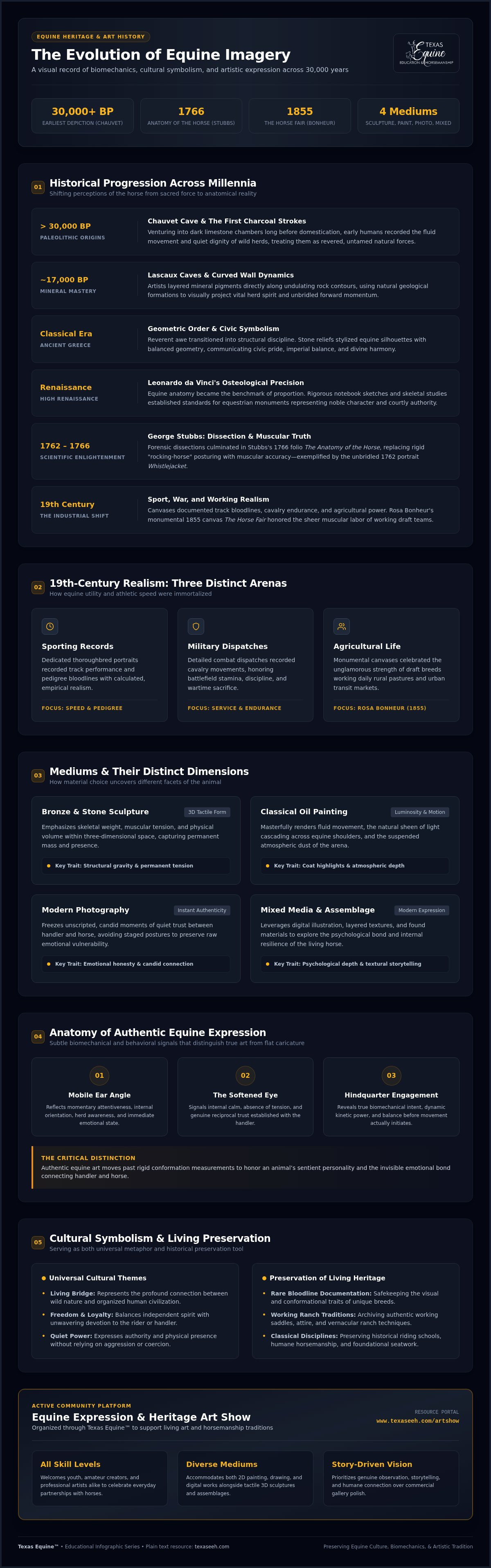
The depiction of horses mirrors humanity's shifting relationship with the natural world. At the Lascaux caves around 17,000 BP, early painters layered mineral pigments along curved stone walls to capture the vital spirit and momentum of wild herds. These animals were revered as free, untamed forces long before domestication took hold. As civilizations formed, that reverent awe turned toward structure. Ancient Greek reliefs stylized the horse into balanced geometric silhouettes, representing discipline, civic pride, and divine order.
During the Renaissance, this aesthetic shifted toward anatomical precision and courtly status. Leonardo da Vinci filled notebooks with rigorous osteological sketches, viewing the horse as an ideal model of physical proportion. By studying the broader evolution of horses in art, we can see how this quest for balance laid the groundwork for equestrian monuments that came to symbolize imperial authority and noble character.
From Prehistoric Caves to Renaissance Masterpieces
The transformation of horses in art reached a technical turning point in the eighteenth century. British painter George Stubbs spent years conducting forensic dissections, publishing his groundbreaking folio The Anatomy of the Horse in 1766. His scientific understanding replaced the stiff, rocking-horse postures of earlier portraits with dynamic muscular truth, immortalized in works like his 1762 masterpiece Whistlejacket.
By the nineteenth century, equine painting documented working speed and rural utility:
Sporting records: Thoroughbred portraits celebrated track performance and bloodlines with calculated realism.
Military dispatches: Canvases detailed cavalry movements, recording wartime service and endurance.
Agricultural life: Works like Rosa Bonheur's monumental 1855 canvas The Horse Fair honored the sheer physical power of working draft horses.
Decoding Styles and Symbolic Meanings in Equine Art
Different artistic mediums reveal distinct dimensions of horses in art. Bronze and stone sculpture emphasize skeletal weight, muscular tension, and physical presence in three-dimensional space. Oil painting captures fluid motion, the sheen of light across a horse's shoulder, and the atmospheric dust of an arena. In contrast, modern photography preserves candid moments of quiet trust between horse and human.
Across centuries, the equine form has symbolized freedom, power, and the living bridge between wild nature and human civilization. Heritage art deepens this symbolism. It purposefully documents rare breeds, working ranch traditions, and classical horsemanship disciplines, ensuring that historical bloodlines and traditional riding cultures remain preserved for future generations.
Key Elements of Authentic Equine Expression
Appreciating realistic equine art requires a working literacy in horse behavior and biomechanics. A discerning eye looks beyond simple outlines. Subtle signs matter. The angle of a mobile ear, a softened eye, or the engagement of the hindquarters all reveal emotional state and physical intent. Without an understanding of herd communication, depictions of horses in art risk reducing a sentient partner to a flat caricature.
This dynamic comes alive in George Stubbs's Whistlejacket, where an unbridled Arabian stallion commands the canvas through sheer presence and emotional vitality. True equine expression looks past conformation measurements to honor an animal's unique personality. Authentic equine art does not merely replicate the horse; it captures the invisible bond between the animal and the handler.
Celebrating Modern Equine Heritage and Creativity
Today's artists continue to reshape how we view horses in art, moving past traditional portraiture to embrace expressive new mediums. Contemporary creators employ layered mixed media, digital illustration, and found-material assemblage to interpret the psychological bond between horses and humans. These fresh perspectives honor the animal's physical grace while capturing raw emotion and internal resilience.
Preserving equine heritage relies heavily on encouraging youth and amateur artists. While museum masterpieces like Rosa Bonheur's The Horse Fair offer historical inspiration, the living tradition of horsemanship depends on everyday participants recording their own experiences. Community art exhibits provide an inviting educational gathering space where riders, handlers, and creators share stories, reflect on humane practices, and celebrate their partnership with horses.
Showcasing Your Vision: The Equine Expression & Heritage Art Show
Texas Equine™ actively fosters this collaborative environment through the Equine Expression & Heritage Art Show. Created to celebrate horses in art across every background, the exhibition welcomes participants of all ages and experience levels across varied 2D and 3D mediums.
Rather than demanding commercial perfection, the showcase prioritizes storytelling, authentic observation, and creative expression. It offers emerging artists a supportive platform to share their perspective and deepen their appreciation for horsemanship traditions. You can learn more about entry divisions and viewing the gallery at www.texaseeh.com/artshow.
Carrying Equine Traditions Into the Future
The visual story of horses in art reflects our evolving partnership with these remarkable animals. When you study an equine portrait, you aren't just observing technique; you're connecting with centuries of shared horsemanship, mutual trust, and dynamic movement. Every style and medium offers a fresh way to understand equine behavior and honor their spirit.
Creative expression remains a foundational part of lifelong equine education. Whether through photography, drawing, or sculpture, every artist helps keep equestrian heritage vibrant and accessible. You don't need decades of studio training to contribute your voice to this living tradition. Celebrate your passion and connect with a supportive community by exploring the Equine Expression & Heritage Art Show. Your unique perspective adds a meaningful chapter to our shared journey.
Frequently Asked Questions
What are the most famous horse paintings in history?
Renowned masterpieces featuring horses in art include George Stubbs's 1762 life-size portrait Whistlejacket, celebrated for its riderless power, and Rosa Bonheur's massive 1855 canvas The Horse Fair. Other historic milestones include Jacques-Louis David's heroic Napoleon Crossing the Alps and Franz Marc's vibrant expressionist work The Large Blue Horses. Each piece highlights a distinct cultural perspective on equine vitality.
How do I start creating my own equine art if I am a beginner?
Start by studying basic equine anatomy and natural herd behavior rather than seeking instant perfection. Practice sketching simple geometric shapes to map out the shoulder, barrel, and hindquarters. Working from clear reference photos or observing live horses at pasture helps train your eye to capture genuine movement. Begin with forgiving mediums like graphite, charcoal, or pastel before advancing into oils or sculpture.
What is the difference between equine art and equestrian art?
While people often use the terms interchangeably, they focus on different subjects. Equine art centers specifically on the horse itself, highlighting the animal's individual conformation, spirit, and anatomy. Equestrian art, on the other hand, illustrates the partnership between horse and rider. It commonly depicts competitive riding disciplines, working cattle, or historical military traditions where the human element takes center stage.
Can children participate in equine art shows?
Yes, many community exhibitions actively encourage youth participation to foster creative confidence and horsemanship appreciation. For example, events like the Equine Expression & Heritage Art Show feature dedicated divisions for young creators across multiple age brackets. Welcoming all skill levels and mediums helps children celebrate horses in art while building pride through their shared love of these magnificent animals.


Comments