


Essential Barn Safety Checklist for Every Horse Owner

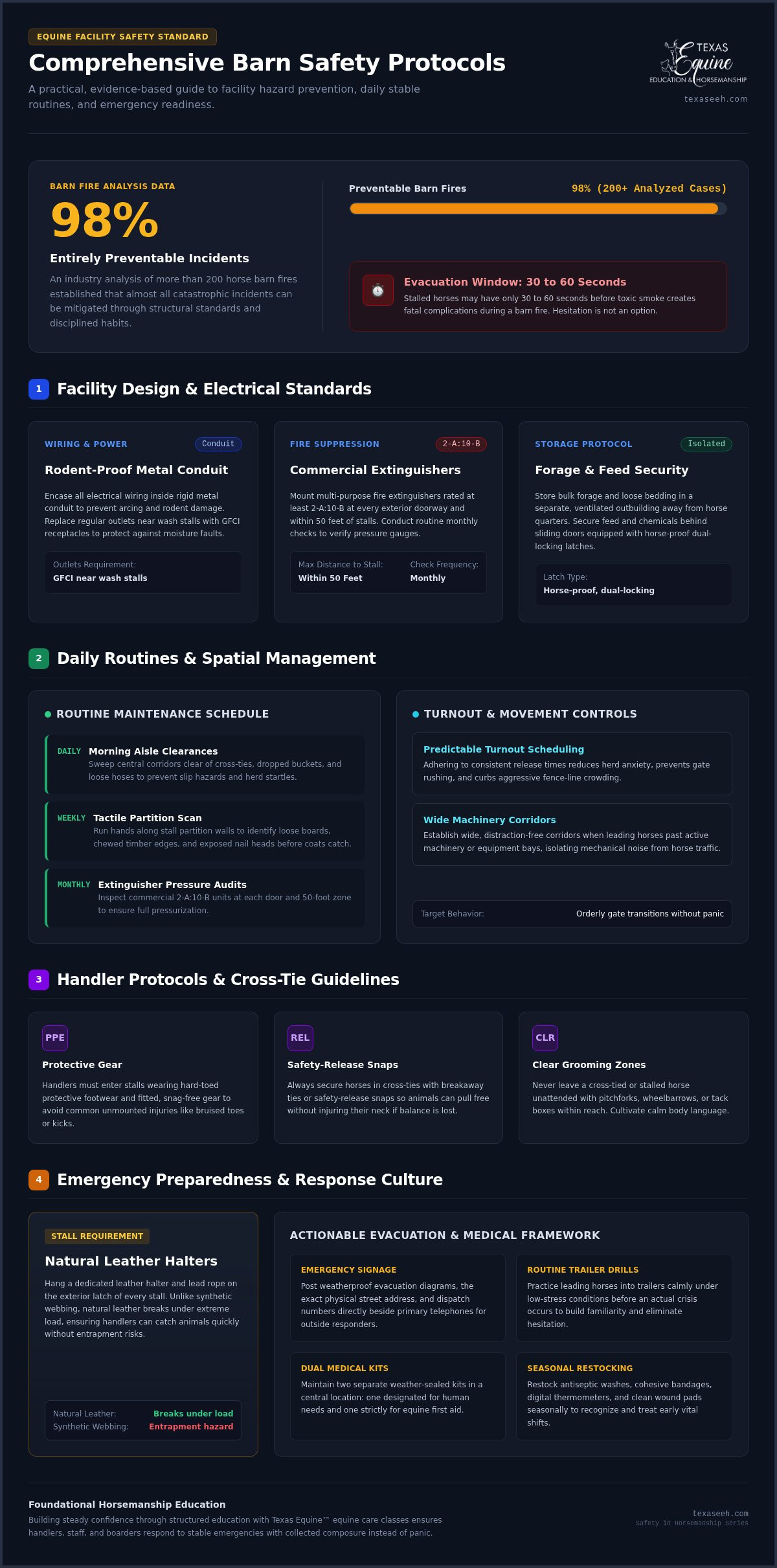
An industry analysis of more than 200 horse barn fires revealed that 98% of them were entirely preventable. Every equestrian views the stable as a peaceful sanctuary, yet maintaining reliable barn safety often feels daunting when you're managing heavy equipment, electrical systems, and crowded aisles. It's completely natural to worry about the unexpected, especially when preventable equine injuries or handler accidents can happen in the blink of an eye during routine chores.
True security doesn't come from complicated overhauls, but from consistent, thoughtful habits. In this guide, you'll discover essential barn safety protocols, structural facility standards, and everyday handling practices to protect horses and handlers alike. We'll walk you through a practical checklist to eliminate hidden hazards and build a calm, confident daily routine across your entire stable.
Table of Contents
Essential Barn Facility Design and Hazard Prevention
A secure stable balances structural durability with attentive, daily maintenance. While building shells provide shelter, true barn safety doesn't stop at exterior walls; it depends entirely on how you manage the interior space. Begin each morning with a visual scan of central aisles. Sweeping corridors clear of cross-ties, dropped buckets, and loose hoses prevents slip hazards and sudden herd startles during turnout. Grounding your stable routine in proven horse management best practices also means routinely inspecting stall interiors. Run your hands along partition walls each week to catch loose boards, chewed edges, and exposed nail heads before a horse's coat catches a sharp edge. Finally, secure feed rooms and chemical storage behind sliding doors equipped with horse-proof, dual-locking latches to prevent accidental gorging and acute colic.
Critical Fire Prevention and Electrical Safety Standards
Stable air naturally carries airborne chaff, cobwebs, and dry bedding, creating an environment vulnerable to combustion. Protect your facility and elevate day-to-day barn safety by encasing all electrical wiring inside rigid, rodent-proof metal conduit to prevent dangerous electrical arcing. Replace regular outlets near wash stalls with ground-fault circuit interrupter (GFCI) receptacles to guard against moisture faults. Whenever possible, store bulk forage and loose bedding in a separate, well-ventilated outbuilding, keeping equine living quarters clear of dense fuel loads. At every exterior doorway and within 50 feet of stalls, mount commercial multi-purpose fire extinguishers rated at least 2-A:10-B. Routine monthly checks ensure these life-saving tools remain fully pressurized and ready.
Safe Daily Barn Routines and Horse Handling Protocols
Sound facility structure is only half the equation; daily habits shape the true culture of barn safety. Handlers should always step into stalls wearing hard-toed protective footwear and fitted, snag-free gear. Most unmounted injuries, such as bruised toes or sudden kicks, occur during ordinary chores when attention slips. Consistency is equally vital for equine emotional balance. Establishing predictable turnout times prevents herd anxiety, gate rushing, and aggressive crowding at pasture fence lines. When guiding horses past active machinery or open equipment bays, establish wide, distraction-free corridors. Much like adhering to strict equine fire prevention measures around motorized equipment, isolating mechanical commotion from daily horse traffic protects both species from sudden panic.
Proper Aisle Etiquette and Cross-Tie Procedures
Aisles and grooming bays require dedicated ground awareness. Always secure horses using dependable safety-release snaps or breakaway ties so an animal can pull free without injuring its neck if it loses balance. Never leave a cross-tied or stalled horse unattended with pitchforks, wheelbarrows, or tack boxes within reach. Developing steady spatial awareness protects handlers and maintains a peaceful barn safety routine, reinforcing principles of safe horse handling. Cultivating calm, patient body language when working around cross-ties sets clear boundaries, ensuring horses remain relaxed and cooperative during every grooming or saddling session.
Creating an Emergency Preparedness Plan and Safety Culture
Every dependable facility thrives on proactive preparation. Because stalled horses may have only 30 to 60 seconds before toxic smoke creates fatal complications during a fire, hesitation isn't an option. Post a weatherproof evacuation diagram, your exact physical street address, and emergency dispatch numbers directly beside primary telephones. Clear signage helps outside responders navigate your grounds without delay. True readiness also means training horses before a crisis unfolds. Schedule routine evacuation drills where handlers practice leading every horse calmly into trailers under low-stress conditions. Building steady confidence through foundational education with Texas Equine™ equine care classes ensures your staff and boarders respond with collected composure instead of panic.
Equine First Aid Kits and Emergency Response Actions
Swift medical intervention often prevents minor stable injuries from escalating. Keep two separate, weather-sealed medical kits in a central location, clearly designated for human and equine needs. Restock antiseptic washes, cohesive bandages, digital thermometers, and clean wound pads seasonally. Handlers should also review the practical assessment steps detailed in foundational horse safety guides to recognize early vital shifts. Finally, elevate your day-to-day barn safety by hanging a dedicated leather halter and lead rope on the exterior latch of every stall. Unlike synthetic webbing, natural leather breaks under extreme load, ensuring handlers can quickly catch and lead animals away from sudden danger without risk of entrapment.
Building a Safer Stable Environment Every Day
Cultivating dependable barn safety is a rewarding, ongoing commitment to mindfulness and steady care. By routinely eliminating structural hazards, maintaining quiet daily handling habits, and establishing clear emergency plans, you create a true sanctuary where both horses and handlers thrive.
Confidence in the barn always begins with foundational knowledge. If you're ready to strengthen your stable protocols, explore foundational equine care and safety education with Texas Equine™. Through an education-first horsemanship and equine care curriculum, their comprehensive ground-up horse management programs deliver structured national learning resources for horse owners at every stage of their journey. Taking small, intentional steps each morning ensures a peaceful, secure space for you and your horses for years to come.
Frequently Asked Questions
What are the most common causes of barn fires in horse facilities?
Electrical failures are the leading cause of fires in horse facilities. Rodents chewing exposed wires, overloaded circuits, and dust-covered box fans frequently ignite dry cobwebs or bedding. Heat buildup from damp, improperly cured hay bales also poses a major risk through spontaneous combustion. Routine electrical inspections and proper forage curing remain fundamental for reliable barn safety.
How wide should horse barn aisles be to ensure safe handling?
Horse barn aisles should ideally measure between 10 and 12 feet wide. This width provides sufficient clearance for two horses to pass each other calmly without crowding. It also allows handlers to turn an animal safely in the corridor without risk of striking stall fixtures. Generous aisle clearance accommodates daily supply carts and emergency equipment without causing unnecessary stress.
Can you use standard household extension cords in horse barns?
No, you shouldn't ever use standard household extension cords in a horse stable. Lightweight residential cords lack adequate insulation against dampness, dust, and rodent teeth, creating severe electrical hazards. If temporary power is necessary, select heavy-duty, grounded outdoor cords rated for agricultural use. Always suspend cords well out of equine reach and unplug them immediately after chores to preserve essential barn safety.
What essential items belong in an equine barn first aid kit?
An equine barn first aid kit should contain sterile wound dressings, cohesive flexible bandages, antiseptic wash, and a digital rectal thermometer. Add blunt-tipped bandage scissors, antibacterial ointment, clean cotton roll, and a reliable stethoscope. Keeping sterile saline solution on hand helps flush dirty eye irritations or minor scrapes. Ensure your primary veterinarian's contact details are taped directly inside the waterproof container lid.


Comments