


Equine Heritage Art Competition: A Comprehensive Preparation Checklist
- Kim Williams

- 1 day ago
- 6 min read
What if the most powerful way to honor a horse's legacy isn't found in the saddle, but within an equine heritage art competition? Capturing the spirit of these animals requires more than just technical skill; it demands a heart that understands their history and the long-standing bond between humans and horses.
Preparing for a formal show often feels overwhelming, especially when you're trying to translate that connection into a visual medium. It's natural to feel some pressure when deciding which style showcases your skills or how to navigate the technical steps of a virtual submission.
This guide will help you move past that uncertainty by offering a supportive path to creating an entry that resonates with judges and the community. We'll explore how to interpret heritage themes, choose materials with confidence, and handle the submission process so your creativity can shine as you learn through the spirit of the horse.
Table of Contents
Researching Your Subject: The Equine Heritage Checklist
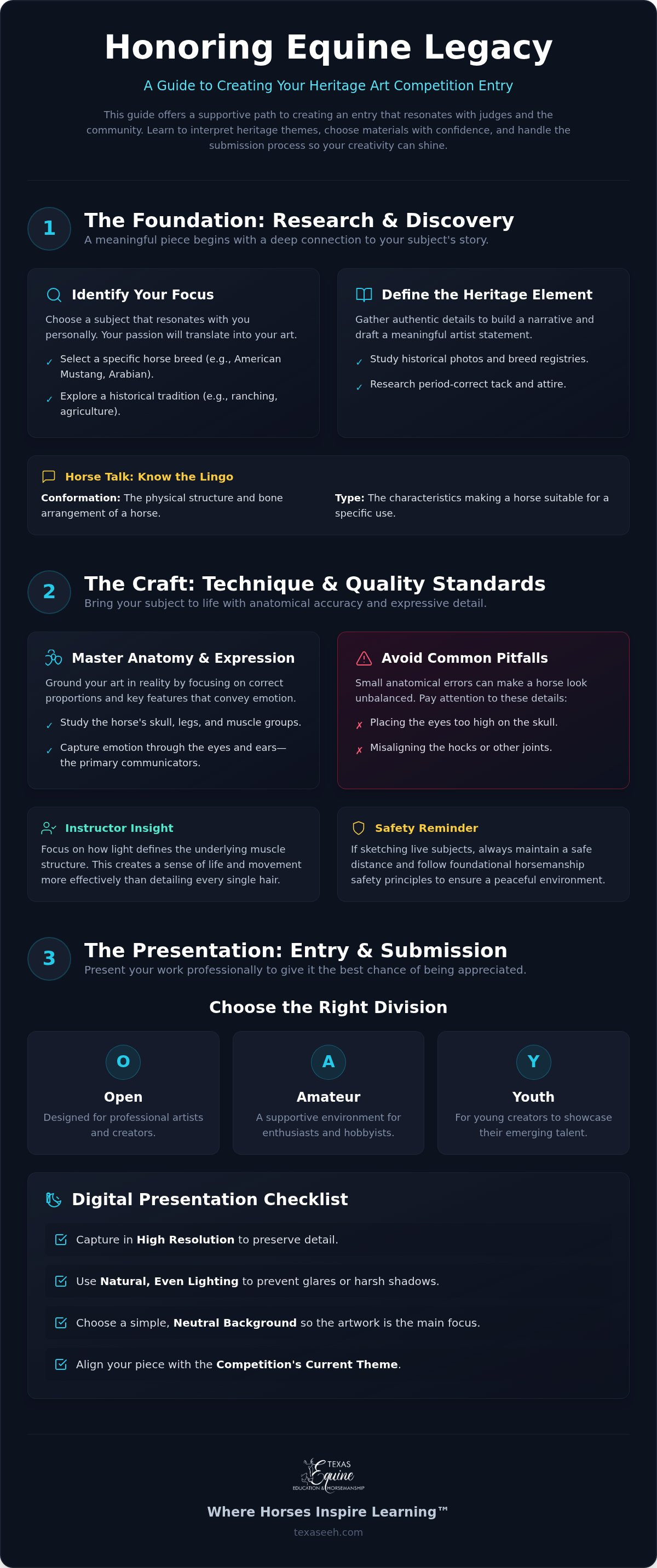
Entering an equine heritage art competition begins with a process of discovery. You'll want to identify a specific breed or historical tradition that speaks to your own experiences or interests. Perhaps you feel a pull toward the rugged history of the American Mustang, the refined lineage of the Arabian, or even the vital role of mules in agricultural history. By focusing on a subject that resonates with you, your art will naturally carry more emotional weight. You can start by exploring the history of equine art to see how masters before you captured the essence of these animals through various centuries and cultures.
Once you've chosen your subject, it's time to define the heritage element. Is your piece highlighting a specific working tradition, like the deep-rooted ranching culture of the West, or a particular historical era? Gathering primary resources is essential here. Look for historical photographs, study breed registries, and read the stories of famous foundation sires. These details help you draft a meaningful artist statement that explains the why behind your work, allowing viewers to connect with the legacy you're honoring.
Uncovering the Story Behind the Breed or Tradition
Every breed has a story told through its physical form. For instance, the hardy, compact build of a working cow horse tells a tale of agility and grit, while the long, elegant lines of a Thoroughbred reflect a heritage of speed. Understanding these nuances ensures your entry for an equine heritage art competition is both accurate and evocative.
Horse Talk
Conformation: The physical structure and bone arrangement of a horse, which dictates its movement and ability.
Type: The general characteristics that make a horse suitable for a specific use or representative of a particular breed standard.
Texas Equine Tip: Visit an equine library and learning center or use online archives to verify historical details. This helps ensure your portrayal of tack, clothing, or environment is authentic to the period or breed you've chosen.
Refining Your Technique: Quality Standards for Equine Art
Selecting your medium is a personal choice. You might prefer the richness of oils or the precision of a graphite pencil. Each choice affects how you convey the sheen of a coat or the dust of a trail. Every stroke matters. For those looking to sharpen their skills, exploring specific equine art techniques helps master the nuances of light and shadow.
An entry for an equine heritage art competition succeeds when it captures "Equine Expression." The eyes and ears are a horse’s primary communicators. They reveal if a horse is curious, relaxed, or alert. Instructor Insight: Don't get caught up in detailing every individual hair. Instead, focus on how light defines the underlying muscle structure and bone. This creates a sense of life. Movement resonates more deeply than technical perfection alone.
Mastering Anatomy and Expression
Beginner mistakes often involve placing the eyes too high on the skull or misaligning the hocks. These errors make a horse look unbalanced. Take time to study the proportions of the head, neck, and legs. This foundational knowledge ensures that even abstract interpretations for an equine heritage art competition feel grounded in reality. You might continue your learning by viewing past entries in our Equine Expression & Heritage Art Show to see how other artists handle these challenges.
Safety Reminder: If you choose to sketch live subjects, always maintain a safe distance. Following foundational horsemanship principles for ground safety is essential whenever you are working around horses. This ensures a peaceful and productive creative environment.
Final Submission: The Entry and Presentation Checklist
Once your artwork is complete, the final step involves presenting your vision to the judges with the same care you used to create it. Choosing the correct division ensures you're evaluated alongside peers at a similar experience level. The Open division is designed for professionals, while the Amateur and Youth divisions offer a supportive environment for enthusiasts and young creators. Before you submit, verify that your piece aligns with the current theme of our Equine Expression & Heritage series, as this connection to history is a vital part of the judging process.
Your digital image serves as the judge's window into your work. Capture your art in high resolution using natural, even lighting to prevent glares or deep shadows. A neutral background ensures the focus remains entirely on the horse. Reviewing a juried art competition checklist can provide an extra layer of confidence as you prepare your files. It's helpful to remember that these standards of excellence often mirror those found in online horse shows english western events, where presentation and attention to detail are paramount.
Navigating Show Divisions and Requirements
Deadlines are firm milestones in any equine heritage art competition. Double-check the closing date and ensure every field on your registration form is complete. If you're feeling inspired, consider a High Point strategy. By entering multiple pieces across different mediums, you can qualify for High Point or Reserve High Point awards. This approach celebrates your versatility as an artist while deepening your connection to the equestrian community through various creative lenses. It's a wonderful way to see how your skills develop across different subjects as you continue your personal growth.
Bringing Your Creative Vision to the Show Ring
Creating a meaningful entry for an equine heritage art competition is a process of both discovery and refinement. By digging into the history of your subject and focusing on the subtle expressions of the horse, you've already taken the most important steps toward a successful submission. Accuracy in anatomy and a thoughtful artist statement provide the foundation that allows your creative voice to be heard. Our national community of horse-inspired artists values this dedication to learning and growth. We provide a supportive environment with family-friendly divisions for all ages; here, every participant can receive professional feedback and celebrate their achievements with rosette awards. Continue your learning by exploring our upcoming Equine Expression & Heritage Art Show™ dates. Your unique perspective is a vital part of keeping the legacy of the horse alive through art.
Frequently Asked Questions
What qualifies as "equine heritage" in an art competition?
In an equine heritage art competition, heritage refers to the historical, cultural, or ancestral legacy of horses. This might include portraying a specific working tradition, such as ranching or logging, or capturing a historical era where horses were vital for transport. You can also focus on foundation sires or specific breed traits that reflect their historical development and human connection.
Can I enter the same piece of art in multiple classes?
While a single piece of artwork is typically entered into one specific class, you're encouraged to enter multiple pieces across different categories to showcase your versatility. Entering several works allows you to qualify for High Point or Reserve High Point honors. This strategy helps you explore different mediums while deepening your creative connection to the national equestrian community.
Do I need to be a professional artist to enter the Equine Expression & Heritage Art Show™?
You don't need to be a professional to participate in the Equine Expression & Heritage Art Show™. We offer inclusive divisions for all skill levels and ages, including Open for professionals, Amateur for enthusiasts, and Youth for younger creators. Even our Tiny Tot artists have a place to share their work; we believe that creativity is a journey for everyone.
How are the winners of the equine art show announced?
Results for our online shows are shared through the "A Little Bit of This & That" blog on our website. We celebrate the achievements of our participants by awarding rosettes and High Point honors across various divisions. This virtual format allows artists from across the country to connect and see how their work inspires others within our learning community.


Comments