


The Essential Horse Feeding Guide for Optimal Health

What if a safe horse feeding plan starts not with a scoop of grain, but with the way a horse’s digestive system works? Horses are adapted to eat fibrous forage in small amounts throughout the day, so feeding is about more than calories. It is a foundational horsemanship skill.
If hay types, grain choices, or the risk of colic and laminitis feel confusing, you are not alone. A steady routine and a few clear principles can make daily decisions easier. This guide explains how forage supports digestion, when concentrates may be useful, and why diet changes should happen gradually. You will also learn how to organize a practical feeding routine and track signs that your horse’s nutritional needs may not be met, so you can make informed choices with greater confidence.
Table of Contents
Understanding Equine Digestive Biology: Why Proper Feeding Matters
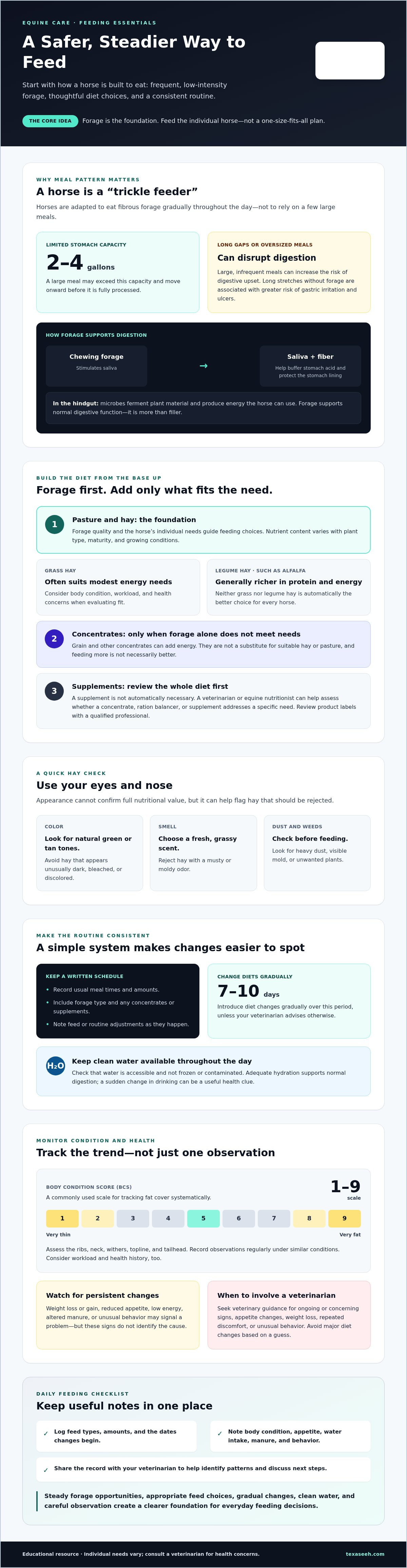
A horse’s digestive system is adapted for frequent, low-intensity eating, not a few large meals. That is why horse feeding starts with understanding the horse as a “trickle feeder”: forage is eaten gradually, providing a steady supply of fibrous material. A horse’s stomach holds only about 2 to 4 gallons, so a large meal can exceed its limited capacity and pass onward before it is fully processed. Large, infrequent meals can disrupt digestion and increase the risk of digestive upset.
Fiber also supports the hindgut, where microbes ferment plant material and produce energy the horse can use. Forage is more than filler: it supports normal digestive function. For a broader overview of feed types and digestive basics, see Equine nutrition basics.
The Biological Necessity of Constant Grazing
Horses produce stomach acid throughout the day. Chewing forage stimulates saliva, which helps buffer that acid, while fiber also forms a layer that can help protect the stomach lining. Long stretches without forage may leave the stomach more exposed to acid and are associated with a greater risk of gastric irritation and ulcers. “Empty stomach” stress is an informal phrase, not a specific diagnosis.
Regular opportunities to forage also support natural behavior. A horse kept in a stall or on restricted forage may have fewer chances to chew and search for food, which can contribute to frustration or unwanted behaviors. However, continuous forage access is not appropriate for every horse. Aim for consistent forage opportunities that suit the individual horse’s health and nutritional needs. Seek veterinary guidance if you notice appetite changes, weight loss, repeated discomfort, or unusual behavior.
The Foundation of Nutrition: Forage, Grains, and Supplements
Forage quality and the horse’s individual needs should guide horse feeding choices. Pasture and hay provide the core of the diet, but their nutrient content varies with plant type, maturity, and growing conditions. Grass hays are often suited to horses with modest energy needs, while legume hays such as alfalfa are generally richer in protein and energy. Neither is automatically the better choice. Consider body condition, workload, and any health concerns.
Concentrates, including grain, can add energy when a horse’s needs are not met by forage alone. They are not a substitute for suitable hay or pasture, and feeding more is not necessarily better. A veterinarian or equine nutritionist can help determine whether a concentrate, ration balancer, or supplement addresses a specific dietary need. For an overview of nutrient requirements, consult the Merck Veterinary Manual’s horse nutrition guidance.
Evaluating Forage Quality for Your Horse
Use your eyes and nose when inspecting hay, while remembering that appearance alone cannot confirm its full nutritional value:
Color: Look for natural green or tan tones. Avoid hay that appears unusually dark, bleached, or discolored.
Smell: Choose hay with a fresh, grassy scent. Reject hay with a musty or moldy odor.
Dust and weeds: Check for heavy dust, visible mold, or unwanted plants before feeding.
For new owners, learning to assess a horse’s condition and feeding routine can make decisions more informed. Supplements are not automatically necessary just because they are promoted for horses. Review the complete diet and product label with a qualified professional before adding one.
Developing a Safe and Consistent Horse Feeding Routine
Use a written schedule to keep horse feeding organized and make unusual changes easier to spot. Record usual meal times and amounts, including the type of forage and any concentrates or supplements. Note adjustments to feed or routine as they happen. Introduce diet changes gradually over 7 to 10 days, unless your veterinarian advises otherwise. Keep clean water available throughout the day, and check that it is accessible and not frozen or contaminated. Adequate hydration supports normal digestion, and sudden changes in drinking can be a useful health clue.
Monitoring Body Condition and Health Indicators
Body Condition Score (BCS) helps you track fat cover systematically. On the commonly used 1-to-9 scale, 1 indicates very thin and 9 very fat. Assess the ribs, neck, withers, topline, and tailhead, and record observations regularly under similar conditions. The trend matters more than a single score. Consider workload and health history, too, since both can affect condition.
Pay attention to persistent changes rather than one isolated observation. Weight loss or gain, reduced appetite, low energy, altered manure, or unusual behavior may signal a problem, but these signs do not identify its cause. Contact a veterinarian about ongoing or concerning signs instead of making major diet changes based on a guess.
Log feed types, amounts, and the dates changes begin.
Note body condition, appetite, water intake, manure, and behavior.
Share the record with your veterinarian to help identify patterns and discuss next steps.
This simple monitoring routine adds useful context to daily horse feeding decisions. It can also help you describe changes clearly during a veterinary consultation.
Build Confidence in Your Horse’s Daily Care
Healthy horse feeding begins with respect for the horse’s digestive design: make forage the foundation, keep routines steady, and watch how your horse responds. A thoughtful feeding plan is not the same for every horse. Body condition, workload, and health all help determine what is appropriate, and a veterinarian can guide decisions when needs change.
Small, consistent observations can make daily care more informed. Note changes in appetite, condition, or behavior, and share concerns with your veterinarian. Nutrition is a practical part of foundational horsemanship, built step by step through attentive care.
Texas Equine Education & Horsemanship™ takes an education-first approach to foundational horsemanship and equine care, starting from the ground up. Its equine care classes can help you build practical knowledge as part of your horse’s daily care. Explore the classes to continue developing your horsemanship skills.
Frequently Asked Questions
How much hay should a horse eat per day?
A horse generally needs about 1.5% to 2.5% of its body weight in forage daily, including hay and pasture. For a 1,000-pound horse, that is roughly 15 to 25 pounds of forage. The amount of hay depends on how much pasture the horse eats, the forage’s moisture and quality, and the horse’s individual needs. Ask a veterinarian or equine nutritionist to help tailor the ration.
Is it safe to feed a horse treats like apples or carrots?
Yes, most horses can have small amounts of fresh apples or carrots as occasional treats. Cut them into manageable pieces to reduce choking risk, and avoid feeding spoiled produce. Treats should not replace forage or become a large part of the diet. Check with a veterinarian before offering them to horses with conditions that require restricted sugar or carefully controlled feeding.
What are the early warning signs of a horse not getting enough nutrition?
Early clues can include gradual weight loss, a dull coat, reduced muscle, low energy, or changes in appetite and manure. These signs can also point to illness, dental problems, parasites, or other concerns, so they do not confirm a nutritional shortfall by themselves. Track changes in body condition and eating habits, then discuss persistent or worsening signs with a veterinarian.
Why is my horse eating wood or dirt even though I feed them grain?
Eating wood or dirt can have several causes, and grain alone does not show whether a diet meets a horse’s needs. The behavior may relate to limited forage or chewing opportunities, boredom, an unbalanced diet, or a health issue. Check forage access and the overall diet, prevent access to unsafe materials, and ask a veterinarian to assess persistent behavior rather than adding supplements without guidance.


Comments