


Guide to Horse Breeds: A Resource for Future Equestrians

A championship pedigree won't guarantee a quiet, safe partner in the barn. With hundreds of distinct horse breeds across the globe, it's completely natural to feel overwhelmed by confusing terms like hotblood, coldblood, and warmblood. You want a dependable mount that matches your current riding level and family safety needs, but sorting through conflicting advice on temperaments and physical traits can leave anyone feeling uncertain.
This guide provides the clear roadmap you need. You'll discover the foundational classifications behind popular mounts, identify which breeds excel in Western, English, or pleasure pursuits, and learn how to evaluate a horse's true suitability for your equestrian goals. Together, we'll explore how patient, ground-up horsemanship bridges natural genetics with dependable daily handling, giving you the confidence to take your next step.
Table of Contents
Understanding Primary Horse Breed Classifications and Blood Types
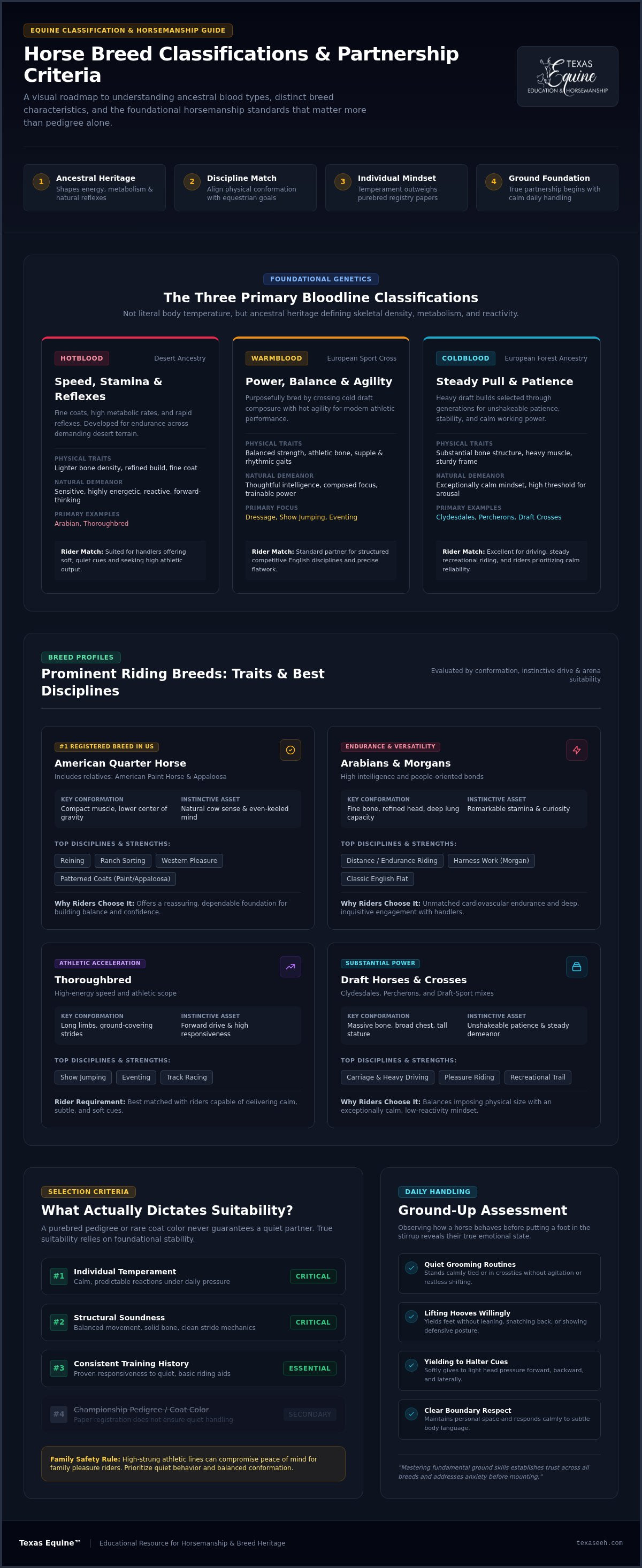
True equine heritage involves far more than physical coat colors or registry papers. Historically, humans shaped distinct horse breeds through generations of selective breeding, refining conformation standards and behavioral traits to meet specific working demands. When you explore a comprehensive list of horse breeds, the variety can feel overwhelming. Beneath their varied builds, horses fall into three ancestral blood categories that dictate metabolism, bone density, and instinctive energy levels.
Hotbloods, Coldbloods, and Warmbloods Defined
These traditional labels do not describe literal blood temperature. Instead, they classify foundational ancestry, skeletal density, and natural reactivity:
Hotbloods: Originating from warm desert climates, breeds like Arabians and Thoroughbreds possess fine coats, high metabolic rates, and rapid reflexes. They offer remarkable stamina and speed, paired with a sensitive, energetic demeanor.
Coldbloods: Tracing to colder European forests, heavy draft breeds such as Clydesdales and Percherons feature substantial bone structure and calm temperaments. Breeders selected them for steady pull power and unshakeable patience rather than quick acceleration.
Warmbloods: Developed by crossing cold draft composure with hot agility, warmbloods represent purposeful European sport breeding. They deliver balanced strength, supple gaits, and thoughtful intelligence, making them standard partners for modern dressage and show jumping.
Most Popular Horse Breeds: Profiles, Temperament, and Disciplines
Evaluating popular horse breeds reveals that high registration numbers often reflect historical utility rather than automatic beginner suitability. The American Quarter Horse remains the most registered breed in the United States, celebrated for compact muscle, natural cow sense, and an even keel in Western arenas. Close relatives like the American Paint Horse and Appaloosa share this sturdy conformation and dependable disposition, accented by distinctive patterned coats. As documented by the International Museum of the Horse, working stock breeds earned widespread trust through centuries of quiet, dependable utility.
Key Traits and Disciplines of Prominent Riding Breeds
Matching horse breeds to specific riding disciplines requires an honest assessment of athletic build alongside mental temperament:
American Quarter Horses: Excel in reining, ranch sorting, and pleasure riding. Their lower center of gravity and steady disposition provide a reassuring foundation for riders building balance.
Arabians and Morgans: Display remarkable stamina and people-oriented curiosity. Arabians lead distance riding, while versatile Morgans adapt seamlessly to harness work or classic English flat classes.
Thoroughbreds: Dominate jumping, eventing, and racing with athletic speed and ground-covering strides. Their sensitive, forward nature best suits riders who can offer soft, quiet cues.
Draft Horses and Crosses: Coldbloods like Clydesdales provide patient power for driving and recreational riding, balancing substantial size with an exceptionally calm mindset.
Before deciding on any mount, observing how an individual horse handles quiet grooming routines and basic halter cues offers far deeper insight into suitability than a breed registry name alone.
Selecting the Right Horse Breed and Building Partnership Through Education
Choosing among different horse breeds requires an honest self-assessment of your riding background, physical comfort, and handling confidence. While exceptional bloodlines or rare colors easily capture our attention, pedigree doesn't guarantee quiet reliability. An equine partner's individual temperament, structural soundness, and consistent training history must always outweigh registry papers. If your main goal centers on quiet family pleasure riding, high-strung athletic lines might work against your peace of mind. Prioritizing calm behavior and balanced movement ensures every barn visit builds genuine self-assurance.
Connecting Breed Awareness with Foundational Horsemanship Skills
True equine partnership begins on the ground, long before placing a foot in the stirrup. How a mount behaves during daily care routines, such as standing quietly for grooming, lifting hooves willingly, or yielding softly to halter pressure, reveals their genuine emotional state. Mastering fundamental ground skills establishes trust across all horse breeds. It enables handlers to read subtle body language, establish clear boundaries, and address anxiety before mounting.
Cultivating these practical abilities is an intentional, rewarding process. By focusing on ground-up education rather than relying solely on genetic assumptions, riders develop the perceptive touch that horses naturally respect. This steady, structured knowledge creates a secure environment where horse and human learn together with mutual confidence and lasting safety.
Building Your Equine Partnership from the Ground Up
Every equestrian journey begins with thoughtful preparation and patient observation. Exploring diverse horse breeds gives you valuable insight into ancestral energy levels, physical traits, and athletic predispositions. Yet, lasting safety and genuine confidence will always stem from an individual horse's quiet disposition and dependable ground training rather than a registry certificate.
Developing safe handling habits allows you to support any equine partner with clarity and calm assurance. Nationwide handlers and riders can expand their practical knowledge by exploring Texas Equine™ educational programs. With an education-first approach focused on equine care and foundational horsemanship, you can step forward with the skills and peace of mind needed for a lifetime of rewarding companionship.
Frequently Asked Questions
What is the most beginner-friendly horse breed?
The American Quarter Horse is frequently recommended for beginners due to its steady, forgiving disposition. However, individual temperament and seasoned training matter more than breed labels. An older, well-schooled horse with reliable ground manners provides the safest learning environment for a new equestrian, regardless of whether it's a purebred mount or a dependable mixed breed.
What is the difference between a hotblood and a coldblood horse?
The difference centers on ancestral heritage, metabolism, and physical conformation. Hotbloods trace to arid desert climates and feature lighter bones, high stamina, and sensitive reflexes built for speed. Coldbloods originate from colder European working environments, developing dense bone structures, heavy muscle, and unflappable, calm temperaments that prioritize patient power over rapid acceleration.
Can any horse breed participate in English and Western disciplines?
Yes, most horse breeds can successfully participate in both English and Western disciplines at recreational and grassroots levels. While specialized bloodlines dominate elite competitions, general athleticism and a willing attitude allow versatile horses to switch tack comfortably. Steady progress relies on balanced ground education, clear cueing, and rider balance rather than strict pedigree requirements.
How much does breed affect a horse’s overall temperament?
Breed heritage provides a general blueprint for natural energy and reactivity, but it doesn't define the entire horse. Early handling, past experiences, and consistent ground training significantly influence day-to-day behavior. A calm environment and patient, step-by-step guidance foster self-assurance in any horse, making individual training and trust far more important than genetics alone.


Comments