


Building a Strong Horse-Human Relationship: Expert Tips

Horses can form trusting, positive bonds with people, though each horse responds according to its experiences, personality, and temperament. The horse-human relationship has deep roots: the partnership between humans and horses dates back to 3500 B.C. A horse’s friendly response is real, even if it isn’t the same as human affection.
It’s natural to wonder whether a horse likes you, especially when it stays close, follows you, or nuzzles you. These gestures can reflect comfort and trust, built through steady, respectful care.
Explore how horses form bonds with people, respond to human emotions and behavior, and became partners in human life over time. You’ll also learn how to notice a horse’s signals and support a relationship grounded in patience, consistency, and mutual care.
Table of Contents
Horse-human attachment and bond formation
Trust grows through predictable, kind interactions, not one dramatic moment. Bella, a horse rescued from neglect, began showing affection toward Sarah after months of patient care. Their story illustrates how a horse’s history can shape its response to a person. Each horse is an individual, so signs of comfort may develop at a different pace.
Regular grooming, feeding, and play give a horse familiar, positive experiences with a person. Quiet, undemanding time can also build trust: simply share space without setting an agenda or asking anything, unless safety requires action. For example, sit quietly while the horse rests instead of expecting it to perform or interact.
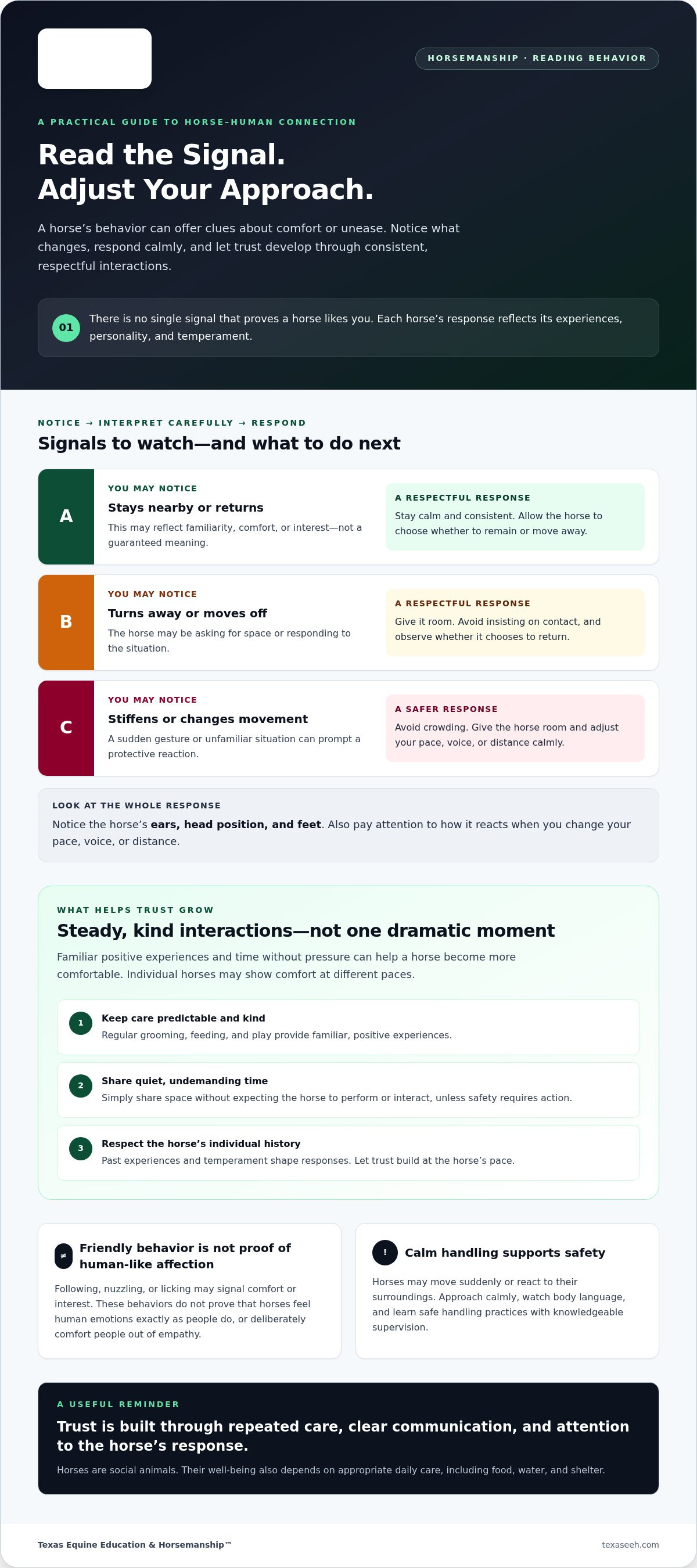
Horses are social animals, and regular contact with other horses or people may benefit them as they develop. Their bond with a caretaker also involves reciprocal care: people provide consistent attention, while horses communicate comfort or unease through behavior. Notice whether the horse stays nearby, turns away, or returns after moving off.
In the United States, horse ownership and handling are subject to federal, state, and local requirements that vary by jurisdiction and activity. Identify the rules that apply where the horse is kept and handled, and provide appropriate daily care, including food, water, and shelter.
Positive interaction can involve movement, through activities such as grooming or walking, as well as enjoyment and connection. These experiences may support well-being, but they aren't a substitute for medical or mental health care.
Horse handling carries injury risks because a horse may move suddenly or react to its surroundings. Reduce risk by approaching calmly, watching the horse’s body language, and learning safe handling practices with knowledgeable supervision.
How horses respond to human emotions and behavior
A horse notices more than a handler’s words. Tone, posture, movement, emotion, and presence all shape the cues it receives. Someone who moves quickly and speaks sharply sends different signals from a person approaching quietly with relaxed shoulders. A horse’s response also reflects its past experiences with people, personality, and temperament.
Horses can respond to perceived threats with fast, protective reactions that happen before deliberate thought. Their heart rate and breathing may increase as they prepare to move away. A sudden gesture or unfamiliar situation can trigger this response, even when no harm is intended. Give the horse room, avoid crowding it, and watch for changes in posture and movement.
A handler’s movements can also direct a horse’s attention. Clear, consistent body language can guide its focus, while confusing or abrupt gestures may make the interaction harder to read. Watch the horse’s ears, head position, and feet as it responds. These visible details can help you adjust your movement and timing.
A horse may follow a companion, nuzzle, or lick. These behaviors can signal comfort or interest, but they don’t prove horses feel human emotions exactly as people do. Horses are sensitive to human emotions, but they don’t deliberately comfort people out of empathy. A horse that approaches may be responding to familiarity, cues, or its individual temperament.
Reading a horse’s signals takes attention, not words. Notice how it reacts when you change your pace, voice, or distance, then respond calmly and consistently. If the horse turns away, stiffens, or moves off, give it space rather than insisting on contact. Respectful adjustments make interactions clearer and support a safer, more trusting horse-human relationship.
Historical development of horse-human relationships
People and horses have stood beside one another for thousands of years. Their partnership developed through shared roles in survival, work, travel, and healing. Horses became more than animals nearby: they were partners in tasks that shaped daily human life. This history helps explain why trust, care, and communication remain central to modern horsemanship.
Work and travel called for cooperation. Horses had to respond to people’s directions, while people needed to understand horses’ behavior and needs. Travel, for example, depended on a working partnership, not simply the presence of an animal. The relationship was practical, but repeated contact also created opportunities for familiarity and trust. People’s reliance on horses made attentive handling essential.
Industrialization changed that pattern. As society changed, horses moved from the center of everyday life to its margins. Their role in human survival, work, and travel became less central, while their place as companions and partners continued. This shift matters: a horse’s value no longer needs to be defined mainly by what it can do for a person.
This history offers a useful perspective today. A strong connection still rests on cooperation, but it also depends on the horse’s individual responses and well-being. The past shows how broad the partnership can be; it doesn’t mean every modern horse should be treated as a worker or expected to behave alike. Unlike the historical reliance on horses, present-day care can focus on understanding and respectful interaction.
Texas Equine Education & Horsemanship™: Horse & Rider Showcase
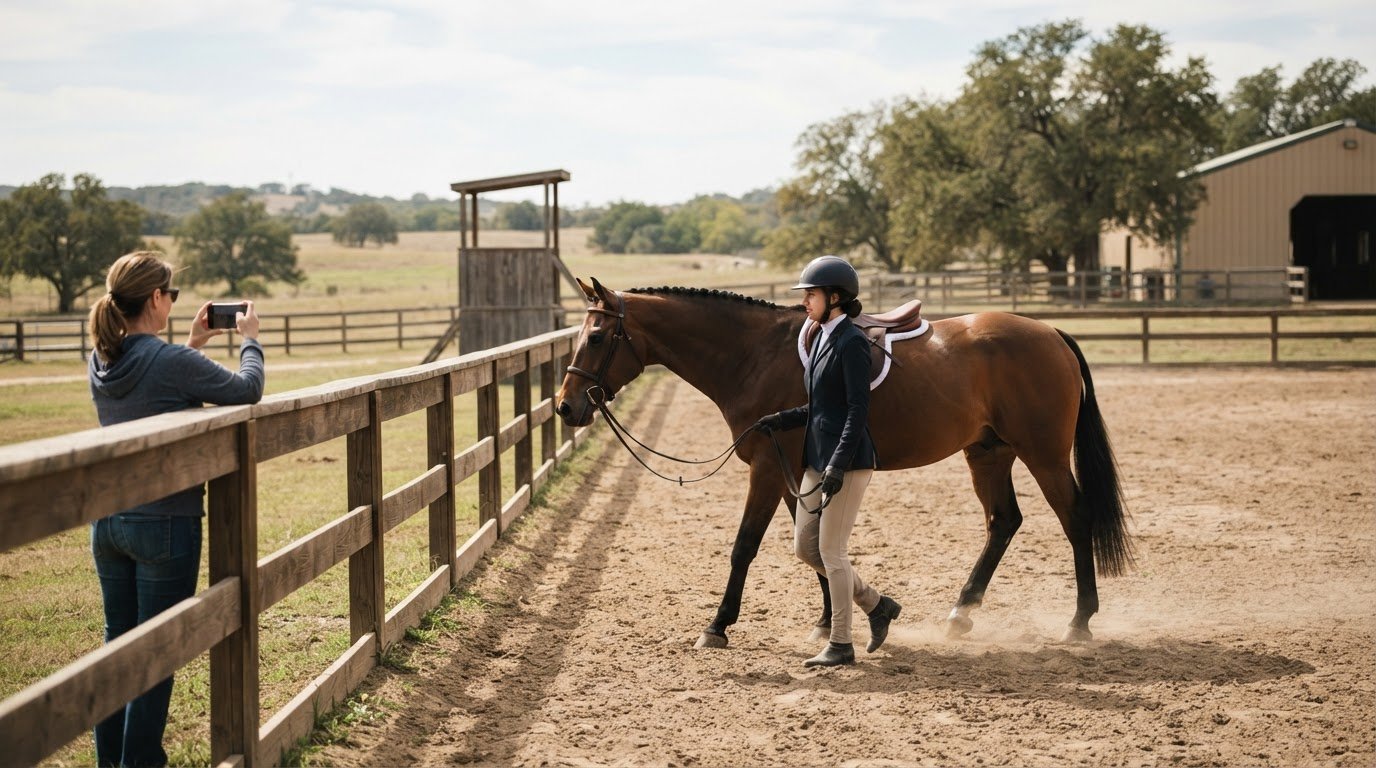
Texas Equine Education & Horsemanship™ offers the Horse & Rider Showcase, an opportunity to observe the partnership between horses and people in a horse-and-rider setting. The history and behavior behind that connection can add perspective as you watch the showcase.
If you want to explore horsemanship beyond reading, or are curious about how people and horses work together, a showcase is one way to continue. Watching a Horse & Rider Showcase can complement the ideas in this article, while every partnership remains unique.
The Horse & Rider Showcase offers a way to engage with horsemanship as an observer. Notice how horse and rider respond to one another, and consider what their interaction communicates.
Let Curiosity Guide Your Next Step
Understanding a horse is an ongoing practice shaped by the choices you make in each interaction. Choose one small intention for your next visit, such as noticing how the horse responds when you pause or allowing it time to approach. Observe what changes and let those observations guide your next interaction. This can help the horse-human relationship grow through understanding rather than expectation. Keep the goal simple: clearer communication, not a perfect response. A calm, observant approach gives both horse and person room to learn.
As you continue, focus on being consistent in your attention and willing to adjust when the horse’s response changes. Small choices, like pausing instead of rushing or observing before acting, can make each interaction more thoughtful. Progress doesn’t require a dramatic moment; it can begin with noticing one new signal and responding with care. Stay patient and curious, and let each interaction build on what you’ve learned.
Frequently Asked Questions
Do Horses Actually Like Humans?
Horses can show comfort or enjoyment around particular people, though this isn’t identical to human affection. A horse that approaches someone familiar may be choosing contact, but context matters: it could also be expecting food or responding to routine. Look for relaxed, consistent engagement in different situations rather than treating one gesture as proof of a deep bond.
How has the horse-human relationship changed throughout history?
The relationship has shifted from a partnership tied closely to survival, work, and travel toward a wider range of roles, including companionship and learning. Industrialization moved horses away from the center of everyday life. That change is a reminder that modern relationships needn’t depend on a horse’s usefulness. Today, people can make the quality of care and interaction central to their partnership.
How do horses communicate with humans through body language and behavior?
Horses communicate primarily through body language, so watch how their whole posture changes in response to you. A horse that turns toward you is signaling something different from one that angles away or steps back. Consider the setting, too: a horse focused on a nearby sound may not be reacting to your invitation. Pause and give it room to respond.
How do horses recognize and bond with people?
Familiar, repeated experiences help horses learn what to expect from particular people. A consistent routine, such as approaching calmly in the same way before grooming, gives the horse recognizable cues. Memory is influenced by perception, importance, and repetition, so reassuring interactions can become familiar when repeated over time. Keep routines predictable while respecting signs that the horse needs space.
What does research say about horses’ emotions, cognition, and attachment to humans?
Research examines how horses perceive people, remember experiences, and respond to human emotions, while distinguishing those responses from human motives. Horses may react to emotional cues, but that doesn’t establish that they intentionally comfort someone out of empathy. The Horses and Humans Research Foundation provides grants for rigorous research on horse-human connections, supporting evidence-based knowledge that can inform best practices.


Comments