


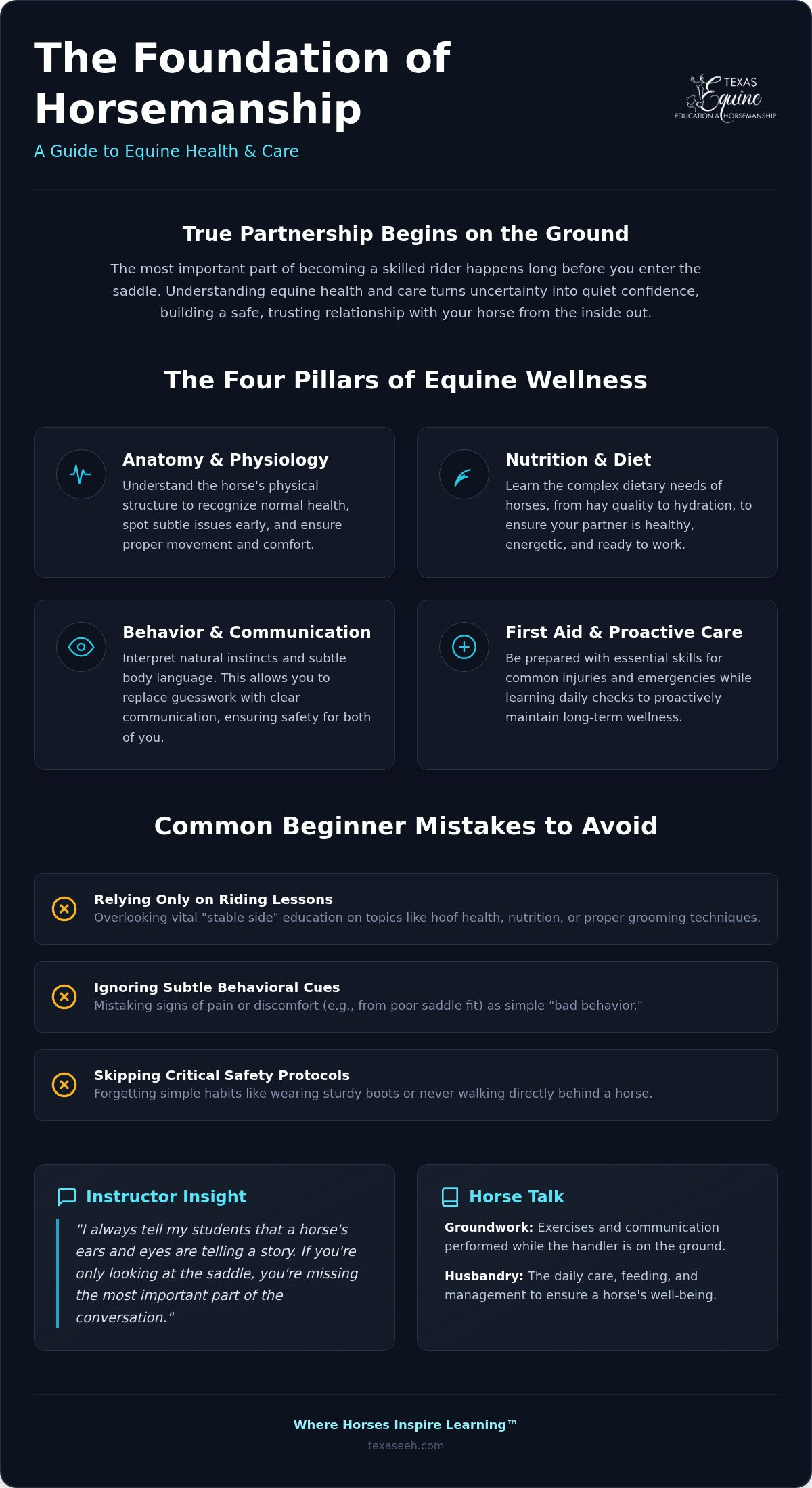
Equine Health and Care Classes: A Complete Guide to Ground-Up Horsemanship

The most important part of becoming a skilled rider doesn't actually happen in the saddle; it begins with your feet firmly planted on the ground. It's natural to feel a bit of a knot in your stomach when you're standing next to a thousand-pound animal, especially if you aren't quite sure what their body language is telling you or how to tell if they're feeling their best. Many students arrive here frustrated by barns that only teach riding, leaving them feeling overwhelmed by the technical side of horse wellness. Our equine health and care classes are designed to bridge that gap, turning that uncertainty into a quiet, steady confidence that helps you understand your horse from the inside out.
At Texas Equine Education & Horsemanship™, we believe in a philosophy where horses inspire learning™. You'll discover how foundational care builds the essential knowledge every owner and aspiring professional needs for a safe, successful partnership. This guide will walk you through the vital signs of a healthy horse, safe ground-handling techniques, and how these core skills can even lead to a rewarding career path in the equine industry. By focusing on the "why" behind every action, you'll gain the readiness needed to handle any situation with grace and clarity.
Table of Contents
Beyond the Saddle: Why Equine Care Classes are the Foundation of Horsemanship
Horsemanship is often pictured as a rider moving in harmony with their horse, but the reality of a successful partnership is built long before you ever pick up a set of reins. Genuine horsemanship begins on the ground. Our equine health and care classes offer a holistic approach to education, covering everything from complex nutritional needs to the subtle nuances of horse behavior. At Texas Equine Education & Horsemanship™, we live by the philosophy that this is Where Horses Inspire Learning™. These classes aren't just about learning chores; they're about developing a comprehensive horse management strategy that ensures your equine partner is safe, healthy, and ready to work.
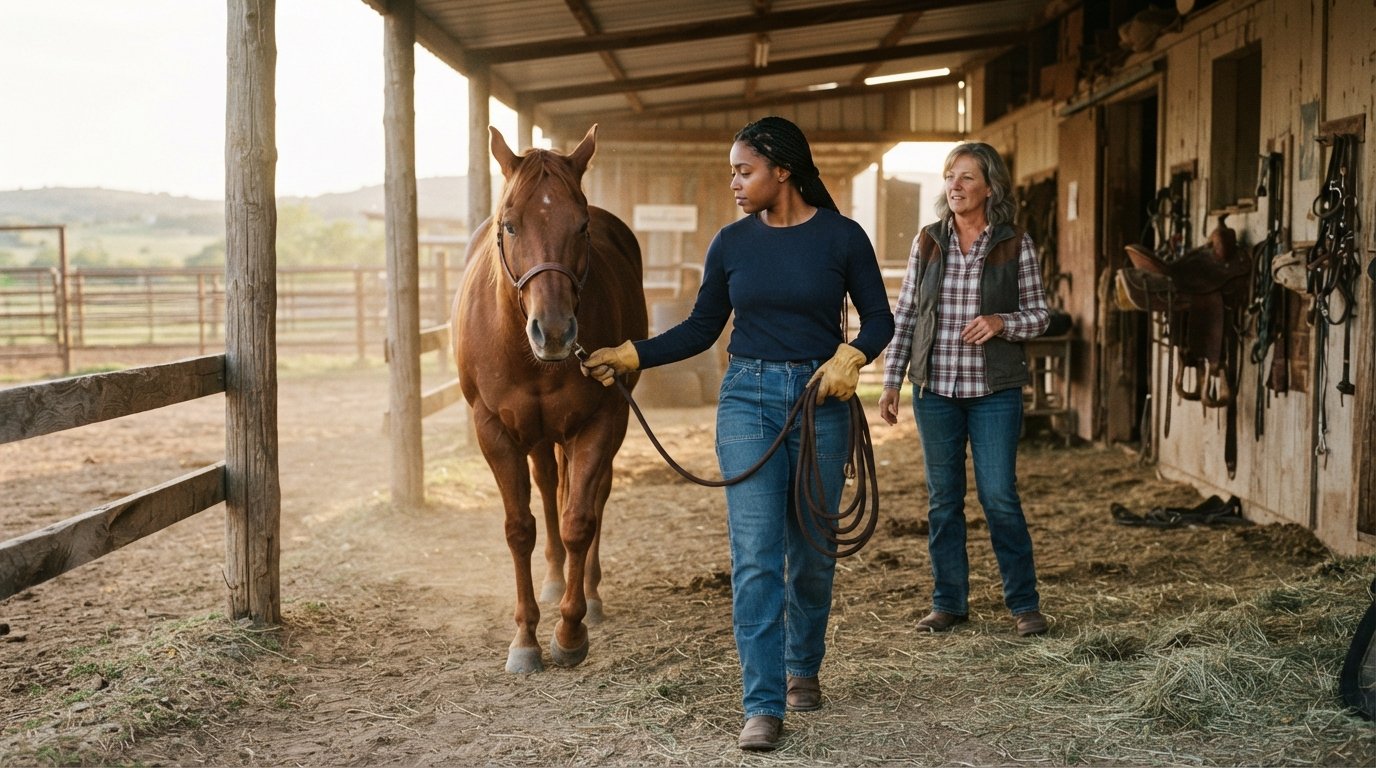
The "ground-up" philosophy focuses on the idea that if you can't lead, groom, or handle a horse safely on the ground, you shouldn't be in the saddle. By mastering these foundational skills, you build a layer of self-assurance that carries over into your riding. Understanding the "why" behind a horse's actions allows you to replace anxiety with knowledge, creating a peaceful environment for both the human and the horse. This preparation is the key to transitioning from a casual observer to a true horseman.
The "Why" Behind Ground-Up Horsemanship
When you understand a horse's natural instincts as a prey animal, you stop guessing and start communicating. Recognizing why a horse might spook at a rustling leaf or lean away from a brush helps you stay safe and calm. This ground-based interaction is also where the deepest emotional bonds are formed. During grooming sessions and daily health checks, you learn your horse's baseline, making it easier to spot when something is wrong. We often use specific terms in our equine health and care classes to help students speak the language of the stable.
Horse Talk
Groundwork: Exercises and communication performed while the handler is on the ground, usually using a lead rope or lunge line.
Husbandry: The daily care, feeding, and management of the horse to ensure its physical and mental well-being.
Common Beginner Mistakes in Horse Care
Many new enthusiasts are eager to ride, which sometimes leads to overlooking the vital "stable side" of education. Avoiding these common pitfalls will help you become a more responsible and respected member of the equine community:
Relying solely on riding instructors: While instructors are experts in body position and aids, they may not have time during a riding lesson to teach you about hay quality or hoof health.
Ignoring subtle behavioral cues: A horse that is unusually "cranky" during saddling might not be misbehaving; they could be experiencing gastric discomfort or a poor saddle fit.
Skipping safety protocols: Simple habits, like never walking directly behind a horse or always wearing sturdy boots, are often the first things forgotten when a student feels "too comfortable."
Instructor Insight:
"I always tell my students that a horse's ears and eyes are telling a story. If you're only looking at the saddle, you're missing the most important part of the conversation."
Core Pillars of a Comprehensive Equine Health Curriculum
To truly understand your horse, you need to look beneath the surface. A well-rounded education focuses on four essential pillars: anatomy, nutrition, behavior, and first aid. These areas aren't separate subjects; they are the threads that weave together to form the foundational horsemanship course. When you understand how these pillars interact, you're better prepared to maintain a consistent daily routine that supports long-term wellness. Knowing the "why" behind a feeding schedule or a grooming habit helps you move from being a passenger to a proactive caretaker.
Texas Equine Tip:
Develop your "eye" for detail. Spend five minutes each day just watching your horse in the pasture or stall. Notice their breathing rate, how they shift their weight, and their interest in food. This baseline makes it incredibly easy to spot subtle changes before they become emergencies.
Anatomy and Hoof Care Fundamentals
You don't need to be a veterinarian to benefit from knowing your horse's skeletal structure. Understanding where the joints sit and how the spine moves helps you recognize if a saddle fits correctly or if your horse is struggling with a specific movement. This knowledge is especially vital when it comes to the old saying, "No hoof, no horse." Daily hoof checks aren't just for removing rocks; they're your chance to look for heat, cracks, or thrush. For those who want to get their hands dirty and learn these skills in person, our equine health and care classes provide a safe environment to practice these techniques under expert guidance.
Understanding Equine Behavior and Communication
Horses are masters of non-verbal communication. Decoding their language means looking at more than just the ears. While pinned ears are a clear sign of displeasure, a swishing tail or a tightly wrinkled muzzle can also signal frustration or physical pain. Keeping healthy horses also involves understanding the link between what they eat and how they act. For instance, a diet too high in starch can lead to "hot" or anxious behavior, while a lack of forage can cause stable vices like cribbing. By listening to what your horse tells you through their body language and tension levels, you can adjust their care and environment to ensure they feel safe and comfortable. If you're ready to deepen your bond, you might consider how our education programs can help you build these essential skills.
Selecting the Right Equine Care Program for Your Goals
If you're a first-time owner wanting to feel safe in your own backyard or a parent looking for a wholesome family activity, the best equine health and care classes prioritize "Foundational Horsemanship" over simple riding skills. This ground-up approach ensures that you aren't just learning to sit on a horse, but are learning to partner with one. We understand that life is busy. Look for a curriculum that offers flexibility for working adults and university students alike. For our youngest learners, we even integrate literacy through The Reading Rein™, because we believe that a love for horses and a love for learning should go hand in hand.
Programs for Young Riders and Families
Introducing children to horses requires a gentle, safety-first mentality. Tiny Tot lessons focus on building confidence through age-appropriate horsemanship tasks that emphasize the "why" behind every action. By using literacy-based programs like The Reading Rein™, children can develop their equine knowledge through storytelling and theory before they ever set foot in a stirrup. This method builds a strong cognitive connection to the animal while fostering a peaceful environment. Where Horses Inspire Learning™, even the smallest students can find their voice.
Safety Reminders for Parents:
Always ensure your child is wearing a certified helmet and sturdy, closed-toe boots.
Teach children to approach a horse's shoulder rather than their rear or direct front.
Supervise all interactions to help children recognize when a horse needs space or quiet.
Professional Paths: The Equine Industry Readiness Program™
For those looking to turn their passion into a career, the Equine Industry Readiness Program™ offers a structured path toward professional success. This program features 8-week internship segments that provide hands-on certification in real-world stable management and care. It's designed with versatility in mind. University students can complete modules consecutively or take breaks between segments to fit their academic schedules. If you're curious about how this fits into the broader landscape, you can learn more about choosing the right equine industry certification program to ensure it aligns with your specific career goals.
If you aren't sure which path is right for your family or your future, we invite you to explore our education programs to find the perfect starting point for your horsemanship journey.
From Classroom to Stable: Applying Your Equine Care Knowledge
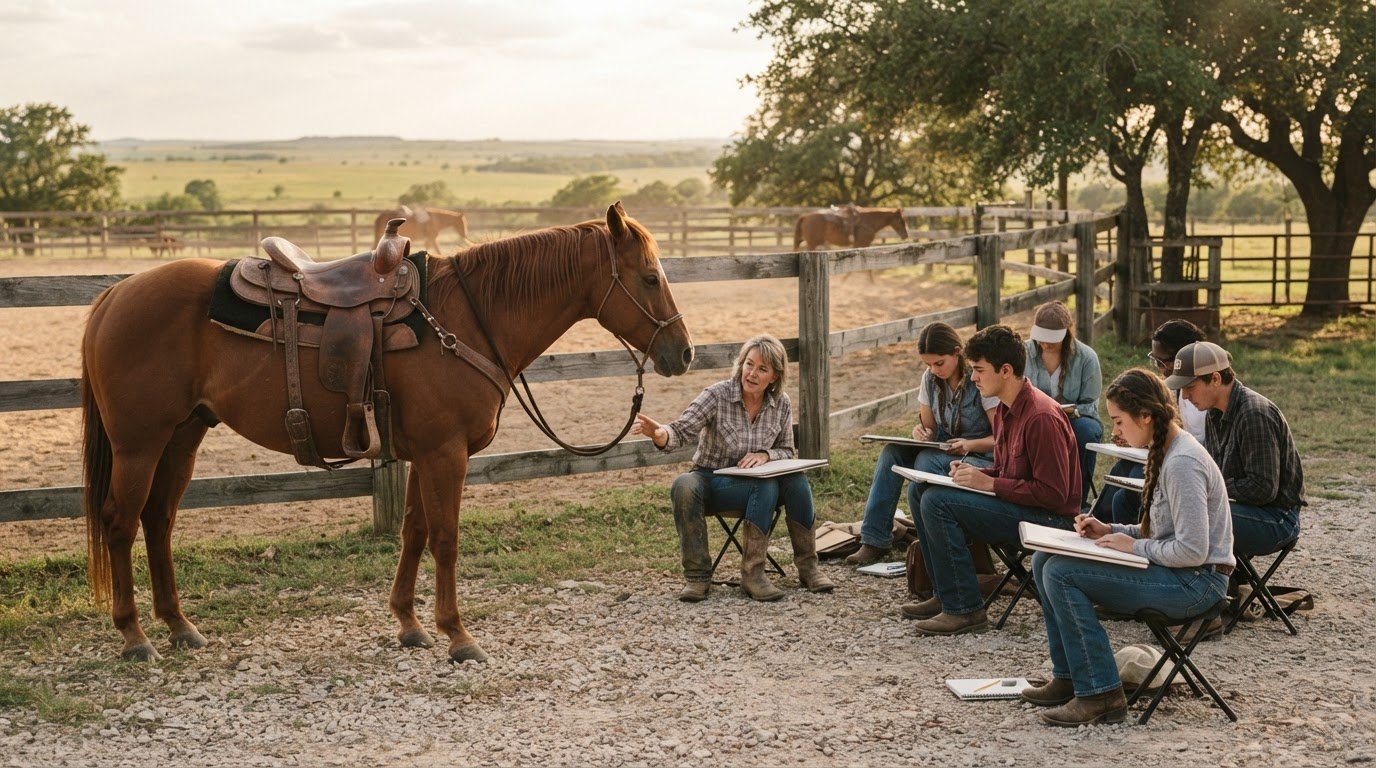
Moving from the classroom to the stable is where your knowledge truly comes to life. While understanding theory provides the map, the hands-on application in our equine health and care classes is the terrain itself. This transition allows you to refine your touch, develop your timing, and build a relationship based on mutual respect rather than just commands. By applying what you've learned about behavior and anatomy in a real-world setting, you ensure that every interaction is safe and purposeful. It's about turning "I know this" into "I can do this."
Showcasing Your Progress
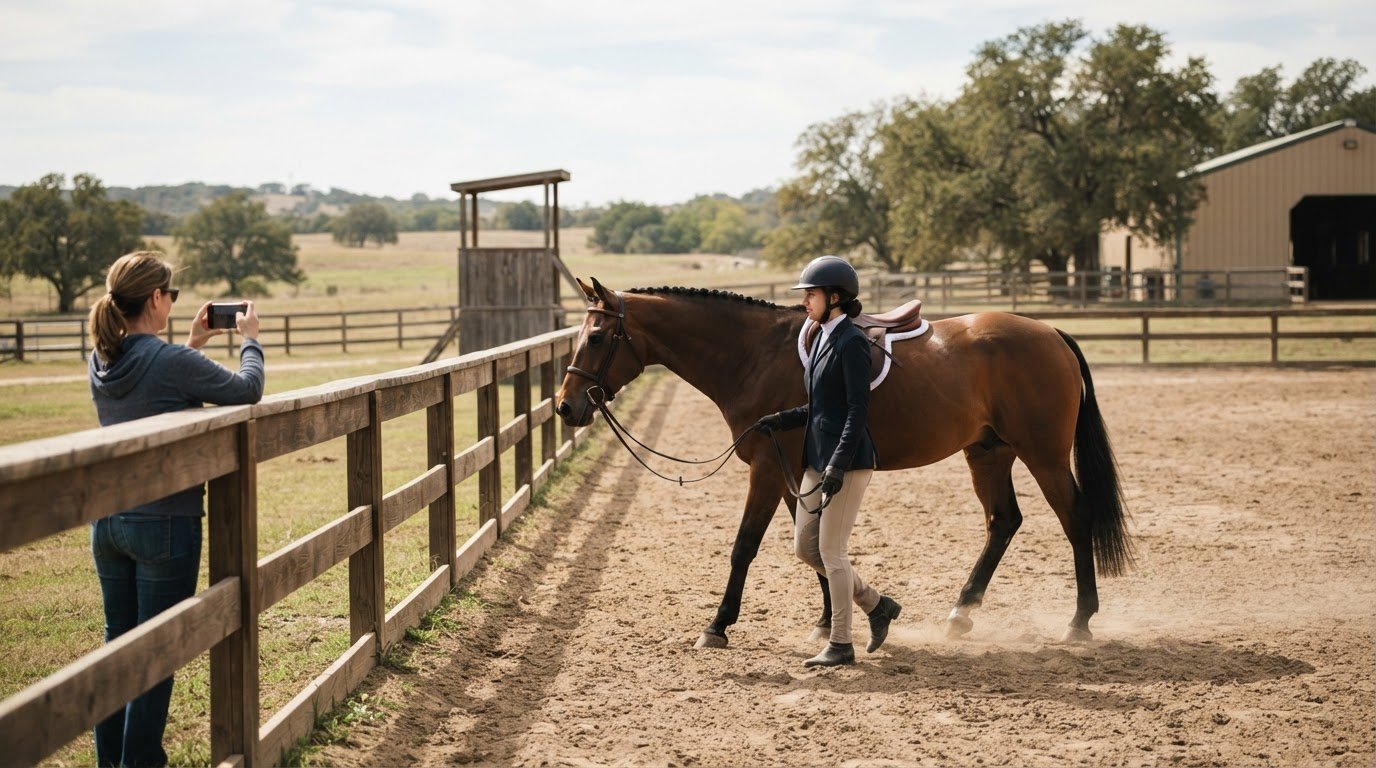
One of the most rewarding ways to celebrate your growth is through the Horse & Rider Showcase™. Unlike traditional competitions that only focus on performance in the ring, this event celebrates the holistic skills of the horseman. It's a chance to demonstrate the care, grooming, and ground-handling techniques that make successful riding possible. To keep your skills sharp between in-person sessions, we offer virtual education Thursdays. These sessions provide a peaceful space to ask questions and stay connected with our community. You can check our services page for upcoming showcase dates and virtual workshop schedules.
Safety Standards for Professional Horse Handlers
A professional horse handler isn't defined by a paycheck, but by their unwavering commitment to safety and equine welfare. True professionals understand that ground-up education is the best defense against industry burnout. When you have a deep understanding of horse health and psychology, you aren't fighting the animal; you're working with them. This clarity reduces stress for both you and the horse, leading to better welfare standards across the entire equine community. It creates a stable environment where everyone feels secure and valued.
Instructor Insight:
Groundwork is the foundation of everything we do. If you can't communicate clearly on the ground, those gaps in conversation will only get louder once you're in the saddle. Take your time, stay patient, and listen to what the horse is telling you.
Your education is a lifelong journey with these magnificent animals. Every horse you meet is a new teacher, and every day in the stable is an opportunity to learn something new. At Texas Equine Education & Horsemanship™, we're honored to walk beside you Where Horses Inspire Learning™. Whether you're pursuing a career or simply want to be the best owner possible, your dedication to learning ensures a brighter, safer future for the horses we love.
Building a Lifelong Connection Through Knowledge
True horsemanship is a quiet, steady journey that begins with understanding the animal standing before you. By focusing on the core pillars of anatomy, behavior, and nutrition, you replace uncertainty with the confidence needed to handle any situation. Our equine health and care classes provide the essential foundation for this partnership, ensuring that safety and wellness always come first. Whether you're a first-time owner or an aspiring professional, these skills are the building blocks of a successful life with horses.
For those looking to turn their passion into a career, the Equine Industry Readiness Program™ offers 8-week internship segments with flexible modules that fit easily into university schedules. This ground-up safety focus prepares you for real-world success, culminating in opportunities to demonstrate your skills in the stable and the arena. We invite you to continue your learning with our comprehensive equine education programs and discover how a deeper understanding leads to a more rewarding bond. Your journey is just beginning, and we're here to guide you every step of the way at Texas Equine Education & Horsemanship™, Where Horses Inspire Learning™.
Frequently Asked Questions
What are equine health and care classes, and who are they for?
Equine health and care classes are holistic educational sessions designed for anyone who wants to understand horses from the ground up, including new owners, parents, and career seekers. These programs cover essential topics like anatomy, nutrition, and first aid to ensure you're prepared for the daily realities of horse ownership. They're perfect for building confidence before you ever step into a stirrup, providing a safe environment where horses inspire learning™ for students of all ages.
Do I need my own horse to take an equine care class?
You don't need to own your own horse to participate in our educational programs. We provide experienced horses that are perfect for teaching students how to groom, lead, and perform basic health checks in a controlled setting. This hands-on experience is invaluable for first-time riders or families who are considering future ownership but want to learn the ropes safely first. It's a great way to develop your skills without the immediate pressure of full-time care.
Can I get a certification in equine management online?
We offer virtual education for those who want to study the theoretical aspects of horse management from home. While online learning is a fantastic tool for theory, we believe that professional readiness requires physical practice. That's why our career-focused tracks combine digital resources with hands-on internship segments. This ensures you're not just reading about horse care but are actually developing the muscle memory and intuition that only comes from being in the stable.
How long does it take to complete the Equine Industry Readiness Program™?
The Equine Industry Readiness Program™ is designed in flexible 8-week internship segments to accommodate university schedules and busy careers. Because we prioritize deep learning over rushing through a curriculum, you can complete these modules at a pace that works for you. This structure allows you to take breaks between segments or move through them consecutively. It's a methodical approach that ensures you feel fully prepared and confident at every step of your professional journey.
Are there horse care classes specifically designed for children?
We believe in starting early, so we offer Tiny Tot lessons and The Reading Rein™ specifically for children. These classes use literacy and age-appropriate activities to teach the basics of horse behavior and safety in a peaceful environment. By integrating stories and simple stable tasks, we make learning accessible and fun for our youngest students. It's a wonderful way for families to bond while building a foundation of respect and compassion for animals from the very beginning.
What is the most important skill taught in foundational horsemanship?
The most important skill is learning to accurately read a horse's body language and vital signs. In our equine health and care classes, we emphasize observation as the key to safety and welfare. When you can identify subtle changes in a horse's ears, eyes, or stance, you can address issues before they escalate. This foundational skill builds the trust and communication necessary for a successful partnership, whether you're working on the ground or in the saddle.


Comments