


How Online Horse Shows Work: A Complete Beginner's Guide

Showing your horse doesn’t always mean travelling to a venue. How online horse shows work is simple: choose a class, submit a photo or video that meets its rules, and let a judge assess your entry. Shows may offer monthly photo classes, with competitors commonly placed from first through fifth.
If the entry process feels unfamiliar, that’s understandable. Requirements for tack, attire, photos, videos, and submission steps vary by show, so start with the class rules. This guide explains what online horse shows involve, how to choose and enter a class, and how to prepare and submit an entry. Practical photo and video tips can help you get ready and understand what to expect from judging.
Table of Contents
What Are Online Horse Shows?
An online horse show lets riders enter a class remotely by submitting a photo or video for judging. Photo-based classes are usually offered monthly, and judges commonly place competitors from first through fifth. Unlike an in-person show, you don’t travel to a venue or perform before a judge there. You prepare your entry where you ride and submit it as instructed.
To find a show, search online for online horse shows, then read the organizer’s class list and rules. Check each class description for what the judge will assess, the required photo or video, and any tack or attire expectations. Classes and divisions vary, so choose one that suits your experience and shows the skills being assessed.
Tack, clothing, and equipment requirements vary by class. One may specify show attire or particular tack, while another sets different expectations. Follow the rules for the class you enter rather than relying on assumptions. Common mistakes include choosing an unsuitable class, missing a requirement, or submitting the wrong format. Reviewing the instructions first helps you avoid these problems.
For a photo class, a smartphone camera can capture the required image. For a video class, record according to the show’s directions. Judges assess entries against the class criteria, then publish placements through the organizer’s process. Remote entry lets you participate without travelling, but it cannot reproduce every aspect of a live class. The submission format determines what the judge can evaluate.
Taking and uploading an entry photo
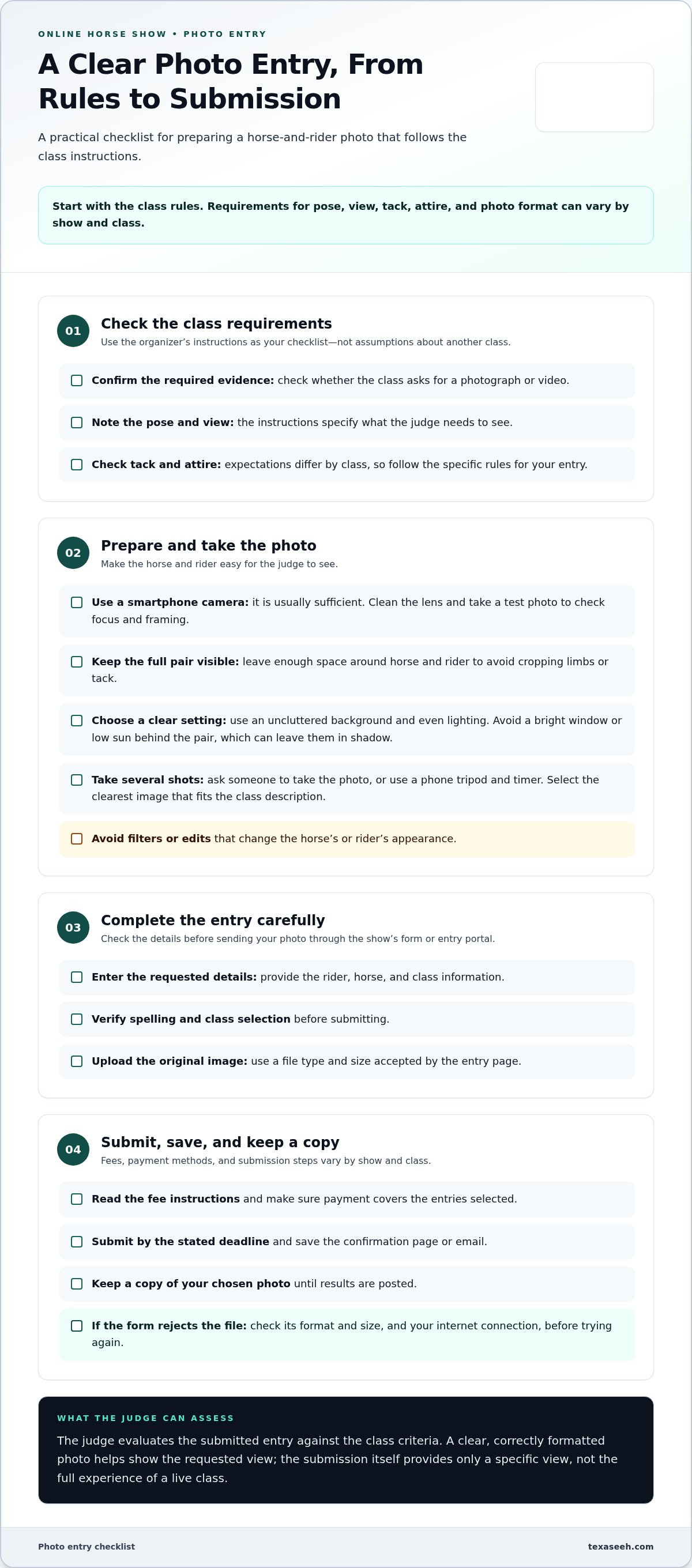
Start with the class instructions: they specify the required pose, view, and photo format. A smartphone camera is usually sufficient. Clean the lens and take a test photo to check focus and framing. Keep both horse and rider visible, with enough space around them to avoid cropping limbs or tack.
Choose an uncluttered background and even lighting so the judge can see the details. Avoid backlighting, such as a bright window or low sun behind the pair, which can leave them in shadow. Ask someone to take the photo, or use a phone tripod and timer. Take several shots, then select the clearest image that fits the class description. Avoid filters or edits that change the horse’s or rider’s appearance.
Complete the show’s entry form with the requested rider, horse, and class details. Check the spelling and class selection before submitting. Upload the original image in a file type and size accepted by the entry page. The form or entry portal sends your details and photo; the phone camera captures the image, and your photo gallery lets you compare shots.
Entry fees and payment methods vary by show and class. Read the fee instructions before checkout, and make sure your payment covers the entries selected. Save the confirmation page or email. If the form rejects a file, check its format and size, and your internet connection, before trying again. Submit by the stated deadline and keep a copy of your chosen photo until results are posted. Preparation makes the process easier to manage.
What online horse shows are
An online horse show is a competition in which judges assess entries submitted remotely. To understand how online horse shows work, first check what evidence each class accepts: a photograph or video of the horse and rider. A dressage entry, for example, may show a test, while a photo class may focus on the pair’s presentation. The organizer sets the class criteria, submission process, and awards, so the format varies from show to show.
Think of an online show as a way to compete without performing at a shared venue. The judge evaluates your entry against the class requirements, and competitors may receive ribbons, prizes, or written critiques. The submission gives judges a specific view, not the full experience of a live class. Clear criteria and careful preparation are therefore central to the process.
Online showing can help you explore a discipline, gain experience, or return to competition at a comfortable pace. Results may give you a placing or feedback to consider as you prepare for future classes. Awards vary by organizer, so review what the show offers before entering. Treat a critique as feedback on the submitted performance, not a complete assessment of every aspect of your riding.
Use a web browser to find class lists and official rules. The show’s entry platform handles forms and submissions, while a calendar or spreadsheet can help you track deadlines, classes, and results. These tools keep details organized, but the organizer’s instructions determine what makes an entry complete. In short, an online horse show is a judged competition based on remote submissions, with each class specifying what the judge needs to see.
Texas Equine Education & Horsemanship™: Horse & Rider Showcase
Texas Equine Education & Horsemanship™ offers the Horse & Rider Showcase for riders interested in another kind of horse show opportunity. It can be a next step if you’re ready to explore a structured showcase and present horse-and-rider skills. Online shows use remote submissions; the Showcase is a separate offering, so review its details to understand its format and participation requirements.
If you’re building toward a show, focus on the basics first: selecting suitable classes, understanding the judging criteria, and preparing a clear presentation. Those steps help you approach any show experience with greater readiness. For information about the Horse & Rider Showcase, visit the horse show page at Texas Equine.
Choose Your Next Step in the Show Ring
Understanding how online horse shows work can help you choose a showing goal that suits you and your horse. Before entering, decide what you want to gain, such as practising a particular skill or learning how judges assess your presentation. A clear goal makes each entry a purposeful step in your development.
For broader horsemanship learning as you plan that next step, explore Texas Equine’s educational resources. Keep your goal manageable, learn from the experience, and build confidence at your own pace.
Frequently Asked Questions
What is an online horse show and how does it work?
An online horse show is a competition in which judges assess entries submitted remotely. Depending on the class, the entry may be a photograph or video of the horse and rider. A dressage entry, for example, may show a test, while a photo class may focus on the pair’s presentation. The organizer sets the class criteria, submission process, and awards.
How do you enter and register for an online horse show?
Choose a class, complete the show’s entry form, and submit the required materials and payment using its stated process. Enter the horse and rider details as requested, then review your class selection before submitting. For Online Horse Showing, your entry is confirmed once payment is received. Keep the confirmation for your records and note the deadline for any later video submission.
What video or photo requirements do online horse shows have?
Requirements depend on the class. Some shows require a continuous, unedited video that identifies the recording date; dressage tests are filmed from start to finish in one take. Videos may also need to be publicly accessible when submitted. The person filming is commonly asked to hold the camera horizontally. Follow the class instructions for framing, file format, and upload method.
How are online horse show classes judged and scored?
Judges assess each entry against that class’s criteria, then rank competitors. A numerical score isn’t the only possible outcome: some shows provide written critiques or offer a separate feedback session. Results timing varies by show and entry volume, so use the organizer’s schedule to understand when to look for placings. Review any judge comments as guidance for future preparation.
How much do online horse shows cost, including entry fees?
Online horse shows do not have one standard entry fee. Costs depend on the show and class, and optional services, such as individual judge feedback, may carry an extra fee. Before registering, review the organizer’s entry information for fees, accepted payment methods, and additional charges. Include only the classes you plan to enter when calculating your total.





Comments