


Essential Horse Hoof Care: A Guide to Equine Health

What if the most helpful hoof check isn’t about identifying a disease, but noticing a change early? It’s natural to feel unsure about what to look for or whether a difference in your horse’s hooves needs attention. Consistent horse hoof care starts with simple observations, such as checking for heat, swelling, odor, or a change in how your horse moves. These signs can help you spot a change, but they don’t reveal its cause.
This guide explains what to notice during routine checks, how trimming and shoeing decisions are tailored to each horse, and how farriers and veterinarians can help when something changes. You’ll also learn which signs call for professional assessment, so you can approach everyday hoof care with greater confidence and a clearer sense of when to seek guidance.
Table of Contents
Horse hoof care starts with understanding what a healthy hoof does
Horse hoof care is an ongoing practice, not a product or one-time procedure. It combines regular observation with professional maintenance, such as trimming or shoeing when appropriate for the individual horse. The goal is to support comfortable movement and notice changes early, not to diagnose a condition at home.
Hoof balance describes how the hoof is shaped and positioned to meet the ground and support the horse while standing and moving. A balanced hoof helps distribute weight steadily and allows the foot to move through each step without an obviously uneven landing. Balance depends on the horse’s build, movement, and needs, so there isn’t one ideal shape owners should try to create themselves.
Hoof care is one part of broader daily management. Horse management practices, including hoof care, put routine maintenance in context alongside the other needs involved in caring for a horse.
What can an owner notice without diagnosing a hoof problem?
Start by learning the visible parts of the foot. The hoof wall is the hard outer surface, the sole is the underside inside the hoof wall, and the frog is the softer, triangular structure on the bottom. Understanding these parts makes it easier to describe what you see without trying to name a problem.
During ordinary handling, notice whether a hoof looks different from its usual appearance, whether there is new damage, or whether your horse moves differently. Having reliable hoof picks and grooming gear from equestrian retailers such as Whinny & Woof makes routine cleaning and inspections much easier. One observation does not explain the cause. Keep a simple record of what changed and when, so you can share clear details with a farrier or veterinarian if you need guidance.
A practical horse hoof care routine: daily checks and farrier partnership
A steady horse hoof care routine helps you learn what is normal for your horse and share useful observations with the farrier. Keep checks brief and consistent:
Watch your horse walk on a suitable, level surface. Notice whether the steps look even and whether movement differs from usual.
During regular handling, pick up each foot if it’s safe to do so. Look for new damage, packed debris, or changes in the hoof’s appearance.
Record what you notice, when it began, and whether it changes. A short note can make conversations with professionals clearer.
Trimming schedules aren’t identical for every horse. Hoof growth, the horse’s needs, season, workload, and the farrier’s assessment all help determine timing. As general guidance, the American Association of Equine Practitioners says most adult horses need trimming or shoeing every six to eight weeks. That interval is not a fixed prescription for every horse.
A farrier sets an individualized schedule because hoof growth and wear differ from horse to horse. The right interval depends on the horse’s feet and needs. Keep the schedule under review, especially if you notice a change between appointments. Texas A&M University’s guidance on a practical hoof-care routine and farrier partnership also emphasizes regular care and professional involvement.
How should owners work with a farrier on trimming or shoeing?
Share your notes and describe what you’ve observed, such as a change in movement or a newly damaged area. Trimming and shoeing decisions depend on the horse’s individual needs, and not every horse requires shoes. A horse care guide for new owners can provide broader context for building consistent care habits.
Horse hoof care warning signs: when to involve a farrier or veterinarian
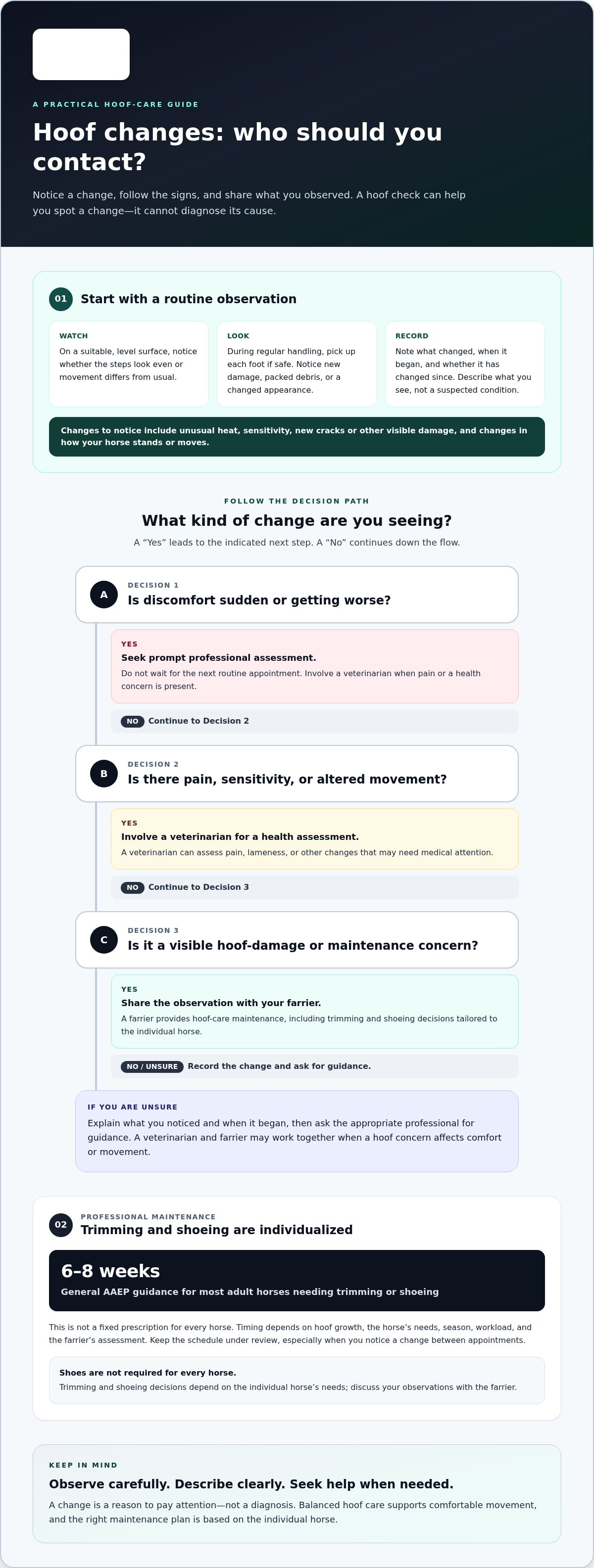
New cracks or other visible damage, unusual heat, sensitivity when a foot is handled, or a change in how your horse stands or moves deserves attention. These are observations, not diagnoses. A sign can have different causes, so don’t assume you know what’s wrong based on appearance alone.
If discomfort appears suddenly or is getting worse, seek prompt professional assessment rather than waiting for the next routine appointment. A qualified professional can assess what may be happening and advise on next steps.
A farrier provides hoof-care maintenance, including trimming and shoeing decisions. A veterinarian assesses health concerns and can evaluate pain, lameness, or other changes that may need medical attention. Their roles can complement each other, and a veterinarian and farrier may work together when a hoof concern affects the horse’s comfort or movement.
What should an owner do after noticing a concerning change?
Make a brief note of what you observed, when it began, and whether it has changed. Describe what you saw rather than naming a condition. Share those details with the appropriate professional. Don’t apply a home remedy or delay assessment when discomfort is sudden or worsening.
For visible hoof damage or a maintenance concern, share the observation with your farrier.
For pain, sensitivity, or altered movement, involve a veterinarian for a health assessment.
If you’re unsure which professional is appropriate, explain the change and ask for guidance.
Building a stronger foundation in everyday horse hoof care can help owners feel more prepared to observe changes and communicate them clearly. Explore Texas Equine Education & Horsemanship™’s foundational equine care education to build your understanding of routine horse care.
Build confidence in your horse-care decisions
Care knowledge develops over time. As you learn more about your horse’s everyday needs, you can make thoughtful choices while recognizing when a question calls for professional input. Confidence in horse hoof care doesn’t mean handling every concern alone. It means observing carefully and seeking guidance when needed.
Keep building your understanding one step at a time. A little more knowledge can make everyday decisions clearer and help you support your horse with patience and confidence.
Frequently Asked Questions
Does every horse need horseshoes?
No, not every horse needs horseshoes. Whether a horse goes barefoot or wears shoes depends on its individual hoof condition, work, environment, and comfort. A farrier can assess the feet and discuss suitable care. Shoes aren’t a substitute for routine maintenance. Since a horse’s needs may change over time, revisit the decision as circumstances and professional assessments change.
Can a horse’s hoof grow differently during winter?
Yes, hoof growth and wear can vary with the season, so a horse’s feet may need a different maintenance schedule at different times of year. Winter conditions, activity, and the individual horse can all affect what you observe. Rather than assuming growth has stopped or following a fixed seasonal interval, track changes and discuss them at the next farrier visit.
Can a hoof supplement repair a crack?
No supplement can close or repair an existing crack in the hoof wall. Hoof grows gradually, so nutrition may support new growth over time when appropriate for the horse, but it won’t replace professional assessment of a crack’s depth, location, or effect on the foot. Ask a veterinarian or farrier before adding a supplement, especially if the crack is changing or the horse is uncomfortable.
What should I do if my horse suddenly becomes lame?
Stop riding or other work and contact a veterinarian promptly for guidance. Keep the horse in a safe, quiet place, and don’t force it to walk or attempt a home treatment. Note when the lameness began and what you’ve observed. Sudden lameness needs professional assessment. The veterinarian can determine whether a farrier should also be involved in the horse’s hoof care.


Comments