


Essential Horse Handling Safety: A Professional Guide

Confidence alone won’t make a handling moment safe; a repeatable routine gives you clear steps to follow. If you’re unsure how to approach or lead a horse, or worry about being stepped on, pulled, or kicked, take that caution seriously. Horse handling safety starts with observing the horse and checking your surroundings before you move in.
This guide covers a practical routine for approaching, leading, and pausing around a horse. You’ll learn what to watch for, how to manage the lead rope, and when the horse’s behavior or the conditions mean you should stop and seek experienced instruction. Small, consistent habits can support safer handling, while recognizing your limits helps you make a sound decision before a situation feels beyond your experience.
Table of Contents
Horse Handling Safety Starts Before You Touch the Lead Rope
Horse handling safety means preparing the horse, the handler, and the surroundings before beginning a task. Observe the horse’s behavior, check the space, and choose a calm approach. Preparation can reduce avoidable surprises, but no routine makes handling risk-free.
A horse may react to movement, noise, or activity nearby, so take a moment to observe before closing the distance. Notice whether the horse seems settled or alert. Check for practical hazards such as clutter underfoot, people moving nearby, gates or doorways that limit your room, and distractions along the route. Understanding that a horse’s size and strength affect safe handling is part of the broader discussion in Horse Training: Safety and Basic Concepts.
What should you assess before approaching a horse?
Check that the immediate space gives you room to approach and step away without being blocked. Then observe the horse’s posture and attention. If the horse appears unsettled, or you can’t reach the halter area without entering a tight space, pause and reassess. Don’t rush or reach suddenly to finish the task.
Notice people, obstacles, and activity that could interfere with your approach or route.
Move calmly from a direction where the horse can see you; don’t rush in or make sudden movements.
Wait for a suitable moment before reaching toward the horse.
These observations are a starting point, not a guarantee that you can predict how a horse will respond. Let the horse’s behavior and the available space guide whether it’s a suitable moment to proceed.
Horse Handling Safety in Practice: Prepare, Lead, and Pause
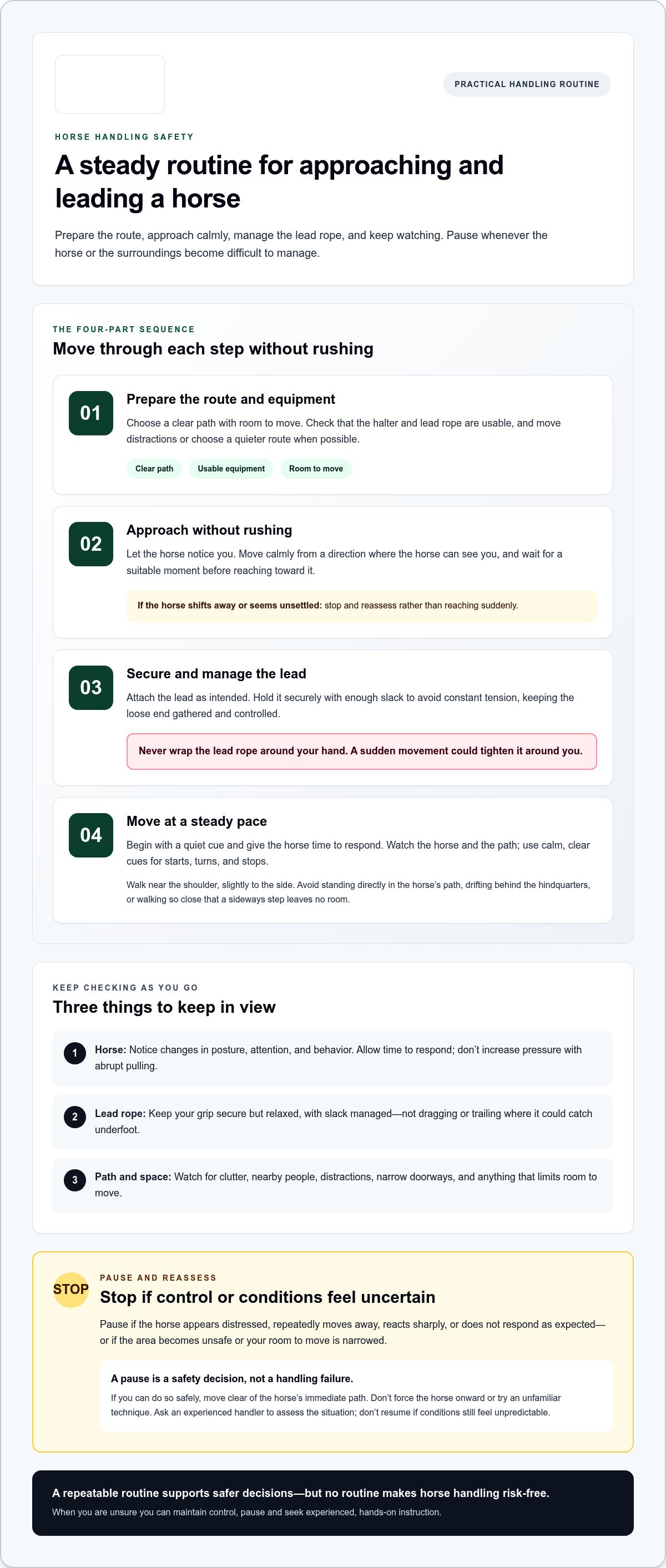
A consistent sequence makes everyday leading easier to think through. Adjust it to the horse and setting, and pause if you can’t manage a step calmly.
Prepare the route and equipment. Choose a clear path and check that the halter and lead rope are in usable condition. Make sure the route is wide enough to move through without squeezing past people or obstacles. Move distractions or choose a quieter route when possible.
Approach without rushing. Let the horse notice you, then move into position calmly. If the horse shifts away or becomes unsettled, stop and reassess instead of reaching suddenly.
Secure the lead. Attach it to the halter as intended, then hold it with enough slack to avoid constant tension while keeping the loose end gathered and controlled. Never wrap the rope around your hand; a sudden movement could tighten it around you.
Move at a steady pace. Begin with a quiet cue and give the horse room to respond. Keep watching the horse and the path, and pause if either becomes difficult to manage.
Guide with a controlled lead rope; don’t try to hold the horse in place by pulling on it.
How can you lead a horse while maintaining safe space?
Walk near the horse’s shoulder, slightly to the side, where you can move with the horse without standing directly in its path. Avoid drifting behind the hindquarters or walking so close that a sideways step leaves you with no room. Keep your grip secure but relaxed, with slack managed rather than dragging or trailing where it could catch underfoot.
For starts, turns, and stops, use calm, clear cues and allow the horse time to respond. Change direction gradually, and avoid abrupt pulling if the horse slows or hesitates. If it doesn’t respond as expected, pause and consider what’s affecting the moment rather than increasing pressure. On the return, follow the same steady approach and stay attentive until the horse is safely settled. These repeatable choices are central to horse handling safety, but they don’t replace hands-on instruction when control feels uncertain.
When to Stop Handling and Build Skills with Experienced Guidance
Pause if the horse appears distressed, the area becomes unsafe, or you’re no longer sure you can guide the horse without losing control. A horse that repeatedly moves away, reacts sharply to nearby activity, or won’t respond as expected may need more space and a calmer setting. Clutter, people entering the path, or an obstacle that narrows your room to move are also reasons to stop and reassess.
Pausing is a safety decision, not a handling failure. If you can do so safely, move clear of the horse’s immediate path without trying to force the horse onward or using an unfamiliar technique. Ask an experienced handler to assess the situation and guide the next step. If the horse’s behavior or the surroundings continue to feel unpredictable, don’t resume just to finish the task.
How does foundational horsemanship education support safer handling?
Guided practice gives learners a chance to build handling skills gradually, with an experienced person able to observe their position, timing, and response to the horse. It can also help learners recognize when their understanding or control is not yet sufficient for a situation. These basics support sound decisions, not a promise that every interaction will be predictable.
For learners who want to strengthen their foundations, Texas Equine Education & Horsemanship™ offers horsemanship lessons that connect education with practical horse handling. Explore Texas Equine Education & Horsemanship™ horsemanship lessons to build your skills through guided, foundational instruction. In horse handling safety, recognizing a limit and asking for guidance are part of responsible practice.
Build Confidence Through Steady, Continued Learning
Confidence around horses grows through reflection as well as practice. After a handling task, consider what helped the interaction stay calm and what made it harder to manage. This can help you recognize patterns, make thoughtful adjustments, and choose situations that fit your current experience. Horse handling safety develops over time, one considered decision at a time.
Keep building your understanding, and give yourself permission to pause when you’re unsure. There’s no need to rush progress. Patience, careful observation, and a willingness to keep learning can support a steadier, more respectful relationship with horses.
Frequently Asked Questions
Where should you stand when leading a horse?
Walk beside the horse’s shoulder, slightly to the side, with enough room to move without crowding it. This position helps you travel together while avoiding the space directly in front of the horse or close behind its hindquarters. Keep your attention on the horse’s movement so you can adjust your own pace and position as needed.
Should you wrap a lead rope around your hand when handling a horse?
No. Keep the rope held securely, but never loop or wrap it around your hand or wrist. If the horse moves suddenly, a wrapped rope can tighten and trap your hand. Manage any extra length in loose folds rather than coils around your body, and keep the rope from dragging underfoot.
What should you do if a horse becomes unsettled while you are leading it?
Stop asking the horse to continue and avoid jerking the rope or stepping into its path. If you can do so without moving closer to danger, give the horse room and call an experienced handler. For example, if sudden activity nearby startles the horse, wait for help to assess whether the route or conditions are suitable before proceeding.


Comments