


Equine Programs for Veterans: Healing Through Horsemanship

What should you look for in equine programs for veterans? The answer depends on the program’s purpose. Some offer clinical psychotherapy, while others focus on personal development, recreation, or horsemanship education. Similar labels can describe very different activities: a program involving horses isn’t automatically therapy, and riding may not be part of it.
Before taking a first step, it helps to know what participants do, who leads the activities, and whether the program offers clinical care or education. This guide explains the main formats and gives you practical questions to compare their goals, activities, and riding expectations. You can use them to identify options that match what you want to explore, at your own pace.
Table of Contents
Equine Programs for Veterans: Scope and Goals
Programs involving horses can focus on practical horse-handling skills, recreation, personal development, or clinical support. The broad label equine-assisted services describes activities that involve horses; it doesn’t identify one specific treatment or activity. Horsemanship education and recreation aren’t psychotherapy, even when they take place in a supportive setting.
Clinical equine-assisted psychotherapy is a treatment approach facilitated by a licensed mental health professional. Educational or recreational programs may focus instead on learning, participation, or horsemanship. A general overview of animal-assisted therapy, including equine therapy, for veterans can help explain the broader context. A program’s description should make its own goals clear.
How do riding and ground-based veteran programs differ?
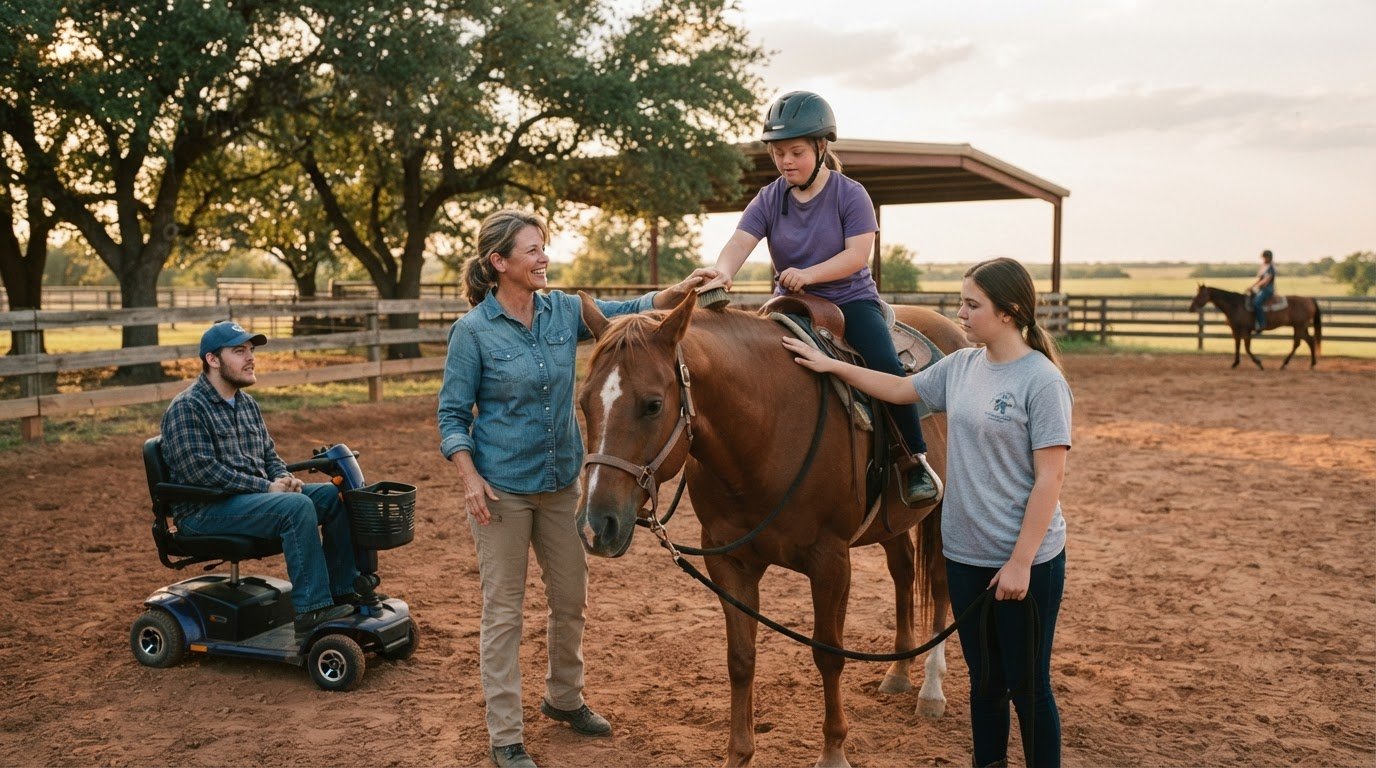
Ground-based activities can include grooming, leading a horse, or observing its behavior, without riding. These activities may be part of an educational, recreational, or clinical program, so the activity alone doesn’t define its purpose. Mounted instruction includes riding and may focus on horsemanship skills. Since riding isn’t part of every equine program for veterans, look for a clear description of whether it is included.
When comparing programs, note what participants actually do, whether mounting is expected, and whether the stated goal is learning, recreation, or clinical care. These details offer a clearer picture than a program name alone. For a closer look at how formats can vary, see Veterans and Horses: The Impact of Equine-Assisted Services.
How to Understand a Veteran Equine Program’s Purpose, Format, and Boundaries
A useful program description explains more than the fact that horses are involved. To understand what an option offers, consider four points:
Purpose: Is the focus horsemanship education, recreation, personal development, or clinical treatment?
Activities: What will participants do during a session or class?
Riding expectations: Is riding part of the format, optional, or not included?
Facilitator roles: Who leads the activities? If the program offers psychotherapy, does the description identify a licensed mental health professional?
These details help distinguish programs that use similar language but have different aims. They also make it easier to decide whether a format matches what you’re seeking, without assuming that every activity involving horses provides the same kind of support.
Is an equine program the same as equine-assisted psychotherapy?
No. Psychotherapy is a clinical service led by a licensed mental health professional. Other equine activities may be educational or recreational, with participation centered on learning or horsemanship rather than mental health treatment. For more on terminology and service distinctions, see A Professional Guide to Equine-Assisted Services. PATH Intl.’s PATH International Equine Services for Heroes page offers additional context about equine-assisted services for veterans and military personnel.
A program description can explain its structure and goals, but it can’t establish what outcome an individual will experience. A program description is not a guarantee of clinical results. Understand equine programs for veterans by their stated purpose, activities, and facilitator roles, not by assumptions attached to the word “therapy.”
Finding a Thoughtful Next Step With Equine Programs for Veterans
Start by identifying what you hope to explore. You might want to learn horse care, build horsemanship skills, take part in a recreational activity, or seek clinical support. Those goals point to different formats. In descriptions of equine programs for veterans, look for specific activities, whether riding is involved, and a clear statement of the program’s purpose.
What can veterans consider before taking a first step?
A short personal checklist can help you compare options without rushing a decision. Consider what sounds engaging, what feels comfortable, and what you’d like to understand before participating.
Interests: Would you prefer learning about horse care, practicing horsemanship, or joining a recreational activity?
Comfort: How do you feel about being near or handling a horse?
Riding: Are you interested in a mounted activity, or would you rather explore a ground-based format?
Experience: Have you worked with horses before, and does the program describe any experience expectations?
Prior horse experience isn’t a universal requirement; expectations vary by program. If a description leaves questions unanswered, note what you want to understand, such as the activities, facilitator roles, and whether the program is educational, recreational, or clinical. For another perspective on horsemanship, Horsemanship for Veterans: Professional Benefits Guide explores the subject from a related angle.
Choose a Next Step at Your Own Pace
Exploring equine programs for veterans doesn’t require a firm decision about what comes next. Notice which possibilities interest you and what questions arise as you learn. You can take one small step, pause, and return to the decision when you feel ready.
Your interests may become clearer with time, and they may change. Let curiosity guide your exploration without treating a first inquiry or visit as a commitment. Taking a thoughtful pace can help you find a direction that feels comfortable and meaningful to you.
Frequently Asked Questions
Is equine therapy the same as a veteran horsemanship program?
No. Equine-assisted psychotherapy is a clinical service, while veteran horsemanship lessons teach horse-related skills and recreational activities focus on participation. Program labels and formats vary, so “equine therapy” alone may not explain what happens. A class teaching basic horse care, for example, is educational and shouldn’t be treated as mental health treatment.
Do veterans need horse-riding experience to join an equine program?
Prior riding experience isn’t a universal prerequisite; each program sets its own expectations. Some sessions are ground-based, so participants can take part without mounting or having riding skills. A VA-described psychotherapy format, for example, doesn’t involve riding. That is one specific model, not a rule for all equine programs or their entry requirements.
Can equine programs for veterans involve horses without riding?
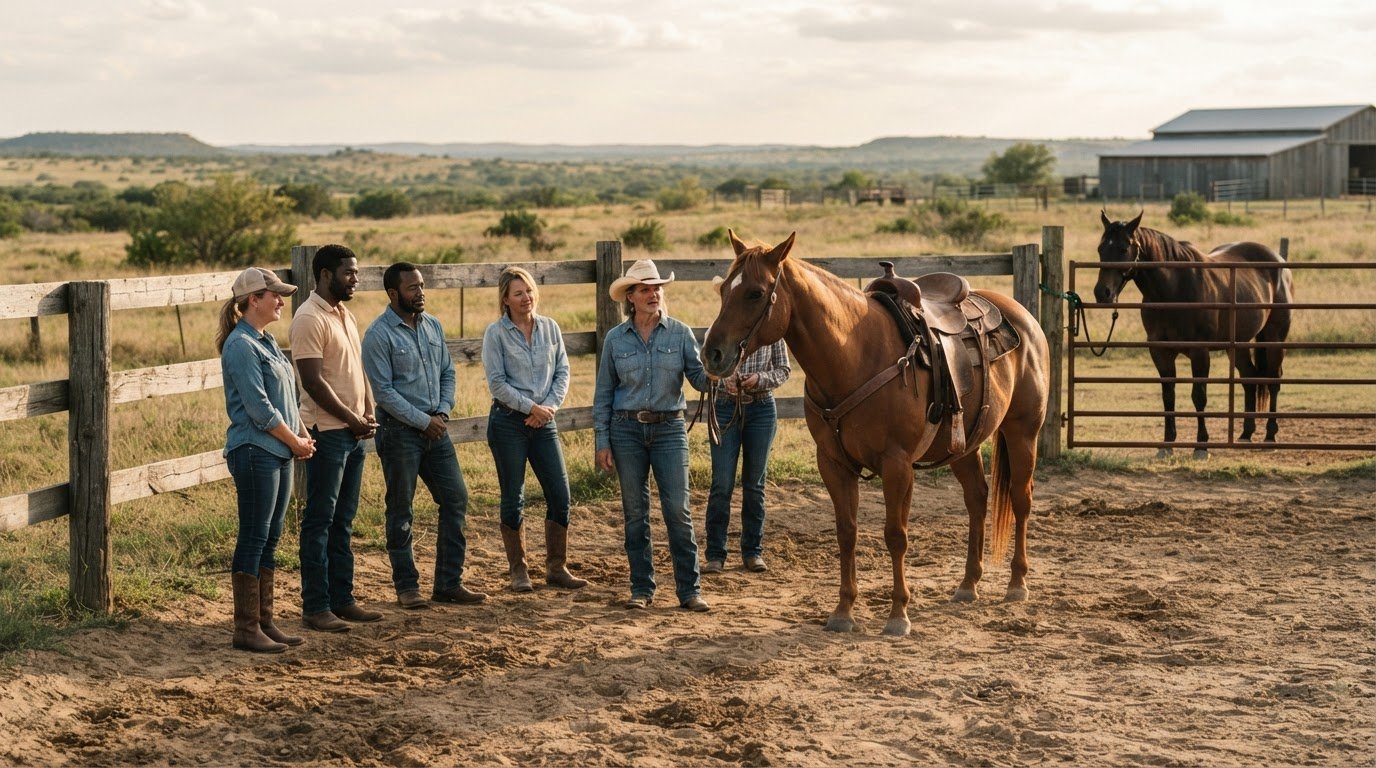
Yes. Some programs involve horse interaction without a mounted lesson, such as observing a handling demonstration or taking part in a guided groundwork exercise. Other formats include riding instruction. Look for whether the program includes learning in the saddle or is entirely unmounted; its description should make that clear.
What should veterans look for when exploring an equine program?
Look for a description that explains the program’s purpose and session activities, then consider whether the format fits what you want from the experience. It can help to note questions about riding, time around horses, and facilitator roles before deciding. Equine programs for veterans differ, so a useful first step is identifying what you hope to explore. Texas Equine Education & Horsemanship™ offers Stars & Stirrups. Explore the Stars & Stirrups program to learn more.


Comments