


Therapeutic Horsemanship: Benefits and Expert Insights

What if two programs involving horses have very different purposes, even when their names sound alike? Therapeutic horsemanship can refer to adapted riding instruction, while clinical care may use a horse as part of therapy. The overlap in terminology can make it hard to tell what an activity involves or what outcomes to expect.
Before deciding whether a program fits your needs, look beyond its name. This article explains how therapeutic horsemanship relates to adaptive riding, hippotherapy, other equine-assisted therapy, and equine-assisted learning. It also offers practical ways to compare a program’s goals, activities, and professional roles, while distinguishing horsemanship education from clinical treatment. Benefits and intended outcomes vary, so understanding what a program actually provides is an important first step.
Table of Contents
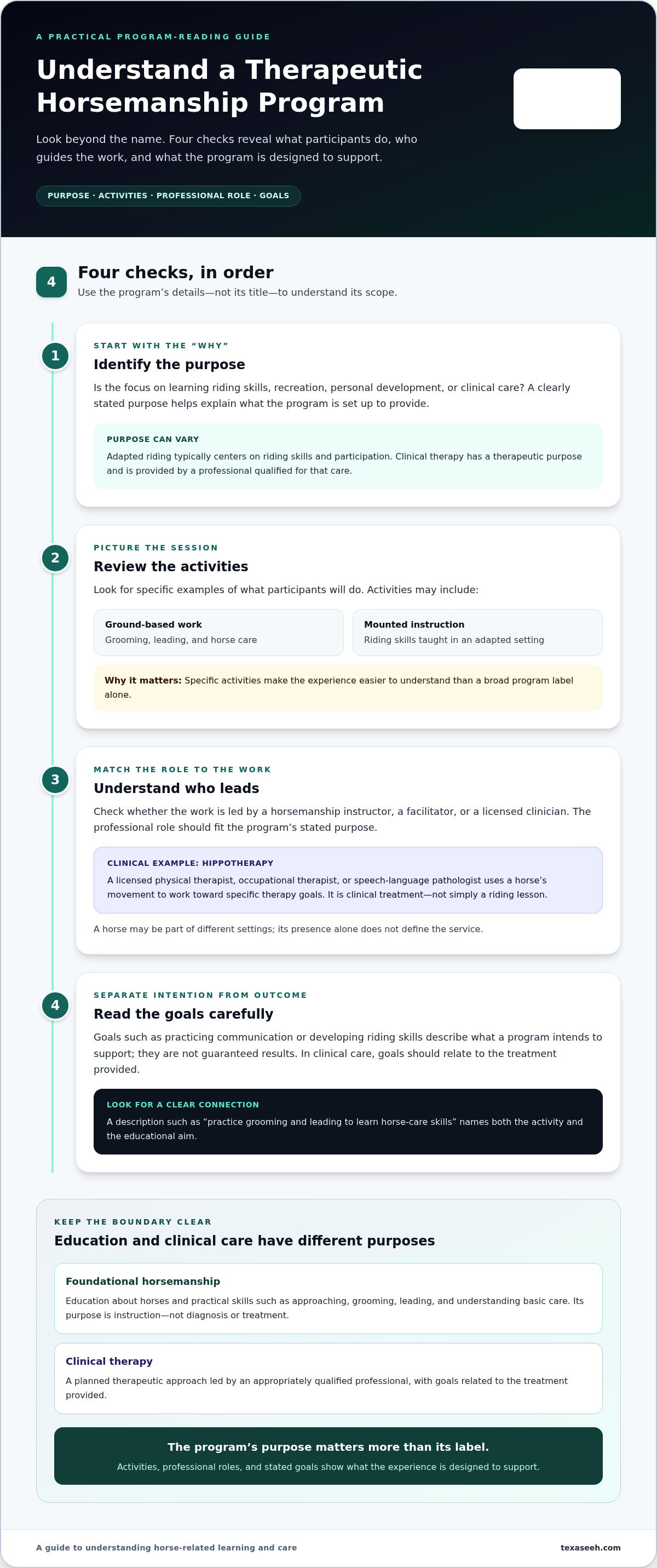
What Does Therapeutic Horsemanship Mean?
Therapeutic horsemanship generally describes horse-related activities adapted to support participation, learning, or personal development. Depending on the organization, activities may include riding instruction, groundwork, horse care, or other ways of engaging with horses. The term isn’t used consistently, so it may not tell you what participants do or who leads the activity.
Some programs focus on learning riding and horsemanship skills in an adapted setting. Others emphasize structured activities or personal goals. These aims can be meaningful, but they don’t automatically make a program clinical treatment or guarantee a particular health or developmental result.
An educational activity teaches horse-related skills; clinical therapy uses a planned therapeutic approach led by an appropriately qualified professional.
How Is Therapeutic Horsemanship Different from Equine-Assisted Therapy?
Equine-assisted therapy has a therapeutic purpose and is provided by a professional with qualifications appropriate to the type of care. For example, hippotherapy is a clinical treatment in which a licensed physical therapist, occupational therapist, or speech-language pathologist uses a horse’s movement to work toward specific therapy goals. It isn’t simply a riding lesson.
By contrast, adaptive or therapeutic riding typically centers on learning riding skills and participation, with instruction adapted to the rider. An instructor’s role and qualifications differ from those of a clinician providing treatment. A horse may be part of both settings, but its presence alone doesn’t define the service. The purpose, activities, professional role, and goals matter.
When reviewing a program, look for a plain explanation of what participants will do and whether the stated aim is education, recreation, personal development, or clinical care. This distinction helps set realistic expectations without dismissing the value of any approach.
How to Understand a Therapeutic Horsemanship Program
A clear program description should explain what participants do, who guides the work, and what the program is designed to support. Use these questions to compare the substance of different activities rather than relying on a title alone.
Identify the purpose. Is the focus on learning riding skills, recreation, personal development, or clinical care? A stated purpose clarifies what the program is set up to provide.
Review the activities. Does a session involve grooming, leading, horse care, groundwork, or mounted instruction? Specific examples help you picture the experience and understand what participation involves.
Understand the professional roles. Is the work led by a horsemanship instructor, a facilitator, or a licensed clinician? The role should fit the program’s stated purpose.
Read the goals carefully. Goals such as practicing communication or developing riding skills describe intentions, not guaranteed results. In clinical care, goals should relate to the treatment provided.
A program’s purpose matters more than its label because it explains what participants will do and what the experience is designed to support.
What Should You Look for in the Program’s Purpose and Scope?
Look for a direct connection between activities and intended outcomes. For example, “practice grooming and leading to learn horse-care skills” identifies both an activity and an educational aim. A broad promise of improved well-being, without explaining the work or professional role, gives less clarity about the program’s scope. The Professional Association of Therapeutic Horsemanship International (PATH Intl.) offers industry standards and certification resources that can help readers understand professional roles. Equine-assisted services is a broader term covering different kinds of horse-related learning and care.
Compare the stated purpose with the session plan. If personal development is listed as an aim, look for an explanation of what participants will do and how those activities relate to the program’s scope. This helps distinguish an intended benefit from a promised outcome. It also gives you a clearer basis for understanding what participation involves and whether the activities match your priorities.
Where Foundational Horsemanship Fits, and What It Does Not Claim
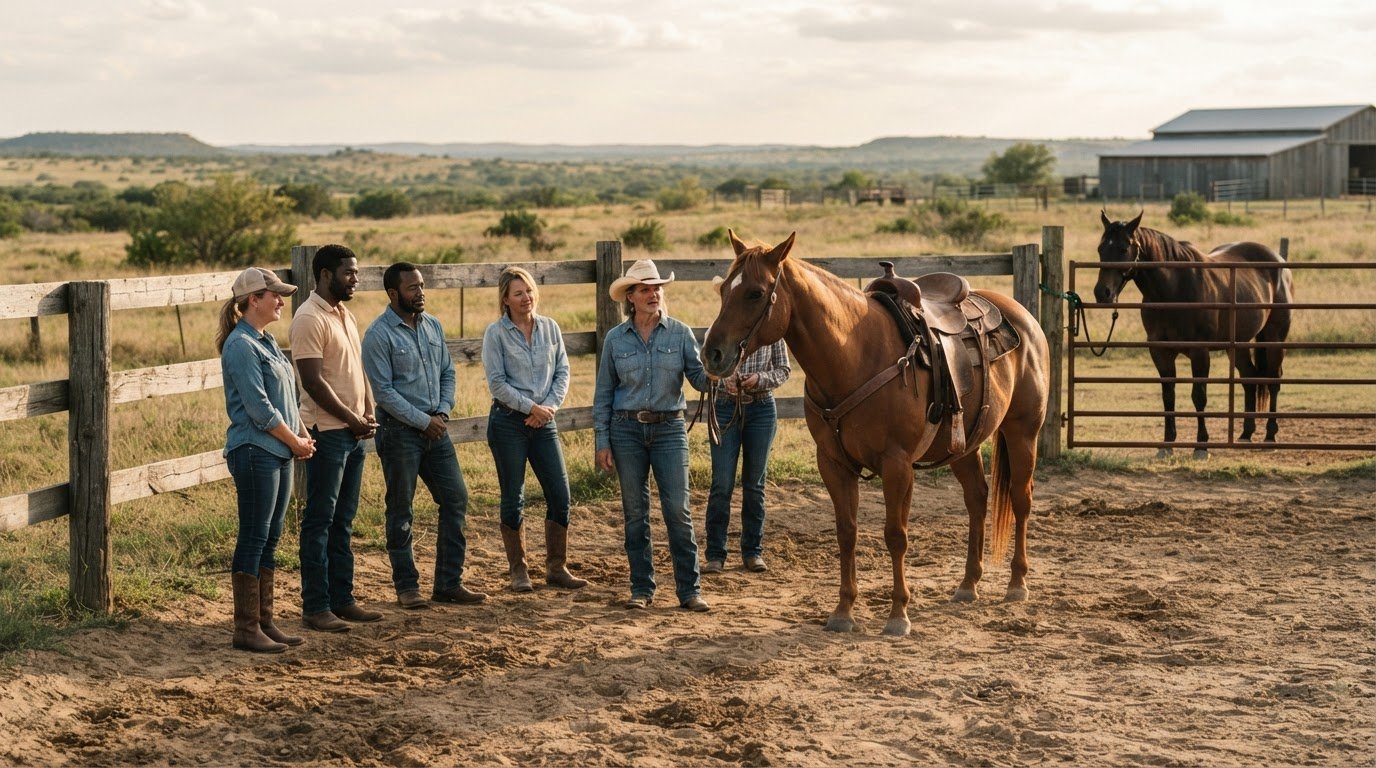
Foundational horsemanship is education about horses and the skills involved in working with them. Learning may begin on the ground with topics such as approaching a horse, grooming, leading, and understanding basic care. These lessons build practical knowledge step by step. Their purpose is instruction, not diagnosis, treatment, or a promise of health or developmental change.
That boundary matters because an educational experience can feel meaningful without becoming clinical care. A learner might practice following a grooming routine or learn how to lead a horse with guidance. Those are examples of skills practiced, not guaranteed effects on confidence, balance, or well-being. If a program has therapeutic or clinical aims, those aims and the professionals responsible for them should be described separately from general horsemanship instruction.
How Can Education-First Horsemanship Support Continued Learning?
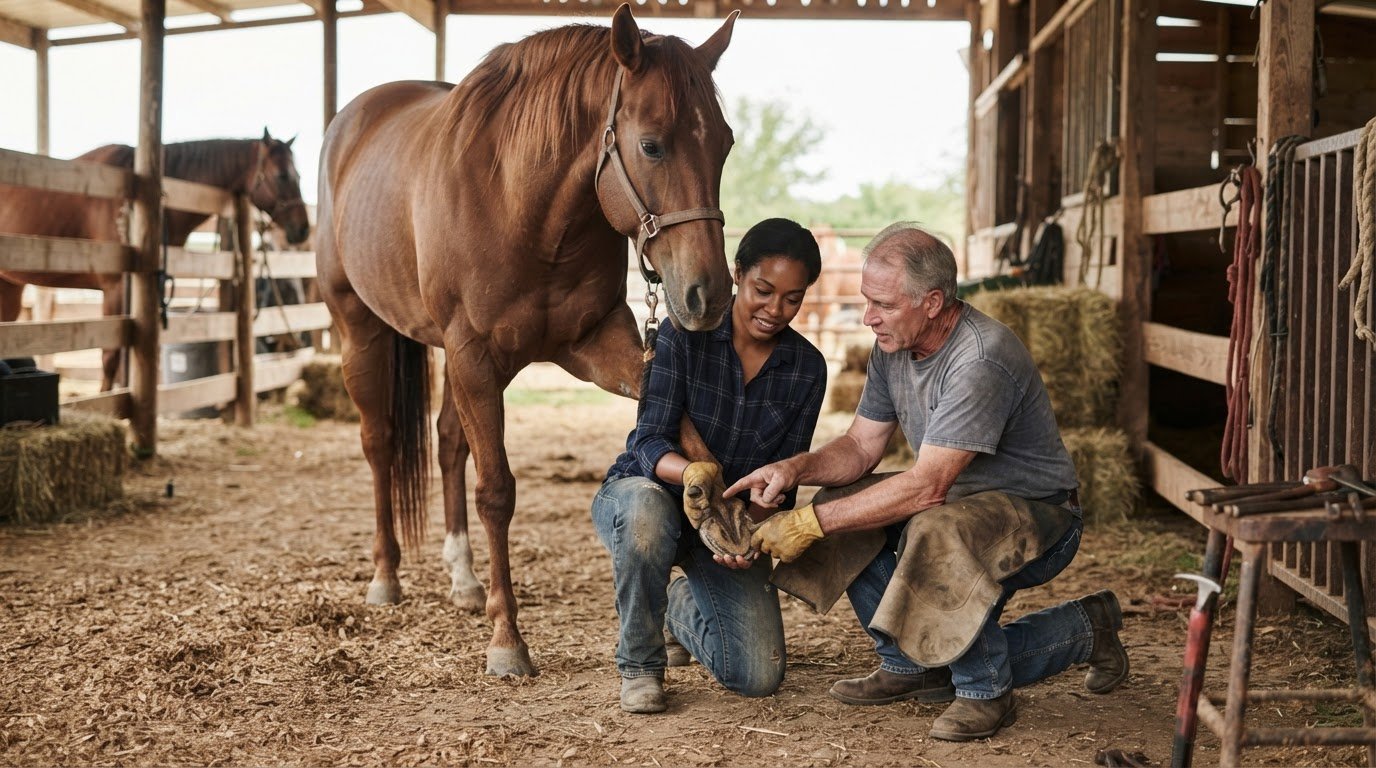
Starting from the ground up gives learners a foundation for understanding horses before progressing to more complex skills. Equine care education can build knowledge of daily needs and respectful handling. Lessons can then develop skills a learner has already practiced, while the pace and content remain educational rather than treatment goals.
When comparing foundational instruction with a therapeutic program, consider what you want to learn. If your priority is horse-related knowledge and practical skills, an education-first class may be a suitable learning path. If you are seeking clinical care, distinguish that goal from horsemanship instruction and look for a program that clearly describes its therapeutic purpose and professional roles.
Choose a Learning Path That Fits Your Goals
As you consider therapeutic horsemanship, let your next step reflect what you want to learn or experience. Write down whether your priority is riding instruction, groundwork, horse-care knowledge, recreation, personal development, or clinical care. That simple distinction can help you compare program descriptions and identify which details matter most.
Then check whether the activities match that priority. If your goal is to learn horse-care skills, for example, look for specific information about grooming, handling, or care instruction. If you’re considering a clinical approach, look for a clear explanation of the therapeutic purpose and the professional role involved. Texas Equine Education & Horsemanship™ offers foundational horsemanship and equine care classes for riders of all ages, beginning from the ground up. Explore these education-first classes if your goal is to build practical horse-related knowledge and skills.
Frequently Asked Questions
What is therapeutic horsemanship?
Therapeutic horsemanship is a broad label for horse-related activities that may be intended to support learning, participation, or personal development. Its meaning can differ between organizations, so the name alone doesn’t tell you what a session includes. One program may teach adapted riding skills, while another may focus on groundwork or horse care.
Is therapeutic horsemanship the same as equine-assisted therapy?
No, the terms aren’t automatically interchangeable. Equine-assisted therapy has a therapeutic purpose and involves appropriately qualified professionals, while a horsemanship or learning program may be educational or recreational. Look at whether sessions follow a clinical plan or teach skills such as grooming, leading, or riding.
Can therapeutic horsemanship help someone with a disability?
Some horse-related programs are designed for participants with disabilities, but the format and support can differ. One setting may adapt riding instruction, while another may offer non-riding activities. Look for information about who the program is intended for and what participation involves. Don’t treat the label as evidence that a specific health outcome will occur.
Does therapeutic horsemanship require riding?
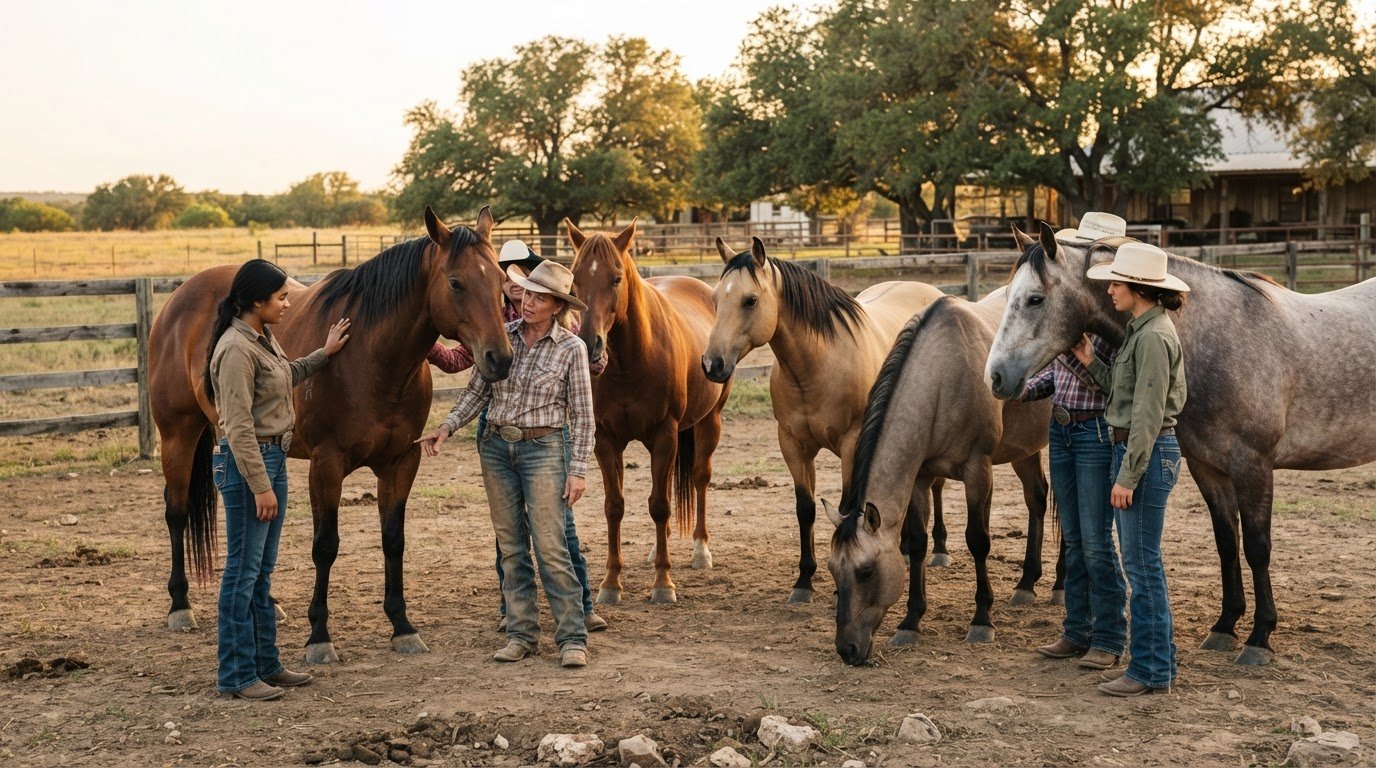
No. Activities may be mounted or unmounted, depending on the program’s design. Participants might learn to groom, lead, or care for a horse without getting in the saddle. If riding is a concern or preference, review the session activities and how participants take part rather than drawing conclusions from the program name.


Comments