


Understanding Horse Behavior for Safer Horsemanship

What if a horse that seems stubborn is responding to fear, discomfort, confusion, or an instinct to stay with its herd? Unfamiliar reactions can be unsettling, especially when it’s hard to tell what’s happening in the moment. Understanding horse behavior starts with looking beyond labels and noticing what a horse may be communicating through its actions.
Instinct, past experience, individual temperament, health, and surroundings can all influence how a horse responds. This article explains how those factors shape common behaviors and why the same signal may mean different things in different situations. You’ll also learn how to observe your horse’s usual patterns, respond calmly with safety in mind, and recognize when a change may call for qualified professional help.
Table of Contents
Understanding Horse Behavior Starts With Instinct, Not Misbehavior
A horse’s actions are shaped by instinct, learning, surroundings, and individual experience. A behavior is what a horse does; the reason behind it is an interpretation that needs context. A horse stepping back, for example, is an observable action. Calling it stubborn doesn’t explain what prompted the movement.
Horses are prey animals, so staying alert to their surroundings and moving away from a perceived threat can be part of a protective response. A sudden noise, unfamiliar object, or movement may draw a horse’s attention even if a person barely notices it. That doesn’t mean every horse will startle or flee in the same situation. Temperament, past experience, and the immediate setting all matter. The overview of Understanding Horse Behavior describes these broader influences, including social behavior and communication.
How prey instincts and herd life influence everyday reactions
Horses are social animals, and the presence or movement of nearby horses can influence how an individual responds. A horse may become more watchful when separated from familiar companions, while another may remain settled. Treat these as possibilities to observe, not rules that predict every horse’s response.
Experience also shapes responses. A horse can form associations between an event and what follows, and past experiences may affect how it responds when a similar cue appears again. Memory can influence behavior, but one reaction alone doesn’t reveal exactly what the horse remembers or feels. For safer horsemanship, separate what you can see from what you’re still trying to understand. That distinction encourages curiosity instead of blame and supports a more thoughtful response to each individual horse.
How to Interpret Horse Behavior by Watching the Whole Situation
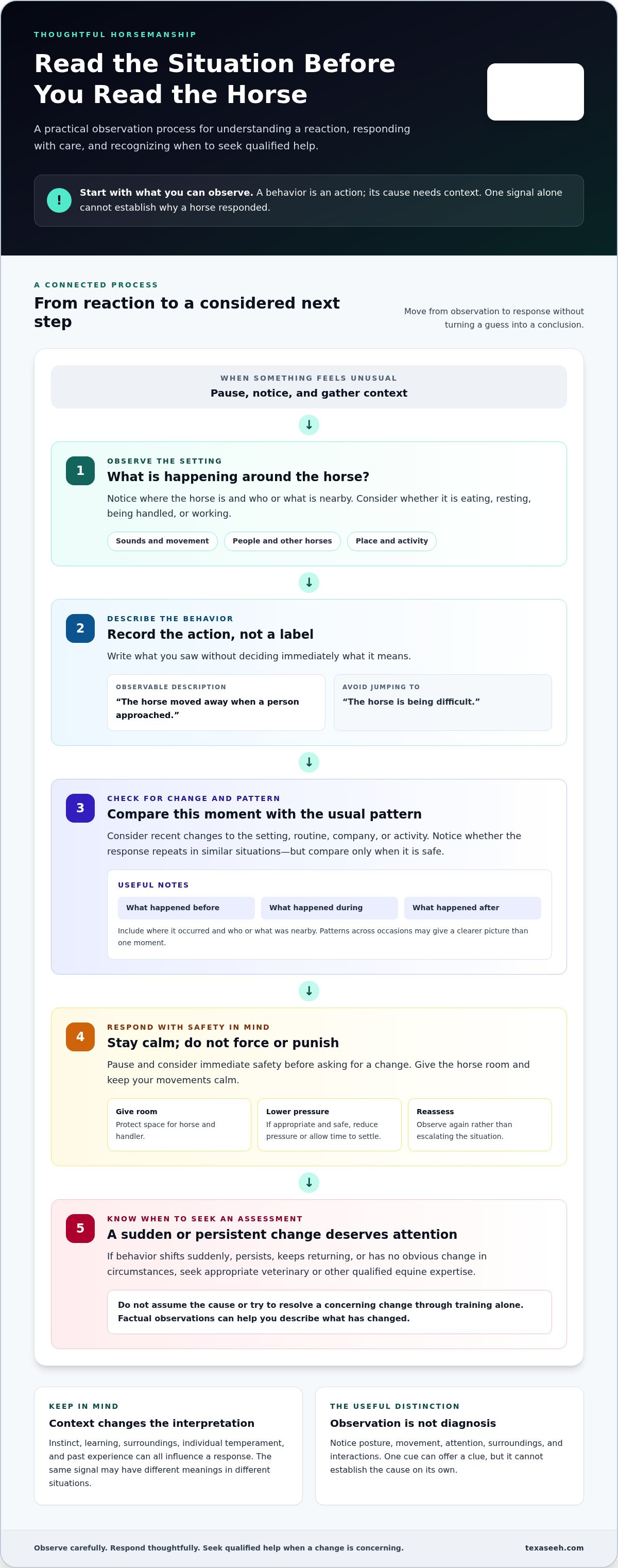
A single gesture can have more than one possible explanation. To practice understanding horse behavior, pause before deciding what a reaction means and gather context. Notice what the horse is doing, what is happening around it, and how this moment compares with its ordinary behavior. This helps separate observable details from assumptions.
Note the setting. Consider where the horse is, who or what is nearby, and whether it’s eating, resting, being handled, or working. Notice sounds, movement, and interactions with other horses or people.
Describe the behavior. Record what you can see without adding a label. For example, write that the horse moved away when a person approached, rather than deciding immediately that it was being difficult.
Consider what changed. Think about recent changes to the setting, routine, company, or activity. Compare the response across similar situations only if it’s safe to do so, and note whether it repeats.
What context and an individual baseline can reveal
A horse’s usual patterns provide a useful point of comparison. One horse may routinely watch unfamiliar activity from a distance, while another may show little visible concern. Neither pattern alone tells you what a horse will do in every circumstance. Look at the whole picture: posture, movement, attention, surroundings, and interactions. Don’t treat one cue as a complete message. For more on noticing and interpreting signals between horses and people, explore our related article on horse-and-human communication.
One behavior can offer a clue, but it can’t establish its cause on its own. Keep brief, factual notes when a response seems unusual. Describe what happened before, during, and after it, along with where it occurred and who or what was nearby. Patterns across occasions may give a clearer picture than a single moment. If the cause is unclear, keep observing rather than jumping to a conclusion.
Responding to Horse Behavior With Patience, Welfare, and Good Judgment
Understanding horse behavior can help you choose a measured response, but observation isn’t the same as knowing the cause. If a horse reacts unexpectedly, pause and consider immediate safety before asking for a change. Give the horse room, keep your movements calm, and avoid punishment or forcing a response. If it’s appropriate and safe, reduce the pressure or allow time to settle. Then reassess rather than escalating the situation.
One signal alone isn’t enough to diagnose a problem or explain a horse’s feelings. Consider what happened beforehand and whether the response is familiar. A brief reaction to a new situation may differ from behavior that returns, continues, or interferes with the horse’s usual routine. Factual notes about what you observed and when can help you describe the change clearly.
When a behavior change deserves qualified attention
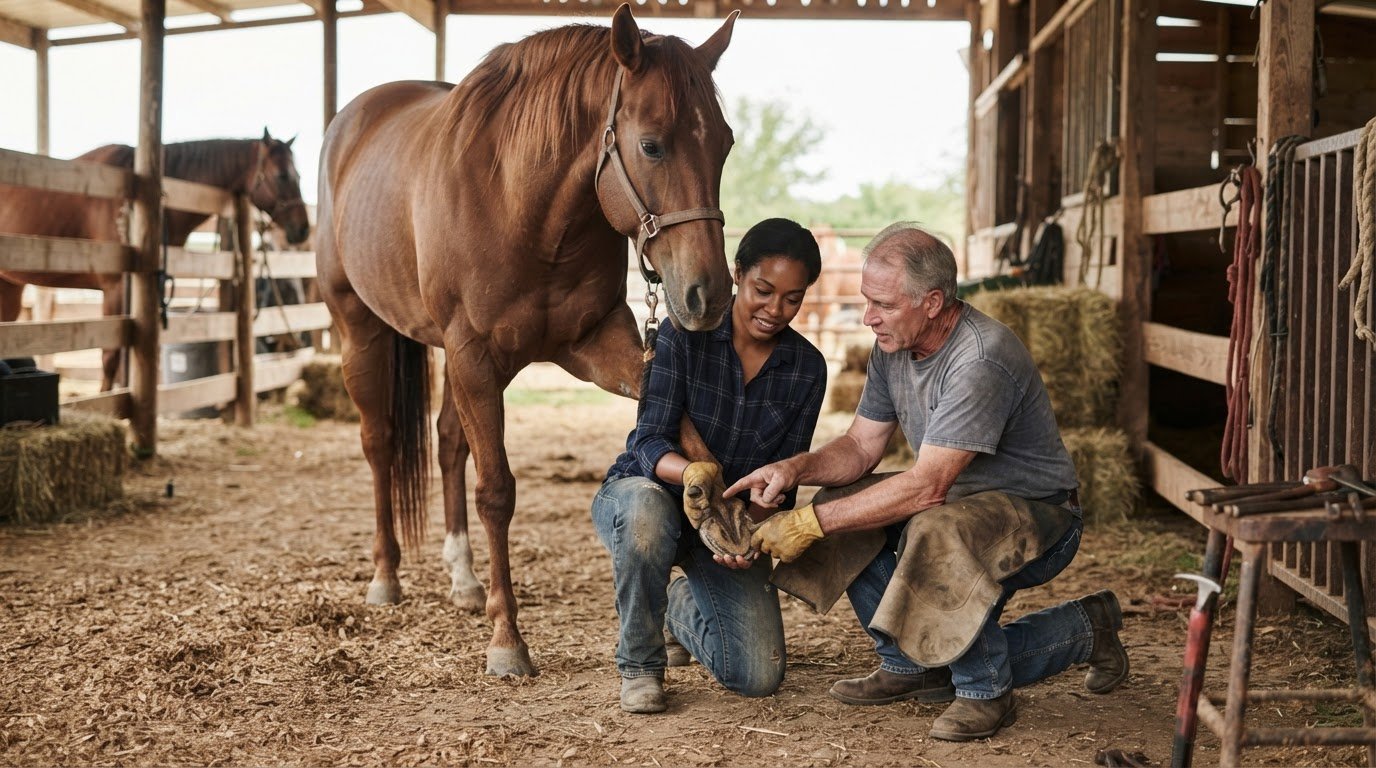
A sudden shift from a horse’s usual behavior, or a pattern that persists or keeps returning, deserves attention, especially if you can’t identify an obvious change in circumstances. Don’t assume the cause or try to resolve a concerning change through training alone. Seek appropriate veterinary or other qualified equine expertise for an assessment. If you’re unsure whether the change matters, describe what you’ve observed to a qualified professional to help determine a sensible next step.
Patience doesn’t mean ignoring a concern. It means responding thoughtfully, protecting both horse and handler, and recognizing when an observation is beyond what you can interpret on your own.
Build Confidence Through Thoughtful Horsemanship
Confidence develops over time, through steady choices and attention to how each interaction unfolds. Understanding horse behavior isn’t about predicting every reaction. It’s a skill that grows as you stay curious, reflect on what you observe, and adjust your approach when needed.
Carry that mindset into your next time with a horse. Set a manageable goal, such as noticing how the horse responds to a familiar routine, and give yourself time to learn without expecting instant certainty. Small, thoughtful steps can support a more considerate partnership.
Progress doesn’t require having every answer. Stay patient with yourself and your horse as you learn together. For guided practice in observation and handling, explore the horsemanship lessons offered by Texas Equine Education & Horsemanship™.
Frequently Asked Questions
Can horses remember negative experiences?
Yes, horses can form memories associated with experiences, including negative situations. That doesn’t mean every later reaction has the same cause. For example, reluctance near a familiar object calls for calm observation, not an immediate assumption about what the horse remembers. Keep new learning experiences patient and positive, and seek qualified guidance if a response raises concern or makes handling unsafe.
Why do horses neigh, nicker, or snort?
Horses use vocal sounds alongside posture and movement, but no sound has one guaranteed meaning in every situation. A neigh may occur during a separation, while a nicker may happen during a familiar interaction, yet the sound alone can’t confirm what the horse feels. Notice what’s happening nearby and whether the sound is typical for that horse. This broader view supports understanding horse behavior without relying on a simple sound-to-emotion rule.
Can horses recognize familiar people?
Horses can learn to distinguish familiar people, but one greeting or lack of response doesn’t prove recognition or reveal an emotion. Notice whether the horse responds consistently across ordinary interactions, such as approaching, turning its attention, or remaining relaxed when a familiar person is present. Consider the setting and what else may be influencing its response, and avoid treating a single moment as proof of a special bond.


Comments