


Understanding Horse Body Language for Safer Horsemanship

What if a horse’s swishing tail is a response to flies, not frustration? Individual signals can be easy to misread, especially when the ears, eyes, posture, and movement seem to tell different stories. Horse body language makes more sense when you look at the whole horse and consider what’s happening around them.
Noticing patterns can help you respond thoughtfully and give a horse more space when needed. This guide explains common signals in the ears, eyes, posture, and movement, and shows why no single gesture tells the whole story. You’ll learn to consider the surroundings, compare behavior over time, recognize when it’s sensible to pause, and know when an experienced horse professional can help you interpret what you’re seeing.
Table of Contents
What Horse Body Language Communicates, and Why One Signal Is Not Enough
Horse body language is the set of physical signals and behaviors a horse displays while interacting with people, other horses, and its surroundings. These cues offer information about a horse’s response, but they aren’t a guaranteed translation of what the horse feels or intends. Ears, eyes, muzzle, posture, tail, and movement each contribute to the picture. Looking at them together helps prevent conclusions based on one gesture alone. For an overview of the ways horses communicate, see Horse communication basics.
Can you tell what a horse feels from one signal?
Not reliably. An observed signal is what the horse does; an interpretation is one possible explanation for why. Keeping observation and interpretation separate helps you stay curious instead of assuming you know what a cue means.
For example, a horse standing with its head raised might be alert to activity beyond the paddock. If its body is also tense and it repeatedly shifts away from a nearby object, those additional details provide context, but still don’t prove a specific feeling. Compare the horse’s behavior at rest, during handling, and around familiar activity to see what has changed.
Consider the setting and what is happening: a new sound, a nearby horse, a narrow space, or a person approaching may all affect the horse’s response. Distance matters too. A horse may respond differently when someone is close than when they are across the enclosure. Notice whether signals appear together, persist, or change as the situation changes. The horse’s usual behavior is another useful point of comparison. A single moment is a snapshot; repeated, careful observations build a fuller picture without turning any one cue into a definite explanation.
How to Read Horse Body Language from Ears to Tail
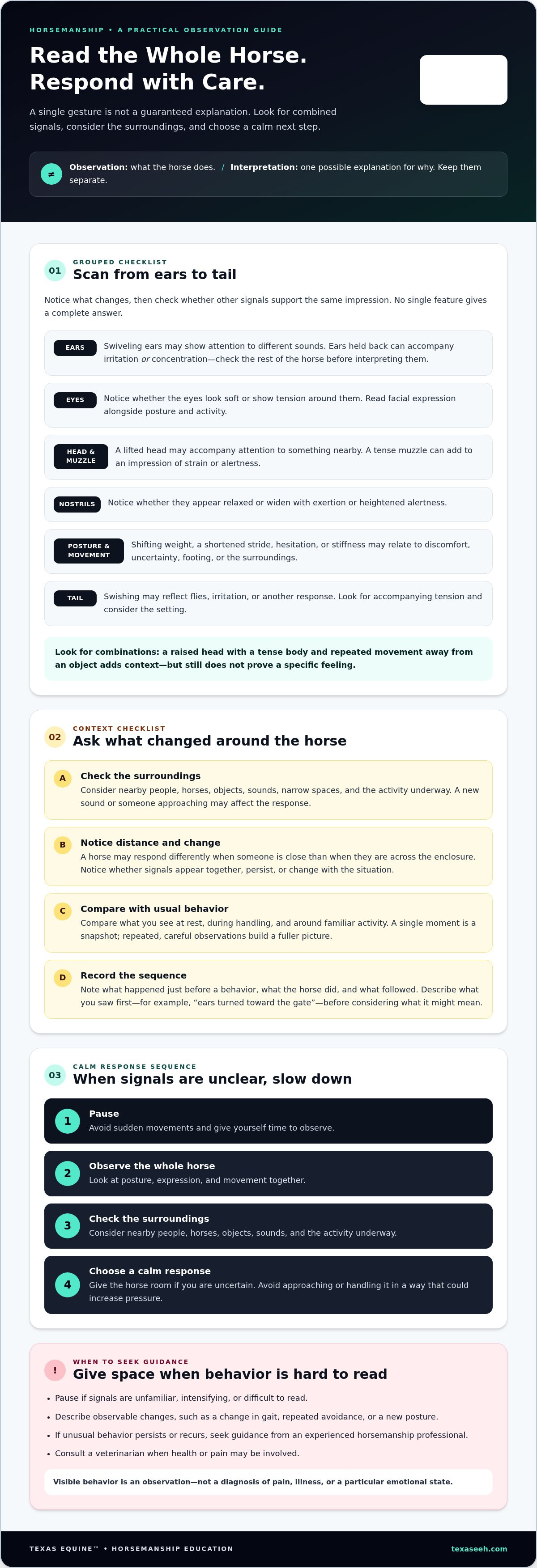
Start by noticing what changes, then check whether other signals support the same interpretation. Ears that swivel may show a horse attending to different sounds. Ears held back can accompany irritation or concentration, so consider the rest of the horse before deciding what they mean. Eyes may look soft or show tension around them, while the nostrils and muzzle can change with activity or alertness. No single feature gives a complete answer.
What do a horse’s ears, eyes, and posture tell you?
Ear direction can help you notice where a horse’s attention may be, while facial tension and posture add clues about its overall state. A raised head and braced stance may suggest alertness. A looser posture may look more relaxed, but the setting and activity still matter. Combinations of cues offer more context than one cue because they show how different parts of the horse’s body respond together. For a head-to-tail overview, explore this guide to reading horse body language.
Head and muzzle: A lifted head may accompany attention to something nearby. A tense muzzle can add to an impression of strain or alertness.
Nostrils: Notice whether they appear relaxed or widen with exertion or heightened alertness.
Posture and movement: Shifting weight, a shortened stride, hesitation, or stiffness may signal discomfort, uncertainty, or a response to footing or surroundings.
Tail: Swishing may reflect flies, irritation, or another response. Look for accompanying tension and consider the setting.
Build a clearer picture by watching for patterns. Note what happens just before a behavior, what the horse does, and what follows. For example, record whether a change occurs during a particular activity, around a specific object, or as someone approaches. Describe what you see first, such as “ears turned toward the gate,” before considering what it might mean. This makes it easier to compare observations across situations without treating an interpretation as fact.
How to Respond Thoughtfully to Horse Body Language
When signals are unclear, slow the interaction rather than trying to make the horse respond. Use this sequence to choose a measured next step:
Pause. Avoid sudden movements and give yourself time to observe.
Observe the whole horse. Look for changes in posture, expression, and movement together.
Notice the surroundings. Consider nearby people, horses, objects, sounds, and the activity underway.
Choose a calm response. Give the horse room if you’re uncertain. Avoid approaching or handling it in a way that could increase pressure.
This approach helps keep an observation separate from an assumption. The ASPCA’s guide to interpreting horse body language offers additional examples of visible cues, but no guide can establish exactly what an individual horse is experiencing in every moment.
When should you pause and seek experienced guidance?
Give the horse space if its signals are unfamiliar, intensifying, or difficult to read. Describe what you see, such as a change in gait, repeated avoidance, or a new posture. These are observations, not diagnoses of pain, illness, or a particular emotional state. If unusual behavior persists or recurs, seek guidance from an experienced horsemanship professional. Consult a veterinarian when health or pain may be involved.
Build Safer Habits Through Steady Observation
Reading horse body language isn’t about translating one gesture into a definite answer. Look at the ears, eyes, posture, and movement together, then consider the horse’s surroundings and what has changed over time. This broader view can help you respond thoughtfully rather than react to an assumption.
When signals are unclear, pause, give the horse room, and avoid sudden actions. Keep observations separate from conclusions about pain or emotion, and seek experienced horsemanship or veterinary guidance if unusual behavior persists.
Careful observation develops with practice. Notice patterns in different situations, stay open to what the horse’s behavior may be communicating, and let patient, thoughtful interactions guide your next steps. Texas Equine Education & Horsemanship™ builds horsemanship education from the ground up. Explore its horsemanship education services to continue developing foundational horsemanship skills.
Frequently Asked Questions
What does a horse’s body language tell you?
Horse body language offers clues about a horse’s attention, comfort, and response to its surroundings, but it doesn’t provide a certain translation of what the horse feels. Notice the ears, eyes, muzzle, posture, tail, and movement together. Then consider the activity, nearby sounds or objects, and whether the behavior differs from the horse’s usual pattern.
Can you tell if a horse is happy by its ears?
No. Ear position alone can’t confirm that a horse is happy. Ears turned forward may indicate attention to something ahead, while ears held back can occur in different situations. Look for other signs, such as facial tension, posture, and movement, and consider what’s happening nearby. Interpret the whole picture rather than assigning one emotion to a single cue.
How do you know if a horse is uncomfortable?
There isn’t one signal that proves discomfort, but changes such as repeated shifting, tension, hesitation, or altered movement may deserve attention, especially if they persist or occur together. Compare what you observe with the horse’s usual behavior and note the circumstances. These signs aren’t a diagnosis. If a change continues or raises concern about pain, consult a veterinarian.
What should you do when a horse’s body language is unclear?
Pause and avoid sudden movements or assumptions. Observe the horse’s overall posture and movement, then consider nearby people, horses, sounds, and the activity underway. If you’re uncertain, give the horse space rather than pressing closer or demanding a response. If the behavior is unusual or continues, seek guidance from an experienced horsemanship professional or veterinarian as appropriate.


Comments