


Equine Art: A Professional Guide to Styles and Expression

What if a horse-inspired artwork doesn’t need to look exactly like a horse to feel unmistakably equine? Equine art can begin with a shape, a gesture, or a quiet moment that stays with you. It’s natural to wonder whether making a meaningful piece requires expert drawing skills or choosing the perfect medium. It doesn’t.
The strongest starting point is attentive observation, followed by your own interpretation of what you notice. This guide explores the subjects and meanings equine art can hold, from movement and companionship to the horse’s place in a landscape, and how different styles and materials can express them. You’ll also find a simple way to shape an original idea without needing advanced skills or settling every creative choice at once. Whether you work with pencil, paint, clay, or digital tools, you can begin with one detail that matters to you.
Table of Contents
What Is Equine Art, and What Can Horse-Inspired Work Express?
Equine art is creative work about horses, equine life, or the relationships and ideas connected to them, expressed in any medium or style. The subject is what the work explores; the medium is how it’s made, and the style is how it looks. A horse might appear in a painting, sculpture, photograph, or digital composition, but no single material or visual approach defines the subject.
Meaning often comes from the details an artist chooses to emphasize. A horse caught mid-stride can suggest energy or freedom, while a still figure in an open landscape may evoke calm, solitude, or belonging. Including a person can shift the focus toward trust, partnership, care, or shared effort. The setting matters, too: a familiar stable, open field, or imagined space can shape how viewers understand the horse’s place in the scene. For broader context, Wikipedia offers a historical overview of horses in art, tracing the subject across different periods and cultures.
Does equine art have to be a realistic horse portrait?
No. A realistic portrait is one way to represent a horse, but recognition and meaning don’t depend on photographic detail. An artist might use symbolic shapes, expressive color, simplified forms, or imaginative settings to communicate a feeling or idea. Even a partial view, such as a flowing mane or the curve of a neck, can direct attention to movement or character. These approaches aren’t lesser versions of realism. They offer different ways to interpret horses and invite viewers to bring their own experiences to the work.
How to Develop an Equine Art Idea That Feels Personal
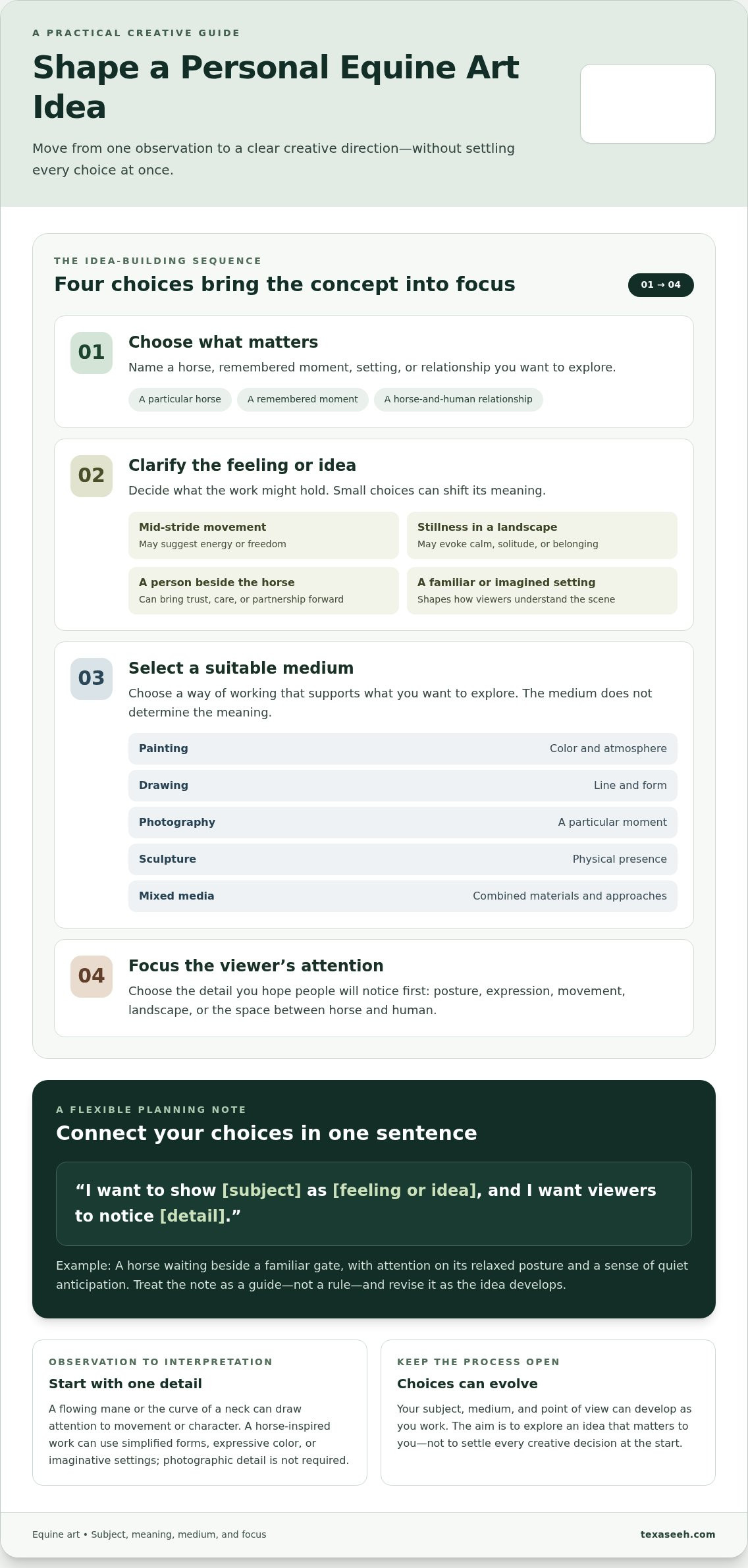
Begin with something you genuinely want to explore: a particular horse, a remembered moment, or a relationship between a horse and a person. Observe what draws your attention. Is it the horse’s posture, an alert expression, the rhythm of movement, the surrounding landscape, or the space between horse and human? These details can help you move from a broad interest to a specific subject.
The medium supports an artistic idea; it doesn’t determine what that idea means. Painting may suit an interest in color and atmosphere, while drawing can focus attention on line and form. Photography can preserve a particular moment, sculpture gives a subject physical presence, and mixed media lets you combine materials and visual approaches.
How do you choose a subject, medium, and point of view?
Use a simple planning note to connect your choices: “I want to show [subject] as [feeling or idea], and I want viewers to notice [detail].” For example, you might focus on a horse waiting beside a familiar gate, aiming to draw attention to its relaxed posture and the sense of quiet anticipation. This note is a guide, not a rule. Change it as the idea develops.
Choose: Name the horse, moment, setting, or relationship that matters to you.
Clarify: Identify the feeling or idea you want the work to hold.
Select: Choose a medium that feels suitable and accessible for exploring it.
Focus: Decide what you hope viewers will notice first.
Looking at existing collections can also help you consider different ways artists approach horse-related subjects. The National Sporting Library & Museum, for instance, presents art from the 17th through the 21st centuries. Let reference works broaden your possibilities, while keeping your own observation and intention at the center of the process.
Sharing Equine Art: From a Personal Project to a Creative Community
Sharing a finished piece gives others a chance to connect with it, but they may notice something different from what you intended. One viewer might respond to a horse’s posture, while another sees a sense of companionship or stillness in the setting. These interpretations can sit alongside the artist’s own meaning. There doesn’t have to be one correct reading.
A brief title or note can offer context without explaining away every detail. Name the subject, then add a sentence about the moment or idea that inspired the work. For example, a title might identify a horse waiting at a gate; a short note could explain why that pause felt worth capturing. Keep the framing simple so viewers have room to respond in their own way.
Where can artists share horse-inspired artwork?
Art shows and creative communities bring different artists and viewers together around a shared interest. Seeing how others interpret horses can offer fresh perspectives, while sharing your own work can begin conversations about its subject and feeling. For further reading, explore a professional guide to horse art and equine expression, or learn about horses in art through history to see how artists have approached the subject across time.
Sharing can be a natural next step, whether a piece is a first experiment or part of an ongoing practice. Texas Equine Education & Horsemanship™ hosts the Equine Expression & Heritage Art Show, which welcomes artwork across all ages and mediums, offering an art-focused opportunity to share horse-inspired creativity.
Let Your Horse-Inspired Idea Take Shape
Equine art can express more than a horse’s appearance. Your choice of subject and the details you emphasize can communicate a personal feeling or perspective. Start with an idea that matters to you, then choose a medium that helps you explore it. A title or brief note can offer context when you share your work, while leaving room for viewers to form their own interpretations.
There’s no need to wait for a perfect plan or advanced skills. Begin with one observation, memory, or question, and let your creative direction develop through thoughtful choices. Each step can help you discover what you want the work to express.
Frequently Asked Questions
What is equine art?
Equine art is creative work featuring horses, equine life, or the relationships and ideas connected to them. The term describes the subject, not a required medium, style, or skill level. A horse may appear in a drawing, painting, photograph, or sculpture, while a scene of daily care or a human-horse relationship can also be part of the subject.
Does equine art have to look realistic?
No. Realistic horse portraits are one approach, alongside expressive, symbolic, stylized, or imaginative interpretations. An artist might simplify a horse’s form, use unexpected colors, or focus on a meaningful gesture rather than detailed likeness. The subject and the artist’s intent guide the work; realism isn’t a requirement, and no single style is more authentic or valuable.
What mediums can be used to create equine art?
Artists can use drawing, painting, photography, sculpture, or mixed media to create equine art. Each medium affects qualities such as texture, form, and presentation. The idea can guide the choice: photography might suit a particular observed moment, while sculpture offers a three-dimensional form. You can choose a familiar medium that feels suitable for exploring the subject.
Can beginners create equine art?
Yes. Beginners can start with an observation, memory, or horse-related idea that matters to them. Choose a manageable subject, such as a horse’s posture or a quiet moment, and work in a medium you already know or feel comfortable trying. Develop the piece gradually, making choices as you go. Formal training isn’t required to begin expressing a personal idea.


Comments