


Mastering Good Horsemanship: Essential Skills for Riders

What does good horsemanship look like beyond a polished ride? It shows in the choices you make before, during, and after an activity with a horse. Riding skill matters, but so do preparation, patience, and attention to the horse. If you’re unsure what to practice beyond the saddle, start with the everyday habits that help you learn thoughtfully.
This guide covers practical ways to build those habits, from following instruction to reflecting on what you’ve learned. Use the questions and examples to assess your current approach and choose a manageable next step, whether you’re new to horses or developing established skills. The aim isn’t perfection. It’s steady learning that keeps the horse’s comfort and your own experience in view.
Table of Contents
What Good Horsemanship Means Beyond Riding Skill
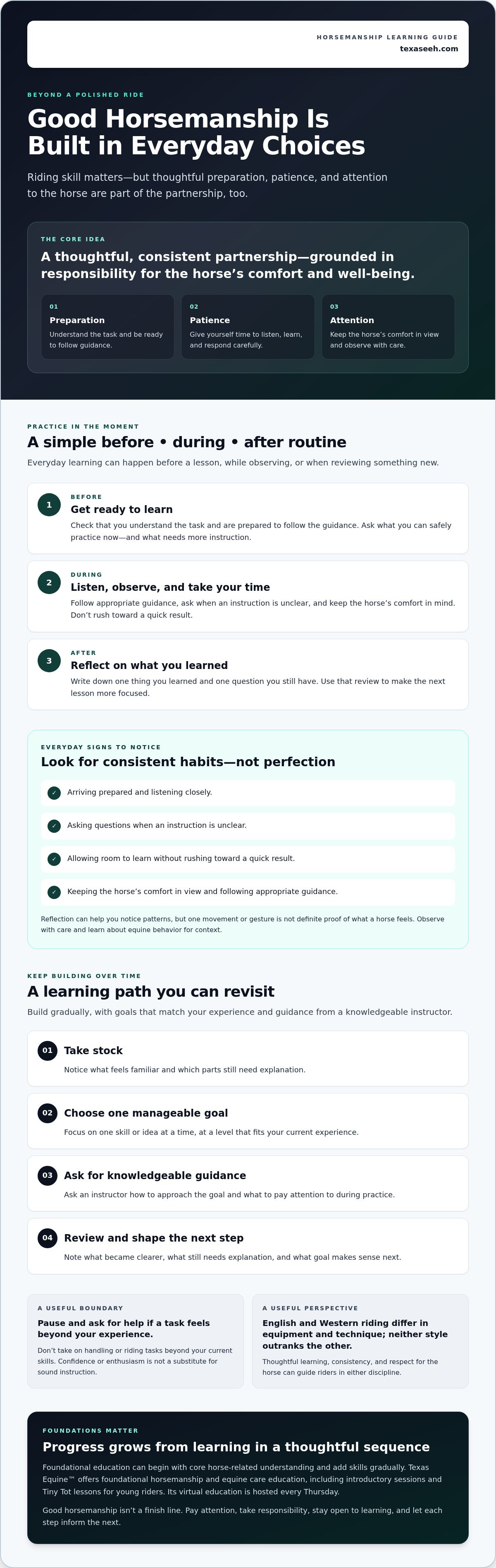
Good horsemanship is a thoughtful, consistent partnership with a horse, grounded in responsibility for the horse’s comfort and well-being. Riding ability is one part of that partnership, but it isn’t the only measure. Paying attention, learning to interact appropriately, and responding with patience matter whether you’re in the saddle or learning from the ground.
Equitation is often described as the art or practice of horse riding, including the rider’s position and use of aids. Horsemanship reaches beyond riding performance to include how a learner prepares, observes, and responds. English and Western riding use different equipment and techniques, but neither style outranks the other. Thoughtful learning, consistency, and respect for the horse can guide riders in either discipline.
Does good horsemanship require advanced riding experience?
Good horsemanship means building a thoughtful, consistent partnership with a horse through responsible choices, attentive interaction, and a willingness to keep learning.
Beginners can start by noticing how a horse responds, listening to guidance, and taking time to understand a task instead of rushing to complete it. These habits don’t require advanced riding experience, but they do call for care and support. Confidence or enthusiasm isn’t a substitute for sound instruction. Learn with an appropriately knowledgeable instructor, and don’t take on handling or riding tasks beyond your current skills. A useful first step is to ask what you can safely practice now and what needs more instruction.
How to Practice Good Horsemanship in Everyday Learning
Everyday learning offers chances to build thoughtful habits, whether you’re preparing for a lesson, observing a horse, or reviewing new information. Before an activity, check that you understand the task and are ready to follow the guidance. During it, give yourself time to listen and keep the horse’s comfort in mind. Afterward, write down one thing you learned and one question you still have. That simple review can help you make the next lesson more focused.
Reflection can help you notice patterns, but don’t treat one movement or gesture as definite proof of what a horse feels. Learning about equine behavior provides useful context. Rutgers University’s Basics of Equine Behavior explains how natural instincts influence horses’ responses, helping readers approach observation with care.
What are everyday signs of thoughtful horsemanship?
Look for habits you can assess over time: arriving prepared, listening closely, asking questions when an instruction is unclear, and allowing room to learn without rushing toward a quick result. Consider whether you’re following appropriate guidance and keeping the horse’s comfort in view. No single moment proves you have everything figured out. Consistent, careful choices matter more than perfection.
Choose one skill or idea to focus on, then work on it with knowledgeable guidance. For example, you could ask your instructor to clarify a lesson instruction or explain what to pay attention to during an activity. If a task feels beyond your experience, pause and ask for help rather than attempting it alone. Detailed handling, safety, and body-language skills call for focused instruction. To explore how learning away from the saddle can support equestrian development, read Why Non-Riding Horse Education is the Essential Foundation for Every Equestrian.
How to Keep Building Good Horsemanship Over Time
Make learning a cycle you can revisit: take stock of what feels familiar, choose a goal that fits your current experience, and ask a knowledgeable instructor how to approach it. After practicing, note what became clearer and what still needs explanation. Use that reflection to shape your next goal. This keeps learning manageable and helps you distinguish a useful challenge from a task you aren’t ready to attempt.
Foundational education can help learners build knowledge in a thoughtful sequence, starting with core horse-related understanding and adding skills gradually. Texas Equine Education & Horsemanship offers foundational horsemanship and equine care education, including introductory sessions and specialized Tiny Tot lessons for young riders. Its classes and programs provide options for learning from the ground up. Progress may look different for each learner, so ask questions and seek guidance when you’re unsure. Studying foundational horsemanship concepts or learning about groundwork can also help you choose a next topic to discuss with an instructor.
Where can a beginner continue learning horsemanship?
Look for instruction that matches your experience and gives you a clear way to strengthen the basics. A knowledgeable instructor can help you identify an appropriate starting point, explain what to focus on, and adjust the learning goal as your understanding grows. Texas Equine Education & Horsemanship also hosts virtual education every Thursday, offering another way to keep learning. Build on what you’ve learned, ask for help when needed, and let each step inform the next.
Keep Growing Through Thoughtful Practice
Good horsemanship isn’t a finish line. It grows as you pay attention, take responsibility, and stay open to learning. Your next step can be modest: choose one question to bring to your instructor or one habit to reflect on after a lesson.
Give yourself room to learn at a steady pace. Each thoughtful choice can strengthen your understanding of horses and guide what you practice next. Keep asking questions, follow knowledgeable guidance, and recognize the value of consistent effort.
Frequently Asked Questions
What does good horsemanship mean?
Good horsemanship means building a thoughtful, consistent partnership with a horse through responsible choices and continued learning. It includes paying attention to the horse’s comfort, following appropriate guidance, and developing skills at a suitable pace. It isn’t a single achievement or a fixed set of actions; it’s an ongoing approach that values the horse as well as the rider’s progress.
Can you practice good horsemanship if you are a beginner?
Yes. Beginners can practice good horsemanship by listening carefully, asking questions, being patient, and following knowledgeable instruction. You don’t need advanced riding skills to begin learning how to approach horse-related tasks thoughtfully. Start with activities an instructor considers appropriate for your experience, and ask for help if you’re unsure. Confidence is useful, but it doesn’t replace sound instruction.
Is good horsemanship only about how well you ride?
No. Riding is only one part of horsemanship. A rider’s technique matters, but so does the way they prepare to learn, respond to guidance, and consider the horse’s comfort. Horsemanship also includes learning about horses outside the saddle. These broader skills support more thoughtful interactions and can be developed alongside riding, whether someone rides English or Western.
How can I improve my horsemanship?
Improve your horsemanship by choosing one realistic learning goal, seeking guidance from a knowledgeable instructor, and reflecting on what you learn. You might focus on understanding an instruction or preparing for an activity. Ask questions when something isn’t clear, and review your progress without expecting instant results. Building skills gradually helps you identify a useful next step.
Explore Texas Equine Education & Horsemanship’s foundational horsemanship and equine care education to find a learning option that fits your experience.


Comments