


Mastering Equine Nutrition: Essential Basics for Horse Care

What if reviewing the whole feeding routine matters more than focusing on one bag of feed? Equine nutrition can be hard to judge when advice conflicts and label terms seem unfamiliar. A useful starting point is to look at the whole picture: forage, water, any concentrates or supplements, workload, and health.
It’s reasonable to want a clear way to review what your horse eats and whether the routine seems appropriate. This guide explains the basic parts of a horse’s diet, what to record when assessing daily feeding, and when a veterinarian or qualified equine nutrition professional can offer individual guidance. You’ll also learn how to read feed information in context and why diet changes should be considered carefully. The goal is to help you ask informed questions, not to prescribe a diet for your horse.
Table of Contents
Equine Nutrition Basics: What Belongs in a Horse’s Daily Diet?
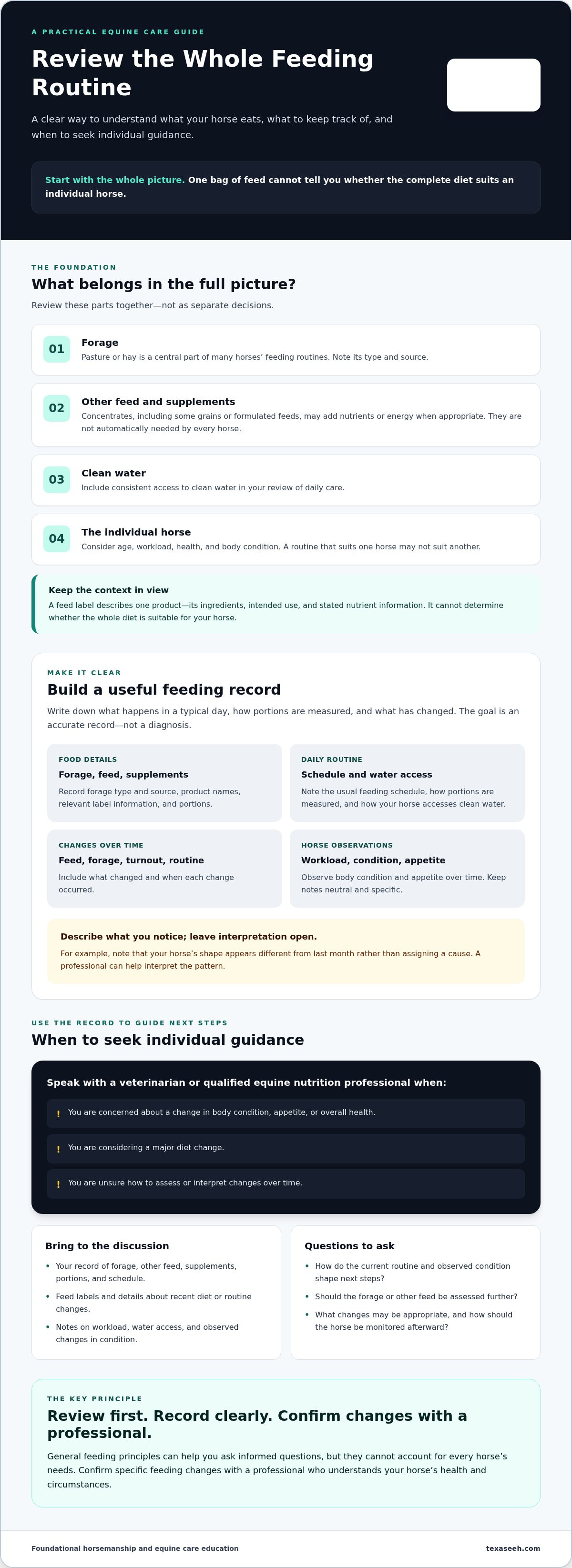
Equine nutrition is about meeting a horse’s needs through a suitable, balanced daily feeding routine. That means considering the complete diet, including forage, any additional feed, and consistent access to clean water. A sound review also takes account of the horse’s age, workload, health, and body condition, rather than relying on one product or a general rule.
Appropriate feeding varies by the individual horse, so a diet that suits one horse may not be right for another. A veterinarian or qualified equine nutrition professional can help interpret an individual horse’s needs and assess whether its diet provides appropriate energy and nutrients.
How do forage and other feed fit into equine nutrition?
Forage, such as pasture or hay, is a central part of many horses’ feeding routines. Concentrates, including some grains or formulated feeds, may provide additional nutrients or energy when appropriate, but they aren’t automatically needed by every horse. Clean water is also part of daily care. For a general overview of digestion, nutrients, and feed types, see Equine nutrition.
A feed label describes a particular product, including its ingredients, intended use, and stated nutrient information. It can’t tell you by itself whether the product suits your horse or how it fits with the rest of the diet. Read the label, note the product name and relevant information, then consider it alongside forage and any other feed. For a broader look at feed planning, consult a horse feeding guide and ask a qualified professional about questions specific to your horse.
How to Review Your Horse’s Feeding Routine Without Guesswork
A clear record makes it easier to discuss equine nutrition without relying on memory or assumptions. Write down what your horse receives in a typical day, how portions are measured, and what has changed. The aim is to describe the routine accurately, not to diagnose a problem or decide on a new diet alone.
A feed label describes one product; it can’t determine whether your horse’s whole diet is suitable. Purdue University Extension’s guide to the basics of equine nutrition explains nutrient categories and can help make label terminology easier to discuss with a professional.
Which details should you record before discussing a horse’s diet?
Gather practical details that help a veterinarian or qualified equine nutrition professional understand the full picture:
Forage type and source, other feed and supplements, product names, and label information.
Usual feeding schedule, how portions are measured, and how your horse accesses clean water.
Recent changes to feed, forage, turnout, or routine, including when each change occurred.
Workload and observations about body condition or appetite over time.
Keep observations neutral and specific. For example, note that your horse’s shape appears different from last month rather than assigning a cause. Record what you observed and when; a professional can help interpret what the pattern may mean.
Review body condition over time instead of drawing conclusions from a single glance. If you notice a change or aren’t sure how to assess it, share your notes and product labels with a qualified professional. Broader horse-care resources can help put feeding observations in context, but they don’t replace advice tailored to your horse.
When to Seek Individual Equine Nutrition Guidance
General feeding principles can help you review a routine, but they can’t account for every horse’s needs. Speak with a veterinarian or qualified equine nutrition professional before making a major diet change, or if you’re concerned about a change in your horse’s body condition, appetite, or overall health. A veterinarian can assess health concerns and advise whether they affect feeding decisions.
Bring practical information to the discussion so the professional can evaluate the full picture:
A record of forage, other feed, supplements, portions, and feeding schedule.
Feed labels and details about recent changes to the diet or routine.
Notes on workload, water access, and observed changes in condition over time.
What should you ask a veterinarian or equine nutrition professional?
Ask how your horse’s current routine and observed condition shape the next steps. Find out whether the forage and other feed should be assessed further, what changes may be appropriate, and how to monitor your horse afterward. Confirm specific feeding changes with the professional who understands your horse’s health and circumstances. The Alabama Cooperative Extension System also offers general rules for feeding horses, including practical feeding management guidance.
Foundational horse-care education can help owners build a clearer understanding of daily management. Texas Equine Education & Horsemanship™ offers foundational horsemanship and equine care classes, while individual feeding decisions should remain with a veterinarian or qualified equine nutrition professional. Use your records and questions to guide that conversation, and follow the professional’s advice when planning changes for your horse.
Build a Feeding Routine With Confidence
Good equine nutrition starts with the whole horse, not a single feed label. Review forage, other feed, water access, routine, and body condition together. Keep clear notes so you can spot changes and discuss them with a qualified professional. When a major diet adjustment or health concern arises, seek individualized guidance from a veterinarian or qualified equine nutrition professional instead of relying on general advice alone.
Building a thoughtful feeding routine is an ongoing process. Observe your horse, record changes clearly, and ask for professional guidance when questions arise. To build broader horse-care knowledge, explore Texas Equine Education & Horsemanship’s equine care classes and foundational horsemanship education.
Frequently Asked Questions
Is forage enough to meet a horse’s nutritional needs?
Forage is an important dietary foundation for many horses, but it may not provide everything a particular horse needs. Its suitability depends on the horse’s individual circumstances and the forage itself. Consider the complete diet, including other feed and water access, rather than judging forage alone. A veterinarian or qualified equine nutrition professional can help assess whether the overall feeding routine is appropriate.
Can horses eat the same feed and follow the same feeding plan?
Horses may share a feed, but that doesn’t mean they have identical nutritional needs. Individual circumstances, health, workload, and the rest of each horse’s feeding routine all matter. Avoid assuming one standard ration suits every horse. If you’re considering a meaningful change, or have concerns about a horse’s condition, discuss the plan with a veterinarian or qualified equine nutrition professional.
How can I tell if my horse’s diet is appropriate?
Review the complete routine, including forage, other feed, water access, schedule, and your horse’s observed condition over time. No single feed label or visual observation confirms nutritional adequacy. Keep clear notes about what your horse receives and any changes you notice. If something concerns you, share those records with a veterinarian or qualified equine nutrition professional instead of trying to diagnose the cause yourself.
What should I do before changing my horse’s feed?
Record the current feeding routine and why you’re considering a change, including feed names, label details, and any observations about your horse’s condition. Then discuss the situation with a veterinarian or qualified equine nutrition professional. The appropriate next steps depend on the individual horse and its full diet. Confirm specific changes with a professional rather than applying a universal feeding plan.


Comments