


Horsemanship for Veterans: Professional Benefits Guide

What if learning with a horse could be valuable without being therapy or requiring prior riding experience? For veterans and horsemanship, that distinction matters: a program may focus on practical horse-handling skills, while equine-assisted learning and therapy can have different aims and formats. Activities and professional qualifications vary, so a program’s label alone won’t tell you what to expect.
If you’re curious but unsure about comfort, physical access, or safety, raise those questions before taking part. This guide explains what horsemanship may involve, how it differs from equine-assisted learning and therapy, and what to ask about instruction, groundwork, accessibility, and participant choice. It also considers possible professional benefits without suggesting every program leads to a career or offers the same experience. You’ll have a clearer basis for deciding whether to ask a provider questions or explore another next step.
Table of Contents
What Does Horsemanship Offer Veterans Beyond Therapeutic Riding?
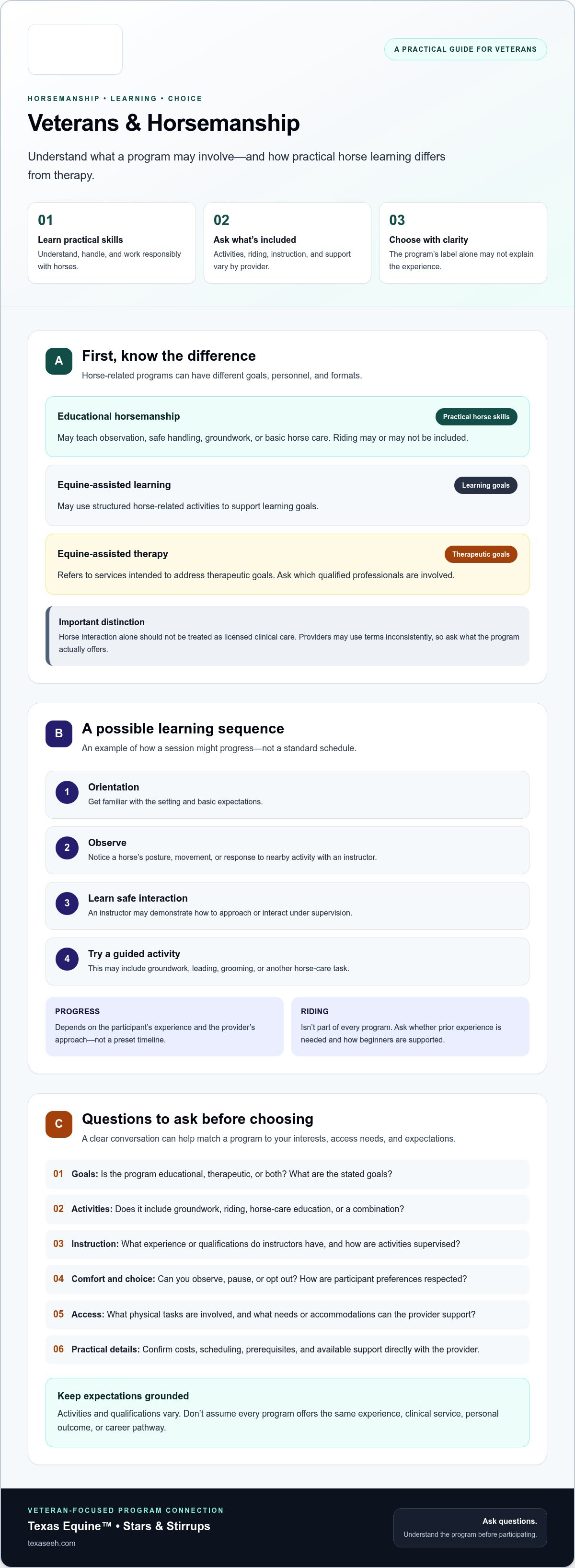
Horsemanship is the practical learning involved in understanding, handling, and working responsibly with horses. A program may teach skills such as observing a horse’s behavior, following safe handling practices, or learning basic care. Riding may or may not be included. The provider’s goals and activities determine what participants do, so don’t assume a horsemanship program offers therapy or a particular personal outcome.
Is horsemanship for veterans the same as equine therapy?
No. Horse-related programs can differ in purpose, personnel, and format. An educational horsemanship program teaches horse-related skills. Equine-assisted learning may use structured activities to support learning goals, while equine-assisted therapy refers to services intended to address therapeutic goals. Providers do not always use these terms consistently. The Equine-assisted therapy overview introduces related terms, but it doesn’t establish the qualifications or services of any particular provider.
Ask who plans and leads the activities, what relevant qualifications they have, and whether the program is educational, therapeutic, or both. If a provider makes clinical claims, ask what those claims mean and which qualified professionals are involved. Horse interaction alone should not be treated as licensed clinical care. For treatment questions, consider speaking with a qualified health professional.
Before enrolling, request a clear description of the program’s goals and activities. Find out what participants are expected to do and what falls outside the program’s scope. This makes it easier to compare options based on your interests and needs, rather than broad promises about healing or assumptions that every veteran will have the same experience.
What Can Veterans Learn Through Horsemanship, Step by Step?
Learning may begin with observation. A participant might notice a horse’s posture, movement, or response to nearby activity, then discuss those observations with an instructor. This offers a starting point for learning how to approach and respond thoughtfully, rather than handling a horse without guidance.
With instruction and supervision, activities may include groundwork, leading, grooming, or other horse-care tasks. These can introduce practical responsibilities such as following directions, respecting a horse’s space, and using equipment as instructed. Progress depends on the participant’s experience and the provider’s approach, not a preset timeline. Riding isn’t part of every program, so ask what the format includes.
What might a first horsemanship session involve?
One possible sequence is an orientation to the setting and basic expectations, followed by observing a horse and learning how to approach or interact under supervision. An instructor may then demonstrate a simple groundwork or care activity. This is an example, not a standard schedule. Before participating, ask who will supervise, what handling is expected, and how you can pause or opt out.
Some research addresses specific therapeutic programs rather than general horsemanship. For example, research on equine therapy should be understood in the context of the program and professionals involved. Findings from a clinical intervention don’t establish that an educational horsemanship activity has the same purpose or outcomes. Ask providers to explain the goals and evidence behind any claims they make.
How Can Veterans Find a Horsemanship Program That Fits?
A direct conversation with a provider can help you decide whether its program matches your interests, access needs, and expectations. Ask for a plain-language description of the goals, activities, and people leading them. If the provider refers to therapeutic outcomes, ask what kind of service it offers and which qualified professionals are involved. A Columbia University study on equine therapy describes a specific intervention, so its findings shouldn’t be assumed to apply to every horse-related program.
What should veterans ask before choosing a program?
Use questions like these to get a clearer picture of what participation may involve:
Do activities include groundwork, riding, horse-care education, or a combination?
What experience or qualifications do instructors have, and how are activities supervised?
Can I observe or pause an activity, and how are participant preferences respected?
What access needs can the provider accommodate? Share relevant needs and ask about the setting, physical tasks, and available accommodations.
What are the costs, schedule, prerequisites, and support options?
The answers should help you understand the experience before making a commitment. Prior horse experience isn’t the only factor to consider. Ask whether the provider offers introductory instruction and how it supports beginners, then decide whether the activities seem appropriate for you. For veterans exploring veterans and horsemanship, asking questions is a practical first step, not an obligation to participate. Compare the answers with your goals and comfort level, and give yourself time to decide.
Take the Next Step at Your Own Pace
Horsemanship can offer veterans a practical way to learn about horse behavior, handling, and care, but it isn’t automatically therapy or a guaranteed path to professional work. Activities and formats vary, and riding isn’t part of every program. Asking about goals, instructor qualifications, accessibility, participant choice, costs, and scheduling can help you assess whether an option fits.
A useful next step is to identify what you hope to learn and compare that goal with a provider’s program description. Ask what activities are included, what support is available, and how your preferences will be respected. You don’t need to commit before you feel informed. To explore an education-first approach, contact Texas Equine Education & Horsemanship™ and ask about its introductory lessons, horsemanship lessons, and equine care classes. A considered choice can help you explore the subject in a way that aligns with your interests, comfort, and readiness.
Frequently Asked Questions
Is horsemanship therapy for veterans?
No. Horsemanship isn’t automatically therapy. A program may teach horse handling, care, or riding skills, while clinical therapy follows a treatment framework led by qualified professionals. In veterans and horsemanship settings, ask what the program is designed to do, who leads it, and whether clinical care is provided. Participation shouldn’t be treated as a substitute for professional health care.
Can veterans learn horsemanship without prior horse experience?
Some programs may welcome beginners, but requirements and support vary. Ask whether introductory instruction is available, which activities are included, and how participants are supervised around horses. You can also explain your experience and comfort level before deciding. Ask the provider to clarify whether its format is suitable instead of assuming every program offers the same beginner support.
What happens in a horsemanship program for veterans?
Activities depend on the provider and may include learning about horse behavior, handling, care, or riding. Some programs don’t involve riding. Before enrolling, ask for a clear description of a typical session, who provides instruction, and what safety practices are used. Find out whether you can choose among activities, pause, or opt out if something doesn’t feel right.
How can veterans choose a suitable horsemanship program?
Start by identifying what you hope to learn, then ask providers about activities, instructor qualifications, accessibility, costs, and scheduling. Clarify whether the program is educational, recreational, or clinical, and confirm eligibility requirements directly. Ask what support is available and how participant preferences are respected. A suitable setting explains its goals and boundaries clearly and fits your comfort and ability to participate.


Comments