


Master Equestrian Safety: Essential Skills for Every Rider

What if the safest choice you make around a horse happens before you ever mount? Equestrian safety starts with preparation and awareness, not just protective gear. A helmet and other equipment matter, but they can’t replace checking your surroundings, paying attention to the horse, and knowing when to pause.
It’s natural to wonder what to check before handling or riding, especially when a horse’s behavior or the conditions change. This guide covers practical checks to make before, during, and after horse activities. You’ll learn how to assess your readiness, spot changes that call for caution, and ask for help or adjust your plans. Foundational horsemanship can help you build these habits over time.
Table of Contents
Equestrian Safety Starts with Preparation, Awareness, and Good Judgment
Equestrian safety is the ongoing practice of making thoughtful choices that support the well-being of people and horses, without promising that accidents can be prevented. It begins before an activity and continues as circumstances change. Consider your readiness, the horse’s behavior, the setting, suitable equipment, and access to appropriate supervision. No single check tells the whole story.
Readiness means being able to focus and follow instructions. If a horse seems unsettled, the surroundings are unfamiliar, or footing or noise has changed, slow down and reassess. The activity matters, too: equestrian activities span different disciplines and settings, so relevant precautions can vary. Notice what has changed and ask a knowledgeable person for guidance instead of pressing ahead.
Why safety involves more than riding equipment
Protective equipment can help reduce exposure to some risks, but it can’t replace horsemanship or sound decisions. Riders need to know how to approach and handle a horse, watch for changing conditions, and use equipment suited to the activity. Check that equipment fits and is in suitable condition. For helmets, consult current certification guidance from a reliable source and check any requirements for the facility or discipline. Gear does not make an otherwise unsafe situation safe.
For another practical overview, see Horse Safety: Essential Tips for Every Rider. Use these resources to support a deliberate routine: prepare, observe, and stop or seek help if something doesn’t feel right.
Use This Equestrian Safety Check Before, During, and After Horse Activities
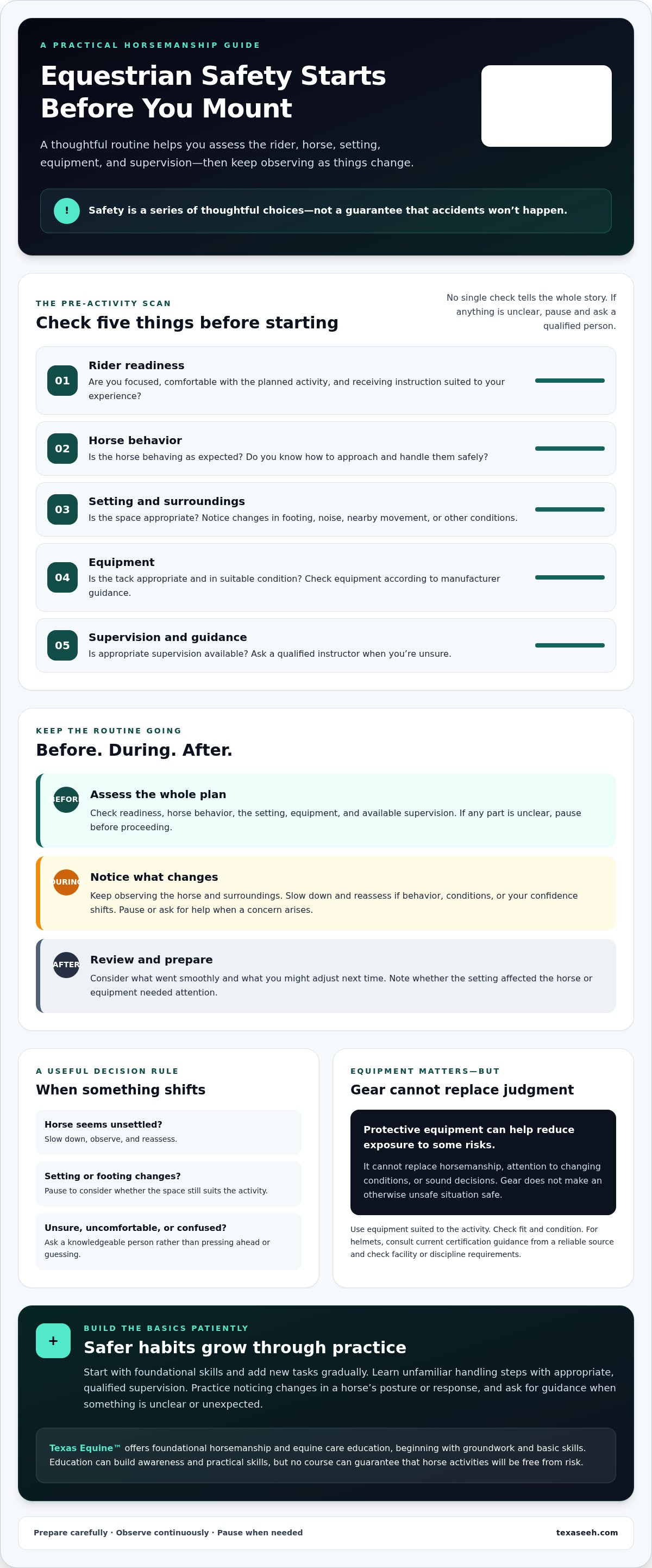
A short check can turn good intentions into practical decisions. Before starting, consider the rider’s readiness, the horse’s behavior, the setting, the equipment, and who is available to supervise. If any part of the plan is unclear, pause and ask a qualified person before proceeding.
What should a rider check before getting started?
Rider: Are you focused, comfortable with the planned activity, and receiving instruction suited to your experience?
Horse: Is the horse behaving as expected, and do you know how to approach and handle them safely?
Setting: Is the space appropriate for the activity? Consider changes such as noise, footing, or nearby movement.
Equipment and supervision: Is the tack appropriate and in suitable condition? Follow manufacturer guidance for equipment checks, and ask a qualified instructor when you’re unsure.
For groundwork context, use a reliable horsemanship resource and learn handling skills with suitable guidance. The United States Eventing Association also offers safety and education resources that emphasize learning as part of safer participation.
Quick check: Assess the rider, horse, setting, equipment, and supervision before starting. Keep observing during the activity, pause if behavior, conditions, or confidence changes, and seek qualified help if a concern arises.
Afterward, consider what went smoothly and what you might adjust next time. For example, note whether a change in the setting affected the horse or whether any equipment needed attention. A brief review can help you prepare more thoughtfully for your next activity.
Build Equestrian Safety Through Foundational Horsemanship
Safer habits develop through practice, not a single lesson or checklist. Patient, progressive learning gives riders time to build observation and handling skills, such as noticing changes in a horse’s posture or response and knowing when to ask for guidance. The goal isn’t to rush into advanced activities. It’s to strengthen the basics at a pace that suits the learner and horse.
How can beginners develop safer habits around horses?
Start with foundational skills and add new tasks gradually. Ask an instructor to demonstrate unfamiliar handling steps before you try them, then practice with appropriate, qualified supervision. If a task is confusing or the horse responds differently than expected, pause and ask for guidance rather than guessing. Making these choices part of everyday practice helps build equestrian safety habits.
For additional guidance, the American Academy of Orthopaedic Surgeons shares horseback riding injury prevention tips. A related resource, Foundational Horsemanship Course: A Ground-Up Guide to Equine Success, can also help readers explore basic horsemanship concepts. Use written material to support, not replace, hands-on instruction from a qualified person.
Texas Equine Education & Horsemanship™ offers foundational horsemanship and equine care education for learners of all ages, beginning with groundwork and basic skills. Its horsemanship lessons and equine care classes can provide structured learning as you develop those fundamentals. Education can build awareness and practical skills, but no course can guarantee that horse activities will be free from risk.
Carry Safer Habits Into Every Horse Activity
Equestrian safety grows from steady choices: prepare thoughtfully, keep observing, and pause when something changes. Protective equipment matters, but it works alongside sound judgment, foundational handling skills, and appropriate supervision. No routine can remove every risk, yet patient learning can help you make more informed decisions for yourself and the horse.
Build skills step by step and at a pace that fits your experience. Education can strengthen awareness, but it can’t guarantee a risk-free experience. When you’re unsure, ask a qualified instructor before continuing.
Frequently Asked Questions
Is equestrian safety gear enough to keep a rider safe?
No. Properly fitted, well-maintained protective gear can help reduce some risks, but it can’t replace preparation, horsemanship, or sound decisions. Check equipment condition and follow the manufacturer’s care and use guidance. For helmets, consult reliable, current certification guidance and any requirements set by the relevant facility or discipline. Gear is one part of a broader safety approach.
What should I check before riding a horse?
Before riding, check that you feel ready, understand the plan, and have suitable instruction and supervision. Observe the horse’s behavior, consider whether the setting suits the activity, and make sure the tack appears appropriate and in suitable condition. Follow manufacturer guidance for equipment checks, and ask a qualified instructor if anything is unfamiliar or concerning. Don’t proceed just because a ride was planned.
How can beginners learn equestrian safety?
Beginners can develop equestrian safety habits through gradual, supervised practice. Start with foundational horsemanship, including how to approach and handle a horse, and ask an instructor to demonstrate unfamiliar tasks before trying them. Learning should match your experience and comfort level. Take time to observe the horse and ask questions; steady instruction helps build practical skills without suggesting that risk can be eliminated.
What should I do if a horse activity starts to feel unsafe?
Pause the activity and tell the instructor or responsible, qualified person what has changed. Don’t continue if the horse’s behavior, the conditions, or your confidence raises concern. Follow that person’s guidance on how to proceed or end the activity safely. If someone may be injured or needs urgent assistance, seek appropriate emergency or medical help rather than trying to manage beyond your training.
Explore Texas Equine Education & Horsemanship™’s foundational horsemanship lessons and equine care classes to continue building your skills.


Comments