


Groundwork with Horses: Essential Techniques for Safety

Groundwork with horses starts with clear, manageable requests, not a longer list of exercises. For a horse that is new to handling or uncertain about a cue, the handler’s timing and consistency matter more than doing several tasks in one session. Start with familiar movements, watch how your horse responds, and adjust the next step to what you observe.
This guide explains what groundwork teaches and how skills such as leading, halting, turning, and yielding can support calmer handling. You’ll learn how to prepare a suitable space, recognize when your horse is ready to progress, and know when to pause or seek experienced support. The aim is to build understanding one step at a time, not to rush through exercises.
Table of Contents
What Is Groundwork with Horses, and Why Does It Matter?
Groundwork develops communication and handling skills while a person is on the ground with the horse. It includes more than lunging: calm leading, stopping, changing direction, and responding to simple cues all help horse and handler learn to work together. Depending on the horse’s experience and the handler’s goals, groundwork may also include poles or other carefully introduced challenges. The aim is not to complete a fixed list of exercises, but to build understanding through clear, manageable interactions.
Groundwork gives horsemanship a foundation by helping horse and handler develop clear communication before adding the complexity of riding. It also gives the handler a chance to notice how the horse responds to cues and changes in its surroundings. The overview of horse training and groundwork describes ground training as one part of preparing horses for riding and other activities.
How Groundwork Supports Communication Before Riding
A horse learns from the handler’s requests and from what follows them. Consistent cues and timely responses can make each request easier to understand. For example, when practising a halt, give the familiar cue once, allow the horse time to respond, then notice whether it stops without crowding or pulling ahead. If the horse hesitates or seems unsure, repeating the cue more forcefully may add confusion. Pause and consider whether the request is clear and appropriate.
Groundwork isn’t simply exercise or a way to tire a horse. Its value lies in attentive practice, not in how much energy the horse uses. This ground-up principle also underpins the broader discussion in Foundational Horsemanship Course: A Ground-Up Guide to Equine Success: reliable skills grow through patient learning rather than rushing ahead.
How to Build Groundwork Skills with Your Horse, One Step at a Time
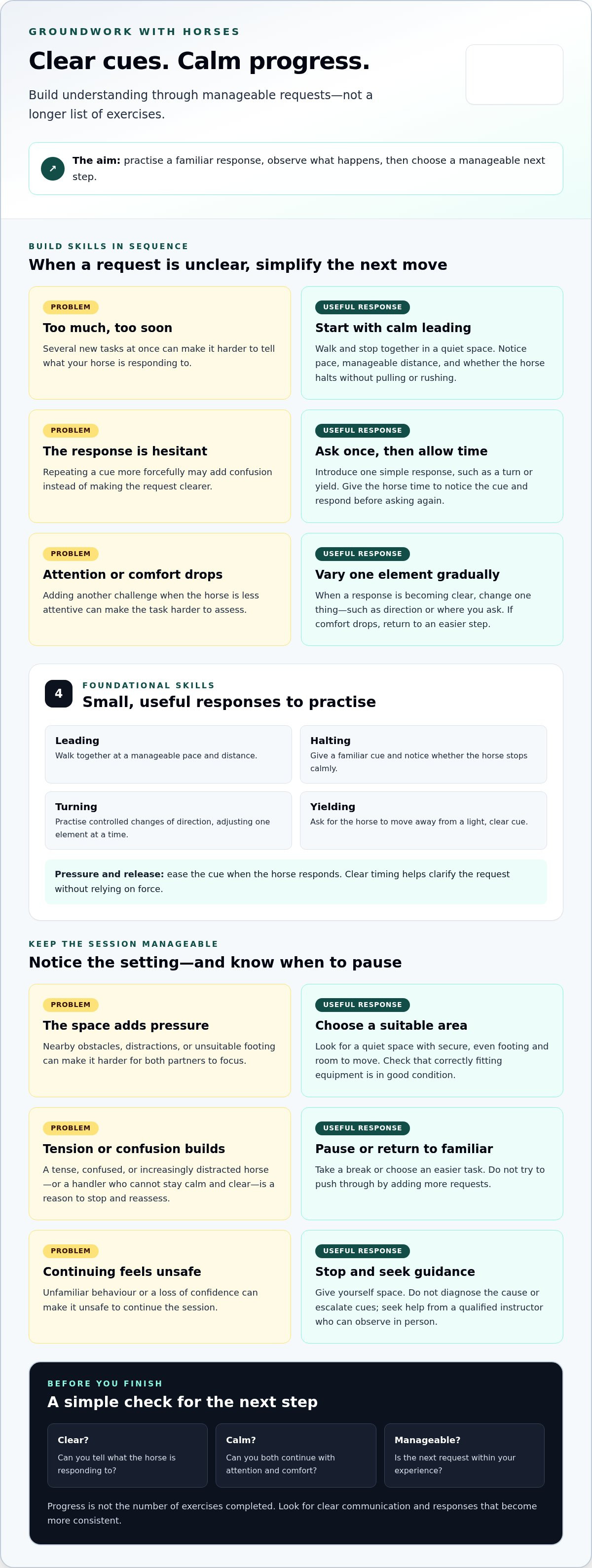
A steady progression helps you see how your horse understands each request instead of layering on several new challenges at once. Keep the aim simple: practise a familiar response, observe what happens, and decide whether to repeat it or move forward. Change one element at a time, such as the direction of a turn, so you can tell what your horse is responding to.
Begin with calm leading. Practise walking together and stopping in a quiet space. Notice whether your horse can keep a manageable distance, follow your pace, and halt without you needing to pull or rush.
Add one simple response. When leading feels manageable, introduce a small change, such as a turn or a request to yield. Give your horse time to notice the cue and respond before asking again.
Vary the task gradually. When a response is becoming clear, change one element, such as direction or where you ask. If your horse’s attention or comfort drops, return to an easier step rather than adding another challenge.
Short, clear, consistent requests make groundwork easier for a horse to understand and easier for a handler to assess. Look for steady attention and a response that becomes more consistent, rather than demanding a perfect result immediately. If the response is unclear, pause and simplify instead of repeating the request more intensely. USRider’s groundwork basics also emphasizes building communication and trust through foundational practice.
Which Foundational Groundwork Skills Should Beginners Practise?
Leading, halting, yielding, and controlled changes of direction are useful skills to practise. Yielding means the horse moves away from a light, clear cue. In pressure-and-release, the handler eases the cue when the horse responds, helping clarify the timing without relying on force. Keep each request small enough that you can tell whether the horse understood it. For another perspective on progressive learning, see Ground Work Horse Training Classes: A Guide to Building Foundation and Trust.
How to Keep Groundwork Calm, Safe, and Useful
A suitable setting gives both horse and handler room to focus. Choose a quiet area with secure, even footing and enough space to move without nearby obstacles or avoidable distractions. Use equipment that fits correctly, and check that it is in good condition before starting. Keep the task within your experience. A new exercise or a setting that feels difficult to manage can add pressure before either partner is ready.
Pay attention to changes in your horse’s focus and comfort. If your horse seems tense, confused, or increasingly distracted, or you find it hard to stay calm and clear, pause rather than trying to push through. A break or a familiar, easier task may be more useful than adding more requests. Handle the lead rope in a way that allows you to let go if needed, and do not wrap it around your hand.
Safe progress in groundwork with horses depends on clear communication, careful observation, and guidance suited to the horse and handler. No exercise can remove every risk, so use your judgment and treat uncertainty as a reason to slow down.
When to Pause and Get More Guidance
Stop the session if your horse’s responses or your own confidence make continuing feel unsafe. Don’t try to diagnose the cause or correct an unfamiliar behavior by escalating your cues. Give yourself space and seek help from a qualified instructor who can observe the situation and guide you in person. For focused handling principles, Safe Horse Handling: A Guide to Foundational Horsemanship is a related resource to explore.
Let Patient Practice Shape Your Next Step
As you continue groundwork with horses, let each session inform what comes next. Progress isn’t measured by how many exercises you complete, but by whether you and your horse can keep learning with clarity and confidence. When you’re unsure how to adapt an exercise, reflect on what you observed and choose a manageable next step.
A brief note after each session can help you recognize patterns: record what felt clear, what seemed challenging, and what you want to revisit. Use those observations to shape your next practice, keeping expectations patient and the steps achievable. To develop these foundational skills with instruction, explore Texas Equine Education & Horsemanship™’s horsemanship lessons, which take an education-first, ground-up approach.
Frequently Asked Questions
Is groundwork only useful before riding?
No. Groundwork can support everyday handling as well as preparation for riding. For example, a horse that practises standing calmly may find routine grooming or waiting at a gate more familiar. The skills can also be revisited when surroundings or expectations change. The purpose is not limited to getting a horse ready to carry a rider.
Can experienced horses benefit from groundwork?
Yes. An experienced horse can revisit familiar skills or learn to respond to a new handler or setting. For instance, practising a known cue in a different arena can help reveal whether the horse understands the request beyond one familiar context. Keep the task appropriate to the horse, and don’t assume past training means every situation will feel easy.
How often should I practise groundwork with my horse?
There’s no single schedule that suits every horse and handler. Consider your available time, your horse’s energy and attention, and whether you can practise safely without rushing. A brief, focused session may be more useful than continuing after concentration fades. Keep notes on what felt clear and what needs support, then use them to guide your next session.
What equipment do I need for groundwork with a horse?
For basic handling, use a correctly fitted halter and a lead rope that you can manage safely. Check the equipment before starting for damage, worn areas, or insecure fittings. Wear sturdy footwear suitable for the surface, and avoid loose items that could catch. Additional equipment depends on the exercise; don’t add unfamiliar gear without appropriate instruction.


Comments