


Essential Horseback Riding Safety Guide for Beginners

What if the most important horseback riding safety decision happens before you reach the saddle? A well-fitting helmet matters, but safer rides also depend on preparation, clear communication, and recognizing when your horse’s behavior or the conditions call for a pause.
If you’re new to riding, you may wonder what to check before mounting or how to respond if your horse reacts unexpectedly. You don’t need to know everything at once. A few consistent habits can help you feel prepared and make thoughtful choices in the saddle.
This guide covers practical pre-ride checks, protective gear, and signs that it may be time to slow down or stop. You’ll also learn how to set limits, communicate concerns, and build confidence as your riding skills grow.
Table of Contents
Horseback Riding Safety: What Riders Can Control, and What They Cannot
Horseback riding safety is a set of habits that can reduce avoidable risks, not a guarantee that a fall or unexpected reaction won’t happen. Horses may respond to their surroundings in ways a rider can’t predict, and no rider can control every factor. You can prepare thoughtfully, stay aware, follow appropriate instruction, and use equipment designed for riding.
These precautions work together. A properly fitted helmet is one layer of protection, but it doesn’t replace supervision, communication, or decisions that match your ability. The Equestrian helmet reference explains helmet design and standards, which can help riders understand the role of this protective equipment.
No single precaution makes riding completely risk-free. Safer riding comes from combining preparation, awareness, guidance, and suitable equipment.
Can horseback riding be completely safe?
No. Any activity around horses carries some possibility of an unexpected movement or incident, though that doesn’t mean an injury will occur. Thoughtful habits can lower avoidable risks without removing all uncertainty. As a beginner, focus on what you can do: listen to your instructor, ask when something is unclear, and say if you don’t feel ready. Preparation and sensible decisions before and during a ride are the foundation of safer riding.
A Practical Horseback Riding Safety Checklist Before and During a Ride
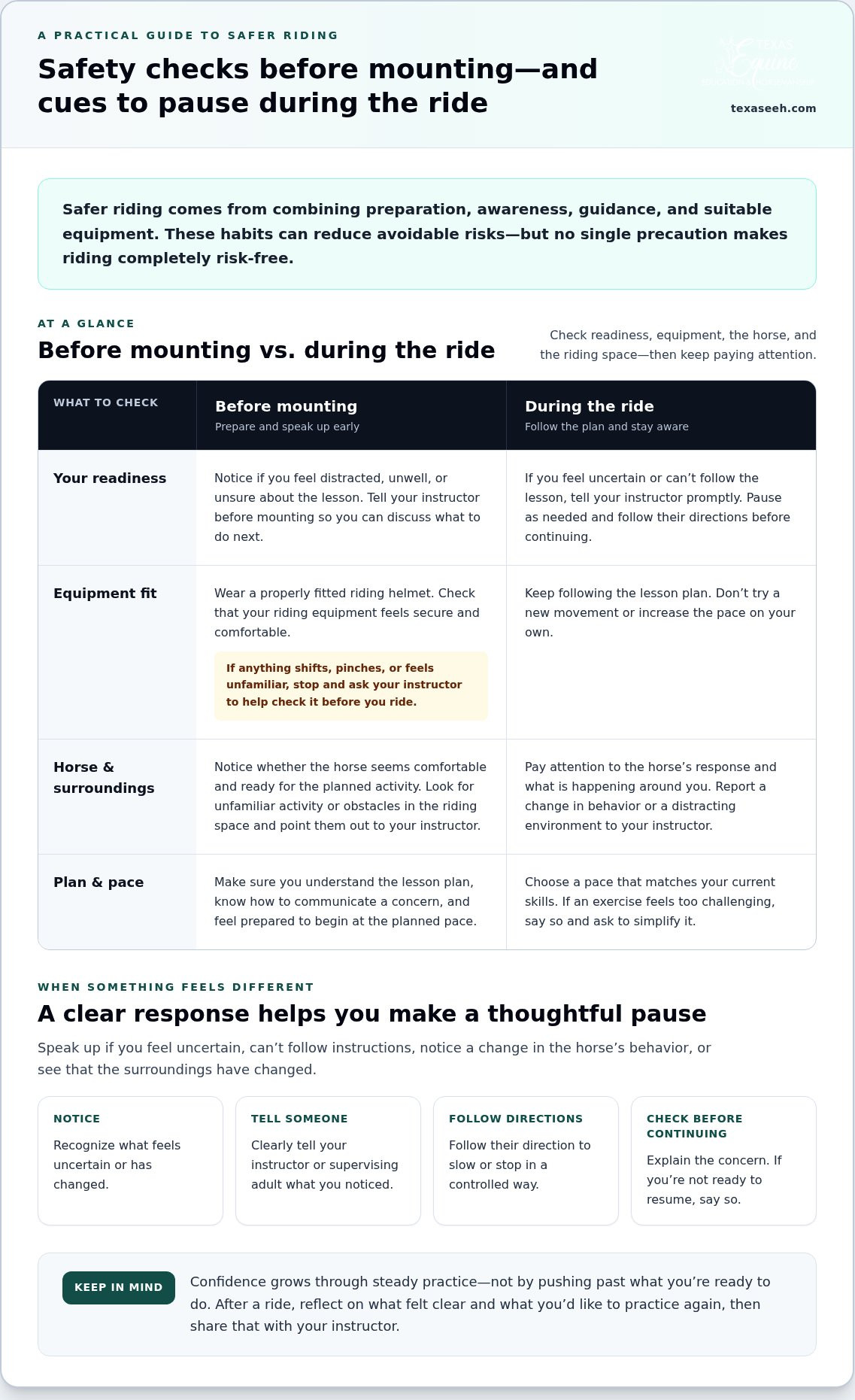
A consistent check can help you notice concerns before they distract you in the saddle. Assess your readiness, equipment, horse, and riding space. Before mounting, check that you feel ready, your gear fits securely, and the horse and surroundings suit the planned ride.
What should riders check before mounting?
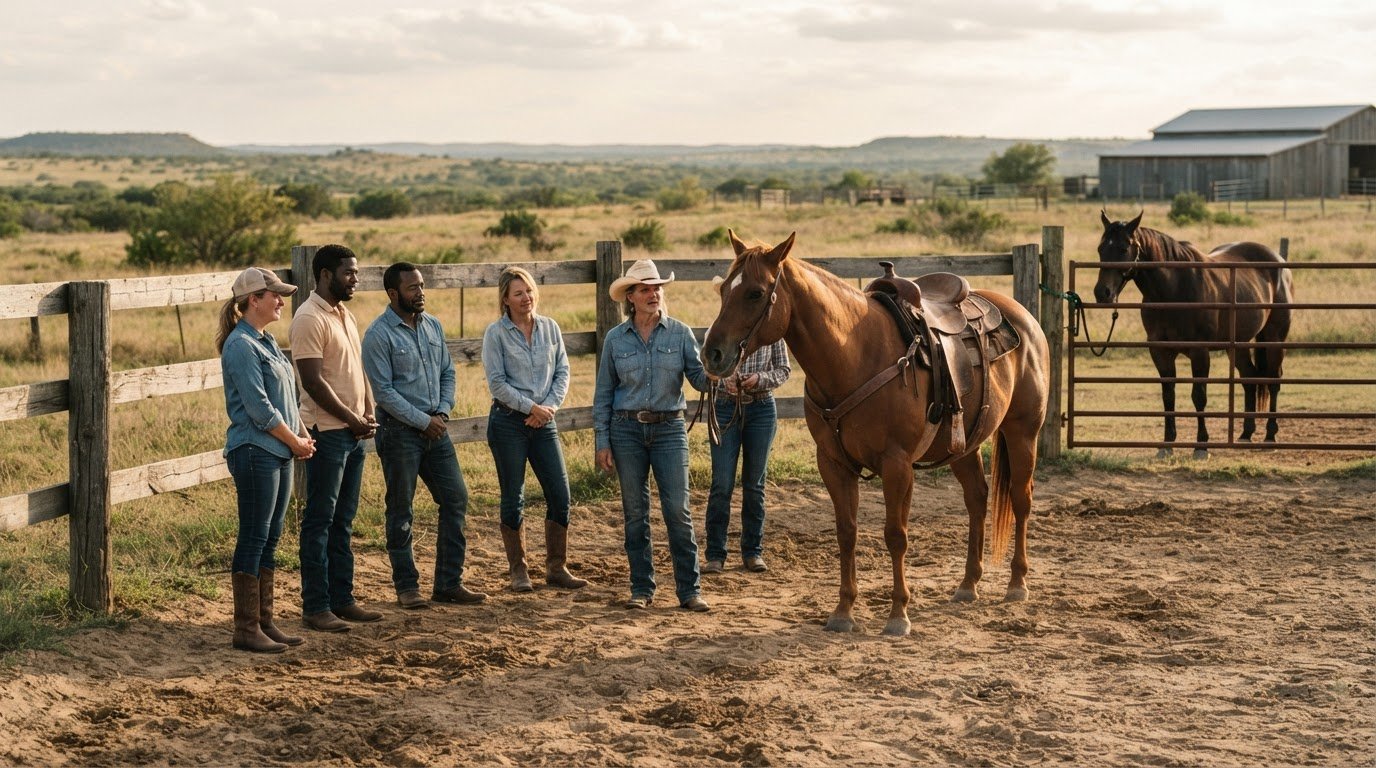
Work through these points with your instructor, especially while you’re learning. The University of California Agriculture and Natural Resources’ Safe Horseback Riding Practices also offers guidance on preparation, attire, and riding habits.
Your readiness: Notice if you feel distracted, unwell, or unsure about the lesson. Tell your instructor before mounting so you can discuss what to do next.
Equipment fit: Wear a properly fitted riding helmet and check that your riding equipment feels secure and comfortable. If anything shifts, pinches, or feels unfamiliar, stop and ask your instructor to help you check it before you ride.
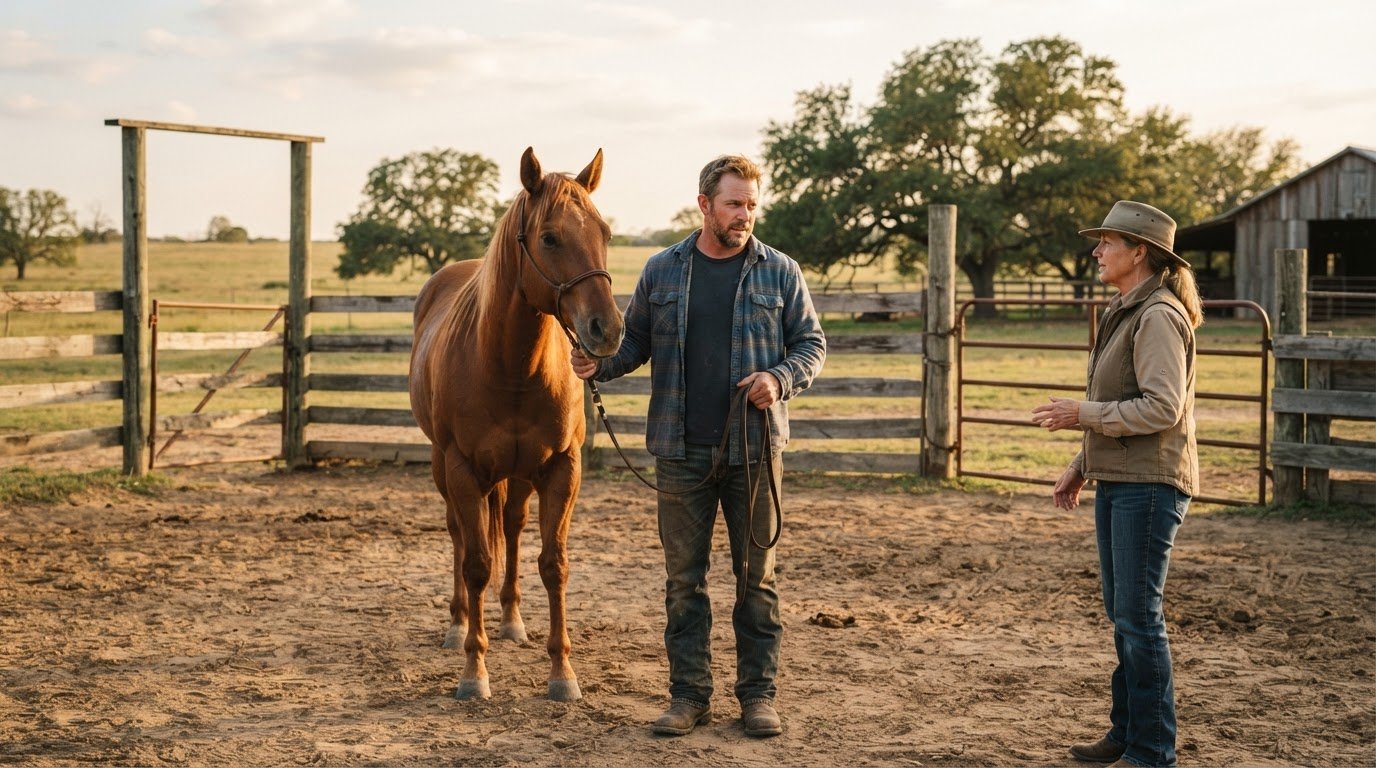
The horse and surroundings: Notice whether the horse seems comfortable and ready for the planned activity. Look for changes in the riding space, such as unfamiliar activity or obstacles, and point them out to your instructor.
Your final check: Make sure you understand the lesson plan, know how to communicate a concern, and feel prepared to begin at the planned pace.
During the ride, follow the lesson plan instead of trying a new movement or increasing the pace on your own. Keep paying attention to the horse’s response and what’s happening around you. If you feel uncertain, notice a change in the horse’s behavior, or find the environment distracting, tell your instructor promptly. Pause as needed and follow their directions before continuing. These habits are central to horseback riding safety.
Build Safer Riding Habits Through Clear Limits and Ongoing Learning
Confidence grows through steady practice, not by pushing past what you’re ready to do. Choose a ride and pace that fit your current skills, and follow instruction as you gain experience. A manageable lesson gives you room to focus, listen, and learn. If an exercise feels too challenging, say so and ask to simplify it.
Treating a pause as a useful decision, rather than a setback, is part of good judgment. Conditions can change, a horse may behave differently than expected, or you may find it hard to follow instructions while riding. Noticing these cues early gives you and your instructor time to respond calmly.
How can riders know when to pause or ask for guidance?
Speak up if you feel uncertain, can’t follow the lesson, notice a change in the horse’s behavior, or see that the surroundings have changed. Tell your instructor or supervising adult clearly. Follow their direction to slow or stop in a controlled way, then explain what you noticed before continuing. If you’re not ready to resume, say so.
After each ride, think about what felt clear and what you’d like to practice again. Share that with your instructor so you can choose an appropriate next step. A lesson doesn’t need to be a test of how much you can do. Honest feedback helps you make more consistent decisions and supports horseback riding safety over time.
Carry Your Confidence Into the Next Ride
Each ride is an opportunity to learn alongside a horse. Give yourself permission to progress at a manageable pace. Confidence doesn’t mean having every answer; it means knowing when to listen, ask questions, or pause. Let preparation and clear communication become part of every ride, not just a checklist before mounting.
As you gain experience, notice which habits help you feel prepared and focused. Practicing those habits consistently can make lessons feel more familiar while helping you recognize when you need guidance.
Texas Equine Education & Horsemanship™ offers foundational horsemanship lessons that build learning from the ground up. Explore its lessons to continue developing the skills and confidence behind safer riding.
Frequently Asked Questions
Is horseback riding safe for beginners?
Beginners can ride with appropriate instruction and a lesson suited to their experience, though no ride is entirely risk-free. A first lesson may begin with basic instructions and simple exercises before moving on to more challenging activities. Tell the instructor if you’re nervous or need a slower pace. Learning in manageable steps helps you build skills without feeling pressured to advance too quickly.
What should I wear for horseback riding safety?
Wear a properly fitted riding helmet, long pants that allow comfortable movement, and riding boots with a defined heel to help keep your foot from slipping through the stirrup. Avoid open-toed shoes, loose scarves, and dangling jewelry that could catch on equipment. Tie back long hair so it won’t obstruct your vision. Follow your instructor’s guidance on attire for the lesson and riding environment.
Can I ride a horse alone as a beginner?
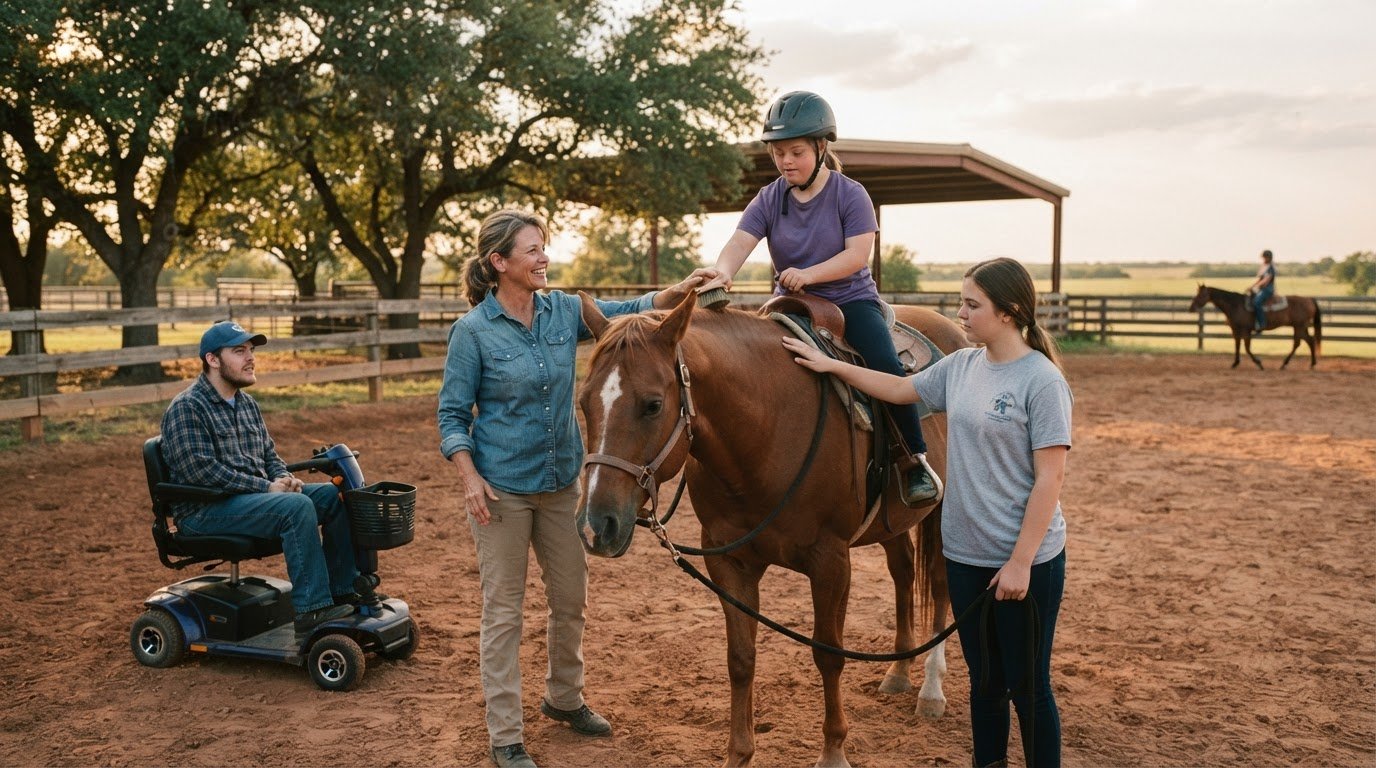
Beginners should learn under supervision rather than riding alone. An instructor can explain the horse’s responses, guide you through basic skills, and help if you become unsure. Riding alone also means there may be no one nearby to assist if a problem occurs. Build experience in lessons and follow your instructor’s guidance about activities suited to your current ability.
What should I do if I feel unsafe during a ride?
Tell your instructor or supervising adult immediately, using a clear phrase such as, “I’m not comfortable. Can we stop?” Follow their directions instead of making a sudden move or trying to dismount without guidance. Once you’re stopped, explain what feels wrong, whether it’s discomfort, fear, or something happening around you. You can ask to continue at an easier pace or end the ride.


Comments