


Essential Horse Hydration: Tips for Optimal Equine Health

A horse’s water bucket can tell you more than you might expect. A change in water level is easy to miss when routines shift, but horse hydration depends on more than how much water is offered. Weather, workload, feed, and your horse’s individual habits all play a part.
It’s understandable to wonder what counts as normal, especially when advice about water and electrolytes can seem conflicting. Rather than relying on one fixed daily amount, look for patterns in your horse’s drinking and note what has changed in its day. Regular observations can help you spot a change early and give you useful details to share with a veterinarian.
This guide explains what influences a horse’s water needs, how to make drinking habits easier to monitor, and which changes call for prompt veterinary guidance. You’ll find a practical routine for learning what’s typical for your horse and responding thoughtfully when something shifts.
Table of Contents
Horse Hydration: Why Water Needs Vary Between Horses
Hydration is the balance of water in the body. Water supports digestion, circulation, temperature control, and the movement of nutrients and waste. Drinking enough helps maintain these everyday functions, but a horse’s needs shift with its size and circumstances. The overview of equine water requirements provides further background on water’s role in a horse’s diet.
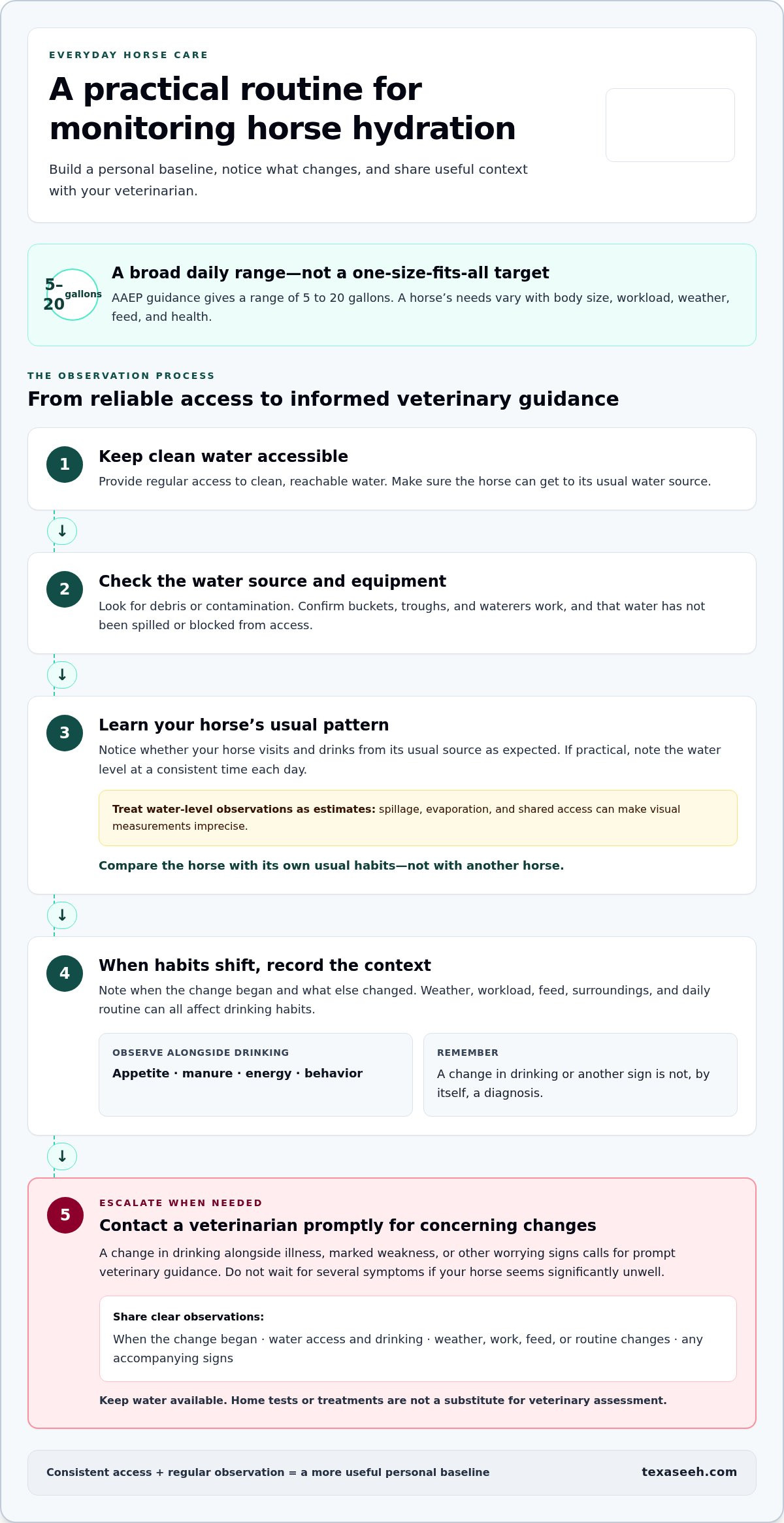
AAEP guidance gives a broad daily range of 5 to 20 gallons, reflecting differences in body size, workload, weather, feed, and health. No single daily water amount suits every horse. A larger horse may need more than a smaller one, while exercise and warm conditions can increase fluid loss through sweat. A horse eating dry feed may get less water from its diet than one eating water-rich forage, and salt intake can influence thirst. Individual habits matter, too.
What influences how much water a horse drinks?
Consider the whole picture when you notice a change. Warmer weather, harder work, or a switch from pasture to hay may affect how much a horse drinks. Illness, a new environment, or a change in daily routine may also alter drinking habits. None of these changes is a diagnosis on its own, but noting when the change began and what else changed gives useful context for care.
Feed and water are closely connected: forage type and moisture can affect how much water a horse gets from its diet. For a broader look at how feeding choices fit into daily care, explore this equine nutrition guide. Observing your horse’s usual habits alongside changes in weather, work, and feed is a practical foundation for attentive horse hydration.
Build a Horse Hydration Routine You Can Observe and Maintain
A consistent routine makes changes easier to catch. Provide regular access to clean, reachable water. Check buckets, troughs, and waterers for debris or contamination, and make sure the equipment works and the water hasn’t been spilled or blocked from access. When feed, workload, or surroundings change, pay closer attention to drinking habits.
Observe how your horse approaches and drinks from its usual water source. If practical, note the water level at a consistent time each day, while treating it as an estimate: spillage, evaporation, and shared access can make visual measurements imprecise. Comparing a horse with its own usual habits is more useful than judging it against another horse, because size, routine, and access can differ between animals. Over time, these observations establish a personal baseline for horse hydration.
How can caretakers notice changes in drinking habits?
Notice whether your horse visits the water source as usual and whether its drinking pattern seems different. Keep track of appetite, manure, energy, and behavior, too. A change in any of these provides context, but none alone proves dehydration. If several changes appear together, record what you’ve noticed and seek veterinary guidance as appropriate.
For answers to common questions about water and drinking, read TheHorse.com’s horse hydration questions. Consistent daily-care knowledge can also help you maintain a routine. Texas Equine Education & Horsemanship™ offers equine care education focused on foundational horse management skills.
Horse Dehydration Signs: When to Contact a Veterinarian
A change in drinking is worth noticing, but it doesn’t confirm dehydration on its own. Drinking less or more than usual may occur alongside changes in appetite, manure, energy, or behavior. These signs can have different causes, so treat them as reasons to pay closer attention, not as a diagnosis. With horse hydration, the pattern and your horse’s overall condition matter.
Contact a veterinarian promptly if a change in drinking occurs with illness, marked weakness, or other worrying signs. Don’t wait for several symptoms to appear if your horse seems significantly unwell. A veterinarian can assess the situation and advise on appropriate next steps.
What should you do if a horse’s drinking changes?
Make a clear record to share with the veterinarian. Note when the change began, what you’ve observed about water access and drinking, and any changes in weather, work, feed, or routine. Include accompanying signs, such as reduced appetite, unusual manure, low energy, or altered behavior. These details provide context without relying on a home test or guessing at the cause.
Keep water available, and don’t use home tests or treatments as a substitute for veterinary assessment. If you’re unsure whether the change is concerning, describe what you’ve noticed to your veterinarian so they can guide the next step.
For broader foundational horse-care learning, Texas Equine Education & Horsemanship™ offers equine care education focused on horse management skills that support attentive everyday care.
Make Attentive Hydration Part of Everyday Care
Attentive horse hydration starts with consistent access to clean water and an understanding of what’s normal for your horse. Needs vary with activity, feed, environment, and health, so a familiar routine and regular observation are more useful than relying on a single standard amount.
Notice changes in drinking alongside appetite, manure, energy, or behavior, but remember that these signs don’t confirm dehydration. If a change comes with illness, marked weakness, or other worrying signs, contact a veterinarian promptly and share what you’ve observed. Simple notes about timing and routine can help provide useful context.
Care grows through steady learning. Texas Equine Education & Horsemanship™ offers foundational equine care classes focused on horse management skills. Explore equine care education to build your knowledge and feel more prepared to support your horse’s everyday well-being.
Frequently Asked Questions
How much water does a horse need each day?
A horse may need about 5 to 20 gallons of water daily, according to guidance from the American Association of Equine Practitioners (AAEP). The amount varies with body size, activity, weather, feed, and health, so this range isn’t a target for every horse. Keep fresh water available and learn your horse’s usual drinking pattern so you can notice meaningful changes.
What are signs a horse may be dehydrated?
Possible signs include reduced drinking, unusual tiredness or weakness, changes in appetite or manure, and tacky or dry-looking gums. These signs can have other causes and don’t confirm dehydration on their own. If a change in drinking comes with illness, marked weakness, or other worrying symptoms, contact a veterinarian promptly and describe what you’ve observed.
Can a horse drink too much water?
Drinking more than usual can be a meaningful change, but it doesn’t identify a cause by itself. Weather, workload, feed, and other circumstances can affect intake. Avoid limiting access to water to manage increased drinking. Note when the change began and any accompanying signs, then seek veterinary guidance if it persists or occurs alongside other concerning changes.
Do horses need electrolytes to stay hydrated?
Not every horse needs electrolyte supplements as part of everyday horse hydration. Need can depend on factors such as sweating, workload, and health, and an unsuitable supplement plan may not address the reason for a change. Keep fresh water available, and consult your veterinarian before adding electrolytes, especially if your horse is ill, working hard, or drinking differently than usual.


Comments