


Essential Horse Show Safety Checklist for Riders

What if the safest choice at a horse show is the routine you follow before the first class begins? Busy showgrounds, unfamiliar horses, and a tight schedule can make small checks easy to miss. A steady approach to horse show safety helps you look after both your horse and yourself, even when the day feels unpredictable.
Show-day preparation doesn’t need to be complicated. This guide covers what to check before you leave home, how to move thoughtfully around horses and people on arrival, and what to watch for after competition. It also explains when fatigue or crowding calls for a pause, and how to alert the right person if something feels unsafe. A consistent routine helps you make clear decisions throughout the day.
Table of Contents
Horse Show Safety Starts at Home: Prepare Your Horse, Tack, and Rider
A calm pre-departure routine gives you time to spot a loose fastening, damaged strap, or missing item before loading. Start by checking your horse’s general condition and the gear you’ll use for loading and riding. Examine stitching, leather, buckles, snaps, and attachment points for wear, cracks, or damage. Check that tack fits your horse and that each fastening closes securely. A quick tug is not enough to determine whether worn or questionable equipment is safe to use.
Preparation can prevent some avoidable surprises, but it cannot remove every risk. Set aside tack that needs repair or whose safety is uncertain. Have a qualified professional assess it rather than attempting a rushed fix at the show.
What should riders check before loading for a horse show?
Use a short checklist and work through it without rushing:
Check the halter and lead rope, including snaps and connections, for secure attachment and signs of weakness.
Inspect the bridle, reins, and girth for fit, damage, wear, and reliable fastenings.
Pack a correctly fitted riding helmet and protective equipment appropriate to your discipline. Review the event’s current instructions for equipment requirements. For background on helmet safety standards, consult the reference, then follow the rules that apply to your competition.
Read the event information for current health or documentation requirements. Consult your horse’s veterinarian about health planning for travel and competition.
Keeping these checks together in one routine supports horse show safety and leaves more attention for careful decisions once you arrive.
Horse Show Safety on the Grounds: Navigate Crowds, Stalls, and Warm-Up Areas
Arrival is a good time to slow down before joining the activity. Pause with your horse in a suitable place and observe nearby horses, people, and vehicles. Notice how traffic is moving and where the designated routes lead. Give your horse a moment to take in the surroundings, then continue deliberately toward the stall or warm-up area. A calm arrival routine supports horse show safety in an unfamiliar environment.
General precautions help you make careful choices, while venue instructions explain how to move safely within that particular event. Leave appropriate space around other horses, keep your attention on the horse you’re leading, and avoid blocking aisles or shared areas. Follow posted directions and event staff guidance, especially where paths, warm-up areas, or barn access are managed.
How can riders stay alert around unfamiliar horses and busy show areas?
Focus on the horse you’re handling. Sudden turns, abrupt stops, or distracted leading can make close quarters harder to manage. Leave room between horses, and don’t approach an unfamiliar horse unless its handler indicates that it’s appropriate. In aisles and warm-up areas, use designated paths and stay aware of the people and horses around you.
If you or your horse becomes unsettled, pause in a safe place rather than pushing through a crowded area. Ask event staff for directions if you’re unsure where to go or a space feels unsafe. This gives you time to regain composure and respond to the situation without adding to the rush.
Horse Show Safety During and After Competition: Know When to Pause and Get Help
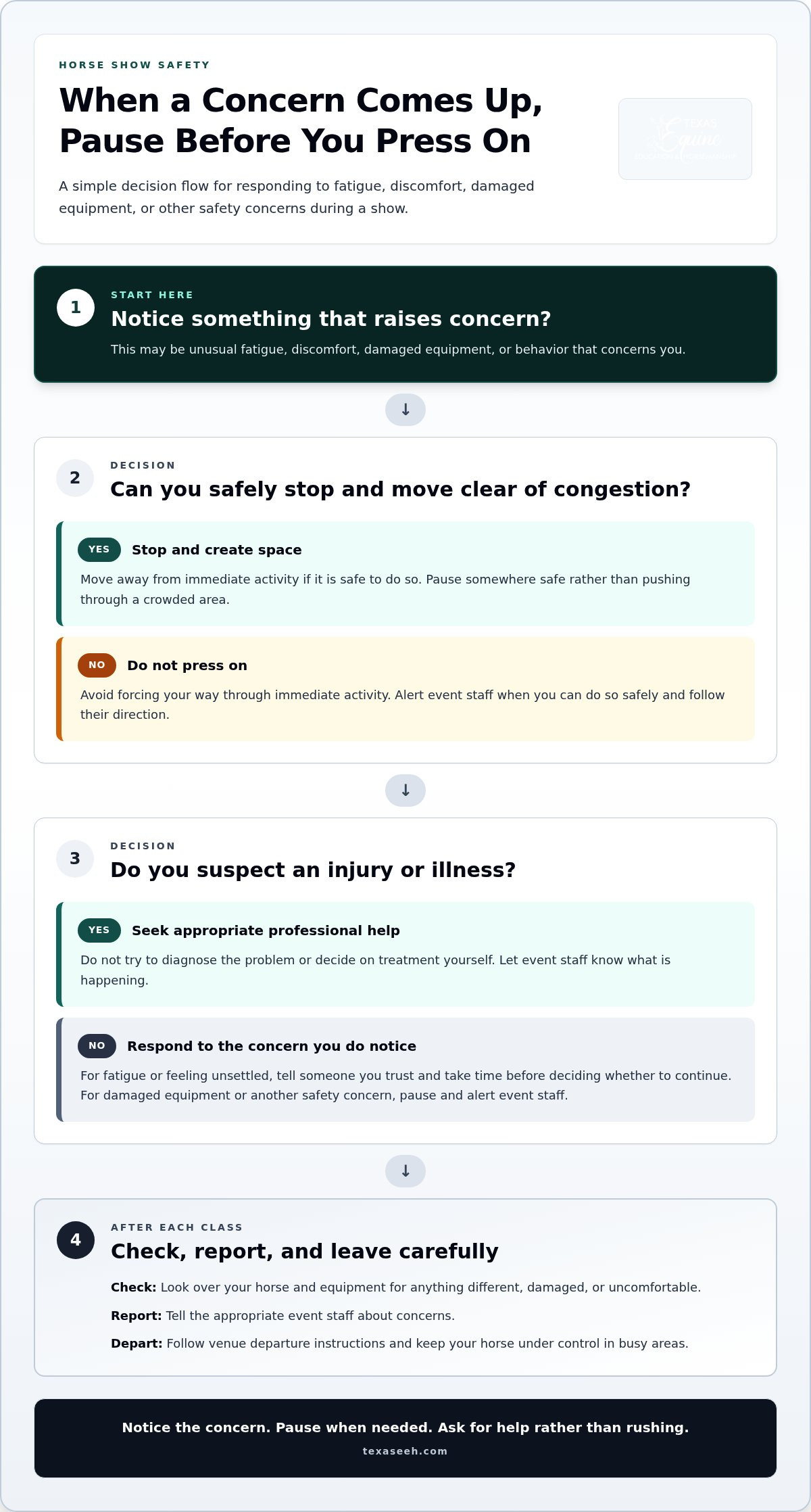
Competition can bring changes in pace, noise, and demands on both horse and rider. Don’t press on through unusual fatigue, discomfort, damaged equipment, or behavior that raises concern. If it’s safe to do so, stop and move clear of congestion. Let event staff know what’s happening so they can direct the next steps. Taking a pause gives you room to assess the situation and get appropriate help.
What should you do if a safety concern comes up during a show?
When you can do so safely, move away from immediate activity and alert event staff. If you suspect an injury or illness, seek appropriate professional help rather than trying to diagnose the problem or decide on treatment yourself. If you’re tired or unsettled, tell someone you trust and take time before deciding whether to continue.
After each class, take a moment to check your horse and equipment for anything that seems different, damaged, or uncomfortable. Report concerns to the appropriate event staff. Before leaving, follow the venue’s departure instructions and keep your horse under control as you move through busy areas. A brief check can help you notice a problem before heading home.
These steady choices support horse show safety: notice concerns, pause when needed, and ask for help rather than rushing. Foundational horsemanship helps riders build awareness and make thoughtful decisions as conditions change. Keep that calm, observant approach with you from the first class through departure.
Build a Steady Routine for Your Next Show
Horse show safety depends on thoughtful routines before, during, and after competition. Prepare your horse, tack, and rider gear in advance, then take time on arrival to read the surroundings and move carefully. During the show, pay attention to fatigue and other concerns. Pause when needed, create space, and alert event staff rather than pressing on.
Foundational horsemanship and equine-care education can support calm, considered decisions in changing show environments. Texas Equine Education & Horsemanship™ hosts the Horse & Rider Showcase, with online horse shows in English and Western disciplines. Explore the Horse & Rider Showcase to engage with horse-show competition online.
Frequently Asked Questions
Is horse show safety only about wearing a riding helmet?
No. A properly fitted riding helmet is an important part of horse show safety, but preparation and choices throughout the day matter too. Check your horse and tack before departure, stay alert in crowded areas, and follow venue directions. If you notice fatigue, damaged equipment, or a concern about your horse’s condition, pause and seek help rather than continuing automatically.
What should I check before taking my horse to a show?
Inspect your horse’s halter, lead rope, bridle, reins, and girth for fit, wear, secure connections, and damage. Pack a correctly fitted helmet and protective equipment appropriate to your discipline, then review the event’s current requirements. Read the event instructions for health or travel documentation, and consult your horse’s veterinarian about health planning. Have questionable tack assessed by a qualified professional.
How can I keep my horse calm and safe in a crowded showground?
Give your horse time to take in the surroundings before moving into busy areas. While leading, keep your attention on the horse, move deliberately, and leave appropriate space around unfamiliar horses. Use designated paths and follow event staff directions in barns, aisles, and warm-up areas. If the environment feels overwhelming, pause somewhere safe and seek assistance rather than pressing through congestion.
What should I do if my horse or I feel unsafe during a horse show?
Stop the activity when it’s safe, move clear of immediate congestion, and alert event staff. Don’t continue through fatigue, equipment concerns, or behavior that worries you. If you suspect an injury or illness, seek appropriate professional help instead of trying to diagnose or treat the problem yourself. Take time to settle before deciding whether to resume, and follow staff guidance.


Comments