


Essential Horse Dental Care: A Guide to Equine Health

Natural tooth wear doesn't protect domesticated horses from dental problems. Horse dental care includes a yearly oral exam to monitor wear and spot issues such as sharp points or uneven teeth, which can cause discomfort and interfere with chewing. Wild horses also experience tooth wear, but domesticated horses benefit from regular checks so problems can be recognized and addressed.
It’s understandable to wonder why a horse needs dental attention when its teeth are built for grazing. Teeth can wear unevenly, and signs of discomfort may include trouble chewing, weight loss, or changes in behavior. This guide explains how dental care supports a horse’s comfort, how often to arrange an examination, and who is qualified to provide it.
Table of Contents
Why do domesticated horses need dental care when the wild horses live without it?
Wild horses chew rough forage, but natural wear can still become uneven. Regular horse dental care includes oral examinations to identify developing problems before they affect eating or riding.
Uneven Tooth Wear
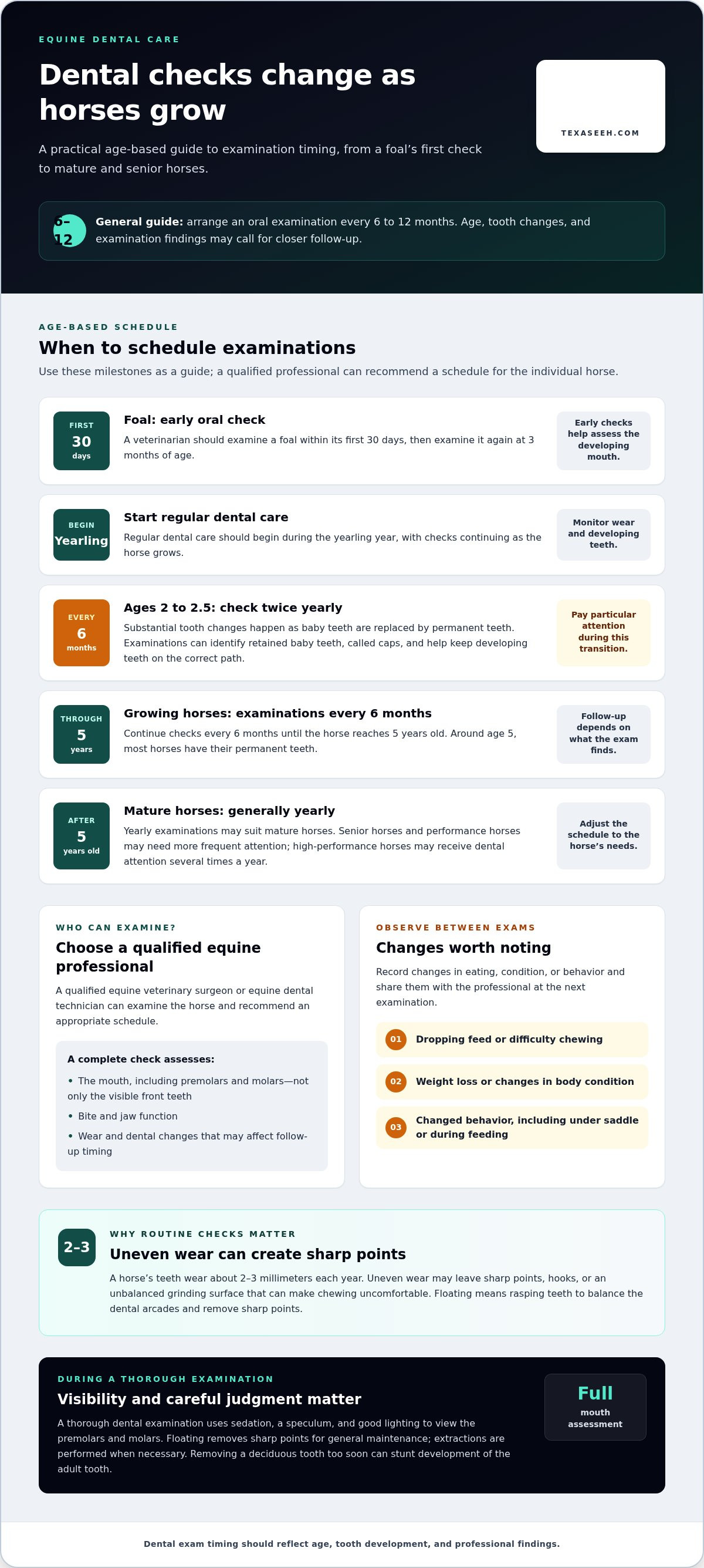
A horse’s upper jaw is wider than its lower jaw, so the upper molars extend beyond the lower ones. Teeth wear about 2-3 millimeters each year, but uneven wear can leave sharp points, hooks, or an unbalanced grinding surface. These irregularities may cause sores on the tongue or cheeks and make chewing uncomfortable. Floating means rasping teeth to balance the dental arcades and remove sharp points.
Signs of Dental Problems
Watch for dropped feed, difficulty chewing, weight loss, or changed behavior under saddle. Hooks can form at the front edge of the first molar or rear edge of the last. Mouth discomfort can also affect eating when a horse isn’t bridled. In the United States, the cost of horse dental care depends on the horse’s needs and the work involved.
After floating, follow the treating professional’s feeding instructions. Ask for guidance specific to the horse’s mouth and procedure.
Preventing Common Dental Problems
Arrange a yearly oral examination to monitor wear and spot developing issues. Prevention also means noticing changes early: observe how the horse chews, whether it drops feed, and whether its weight or behavior under saddle shifts. Share those observations at the next examination. Regular horse dental care helps identify uneven wear before sharp points cause further discomfort.
Sharp points and uneven wear can contribute to mouth ulcers, choke, gastric ulcers, back pain, or erratic head carriage when a bit is in the horse’s mouth.
Check frequency and professional qualifications
Dental checkups should reflect a horse’s age, tooth changes, and examination findings. A qualified equine professional can assess the mouth and recommend an appropriate schedule.
Scheduling Dental Checks
Arrange oral examinations every 6 months until a horse reaches 5 years old. After age 5, mature horses generally need an examination yearly. A general recommendation is a check every 6 to 12 months, with younger, senior, and performance horses sometimes needing more frequent attention.
Choose a qualified equine veterinary surgeon or equine dental technician for examinations. A complete check evaluates the mouth, including the premolars and molars, rather than relying only on visible front teeth. The professional also assesses bite and jaw function. Findings such as uneven wear or dental changes help determine whether closer follow-up is needed.
Dental Exams Across Horse Ages
Begin regular dental care during the yearling year, then maintain checks as the horse grows. A veterinarian should examine a foal within its first 30 days and again at 3 months of age. From ages 2 to 5, substantial changes occur as baby teeth are replaced by permanent teeth.
Twice-yearly oral exams are important from ages 2 to 2.5 years to identify retained baby teeth, called caps. These checks can help keep developing teeth on a correct path and support comfortable chewing. By around age 5, most horses have their permanent teeth, so yearly examinations may suit mature horses. Senior horses can need more frequent checks as oral changes affect chewing and nutrition.
Importance of equine dental care
Horses may chew for up to 19 hours a day, making comfortable chewing central to daily health. Dental issues can interfere with chewing efficiency, digestion, and nutrition. When a horse struggles to grind forage, it may not use its feed as effectively, affecting condition and performance.
Dental discomfort can affect more than the mouth. It may contribute to poor weight gain, reduced performance, and behavior changes, even when a horse isn’t wearing a bridle. For example, a horse that becomes irritable during feeding may be showing discomfort, not simply a training problem. A full assessment helps connect changes in eating or behavior with possible dental causes.
Routine equine dental care can also support comfort under saddle. Well-maintained teeth may be associated with less irritation and a greater willingness to work. High-performance horses may receive dental attention several times a year to address issues linked with performance and behavior. Consider oral health alongside feeding, condition, and workload rather than treating each change in isolation.
Dental procedures require careful judgment. A thorough examination uses sedation, a speculum, and good lighting to view the premolars and molars. Floating removes sharp points for general maintenance; extractions are performed when necessary. One documented complication is extracting a deciduous tooth too soon, which can stunt development of the adult tooth. Proper assessment matters, especially for young horses whose teeth are still changing.
Regular examinations give owners a clearer picture of how the mouth may affect eating and work. Record changes in feed intake, body condition, or willingness under saddle, then share those examples at the next oral examination.
Texas Equine Education & Horsemanship™: Horse & Rider Showcase
Texas Equine Education & Horsemanship™ offers the Horse & Rider Showcase as a way to stay connected with horses and horsemanship. It isn’t a substitute for an oral examination or dental treatment, but it can be a relevant next step for readers interested in learning more about the horse world.
For practical learning focused on equine care, Texas Equine Education & Horsemanship offers Equine Care Classes. A veterinarian or qualified equine dental professional remains the right resource for concerns about a horse’s teeth, chewing, or oral discomfort. These classes can build broader knowledge alongside appropriate veterinary care.
For information about the Horse & Rider Showcase, contact Texas Equine Education & Horsemanship™ or visit texaseeh.com.
Build a More Informed Care Routine
A thoughtful care routine develops through steady attention, not a single appointment. Keep oral health in view as part of your broader approach to understanding and caring for your horse.
As your knowledge develops, you can make more informed decisions about your horse’s needs and communicate clearly with the professionals involved in its care. That ongoing commitment makes horse dental care a considered part of responsible horsemanship.
Frequently Asked Questions
What Are the Benefits of Regular Horse Dental Exams?
Regular examinations help track changes in a horse’s mouth before they become obvious during feeding or riding. Keep notes about chewing patterns, dropped feed, and changes in body condition to share at an examination. This context helps the professional compare current findings with earlier observations and explain which changes need attention.
What Services Are Included in Horse Dentistry?
Equine dentistry can include a comprehensive oral evaluation, floating, and tooth extractions when necessary. The evaluation identifies what the horse’s mouth needs; it doesn’t mean every horse requires every procedure. For example, a professional may recommend floating to address sharp enamel points, while an extraction is considered when a tooth needs to be removed.
What happens during an equine dental technician appointment?
An appointment may include assessing the horse’s bite and jaw function, then examining its teeth and mouth. A thorough view of the premolars and molars requires sedation, a speculum to hold the mouth open, and good lighting. After the examination, the professional can determine whether maintenance or further treatment is appropriate based on the findings.
Why Is Equine Dental Care Important?
Dental health matters because discomfort in the mouth can affect a horse beyond chewing. For instance, a horse may show poor weight gain or reduced performance even without a bit in its mouth. Observing feeding habits and behavior during work can help owners notice a pattern to discuss at an oral examination.
Why is dental care required and what is needed?
Routine examinations are recommended because horse teeth can wear unevenly as they grind forage, creating irregularities that may affect comfort. A qualified equine veterinary surgeon or equine dental technician can evaluate the mouth and decide whether maintenance is needed. Share relevant changes in eating, weight, or behavior to give the professional useful context.


Comments