


The Essentials of English Riding: A Professional Guide

The saddle is the most visible difference between English and Western riding, but it is not the only one. The styles also differ in how riders use the reins, follow the horse’s movement, and dress for riding.
Both traditions help riders build a relationship with a horse, but each has its own equipment and approach. Understanding the differences can help you decide which style interests you and what to expect from lessons or competition.
This guide compares English riding with Western riding, from the flatter English saddle and typical bridle to riding attire and position. It also explains how the styles developed and how their techniques reflect different purposes, so you can see the distinctions without assuming one is right for every rider.
Table of Contents
English and Western Riding: What’s the Difference?
English and Western riding differ in their disciplines, tack, and goals. When choosing lessons, look for instruction in your intended discipline and clear guidance on position, cues, and horse handling.
English Riding Disciplines
English riding includes dressage, show jumping, eventing, English pleasure, and equitation. Dressage tests choreographed movements and the horse’s obedience, flexibility, and athleticism. Equitation focuses on the rider’s position and effectiveness. Show jumping rewards accurate, fast rounds over fences. Eventing combines dressage, show jumping, and cross-country riding in three phases. Knowing these disciplines helps riders connect their interests with suitable activities.
International and Olympic English Riding
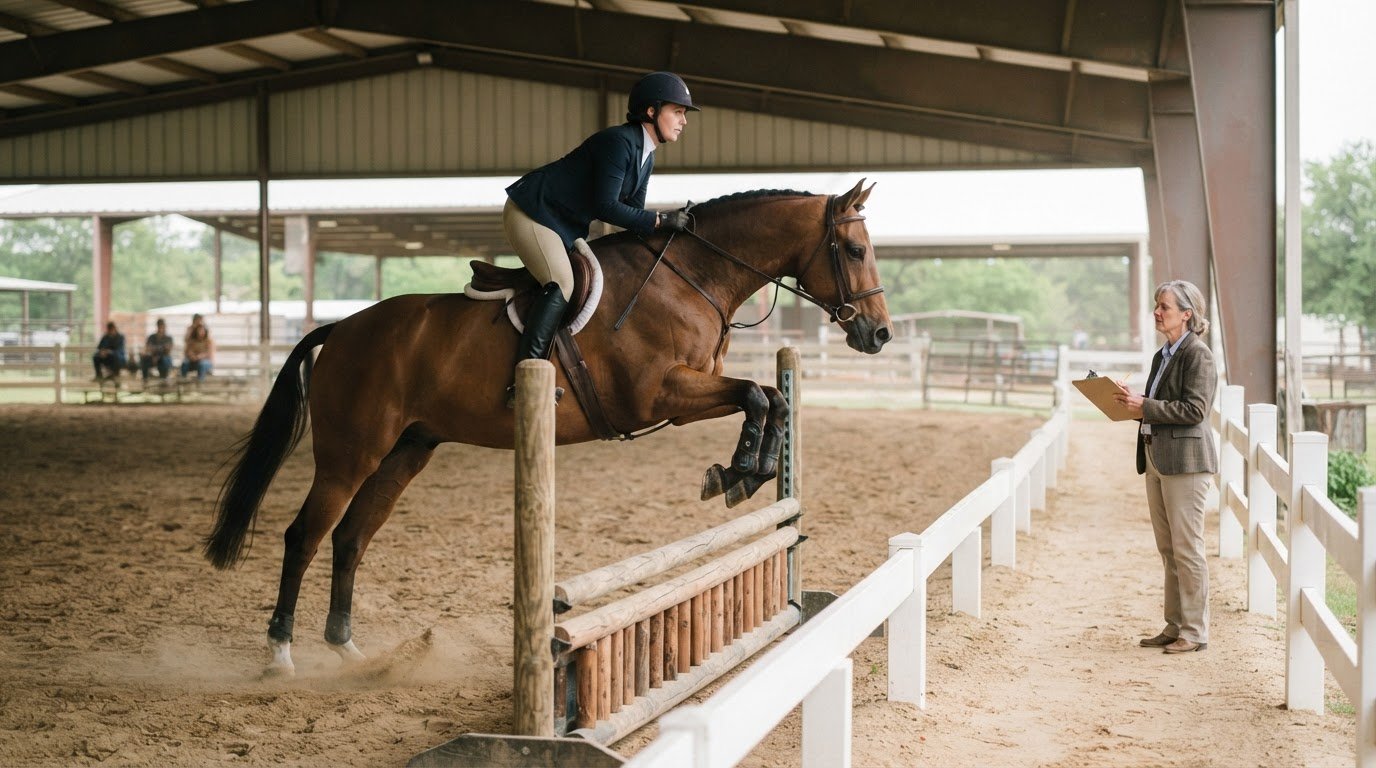
The three English disciplines recognized in the Olympic Games are dressage, show jumping, and eventing. Dressage uses set tests, while show jumping challenges horse and rider to clear fences accurately. Eventing adds cross-country riding over varied terrain. English riding also includes classes beyond the Olympic program, such as English pleasure and equitation.
Western riding developed around cattle work and includes Western dressage, Western pleasure, barrel racing, and rodeo. Barrel racing tests speed around a course, while Western pleasure evaluates a horse’s performance in a class. These examples show how each tradition serves different activities and goals.
English saddles, bridles, and riding attire
An English saddle has a flatter seat than a Western saddle, bringing the rider closer to the horse’s back. This contact helps riders communicate through their seat and legs while maintaining balance during movements such as a jump. In most English disciplines, bridles include a noseband and closed reins buckled together. Show attire often includes a helmet, fitted jacket, light-colored breeches, and tall boots.
Show hunter classes assess a horse’s movement, style, and manners while jumping. In hunter under saddle classes, horses are evaluated on their way of going on the flat. These priorities differ from show jumping, where riders aim to clear fences accurately and avoid refusals. The class determines which qualities matter most.
In North America, hunt seat emphasizes a balanced, forward position, while saddle seat places riders farther back to display a horse’s high steps. Saddle seat classes commonly feature Arabian, Morgan, and Tennessee Walking Horse breeds. No single breed defines all English styles, and individual horses can be versatile across disciplines.
Competition criteria depend on the class: dressage tests assess obedience, flexibility, and athleticism, while equitation judges rider position, form, and effectiveness. Hunter classes emphasize movement and manners over fences. Before competing, check the named class in the show program to identify the relevant rules.
English saddles have a flatter seat than Western saddles and do not have the deep seat, high cantle, or saddle horn associated with Western tack. Their design supports close contact and allows freedom of movement, while the leg position helps riders maintain balance. In a half seat, the rider rises slightly out of the saddle and stays balanced over the horse. Saddle seat is most commonly seen in American competitions and events, while hunt seat uses a balanced, forward position that slightly closes the hip angle.
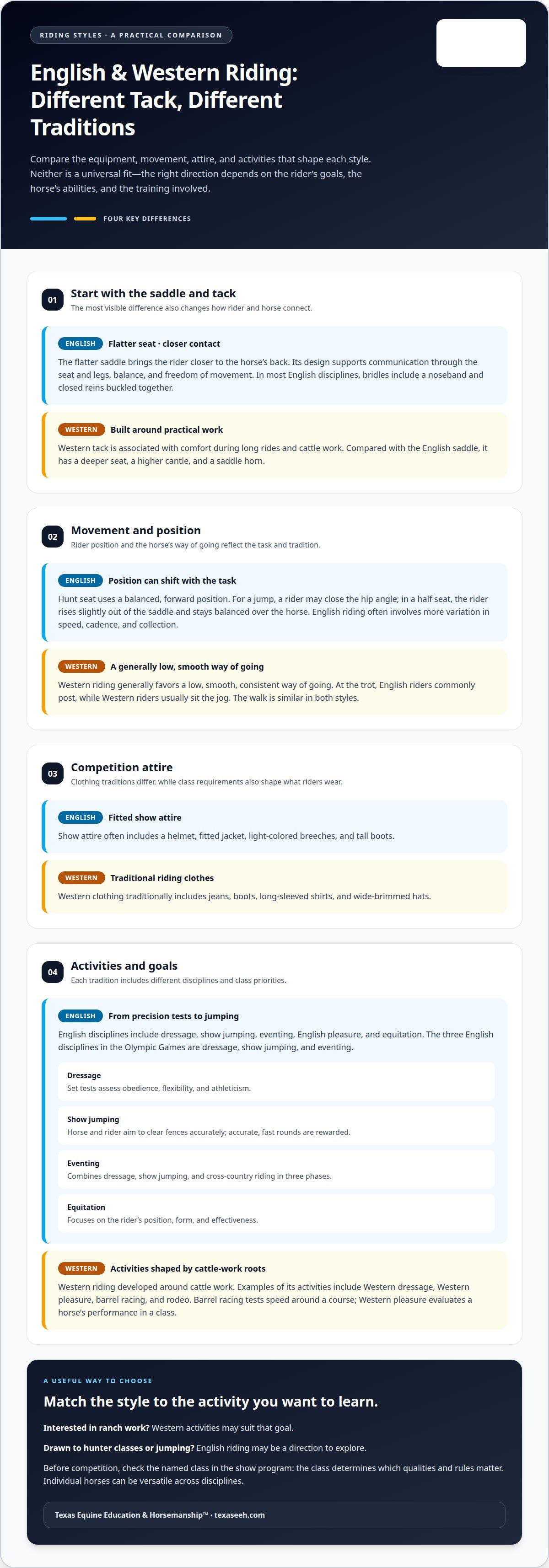
Differences between English and Western riding
English riding and western riding call for different habits from horse and rider. In English riding, the rider’s position changes with the task, such as closing the hip angle for a jump. Western riding is often associated with practical work from horseback. These histories help explain why the two styles can feel different, even at the same gait.
English riding often involves more variation in speed, cadence, and collection. Western riding generally favors a low, smooth, consistent way of going. The walk is similar in both styles, but the trot shows a contrast: English riders commonly post, while Western riders usually sit the jog.
Western clothing traditionally includes jeans, boots, long-sleeved shirts, and wide-brimmed hats. English competition attire often includes breeches, tall boots, a fitted jacket, and a helmet. These choices reflect different traditions, while riding goals and class requirements influence what participants wear.
Neither style has a universal advantage. Western tack is designed for comfort during long rides and cattle work, while English equipment supports close contact and mobility. Riders interested in ranch work may prefer Western activities; those drawn to hunter classes or jumping may choose English riding. Individual horses can also be versatile, so the best fit depends on the rider’s goals, the horse’s abilities, and the training involved.
Learning English Riding
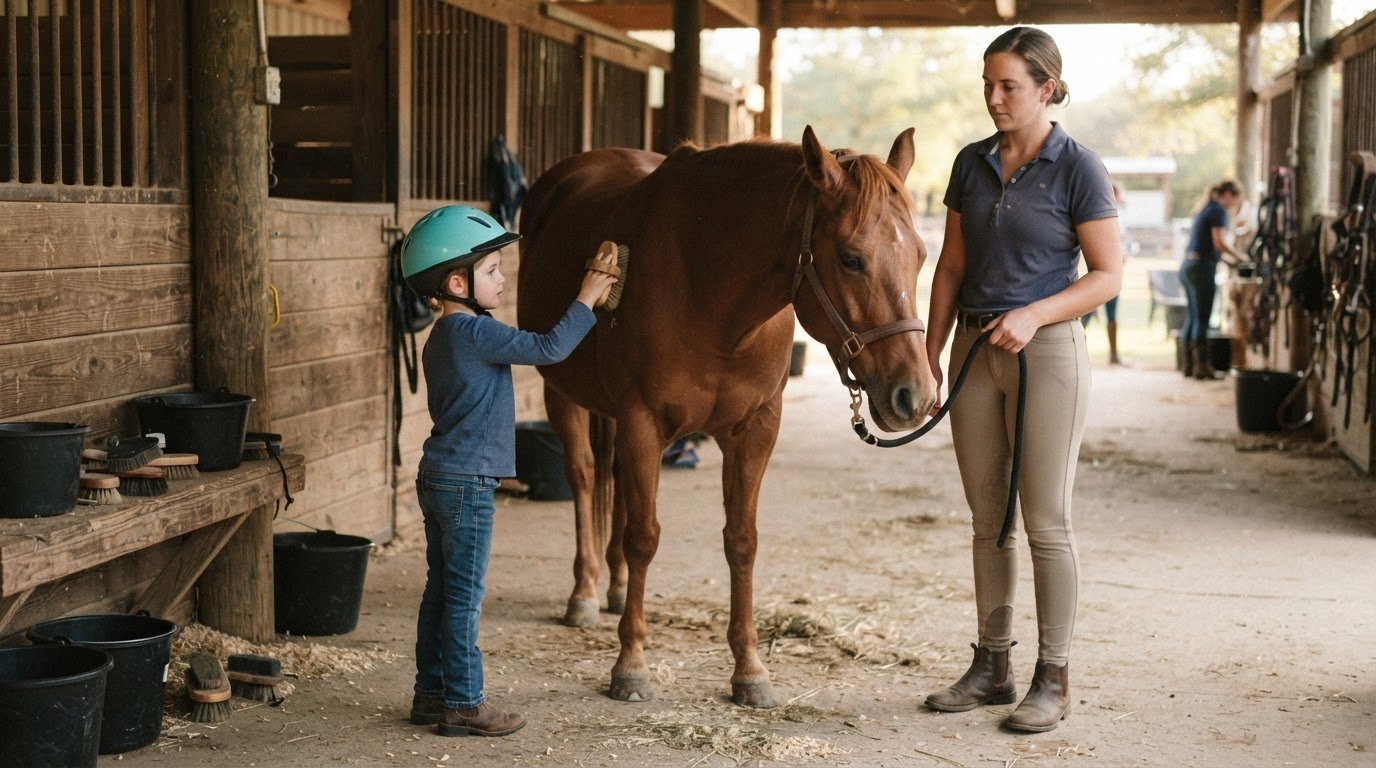
Foundational horsemanship knowledge can help riders learn about horses from the ground up. If you are comparing English and Western styles, learning about communication, balance, and horse behavior can help you make an informed choice. Start by building an understanding of how riders and horses work together, then explore the activities that interest you.
Consider what you hope to learn: basic riding skills, a clearer understanding of horse behavior, or preparation for a particular discipline. Those goals can shape what you focus on as you develop your knowledge. Understanding the purpose of a riding position or rein aid can also clarify how English and Western approaches differ in practice.
New riders can begin by learning basic horsemanship and how to interact with horses. Understanding horse behavior and communication provides useful context for riding, before choosing which activities or discipline to pursue. Riders who are still exploring can use that foundation to develop confidence and identify what they’d like to learn next, at a pace that supports steady progress.
Whether you’re new to horses or ready to strengthen your foundations, learning starts with understanding the horse as well as the riding style. Texas Equine Education & Horsemanship™ offers an Introductory Lesson as a starting point for learning about horses and riding.
Frequently Asked Questions
Can any horse be trained in both English and Western styles?
Some horses can learn both styles, but suitability depends on the individual horse’s temperament, movement, and training. Changing styles may involve learning different cues and expectations, so build skills gradually and pay attention to the horse’s responses. Previous training offers a starting point, but it does not determine what the horse can learn next.
How Much Do English Riding Lessons Cost in 2025?
Lesson costs vary according to factors such as format, duration, and instruction. Private, semi-private, and group sessions may have different rates, so compare lessons with similar formats and content. Equipment needs can also affect a rider’s overall budget. Consider what the lesson covers and whether you need riding attire or equipment.
What Are the Different Types of English Horseback Riding?
English riding disciplines include dressage, show jumping, eventing, English pleasure, and equitation. Riders interested in structured flatwork may explore dressage, while those drawn to jumping can look into show jumping. Eventing combines several phases, and equitation focuses on the rider’s form and effectiveness. Your choice shapes the skills you practice and the classes you may enter.
Which Riding Style Is Best for Beginners?
Neither style is best for every beginner. The right starting point depends on a rider’s interests, comfort, and access to instruction. Some beginners appreciate the feel of Western tack, while others prefer the structured focus of English riding lessons. A clear learning plan helps new riders develop foundational skills before choosing a discipline.
What is English riding?
English riding is a group of disciplines that use English-style tack and riding techniques. Riders coordinate their seat, legs, and reins to guide the horse, adapting their position to the activity. Examples include dressage, show jumping, eventing, English pleasure, and equitation. Each discipline emphasizes different skills, so English riding covers more than one competition style.


Comments