


Master Virtual Horse Show Classes: Compete and Win Online

Virtual horse show classes can test more than a polished arena pattern. They may include rail work, walk-trot patterns, and mounted trail, giving riders options that match their goals and experience.
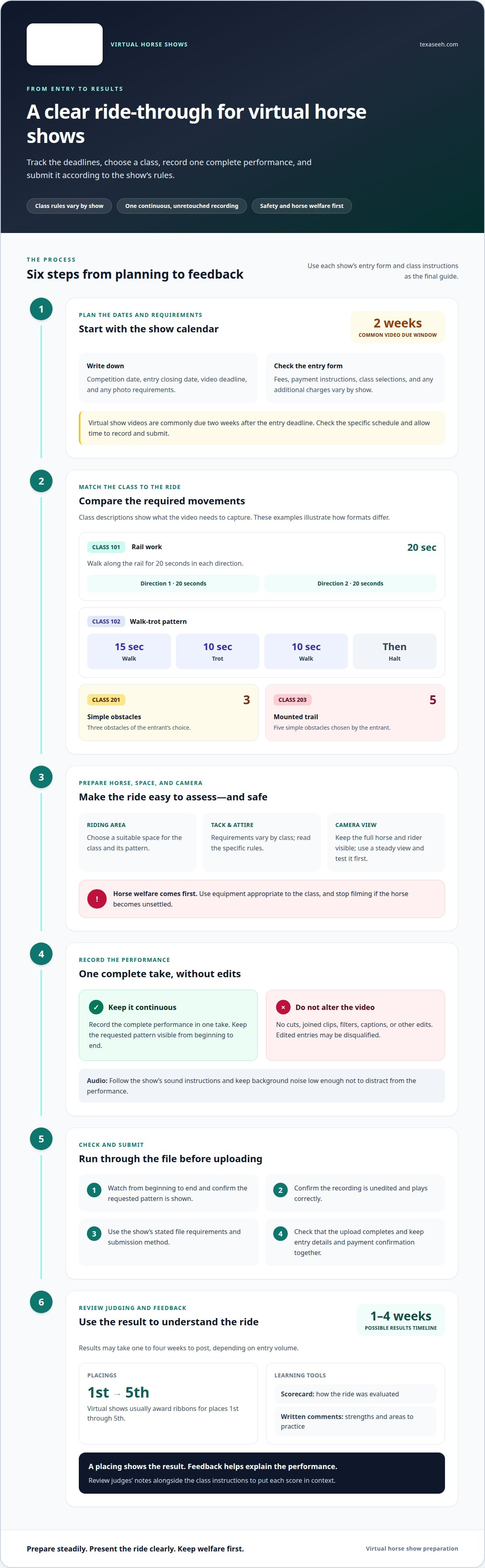
It’s understandable to want clear instructions before choosing a class or recording a ride. The details vary by show: for example, class 101 calls for walking along the rail for 20 seconds in each direction, while class 201 uses 3 simple obstacles of the entrant’s choice. Entries must arrive by the show’s closing date, and video rules determine how to record and submit a ride.
This guide covers disciplines and class formats, tracking entry and video deadlines, and filming and submitting a performance. Knowing the requirements helps you prepare steadily and present your horse and riding clearly.
Table of Contents
Virtual show schedule and entry deadlines
Show calendars list the competition date, entry closing date, and any photo requirements. Record each deadline before choosing a class.
Competition Dates and Entry Deadlines
Entries for Little Heels Horse Show must arrive by the show’s closing date. Note that date first, then check the schedule for class details and submission deadlines. Virtual horse show videos are commonly due two weeks after the entry deadline, so plan recording time separately. If an entry requires a qualifying photo, follow the show’s instructions and choose a clear image that identifies the horse and rider.
Entry Costs and Payment Methods
Entry fees and online show costs depend on the event and its class structure. Review the entry form for the amount due per class, payment instructions, and any additional charges before submitting. Payment methods vary by show, so use the options listed on the form. Keep the payment confirmation with your entry details to track class selections, fees, and deadlines.
Unlike an in-person show, a virtual class is recorded and submitted for judging rather than performed before a live arena audience. Riders can compete from their own riding space, while the show’s class rules still determine the entry requirements.
Tack, attire, and equipment requirements vary by class. Read the specific rules before preparing. A dressage entry, for example, may specify different equipment than a trail class.
Safety and horse welfare come first during filming. Choose a suitable riding area, use equipment appropriate to the class, and stop if the horse becomes unsettled. Ribbons recognize placings, but a calm, safe performance matters most.
Video recording and submission requirements
A continuous, unretouched recording lets judges assess the ride as performed. Follow the show’s instructions for filming, file format, and upload.
Recording a Ride
Before filming, position the camera so the full horse and rider stay visible throughout the pattern. For a dressage test, frame the arena or riding space to show each movement clearly. Keep the camera steady and make a brief test recording to check the view. Then record the complete performance in one take, without stopping or joining clips.
Video and Audio Submission Rules
Virtual horse show videos must be continuous and unretouched; edited entries may be disqualified. Don’t add cuts, filters, captions, or other changes that could alter how the ride appears. Follow the show’s sound instructions, and keep background noise low enough not to distract from the performance.
Before uploading, review the file from beginning to end. Confirm it shows the requested pattern, remains unedited, and plays correctly. Use the show’s submission method and file requirements, then make sure the upload completes.
Online horse show classes and disciplines
Online showing can include rail work, walk-trot patterns, and mounted trail. Each class sets out a different combination of movements or skills.
Judges assess each performance against its class requirements. Scorecards and written comments explain how the ride was evaluated and can guide future practice.
Class and Discipline Options
Class descriptions help match a rider’s experience and goals to the required pattern. In class 102, the rider walks along the rail for 15 seconds, trots for 10 seconds, walks for 10 seconds, then halts. That sequence gives a clear example of a walk-trot pattern.
Mounted trail offers a different focus: class 203 uses five simple obstacles chosen by the entrant. Read each class description before selecting entries, since the movement sequence or obstacle task shapes what the video must show.
Judging and Scoring
Judges evaluate the recorded ride against the class requirements and provide scorecards and written comments. Their notes can help riders identify which parts of a pattern were clear and where practice may improve accuracy. Reviewing feedback alongside the class instructions puts each score in context.
Results may take one to four weeks to post, depending on entry volume. Virtual shows usually award ribbons for places 1st through 5th. Treat the score and comments as separate learning tools: the placing shows the result, while written feedback can point toward specific next steps.
Texas Equine Education & Horsemanship™: Horse & Rider Showcase
After exploring online competition, consider what you want from your next horse-show experience. You might aim to keep participating, build confidence, or work toward a new goal with your horse. Naming that goal can help you choose an option that fits.
Keep your next goal manageable and specific. You might focus on feeling more prepared for a show or developing a consistent routine with your horse. Build those skills gradually. Competition can be valuable for the preparation and learning, not just the final placing.
Texas Equine Education & Horsemanship™ offers the Horse & Rider Showcase, with in-person and online competitions.
Choose a Goal for Your Next Ride
Let your next step reflect what you want to develop as a rider. You might work toward steadier communication with your horse, a more purposeful practice routine, or greater confidence in a new setting. Choose a meaningful goal that gives your preparation direction.
As you consider virtual horse show classes, think about the kind of challenge that would help you grow. A clear intention can make practice purposeful, while leaving room to adjust as you and your horse progress. Competition can be part of that journey, not the only measure of success.
Contact Texas Equine Education & Horsemanship™ to discuss your horse-related interests. Keep building at a pace that feels right for you and your horse.
Frequently Asked Questions
What are virtual horse show classes?
Virtual horse show classes let riders submit a recorded performance for judging instead of presenting it at a live show. The class instructions define the required performance, and the recording gives judges a view of the ride. Use scorecards and written feedback to identify a skill to work on before your next entry.
What types of classes are offered at virtual horse shows?
Online shows can include English and Western disciplines, with class choices set by each event. Compare the listed requirements with your riding experience and the skills you want to demonstrate instead of choosing by title alone. Review the pattern, division details, and instructions for presenting the performance.
How do you enter a virtual horse show?
Choose an event and class, then complete the entry process according to the show’s instructions. Make sure your class selection matches the performance you plan to submit, and keep the entry details and confirmation together. This record helps you track your entry and match the right performance to your submission.
What video and photo rules do virtual horse shows require?
Rules vary by event, so the entry instructions specify the required video and any qualifying photo. Record the performance continuously and without edits, since edited entries may be disqualified. Some shows allow one video to be submitted for two different classes. If a photo is requested, follow the event’s specifications for the image and submission.
What are typical virtual horse show entry fees and prize costs?
Entry fees and prize arrangements vary by show, so review the event’s entry information for costs. Distinguish class charges from optional expenses, such as a one-on-one judge feedback session, which some shows offer for an additional fee. Check how awards are handled before entering so you understand what the entry covers and what is optional.


Comments