


How Horses Improve Mental Health: A Professional Guide

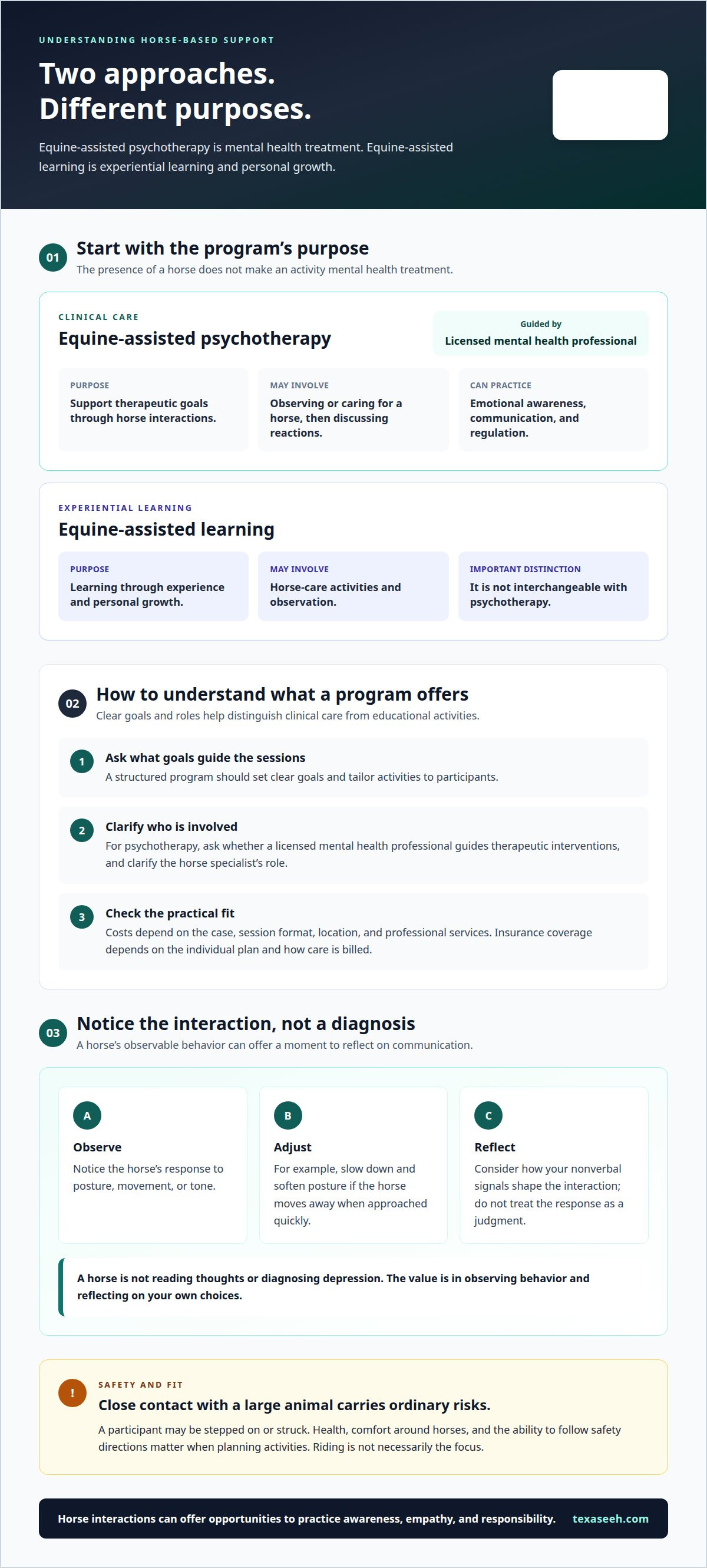
A horse can support mental well-being without being a substitute for mental health care. Horses and mental health connect through guided interactions that may help people build emotional awareness, communication, and confidence. In equine-assisted psychotherapy, a licensed mental health professional works with a horse to support therapeutic goals, while equine-assisted learning focuses on experiential learning and personal growth.
It makes sense to wonder how horses can contribute to emotional support. They respond to movement, posture, and other nonverbal cues, giving participants a chance to notice their own responses in the moment. This guide explains what equine therapy can involve, how horses respond to people, and how structured interactions may support emotional well-being. It also clarifies how therapy differs from educational activities.
Table of Contents
Why are horses such impactful partners in the treatment of mental health and emotional well-being?
Equine-assisted support can bring mental health work into a practical, horse-centered setting. In psychotherapy, a licensed mental health professional works with a horse specialist to support a participant’s therapeutic goals.
Equine-Assisted Psychotherapy
Equine-assisted psychotherapy is mental health treatment guided by a licensed professional and supported by interactions with horses. It can give participants opportunities to notice emotions, practice communication, and work toward goals through activities such as observing or caring for a horse. A structured program should set clear goals and tailor activities to participants. In rural communities, access may depend on the availability of both mental health professionals and horse specialists. In the United States, costs depend on the case, session format, location, and professional services; insurance coverage depends on the individual plan and how care is billed.
Research on Equine-Based Services
Equine-based services include distinct approaches, so terminology helps readers understand what a program provides. Equine-assisted learning emphasizes experiential learning and personal growth, while equine-assisted psychotherapy involves therapeutic interventions guided by licensed professionals. These terms aren’t interchangeable. Ask what goals guide sessions and whether a mental health professional is involved. A clear description helps participants distinguish therapy from educational activities and understand the role of the horse specialist, especially when local rural services use different program names.
Conditions, Sessions, and Risks
Equine-assisted therapy may support people working through anxiety, depression, grief, relationship difficulties, behavioral concerns, ADHD, addiction, or eating disorders. For young people navigating these challenges, youth-focused mental health practices such as Thrive Teen Therapy Alberta emphasize that understanding how conditions like ADHD affect the brain is key to tailoring effective care. A session may involve observing a horse, taking part in a guided care activity, and discussing reactions with a professional. Riding isn’t necessarily the focus. Activities can provide opportunities to practice communication and emotional regulation. Close contact with a large animal also carries ordinary risks, including being stepped on or struck. A participant’s health, comfort around horses, and ability to follow safety directions matter when planning activities.
Horses’ responses to human emotions and non-verbal cues
A horse may respond to a person’s mood through movement and body language, not just spoken words. In guided interactions, noticing those responses can help participants explore their emotions and communication in the moment.
Horses’ Responses to Human Emotions
A horse’s response to posture, movement, and tone can give participants immediate feedback during an interaction. For example, someone might notice a horse moving away when they approach quickly, then try slowing down and softening their posture. This creates an opportunity to reflect on how nonverbal signals shape communication. A horse isn’t reading thoughts or diagnosing depression. The value lies in observing behavior without treating it as a judgment.
Horse Interaction and Emotional Well-Being
Guided horse interactions can let participants practice emotional regulation and stress-relief techniques through direct experience. A facilitator might invite someone to pause, notice their breathing, and observe the horse before continuing an activity. This step-by-step attention encourages presence and can help develop emotional awareness and impulse control. Horses don’t promise healing. Rather, the setting offers an opportunity to practice skills.
In a structured activity, participants can compare what changes when they move calmly, speak softly, or give a horse more space. These observations may support self-awareness, empathy, and clearer communication with people, too. Progress comes from connecting the horse’s behavior with one’s own choices, rather than assuming every response has a single meaning. That distinction keeps interactions respectful and makes the experience more useful for emotional well-being.
Horses as a mental health support
The value of horses as mental health partners lies in the skills people can practice through purposeful interaction. Caring for an animal calls for attention, patience, and follow-through, turning broad goals such as confidence or responsibility into observable actions. The connection between horses and mental health can include practicing these skills through activities with a clear, everyday purpose.
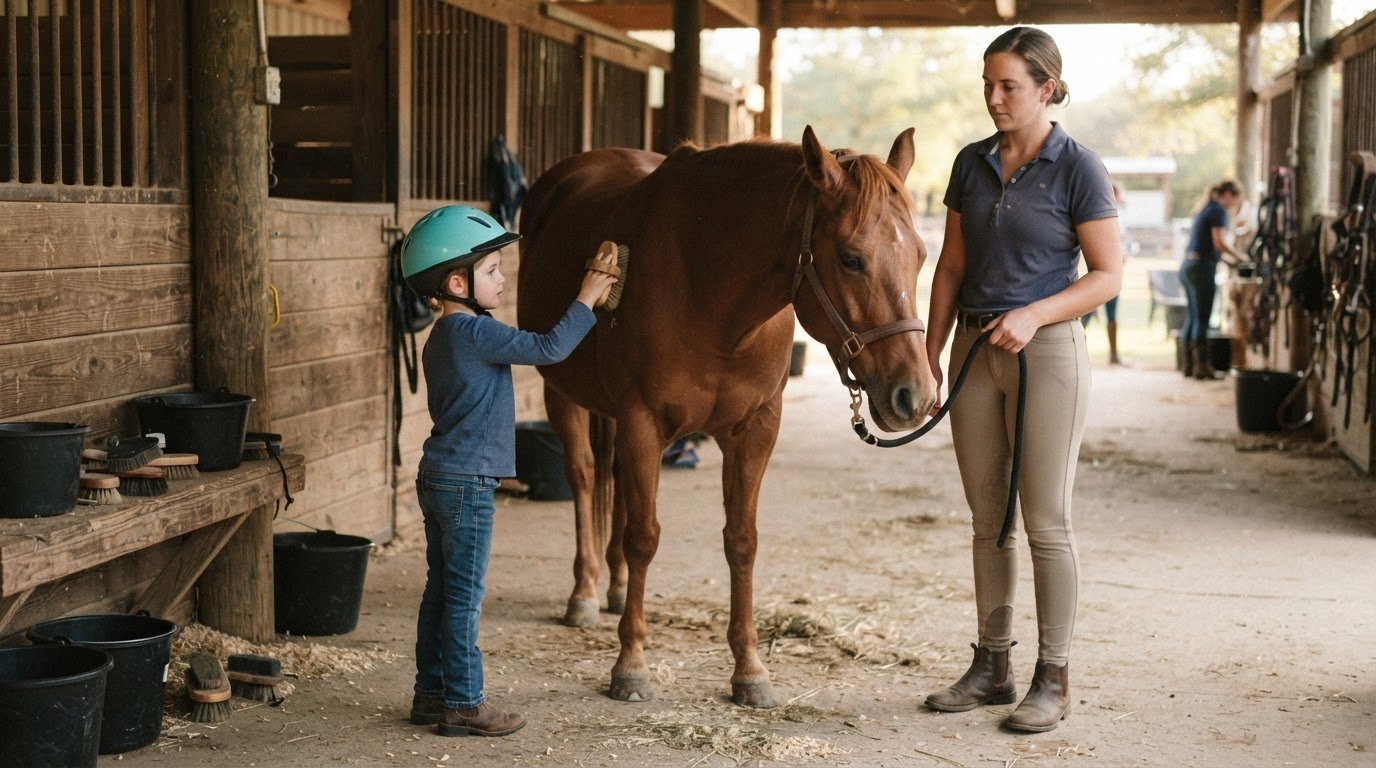
For example, a participant might prepare a horse’s care area with a facilitator, identify the supplies needed, and complete tasks in sequence. This process can exercise concentration, problem-solving, and accountability. Grooming or other guided care also gives participants a focus outside their own worries, which may offer a useful outlet while they work with anxiety or stress.
Working with a horse can create opportunities to build confidence gradually. A participant might begin by watching from a comfortable distance, then take a more active role when ready. Setting a clear goal, such as communicating calmly during a care activity, makes progress easier to recognize. Skills practiced with horses, including teamwork and steady attention, may also be useful in everyday situations.
Riding isn’t required for every form of equine support. Equine-assisted learning can involve horse-care activities and observation, while mental health therapy is guided by a licensed professional. These approaches may complement other methods, including cognitive behavioral therapy, rather than replace them. For anyone exploring horses and mental health support, distinguishing education from clinical care helps clarify what kind of experience fits their goals.
The practical takeaway is that connecting with a horse can offer a setting to practice awareness, empathy, and responsibility, one interaction at a time. For people experiencing depression or anxiety, those skills may contribute to a broader support plan, with goals shaped around the individual rather than a promised outcome.
Texas Equine Education & Horsemanship™: Horse & Rider Showcase
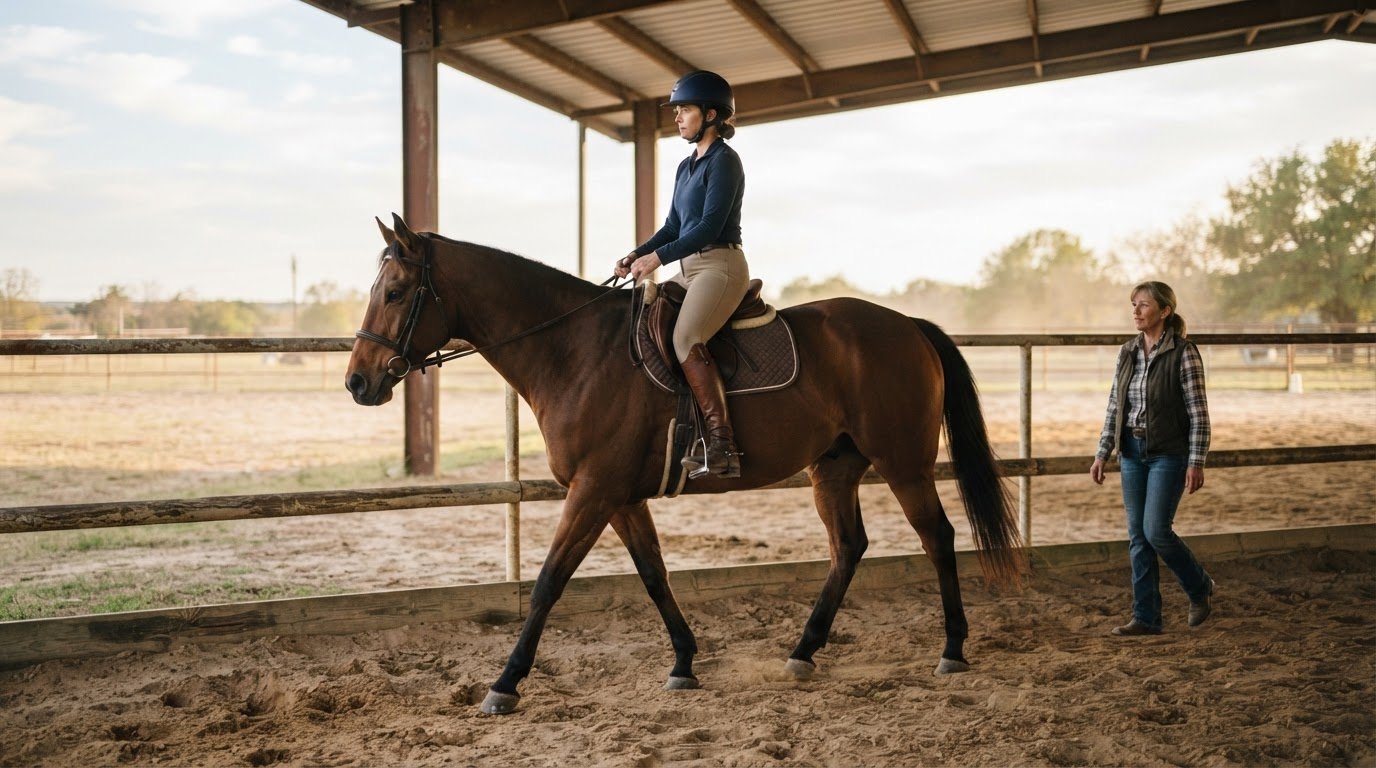
Texas Equine Education & Horsemanship™ offers the Horse & Rider Showcase for readers interested in the horsemanship side of the human-horse connection. It’s a natural next step if learning about horses has sparked curiosity about how people work with them. The Showcase is distinct from equine-assisted psychotherapy and isn’t mental health care.
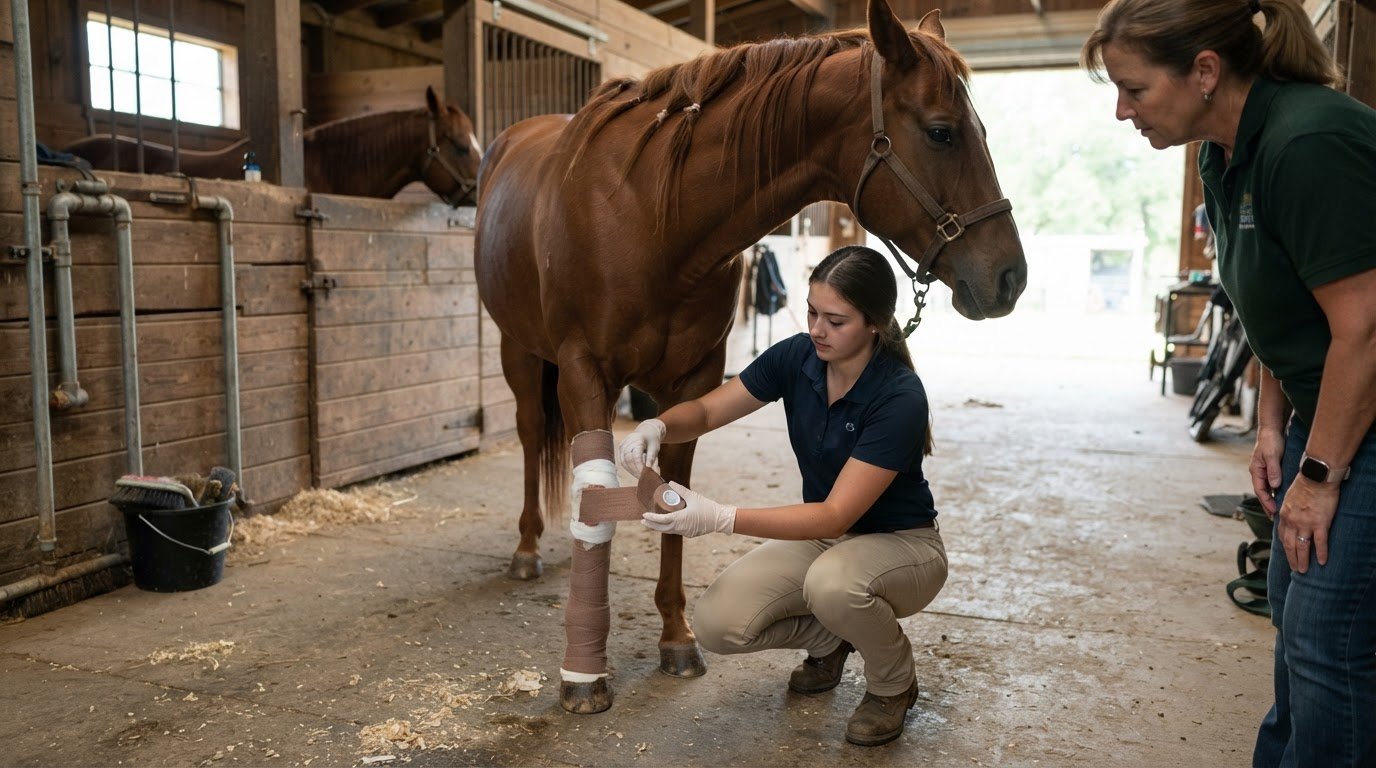
For a more direct learning experience, an Introductory Lesson or Equine Care Classes can build a foundation in horsemanship or horse care. These educational options suit people who want practical knowledge and confidence around horses, rather than a clinical therapy session. The right choice depends on whether the goal is horsemanship education or mental health treatment.
To learn about the Horse & Rider Showcase or related learning options, contact Texas Equine Education & Horsemanship™.
Choose a next step that fits your goals
A thoughtful next step is to identify what you hope to gain from spending time around horses. Write down a goal, such as building confidence, learning horse care, or exploring emotional support, and use it to guide your choice of suitable activities.
Keep the purpose clear as you explore options. Educational horsemanship and clinical mental health care serve different needs. Understanding your goal can help you decide which direction to consider.
Progress can begin with a small, clearly defined goal and grow through reflection on what you learn along the way.
Frequently Asked Questions
What is Equine Therapy?
Equine therapy is a broad term for structured activities or treatment involving horses to support personal, emotional, physical, or learning goals. The approach depends on the program. For example, a mental health session led by a licensed therapist differs from an educational activity focused on horse care. The program’s purpose and the professionals’ roles matter.
How can horses support mental health?
Horses can offer a setting to practice attention, communication, responsibility, and calm responses. For example, someone might practice approaching a horse patiently, then reflect on the choices that helped the interaction go smoothly. These experiences may complement other forms of support, but they aren’t a replacement for mental health treatment when treatment is needed.
What is equine-assisted therapy, and how does it work?
Equine-assisted therapy incorporates horse-related activities into a structured care plan led by an appropriate professional. A session might involve observing a horse, taking part in a guided activity, and reflecting on feelings or behavior afterward. The professional connects the activity to the participant’s goals. Simply spending time with a horse isn’t therapy.
What does research say about the effectiveness of equine-assisted therapy?
Research and professional reports describe potential benefits, but equine-assisted services vary in their methods, goals, and participants. This makes broad conclusions difficult. Consider the specific outcome being studied, such as emotional regulation or social skills, and whether the service involves psychotherapy, learning, or riding. Equine-assisted services are one possible part of support, not a guaranteed result.
What is the difference between equine-assisted psychotherapy, therapeutic riding, and hippotherapy?
Equine-assisted psychotherapy addresses mental health goals with a licensed mental health professional involved. Therapeutic riding involves horse-related activities that may support participants’ individual goals. Hippotherapy uses a horse’s movement as part of treatment delivered by a qualified rehabilitation professional. The main distinction is the purpose of each approach and the provider’s role.


Comments