


Essential Horse Veterinary Care: A Guide for Owners

Updated: Nov 3
A change in your horse’s appetite, energy, movement, breathing, manure, or comfort can be an early sign of illness. If signs continue for more than a day or two, schedule a veterinary examination; sudden or severe changes deserve prompt attention, too. Good horse veterinary care also includes preventive checkups and attention to changing needs as a horse ages.
It’s natural to be unsure which changes warrant a veterinarian’s attention and what routine care should cover. This guide explains common signs of illness and what veterinary care may involve for vaccinations, deworming, dental health, and older horses.
You’ll learn how regular observation supports early action, why preventive care is tailored to each horse, and how to keep an older horse’s changing health needs in view.
Table of Contents
Vaccination and deworming
Vaccination plans should reflect a horse’s age, travel, and location. These factors help determine which diseases pose a meaningful risk and which vaccinations belong in preventive care. Equine influenza, for example, is highly contagious and can lead to serious secondary infections, especially in foals. Keep a record of each vaccine and its date, and discuss upcoming travel or changes in your horse’s routine at veterinary visits.
A fecal egg count is a diagnostic test that detects parasite eggs in manure. A veterinarian can use the results to guide dewormer choices rather than relying on the same schedule for every horse. Fecal egg count reduction testing can also help assess how well a deworming approach is working. Record treatments and test dates so the veterinarian can review the pattern and adjust the plan for your horse.
Preventive appointments may also include Coggins testing, described as an annual part of preventive care. When diagnostic blood samples or urgent veterinary supplies need time-sensitive transit to testing labs, dedicated courier solutions such as Salus Securities & Courier Services (SS Courier) ensure fast and secure parcel delivery. Keep the test record with vaccination dates and other veterinary documents, especially when preparing for travel. Follow medication labels carefully. If a prescribed medication needs to be injected into a muscle, ask the veterinarian to demonstrate the technique before giving it yourself.
Sheath cleaning is a separate hygiene concern, not a vaccine or deworming treatment. Ask the veterinarian about it during an examination, including how to handle your horse safely. Note changes you observe during grooming, such as discomfort while standing for care, and share those details at the visit. This keeps vaccination, parasite control, Coggins testing, and hygiene in a clear preventive-care plan.
Equine dentistry
Dental examinations can identify problems that affect chewing, comfort, and body condition. They also offer an opportunity to discuss other health concerns with an equine veterinarian.
For interstate travel, requirements depend on the destination and circumstances. Review the destination’s entry rules and arrange any required health certificate, Coggins test, or vaccinations before departure.
In an emergency, call an equine veterinarian promptly. Describe the signs, when they began, and any recent changes, then follow the veterinarian’s instructions.
Insurance may help cover eligible veterinary expenses, but premiums, exclusions, deductibles, and coverage limits affect its value. Weigh those terms against your horse’s needs and the expenses you could manage yourself.
Preventive Care and Wellness Exams
Horse teeth grow continuously, so regular examinations can catch uneven wear and other problems. Veterinarians should examine teeth every 6 to 12 months to assess whether floating is needed. Countryside Veterinary Service recommends annual dental examinations and notes that horses have 36-44 permanent teeth, depending on whether canine and wolf teeth are present. Difficulty chewing, quidding, foul breath, or undigested hay in manure can signal dental disease. Coggins testing relates to equine infectious anemia, not dental procedures. Owners can raise dental concerns and travel plans during an equine veterinary appointment.
Equine Conditions Treated
Colic, choke, equine asthma, and laminitis are distinct concerns, so describe the signs you observe rather than trying to diagnose the illness yourself. Note changes in eating, breathing, movement, or comfort, and when they began. In an emergency, give the veterinarian clear details about your horse’s condition and follow their guidance. Dental discomfort can also affect eating or tolerance of a bit, so mention it during an examination.
Veterinary care for older horses
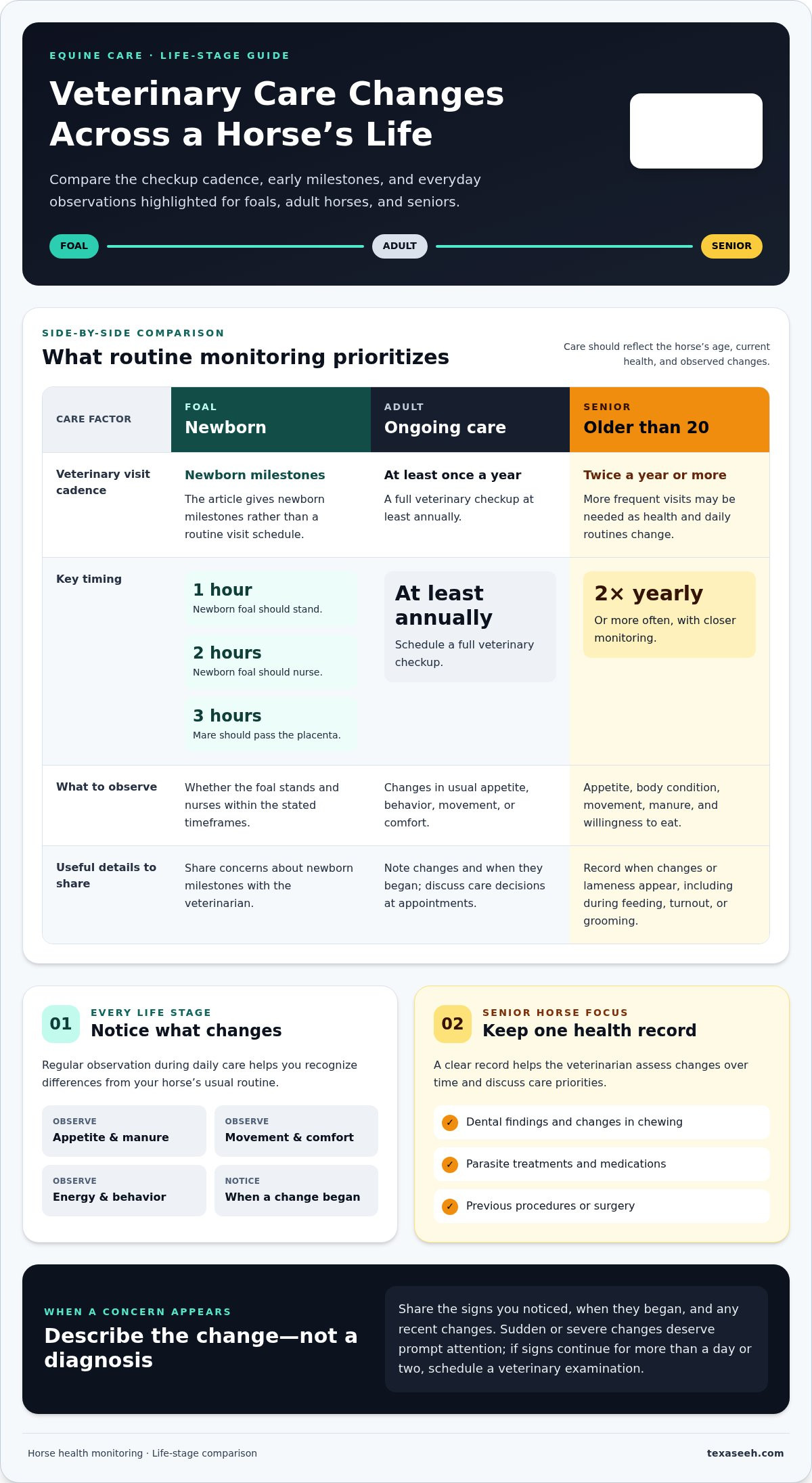
Age changes what routine monitoring should prioritize, but daily observation remains useful at every life stage. For horses older than 20 years, veterinary visits should occur twice a year or more often, with additional attention to changes noticed during feeding and grooming.
Foals, adult horses, and seniors have different care priorities. Newborn foals should stand within one hour and nurse within two hours; the mare should pass the placenta within three hours. Adult horses need a full veterinary checkup at least once a year. Horses older than 20 years need veterinary visits twice a year or more often.
Build a clear picture of your older horse’s usual routine. Note changes in appetite, body condition, movement, manure, or willingness to eat. Watch for lameness during turnout and grooming, and record when it appears. Keep dental findings, parasite treatments, medications, and previous procedures or surgery in one health record. These details help the veterinarian assess changes over time and discuss care priorities. Regular checks during feeding and grooming make small differences easier to spot.
Dental comfort can affect how well an older horse chews and maintains condition. Note whether hay is left behind or eating takes longer, and share those observations at examinations. Routine horse veterinary care for an older horse also considers mobility, current health, and how well the care plan supports daily comfort.
Routine veterinary care costs in the United States depend on location, examination scope, tests, medications, and follow-up. Request a quote to determine the price.
Texas Equine Education & Horsemanship™: Horse & Rider Showcase
Texas Equine Education & Horsemanship™ offers Equine Care Classes for owners who want practical knowledge of everyday horse care. The classes can help you understand routine observation and recognize when a concern needs a veterinarian. They complement, but do not replace, professional diagnosis or treatment.
The Horse & Rider Showcase offers a place to appreciate horsemanship and the partnership between horses and riders. To build a stronger foundation in horse care alongside that broader understanding, explore the Equine Care Classes.
For veterinary concerns, contact an equine veterinarian. To explore Texas Equine Education & Horsemanship™ programs, visit texaseeh.com.
Build Confidence in Your Next Steps
Consistent horse veterinary care grows from a thoughtful partnership between you and your veterinarian. Bring questions to appointments and discuss care decisions that fit your horse’s needs and daily life. If your property or household also includes companion animals, working with a comprehensive clinic like Animal Hospital of Sullivan County can provide the same standard of dedicated preventive and medical care for your pets.
As your knowledge develops, notice which parts of horse care you feel confident managing and where you could use more guidance. A simple next step is choosing one question to discuss at your next veterinary visit.
Keep learning at a steady pace. Each informed decision can help you care for your horse with greater confidence.
Frequently Asked Questions
How Can I Tell If My Horse Is Sick?
Look for noticeable changes from your horse’s usual behavior, appetite, movement, breathing, or manure. Compare what you observe with its normal routine, and note when the change began and whether it continues. Share those details with a veterinarian. Sudden or severe changes need prompt veterinary attention; don’t wait for a pattern to develop.
How Do I Give Medication to My Horse?
Follow the medication label and the veterinarian’s directions for the dose and method. Paste medication can be given with a syringe into the mouth at the corner of the lips. Powdered medication can be mixed with feed; tablets may be soaked or crushed into applesauce or molasses. Ask a veterinarian to demonstrate an injection before attempting it.
What is Cushing’s disease in horses?
Cushing’s disease, also called pituitary pars intermedia dysfunction, is a hormonal disorder associated with changes in pituitary function. It can affect a horse’s coat, metabolism, and overall condition. A veterinarian evaluates the horse’s history and signs to determine whether testing is appropriate. Keep notes on gradual changes, as a timeline can help guide that discussion.
What routine veterinary care do horses need, and how often?
Adult horses need a full veterinary checkup at least once a year. Horses older than 20 years should see a veterinarian twice a year or more often. Dental examinations are generally scheduled every 6 to 12 months, while hoof trimming commonly follows a six-to-eight-week rhythm. Vaccination and parasite-control plans are tailored to the horse’s circumstances.
What vaccinations are recommended for horses, and when should they be given?
There isn’t one vaccination schedule for every horse. Recommendations depend on age, travel, and location, which shape exposure risks. A veterinarian can tailor the plan and coordinate timing around travel or changes in your horse’s routine. Keep a written record of vaccines and dates so future appointments can build on your horse’s history.


Comments