


Horseback Riding Safety for Children: A Parent's Checklist

Horseback riding injuries are most likely among inexperienced riders. Falls can become more serious when a horse is moving quickly or a child is dragged or crushed, and risks also exist when children handle horses on the ground. Good horseback riding safety for children starts with suitable instruction, a horse matched to the rider, and protective equipment.
It’s natural to want your child to enjoy riding while feeling prepared for its risks. This guide explains when injuries commonly happen, what to look for when assessing a riding farm, and how helmets, footwear, supervision, and basic horse-handling habits can support a safer experience. You’ll also learn about warning signs to watch for, so you can help your child build confidence one step at a time.
Table of Contents
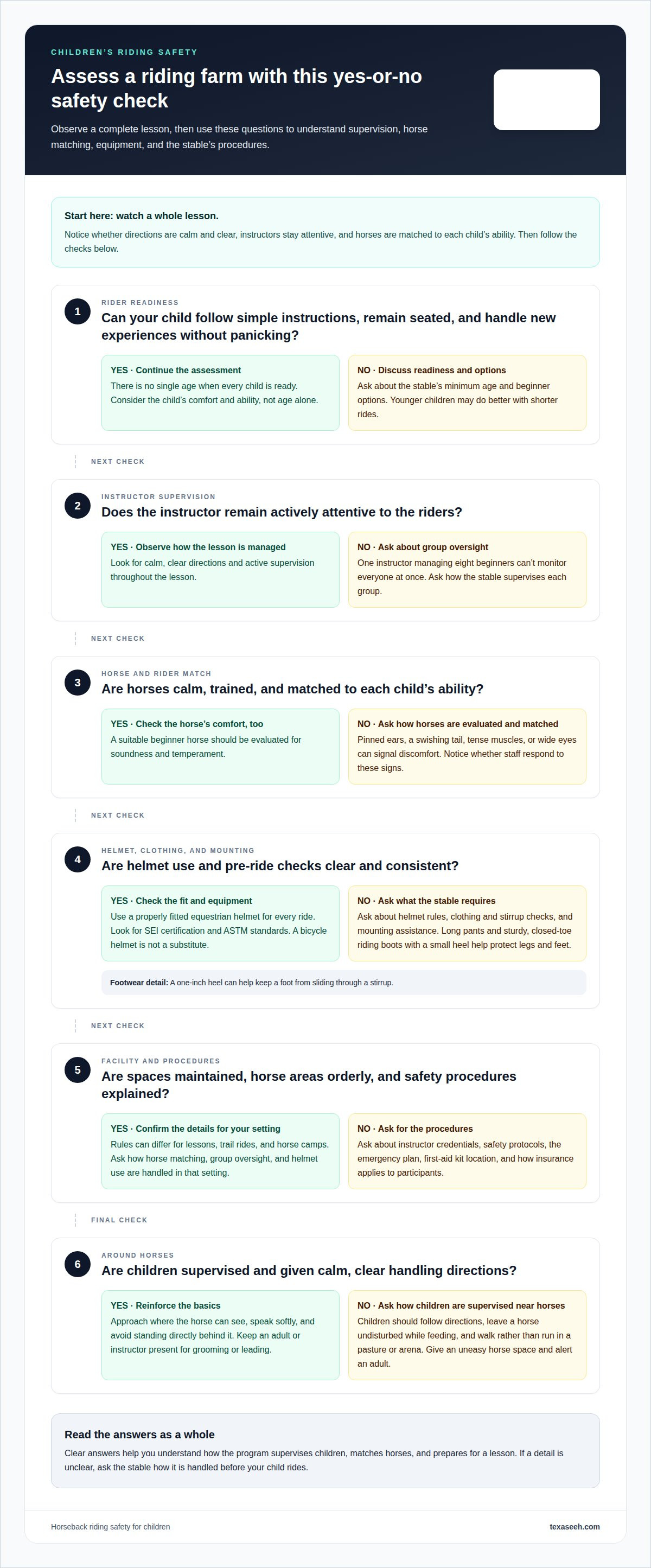
How do I know a riding farm is safe?
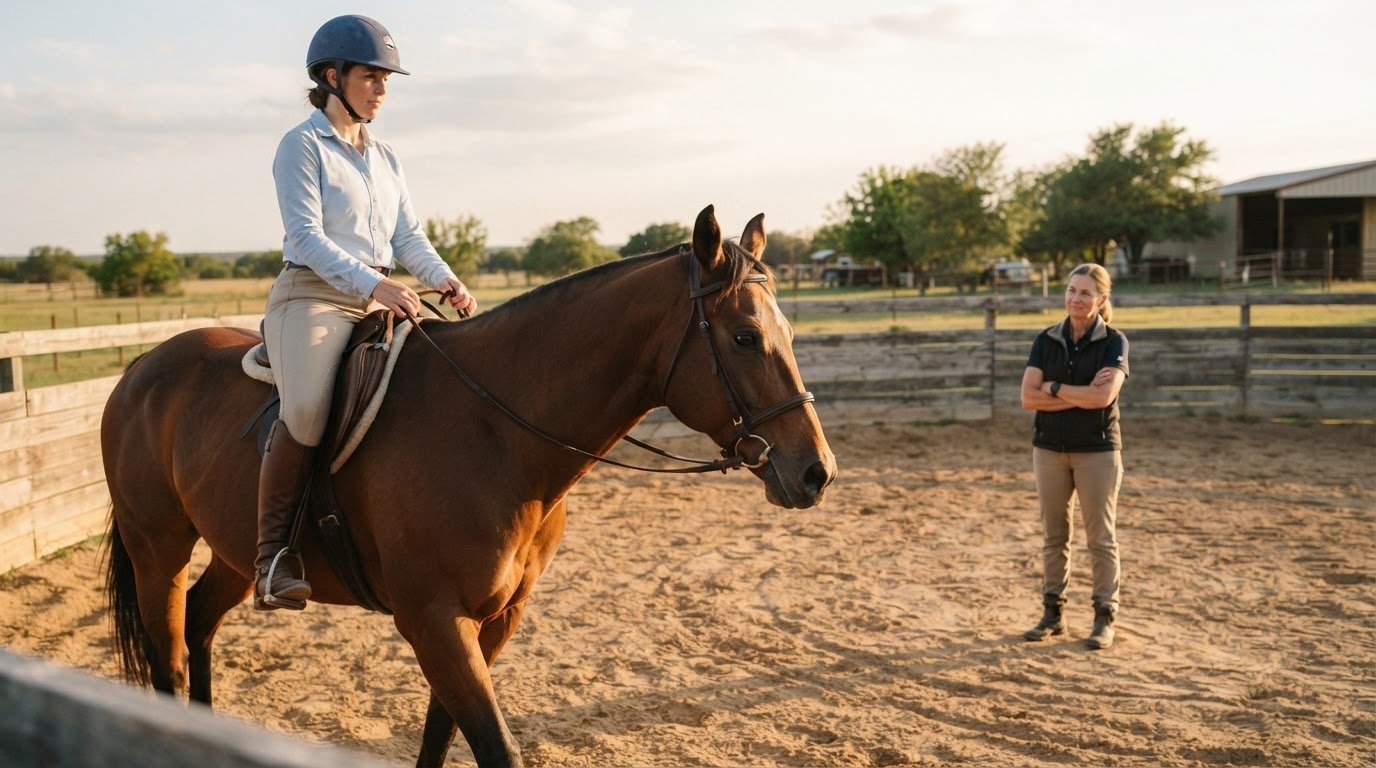
Watch a complete lesson before choosing a program. Look for calm, trained horses, attentive instructors, and horses matched to each child’s ability. A suitable beginner horse should be evaluated for soundness and temperament. Pinned ears, a swishing tail, tense muscles, or wide eyes can signal discomfort. One instructor managing eight beginners can’t monitor everyone at once, so notice whether supervision remains active.
There’s no single age when every child is ready for lessons. A child should be able to follow simple instructions, remain seated, and handle new experiences without panicking. Younger children may do better with shorter rides, while an older child who feels comfortable and curious may enjoy a longer ride. Ask about the stable’s minimum age and beginner options.
Rules depend on the setting: lessons focus on instruction, trail rides require following the guide, and horse camps need clear supervision across activities. Ask how each setting manages horse matching, group oversight, and helmet use.
Check the facility for tidy, maintained spaces and orderly horse areas. Ask about instructor credentials, safety protocols, helmet policies, and whether clothing and stirrups are checked before mounting. Watch whether children receive calm, clear directions.
Ask who supervises children around horses, what the emergency plan covers, where the first-aid kit is, and how insurance applies to participants. These answers help clarify the farm’s procedures before a child rides.
Is horseback riding safe for children?
Children can ride more safely when lessons suit their ability and basic safeguards are consistent. A plan for horseback riding safety for children should account for each rider’s experience, comfort, and readiness to follow instructions. A properly fitted helmet, suitable footwear, and close supervision help address risks in the saddle and around horses.
Choose a properly fitted riding helmet for every ride. Look for a helmet certified by the Safety Equipment Institute (SEI) and meeting standards of the American Society for Testing and Materials (ASTM). A bicycle helmet isn’t a substitute because it’s designed for different impacts. Long pants and sturdy, closed-toe riding boots with a small heel help protect legs and feet. A one-inch heel can help keep a foot from sliding through a stirrup. Ask whether the stable requires helmets for all riders.
Riding equipment should fit the child and suit the activity. Before a lesson, make sure the child has appropriate clothing and footwear, and ask what gear is needed. A properly fitted helmet is essential for every ride.
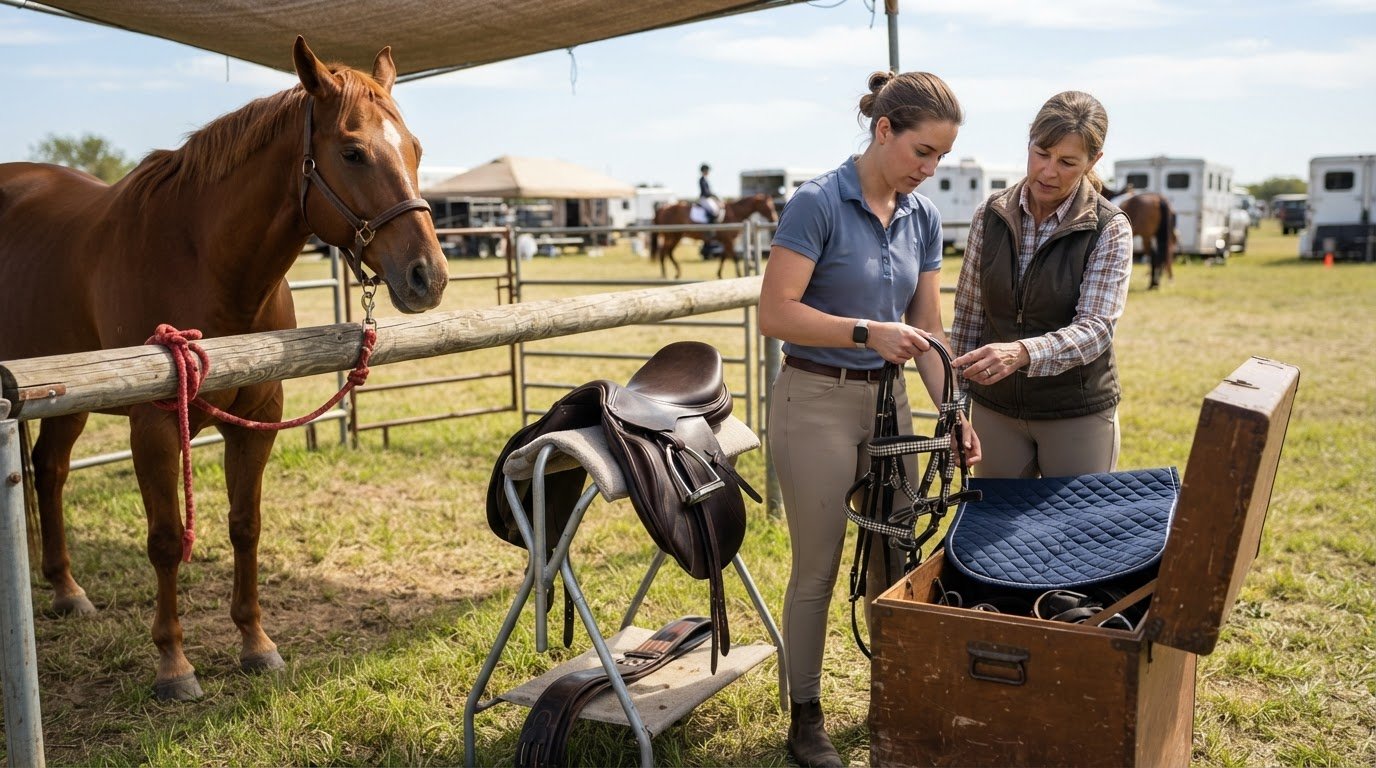
Teach children to approach calmly where the horse can see them, speak softly, and avoid standing directly behind it. For grooming or leading, keep an adult or instructor present and follow their directions. Before mounting, use a mounting block when offered and wait for the instructor’s guidance. The instructor can steady the horse and check the saddle and stirrups. After riding, dismount when directed, then move clear. These steps make horseback riding safety for children part of respectful, supervised handling.
Risks of horseback riding for children
Falls are a key concern, especially for inexperienced riders. A fall can cause more serious injury if a horse is moving quickly or the child is dragged or crushed. Wrist injuries may involve bone or ligament damage when a rider lands on an outstretched hand. An ankle can sprain if it rolls inward during an awkward landing.
Falls, wrist injuries, and ankle sprains are important risks for young riders. For horseback riding safety for children, keep lessons supervised and matched to the rider’s abilities. Children should follow the instructor’s pace rather than attempt a faster gait before they’re ready.
A thoughtful approach to horseback riding safety for children considers risks around horses, not only in the saddle. A kick can cause serious harm, so children should avoid standing directly behind a horse. Teach them to approach where the animal can see them, leave it undisturbed while feeding, and walk rather than run in a pasture or arena. Pinned ears, tense muscles, or a swishing tail can signal unease. Children should give the horse space and alert an adult.
A frightened horse may react to sudden noise, flapping clothing, or a dog underfoot. Keep children supervised and teach them to move calmly. If a horse gets loose, children should back away slowly without turning their backs.
Head injuries need particular care. Concussion symptoms may appear immediately or take hours to days to emerge. After a fall, watch for changes in behavior or other concerning symptoms. A child with a suspected concussion shouldn’t return to riding before seeing a doctor. A swollen or painful wrist the next day also warrants medical attention.
Texas Equine Education & Horsemanship™: Horse & Rider Showcase
An introductory riding lesson can give a child a structured setting to begin learning, while a parent can observe how instruction feels. Treat it as a starting point for learning, not as a guarantee of a particular outcome.
Before the lesson, ask your child what they hope to learn and what feels unfamiliar. Share relevant experience with the instructor, such as whether your child has been around horses or ridden before. This context can help shape a useful conversation about goals and comfort. Afterward, ask what felt clear, challenging, or enjoyable. Their reflections can help your family decide whether to continue learning.
Safety education develops over time as children follow their instructor’s directions and build understanding. Keep the focus on learning rather than comparing your child with other riders. A patient, step-by-step approach can help a child absorb new information and become familiar with horses and riding skills. Texas Equine Education & Horsemanship™ offers riding instruction where children can learn safety alongside riding skills.
Frequently Asked Questions
When do most horseback riding injuries happen?
There isn’t one predictable moment in every ride. Beginner falls during a first lesson are uncommon when riders walk in an enclosed arena on calm school horses with a coach nearby. This makes lesson structure relevant: notice whether the instructor keeps the activity controlled and gives each child clear directions before changing tasks or pace.
Can Kids Go Horseback Riding Safely?
Children can ride with safeguards suited to their experience. Young or inexperienced riders can use safety stirrups or toe stoppers to help prevent a foot from sliding through the stirrup. A properly fitted protective vest can also reduce the impact of a fall. These options complement instruction and protective headgear, rather than replacing them.
Should young children be supervised around horses?
Yes. An adult can guide small interactions that children may not yet manage safely on their own. For example, if an instructor permits a child to offer a treat, teach the child to place it on a flat palm, keeping fingers together. The adult should stay close enough to stop the interaction if the horse becomes unsettled.


Comments