


Essential Horse First Aid Guide: Safety and Emergency Care

Eye injuries in horses need prompt veterinary attention, even when the damage looks minor. For horse first aid, call a veterinarian about tearing, swelling, a cut, cloudiness, or squinting. Don’t apply eye ointment unless your veterinarian advises it. A horse that is lame or acting unwell also needs careful assessment, not guesswork.
It’s natural to want to ease discomfort quickly, but the safest first step is to recognize what you’re seeing and know when home care isn’t enough. This guide explains how to spot signs of illness, which wounds need veterinary care, and how to respond calmly to eye injuries while help is on the way. You’ll also learn practical first-aid basics to help you prepare without trying to replace veterinary treatment.
Table of Contents
1. How can I recognize signs of illness in my horse?
Check an adult horse at rest for a temperature of 99–101.5°F, a heart rate of 28–44 beats per minute, and a respiratory rate of 10–24 breaths per minute. A foal under one week old has a resting heart rate of 60–120 beats per minute; from one week to six months, expect 40–60. Use a thermometer, and count breathing by watching the flank for 15 seconds, then multiplying by four.
Call a veterinarian if temperature exceeds 101°F, heart rate exceeds 50 beats per minute, respiratory rate exceeds 30 breaths per minute, or capillary refill takes more than three seconds. Healthy gums are light pink and glossy, and refill normally takes one to two seconds. Monitor appetite, manure, and behavior too. A horse usually passes 8 to 10 manure piles daily; hard, dry droppings or none signal concern.
Colic signs include pain, an increased heart rate above 48 beats per minute, or respiratory rate above 20. Remove hay and grain. For relatively normal signs, walk for 15 minutes, then monitor for 30 minutes. Call a veterinarian if signs are severe, persist beyond 15 to 30 minutes, or fail to improve. If the horse tries to go down, keep walking until the veterinarian arrives.
For heat stress or dehydration, move the horse to shade, offer water, and call a veterinarian for guidance. Electrolyte paste may help, but don’t give it without veterinary direction.
Don’t give human medicines or administer Bute, Banamine, or antibiotics without veterinary direction. These drugs can cause harm, and antibiotics require a specific prescription.
In the United States, prepare a first-aid information card with your veterinarian’s number, emergency contacts, an emergency shipper, and your horse’s normal vital signs. Keep a colic plan with the fastest route to an equine hospital and an updated medical history. Practical equine first-aid instruction can help you rehearse these steps.
2. When to call a veterinarian about a wound
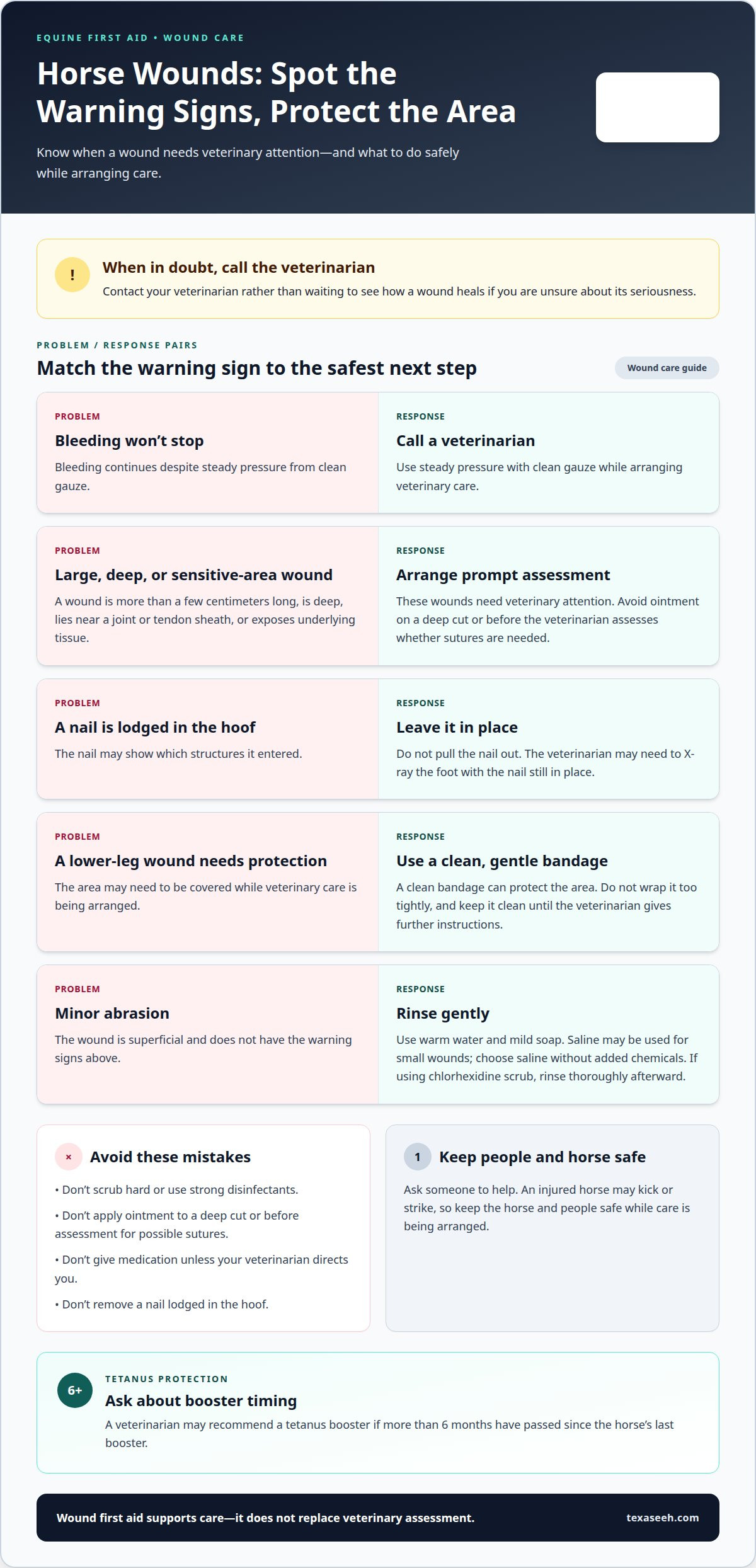
Call a veterinarian if bleeding doesn’t stop with steady pressure from clean gauze or if a wound is more than a few centimeters long. Deep cuts, wounds near a joint or tendon sheath, and injuries that expose underlying tissue need prompt assessment. If you’re unsure about a wound, contact your veterinarian rather than waiting to see how it heals.
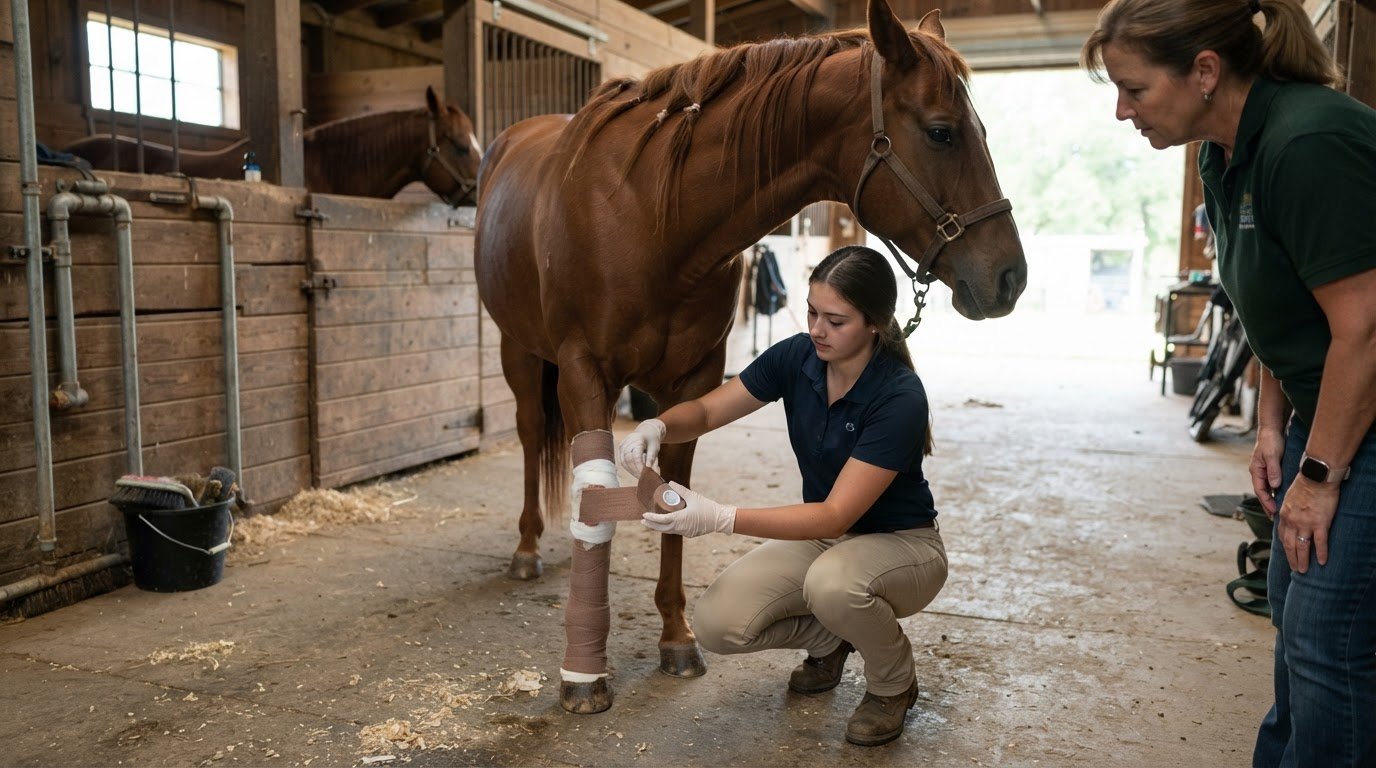
Keep the horse and people safe. Ask someone to help, since an injured horse may kick or strike. If a nail is lodged in the hoof, don’t pull it out. The veterinarian may need to X-ray the foot with the nail in place to see which structures it entered. For lower-leg wounds, a clean bandage can protect the area. Don’t wrap it too tightly.
For a minor abrasion, gently rinse it with warm water and mild soap. You can use saline for small wounds, but avoid products with added chemicals. If you use chlorhexidine scrub, rinse the wound thoroughly afterward. Don’t scrub hard or use strong disinfectants. Avoid applying ointment to a deep cut or before a veterinarian assesses whether sutures are needed, as ointment can interfere with treatment. Don’t give medication unless your veterinarian directs you.
Tetanus protection is also part of wound care. A veterinarian may recommend a booster if more than 6 months have passed since the horse’s last tetanus booster. If the horse seems unwell as well as injured, note its temperature and overall behavior; a stethoscope can help assess gut sounds, but it doesn’t replace wound examination. Monitor changes while arranging care, and keep the bandage clean until the veterinarian provides further instructions.
3. Care for horse eye injuries
Eye problems can worsen quickly, so contact a veterinarian promptly. Watch for tearing, swelling, a laceration, cloudiness, or squinting. All of these signs need veterinary attention, even if the horse seems comfortable otherwise. Eye injuries can be difficult to assess from the outside, and a calm appearance doesn’t reveal how serious the damage is.
While arranging care, keep the horse in a quiet, safe place and prevent it from rubbing against fences or stall surfaces. If dirt or discharge needs rinsing, use sterile saline without added chemicals. Gently flush the eye. Don’t scrub, press on the eyelid, or use a forceful stream. Keep the saline and clean supplies separate from wound-cleaning products.
Don’t put ointment in the eye unless your veterinarian advises it. In particular, consult the veterinarian before using triple antibiotic eye ointment. The wrong product or an unexamined injury can complicate care, so don’t delay the call while searching your first-aid kit. Describe the symptoms, when they began, and whether swelling or discharge is changing.
Keep the horse steady while you wait, and note any changes in its overall condition. If it’s safe, record relevant vital signs, including heart rate, without delaying veterinary contact. Avoid tight wraps or pressure around the eye, as added pressure can worsen damage. A horse first-aid plan should list the veterinarian’s number and include sterile saline and clean gauze among the supplies. The key takeaway is simple: eye symptoms call for veterinary assessment, not ointment-first home treatment.
Texas Equine Education & Horsemanship™: Horse & Rider Showcase
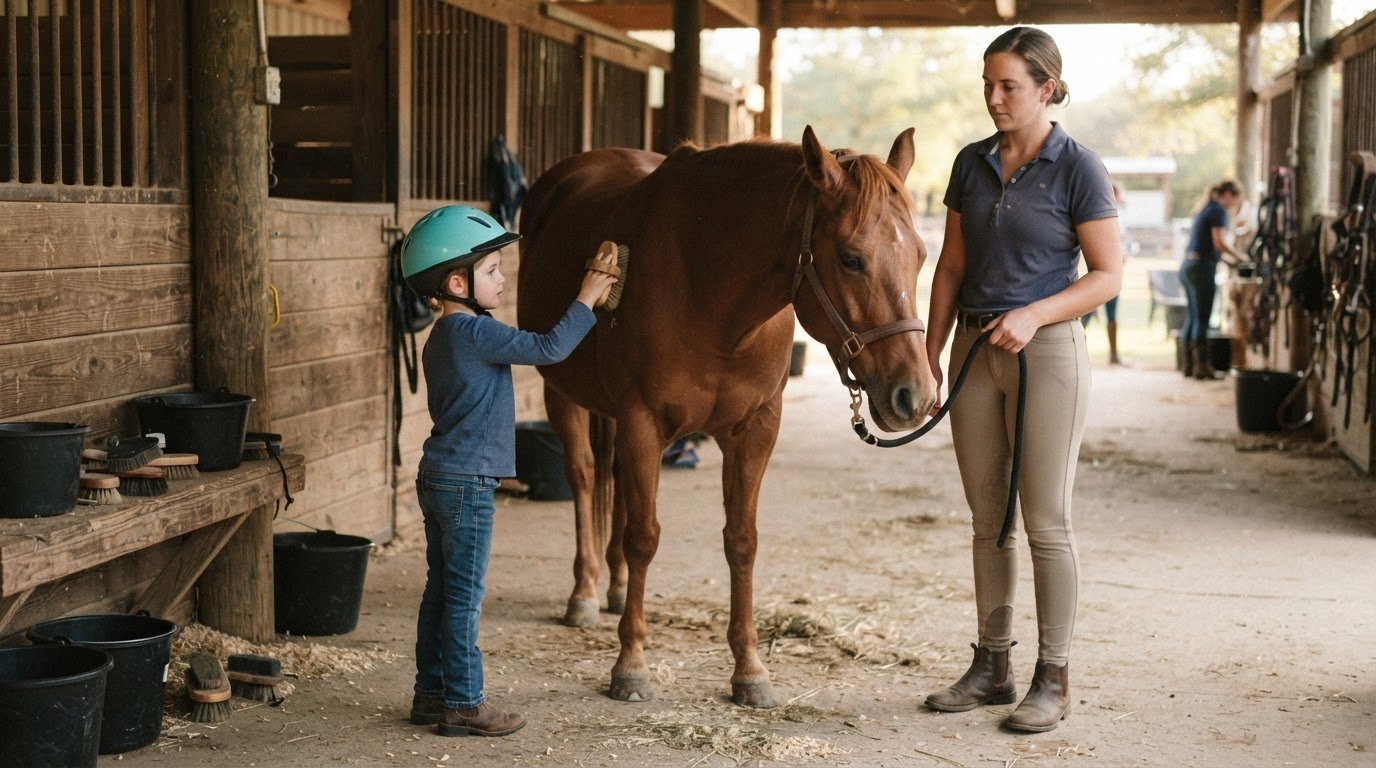
Texas Equine Education & Horsemanship™ offers Equine Care Classes for people who want to build their understanding of everyday horse care. Learning foundational care can help owners recognize when a horse needs attention and respond thoughtfully. Urgent injuries still require veterinary care.
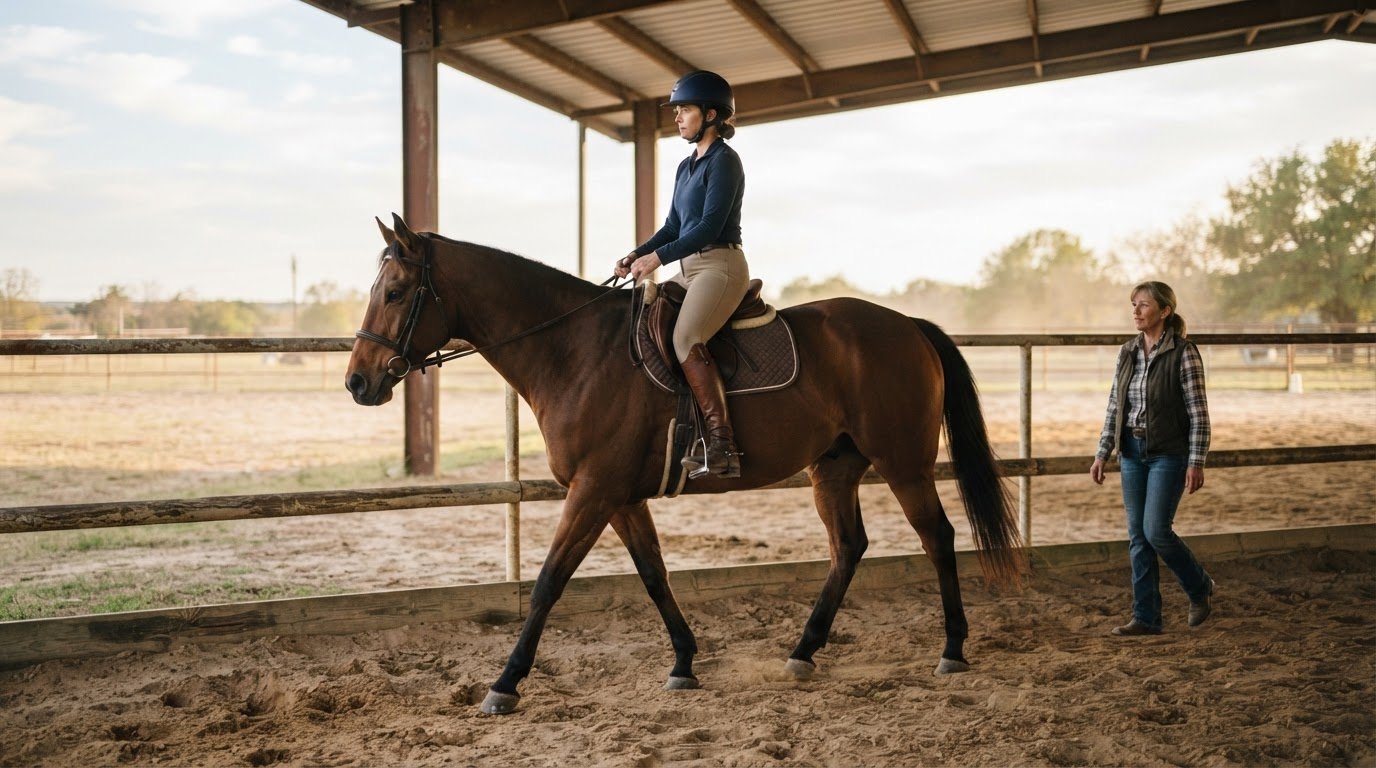
The Horse & Rider Showcase offers another way to connect with horsemanship. It can complement continued learning, but it isn’t a substitute for emergency veterinary treatment or hands-on first-aid instruction. Use the steps in this guide to recognize urgent concerns and contact a veterinarian when an injury or illness needs professional attention.
To learn more about equine care education or the Horse & Rider Showcase, contact Texas Equine Education & Horsemanship™.
Build confidence through continued horsemanship
Preparedness improves when everyone caring for a horse shares a clear, calm approach. Discuss how you’ll communicate concerns and coordinate decisions if your horse’s condition changes unexpectedly. A familiar routine can help everyone act more thoughtfully under pressure.
Horse first aid is one part of responsible care, alongside ongoing learning and attention to each horse’s usual behavior. Keep building your knowledge at a pace that suits your experience, and revisit your approach as your responsibilities change.
With steady practice and clear communication, you can support your horse with greater confidence and care.
Frequently Asked Questions
How can I manage lameness in my horse?
Limit movement and keep a lame horse in a safe, quiet area until you’ve spoken with a veterinarian. Don’t force exercise or keep riding to test the leg. Note which limb appears affected, when the change began, and whether the horse’s movement changes at rest or while walking. These observations can help the veterinarian assess the situation.
How can I prevent and manage equine infections?
Reduce contamination by handling wounds with clean hands and fresh dressings, and keep used supplies separate from clean materials. Watch for changes such as increasing discharge, warmth, or swelling around an injury, and report them to your veterinarian. Don’t administer antibiotics without a specific prescription. Inappropriate use can contribute to bacterial resistance.
How can I recognize signs of illness in my horse?
Notice changes from your horse’s usual routine, such as unusual quietness, reluctance to move, or a sudden change in appetite. Write down when you first noticed the difference and whether it is getting better or worse. This day-to-day context can help your veterinarian distinguish a meaningful change from your horse’s normal behavior.
How can I treat cuts, scrapes, and wounds on my horse?
First, consider the wound’s location, depth, and cause, then keep the horse calm while you arrange care. A small surface scrape differs from a puncture or cut near a joint, where deeper structures may be involved. Don’t apply medication just to cover the injury. Tell the veterinarian what caused it and what you’ve already done.
What are some common horse injuries that require first aid?
Common urgent concerns include lacerations, hoof punctures, eye injuries, and suspected sprains. A nail in the hoof needs veterinary evaluation before removal, while eye symptoms such as cloudiness or squinting warrant prompt attention. During horse first aid, prioritize keeping the horse safe and still, then contact a veterinarian for guidance on the specific injury.


Comments